

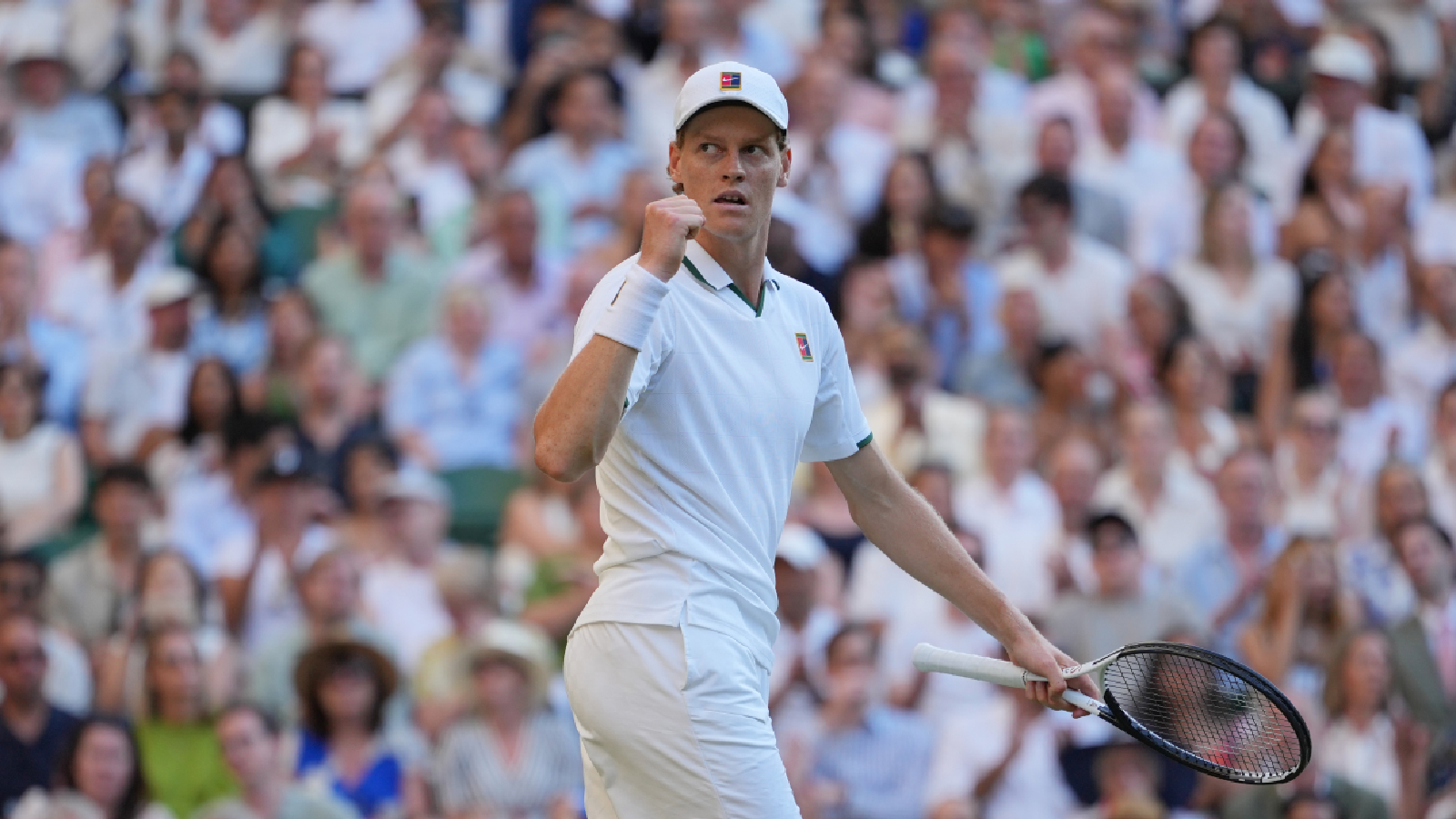
LONDON, UK – July 13, 2026 – In a gripping display of tactical evolution and mental fortitude, Jannik Sinner of Italy claimed the coveted Wimbledon men’s singles title on Sunday, July 12, 2026, defeating Germany’s Alexander Zverev in a four-set thriller. The final score of 6-7(7), 7-6(2), 6-3, 6-4, while reflecting a hard-fought contest, belied the profound shift in Sinner’s game that ultimately secured his triumph. This victory, marked by a dominant and unassailable serve, not only etched Sinner’s name into the annals of tennis history but also signaled the arrival of a truly complete player on the sport’s grandest stage.
The atmosphere on Centre Court was electric, a palpable tension lingering as two of the game’s most formidable talents vied for supremacy. Zverev, renowned for his powerful serve, initially appeared to hold the statistical edge. He delivered 17 aces to Sinner’s 15 and boasted an impressive 80% first-serve percentage compared to Sinner’s 66%. Yet, the numbers, in this instance, proved deceptive. As the match wore on, it became glaringly apparent that the true differentiator lay not in the initial delivery, but in the subsequent execution of each point. Sinner converted 80% of points on his first serve to Zverev’s 71%, and a remarkable 65% on his second serve against Zverev’s 61%. Furthermore, Sinner’s superior returning game, evidenced by 43 return points won to Zverev’s 34, underscored his multidimensional approach. When the match demanded decisive action, Sinner consistently found more avenues to exert his will. This victory was a testament to a meticulously rebuilt weapon: his serve.
A Dominant Performance on Centre Court
The final unfolded with both players showcasing immense power and precision. The opening two sets were a testament to their evenly matched capabilities, each claiming a set in a tie-break, reflecting the razor-thin margins at the elite level. Zverev’s early dominance on serve was notable, keeping Sinner at bay with a barrage of unreturnable deliveries. However, Sinner’s consistent pressure on return and his ability to win critical points on his own serve slowly began to wear down the German.
The pivotal moment arrived in the third set. Locked at 3-3, after 31 consecutive holds of serve between the two finalists, Zverev earned his first break point of the match. It was a chance to seize control, but fate intervened. As Zverev lunged to chase down a finely crafted drop shot from Sinner, he slipped, hyperextending the same knee that had plagued him with a serious injury two years prior. Sinner, displaying commendable sportsmanship, immediately crossed the net to help his opponent up. While play resumed, the incident visibly impacted Zverev. "I was struggling to push off on the serve," Zverev later admitted, "My serve speed went down… the fall didn’t help me in the third set." The psychological and physical toll was immediate. Just two games later, serving with a compromised push-off, Zverev was broken for the first time in the entire final. Sinner capitalized with ruthless efficiency, serving out the set to take a 2-1 lead.
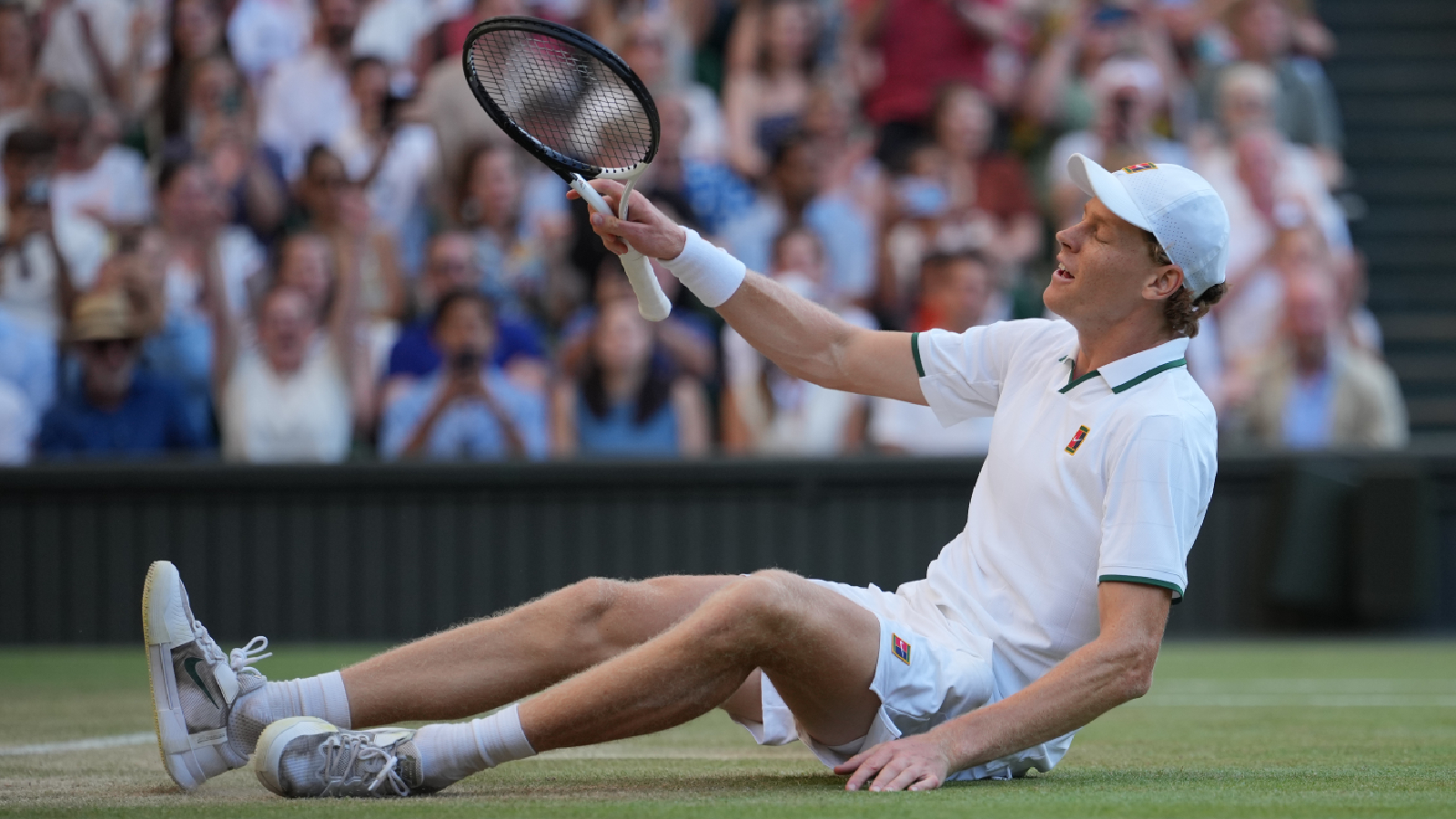
The fourth set saw Sinner press his advantage, demonstrating unwavering composure. In a thrilling seventh game, he generated three break points, at one point scrambling heroically to the turf to keep a rally alive. He converted the third, a testament to his sustained pressure and the resilience forged through years of dedicated training. Zverev, though valiant, finally cracked under the relentless assault. Sinner ultimately faced only one break point in the entire final, a testament to the impregnable nature of his service game, and saved it with characteristic composure. This historic victory, secured on the hallowed grass of Wimbledon, marked a new chapter for the young Italian, solidifying his status as a major force in men’s tennis.
The Unseen Architect: A Chronology of Sinner’s Serve Transformation
Jannik Sinner’s ascent to Wimbledon glory is not merely a tale of innate talent, but a meticulously crafted narrative of strategic improvement, relentless dedication, and courageous adaptation. At the heart of this transformation lies the dramatic overhaul of his serve, a shot that once represented a vulnerability and now stands as his most formidable weapon. The journey from a tentative delivery to an unassailable offensive tool is a testament to the power of deliberate practice and astute coaching.
Early Struggles and the Piatti Era (2022)
Two years prior to his Wimbledon triumph, the notion of Sinner dominating on serve would have been met with skepticism. Under his former coach, Riccardo Piatti, Sinner employed what was described as a "platform serve." This technique involved keeping his feet planted wide throughout the motion, with the racket arm initiating its swing from well behind the body. While Piatti’s guidance undoubtedly laid foundational elements for Sinner’s overall game, his first-serve percentage during this period often languished below 60%. This was a glaring weakness, particularly against top-tier opponents who would relentlessly target this inconsistency, forcing Sinner into defensive positions from the outset of rallies. The serve, at that stage, was a shot he had to protect rather than one that offered protection.
Vagnozzi’s Vision: Smoothing the Hitch (2022-2023)
The turning point arrived with the coaching transition from Piatti to Simone Vagnozzi in 2022. Vagnozzi immediately identified the serve as the primary area requiring urgent attention. Veteran tennis commentator Jim Courier recalled cornering Vagnozzi at the 2022 Miami Open, curious about his strategic blueprint for Sinner. "The serve, it’s got a hitch in it," Vagnozzi reportedly told Courier. "We’ve got to get rid of the hitch and smooth it out. I want the toss more in front so he can be more offensive." This insight was crucial. The "hitch" referred to an unnecessary pause or discontinuity in the serving motion, robbing Sinner of fluid power and precision. Vagnozzi’s objective was clear: streamline the motion, improve the ball toss position, and empower Sinner to attack with his first serve, rather than merely initiating the point.
The Cahill Influence and Pinpoint Precision (Mid-2023 onwards)
The strategic evolution gained further momentum in mid-2023 with the addition of renowned coach Darren Cahill to Sinner’s team. Cahill, known for his work with multiple Grand Slam champions, collaborated with Vagnozzi to implement a radical change: switching Sinner to a "pinpoint stance." This technique involves drawing the back foot up to meet the front foot during the service motion, generating more kinetic energy and upward thrust. The inspiration for this unconventional move came from an unlikely source: John Isner, the towering six-foot-ten American known almost exclusively for his monstrous serve, whose overall game style bore little resemblance to Sinner’s. On paper, the choice seemed counterintuitive for a player of Sinner’s build and game. However, the coaching duo believed it would unlock a new level of power and disguise.
This significant mechanical alteration required immense patience and dedication. It took years for the changes to fully manifest in the statistics, demanding unwavering commitment from Sinner. Gains began to appear in 2023, showing steady improvement, which accelerated further in 2024. By 2026, the painstaking rebuild had paid off spectacularly, with Sinner consistently landing over 65% of his first serves and winning approximately 80% of those points – a testament to the efficacy of the new technique and the unwavering belief of his coaching team.
The 2025 US Open Catalyst
A crucial moment in Sinner’s serve transformation, highlighting the psychological aspect of his development, occurred at the 2025 US Open final against his burgeoning rival, Carlos Alcaraz. In that high-stakes encounter, Sinner’s first-serve percentage plummeted to a dismal 48%, a catastrophic failure under immense pressure. He ultimately lost the match. The sting of that defeat, however, became a powerful catalyst. Days later, leaked practice footage showed Sinner back on court, relentlessly drilling the very shot that had betrayed him. He channeled the frustration into focused action, dissecting and refining every element of his serve. The immediate reward for this dedication was victory in his very next tournament, signaling that the mental fortitude to overcome setbacks was now as robust as his physical game. The serve was no longer just a technical problem; it was a psychological challenge Sinner was determined to conquer, transforming a moment of failure into a springboard for future success.
The Numbers Speak: Supporting Data Behind Sinner’s Ascent
Jannik Sinner’s 2026 Wimbledon triumph was not merely a subjective impression of improved play; it was a statistical masterpiece, meticulously built upon years of data-driven refinement. The numbers tell a compelling story of a player who transformed a weakness into an impenetrable strength, redefining the modern tennis serve.
Deconstructing the Final: Sinner vs. Zverev
The Wimbledon final against Alexander Zverev provided a stark illustration of Sinner’s evolved game. While Zverev out-aced Sinner 17 to 15 and boasted a higher first-serve percentage at 80% compared to Sinner’s 66%, these superficial metrics failed to capture the depth of Sinner’s efficiency. The critical difference lay in the effectiveness of those serves. Sinner won an astonishing 80% of points on his first serve, significantly higher than Zverev’s 71%. Even more telling was Sinner’s second serve, often considered a vulnerability for many players, where he won 65% of points compared to Zverev’s 61%. This consistency across both first and second serves meant Sinner rarely offered Zverev a viable pathway into his service games. Beyond his own serve, Sinner’s superior returning game was equally impactful, winning 43 return points to Zverev’s 34. This dual threat — a dominant serve backed by aggressive returning — left Zverev perpetually under pressure, ultimately leading to his cracking under sustained intensity.
Semifinal Masterclass Against Djokovic
The semifinal clash against the legendary Novak Djokovic served as an even more emphatic demonstration of Sinner’s service prowess. Djokovic, arguably the greatest returner of all time, found himself utterly neutralized. Sinner lost only five points behind his first serve throughout the entire straight-sets encounter. This near-flawless performance against a player renowned for dismantling even the most potent serves sent a clear message: Sinner’s serve had reached an unprecedented level of impregnability. Djokovic’s inability to consistently gain traction on Sinner’s first delivery was a rare sight, highlighting the strategic dilemma Sinner now poses to every opponent.
Historical Context: A Federer-esque Feat
The scale of Sinner’s achievement becomes even clearer when placed in historical context. By navigating both his semifinal and final matches without dropping a single service game, Sinner emulated a feat last achieved by Roger Federer at Wimbledon in 2003. That year, Federer’s maiden Grand Slam title heralded a new era of dominance, characterized by elegant, unassailable serving. Sinner’s accomplishment, facing only two break points across both high-pressure encounters (one against Djokovic, one against Zverev), and saving both, places him in an exclusive pantheon of Wimbledon champions. It underscores not just the mechanical perfection of his serve, but also the immense mental fortitude required to maintain such an impenetrable front under the greatest pressure. This statistic speaks volumes about his newfound composure and reliability.
The Evolution in Statistics (First Serve %, Points Won)
The journey to these impressive 2026 figures was a gradual, painstaking ascent. In 2022, Sinner’s first-serve percentage hovered below 60%. Following the strategic changes initiated by Vagnozzi and Cahill, 2023 saw tangible "gains," as the new pinpoint stance began to integrate. These improvements were compounded in 2024, showing a consistent upward trend. By 2026, Sinner’s first-serve percentage comfortably exceeded 65%, with an extraordinary conversion rate of approximately 80% of those points won. This isn’t merely an incremental improvement; it represents a fundamental re-engineering of a core tennis stroke, transforming it from a potential liability into his most potent weapon. The sustained increase in both accuracy and effectiveness over several years is a testament to the meticulous planning, relentless practice, and unwavering belief that defined Sinner’s path to Wimbledon glory.
Voices from the Tour and Coaching Box: Official Responses and Expert Analysis
Jannik Sinner’s transformation has not gone unnoticed by those who understand the intricate mechanics and mental demands of professional tennis. His rivals, coaches, and seasoned analysts have offered their perspectives, providing a rich tapestry of official responses and expert insights into the making of a Wimbledon champion.
Djokovic’s Acknowledgment
Perhaps the most resonant endorsement came from the player Sinner defeated in the semifinals, Novak Djokovic. Following his straight-sets defeat, in which he lost only five points behind Sinner’s first serve, Djokovic spoke with a rare blend of respect and tactical admiration. "You cannot attack Jannik Sinner’s first serve," Djokovic stated unequivocally. "You can try to read it, block it, get it back and play." This admission from a player universally regarded as the greatest returner in the history of the sport carries immense weight. Djokovic, who has dissected and dismantled countless serves throughout his illustrious career, found himself facing an almost unplayable delivery. He elaborated on the shift, stating it "has become an incredible weapon in the last two years. Very unpredictable, great variety, great balance. He is using his height extremely well." Djokovic’s words underline not just the mechanical improvements but the strategic depth and versatility Sinner has cultivated in his serve, turning it into an unpredictable and multifaceted threat.
Vagnozzi and Cahill: The Architects’ Perspective
While often understated, the contributions of Sinner’s coaching team, Simone Vagnozzi and Darren Cahill, have been pivotal. Their audacious decision to fundamentally alter Sinner’s serve, even modeling it on a player with a completely different game style like John Isner, showcased their deep understanding of biomechanics and their courage to implement radical change. Though direct quotes from the coaches immediately after the final were limited, their philosophy has been consistent. Vagnozzi, from the outset, targeted the "hitch" in Sinner’s motion and sought a more offensive toss position. Cahill, with his vast experience in developing Grand Slam champions, refined this vision, focusing on the pinpoint stance to maximize kinetic chain efficiency. Their collaborative approach, characterized by patience and a long-term vision, allowed Sinner to embrace these complex changes without rushing the process. They understood that such a fundamental rebuild would take time to yield results, and their unwavering support through periods of adjustment was crucial.
Paolo Bertolucci’s Insight
Paolo Bertolucci, the former Italian Davis Cup player and respected tennis analyst for Gazzetta dello Sport, has closely observed Sinner’s journey. Bertolucci pointed to smaller, yet critical, adjustments made beneath the overarching mechanical overhaul. He highlighted refinements such as bringing the toss closer to the body and holding the right elbow further back during the loading phase of the serve. These subtle tweaks, he argued, collectively transformed the serve "from a shot Sinner had to protect into one that protects him." Bertolucci’s analysis underscores the meticulous attention to detail that went into Sinner’s development. It wasn’t just about a major change in stance, but a series of incremental, precise modifications that cumulatively elevated the shot’s effectiveness, making it a reliable foundation for his aggressive baseline game.
Sinner’s Own Humble Assessment
Amidst the chorus of praise and technical analysis, Sinner himself offered a characteristically understated account of his serve transformation. After his quarter-final victory against Jan-Lennard Struff, he simply stated that he and his team changed "the motion, the toss, the timing, many things." His focus, he emphasized, wasn’t merely on chasing raw pace, but on learning "the right serve at the right moment." This humble perspective reveals a profound understanding of the game beyond just mechanics. It speaks to the tactical intelligence and match awareness that now accompany his physical prowess. For Sinner, the serve is not just about power; it is about strategic deployment, variety, and the ability to choose the optimal delivery for any given situation, a hallmark of true champions. This self-awareness, combined with his relentless work ethic, has been instrumental in turning a technically sound shot into a truly fearsome weapon.
Implications for the Future of Men’s Tennis
Jannik Sinner’s Wimbledon victory, particularly the manner in which it was achieved through a painstakingly rebuilt and dominant serve, carries significant implications for the future landscape of men’s tennis. It signals not just the rise of a new champion but potentially a shift in strategic paradigms and the rekindling of captivating rivalries.
A New Era of Dominance?
Sinner’s victory, marked by his unparalleled serving performance throughout the latter stages of Wimbledon, positions him as a leading contender for future Grand Slam titles. His ability to combine formidable power from the baseline with an almost unreturnable serve makes him a truly complete player. This level of comprehensive dominance, particularly against a field including seasoned veterans like Djokovic and powerful young rivals like Zverev, suggests that Sinner is not merely a flash in the pan but a potential architect of a new era. His systematic improvement, rather than a sudden surge, indicates a sustainable path to sustained success. The question now is whether he can translate this Wimbledon triumph into consistent Grand Slam contention and potentially multiple major titles, carving out his own legacy in the post-Big Three era.
The Alcaraz Factor: A Rivalry Reignited
One of the most exciting implications of Sinner’s elevated game is the prospective renewal of his rivalry with Carlos Alcaraz. The article notes that Alcaraz was sidelined all season by a wrist injury, creating an intriguing "what if" scenario. Their past encounters have been nothing short of epic, often pushing each other to their absolute limits. The 2025 US Open final, where Sinner’s serve faltered against Alcaraz, was a stark reminder of the fine margins between them. Now, with Sinner’s serve transformed into an impenetrable fortress, a potential clash with a fully fit Alcaraz promises to be a battle for the ages. This enhanced Sinner will undoubtedly force Alcaraz to elevate his own game further, particularly his return of serve, to counter the Italian’s new weapon. The prospect of these two young titans, each possessing unique strengths, battling for tennis supremacy is a tantalizing one that could define the next decade of the sport.
The Blueprint for Success: Adaptation and Resilience
Sinner’s journey offers a compelling blueprint for aspiring players and established professionals alike: the importance of continuous adaptation and unwavering resilience. In an era where players often peak early and rely on innate abilities, Sinner’s methodical approach to identifying and rectifying a significant weakness stands out. His willingness to undergo a radical technical overhaul, knowing it would take years to bear fruit, demonstrates a rare blend of foresight, discipline, and trust in his coaching team. This serves as a powerful reminder that even at the highest level, no aspect of a player’s game is beyond improvement. It underscores the value of long-term development plans over short-term fixes and the mental fortitude required to persist through periods of adjustment and setback. Sinner’s success validates the notion that systemic, data-driven improvement, coupled with immense dedication, can lead to the pinnacle of the sport.
Impact on Coaching and Player Development
Sinner’s success story also has significant implications for coaching methodologies and player development strategies across the tennis world. The decision by Vagnozzi and Cahill to implement such a drastic change, even drawing inspiration from an unconventional source like John Isner, highlights the innovative thinking required to unlock a player’s full potential. It challenges conventional wisdom and emphasizes that effective coaching often involves tailoring solutions that might not fit traditional molds. The meticulous process of identifying a "hitch," streamlining the motion, and then refining it with subtle adjustments, provides a case study in advanced biomechanical analysis and applied sports science. This could inspire other coaches to adopt more individualized and audacious approaches, focusing on fundamental technical overhauls rather than superficial adjustments. Sinner’s triumph serves as a powerful testament to the impact of dedicated, innovative coaching on a player’s trajectory from promising talent to Grand Slam champion. His journey illustrates that true greatness is often forged through the courage to change, the patience to endure, and the relentless pursuit of perfection.
