

Main Facts
The relentless pursuit of artificial intelligence (AI) dominance by tech titans Google, Amazon, and Microsoft has triggered an alarming surge in their carbon emissions, painting a stark picture of the environmental toll exacted by the digital age. Between 2024 and 2025, these industry giants reported drastic increases in their greenhouse gas (GHG) output, primarily fueled by the massive expansion of data center capacities required to power burgeoning AI models and services. Google’s total emissions jumped by over 18%, Amazon’s by 16%, and Microsoft’s by a staggering 25% in just one year. This rapid escalation casts a long shadow over their earlier climate pledges, revealing a critical conflict between technological advancement and environmental stewardship. The world, it appears, is paying a steep and accelerating environmental cost for the AI race, with implications ranging from increased atmospheric carbon to localized ecological disruptions and strained community resources.
The Unfolding Crisis: A Chronology of Escalating Emissions
The past year has marked a pivotal moment in the intersection of technology and environment, characterized by an unprecedented acceleration in AI development and its subsequent impact on global carbon footprints.
The AI Imperative and Data Center Boom
The genesis of this escalating crisis can be traced back to the late 2023 and early 2024 period, which saw a monumental shift in the tech industry’s focus towards generative AI. The public launch and rapid adoption of sophisticated AI models spurred a fierce competitive race among Google, Amazon, and Microsoft to develop, deploy, and scale their own AI capabilities. This "AI imperative" translated directly into an insatiable demand for computational power, requiring vast new infrastructure.
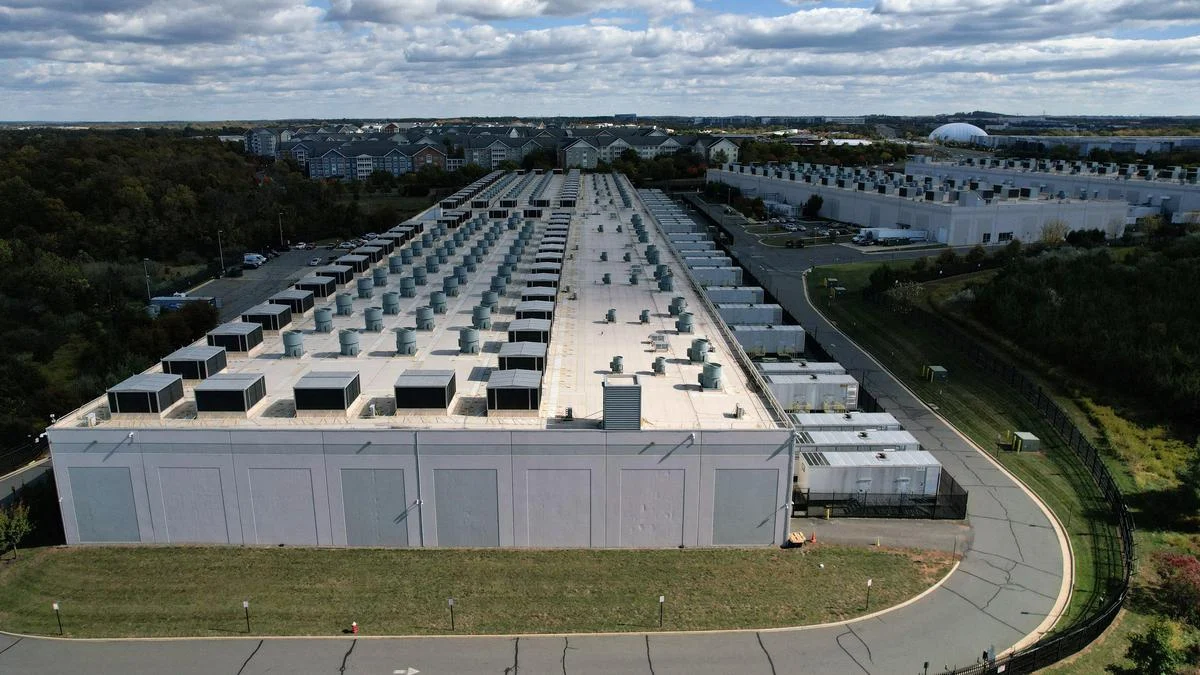
To meet these demands, tech giants embarked on an aggressive global expansion of their data center portfolios. These facilities, the literal engines of the internet and AI, require immense amounts of electricity for their servers, networking equipment, and, crucially, their elaborate cooling systems. Regions across North America, Europe, and Asia have witnessed a proliferation of new data center construction, often requiring significant land, water, and energy resources. The training of large language models (LLMs) alone consumes prodigious amounts of energy, with estimates suggesting that a single advanced model can consume as much electricity as several homes for a year during its training phase. Beyond training, the continuous inference and processing of data for AI services also contribute to an "always-on" energy drain that scales with user adoption.
2024-2025: The Year of Record Jumps
The consequences of this rapid expansion became undeniably clear with the release of the companies’ latest environmental reports. These documents, intended to showcase sustainability efforts, instead highlighted significant backslides in overall carbon reduction.
Google, in its 2026 Environmental Report (covering data up to 2025), disclosed a substantial increase in its Greenhouse Gas Protocol-aligned emissions. The company’s total carbon equivalent (CO2e) emissions soared from 15.93 million tonnes in 2024 to 18.84 million tonnes in 2025 – an increase of more than 18%. Delving deeper, Google’s direct emissions (Scope 1), primarily from its expanding data center portfolio and associated fuel use for backup generators, saw a worrying 20% jump. While market-based Scope 2 emissions (from purchased electricity) reportedly fell slightly, this minor reduction was overshadowed by a significant rise in Scope 3 emissions, driven by the manufacturing and logistics of technical infrastructure hardware, as well as data center construction itself. This 2024-2025 spike is part of a broader, more troubling trend, with Google’s total emissions skyrocketing by over 80% since 2019, underscoring a consistent upward trajectory.
E-commerce and cloud computing behemoth Amazon also reported a considerable increase in its carbon footprint. Its 2025 Sustainability Report indicated that absolute emissions grew by 16% from 2024 to 2025, reaching a staggering 80.85 million tonnes of CO2e. Like Google, Amazon’s growth isn’t a recent anomaly; its emissions have surged by more than 50% since 2019, reflecting the relentless expansion of its e-commerce logistics network and its Amazon Web Services (AWS) cloud infrastructure, which hosts countless AI applications.
Microsoft, a key player in the AI race with its significant investment in OpenAI and Azure AI services, reported the most dramatic year-on-year increase among the three. The software giant’s total emissions climbed by 25%, rising from 16 million tonnes of CO2e in 2024 to 20 million tonnes in 2025. This substantial leap directly correlates with its aggressive expansion of data center infrastructure to support its cloud and AI ambitions.
Emerging Concerns Beyond Carbon: The Meta Example
While the focus remains largely on carbon emissions, the environmental impact of Big Tech’s infrastructure expansion extends beyond atmospheric pollutants. Social media giant Meta, while yet to release its latest emissions data, provides a cautionary tale of localized ecological disruption. In Wyoming, U.S. officials have linked the presence of Cupriavidus gilardii, a type of bacteria, to discharge from a Meta data center currently under construction. This incident highlights concerns about water quality, chemical runoff, and the broader ecological footprint of these massive industrial complexes, which consume vast amounts of water for cooling and can generate various forms of localized pollution. Such events underscore that the environmental costs are multifaceted, impacting not just global climate systems but also local ecosystems and communities.
Deconstructing Emissions: Supporting Data and Reporting Nuances
Understanding the full scope of Big Tech’s environmental impact requires a grasp of how corporate emissions are categorized and reported. The Greenhouse Gas Protocol provides the global standard, dividing emissions into three distinct categories: Scope 1, Scope 2, and Scope 3. However, the way companies interpret and present these figures can sometimes obscure the larger environmental narrative.
The Greenhouse Gas Protocol: A Framework for Accountability (and Ambiguity)
The Greenhouse Gas Protocol (GHGP) is an internationally recognized accounting standard that helps companies and organizations measure and manage their GHG emissions. Its three scopes are:
- Scope 1: Direct Emissions. These are emissions that a company directly owns or controls. For tech companies, this primarily includes emissions from fuel combustion in company-owned vehicles (e.g., Google’s autonomous cars, Amazon’s delivery vans), and critically, on-site fossil fuel combustion for backup generators at data centers. As data centers expand and prioritize uninterrupted service, the reliance on large diesel generators increases, leading directly to higher Scope 1 emissions. Google’s 20% increase in Scope 1 emissions is a direct testament to this, indicating a greater operational footprint from its owned infrastructure.
- Scope 2: Indirect Emissions from Purchased Energy. These are emissions from the generation of purchased electricity, heating, steam, and cooling consumed by the company. For Big Tech, this is overwhelmingly the electricity consumed by their vast data centers and corporate offices. Scope 2 emissions can be reported in two ways:
- Location-based: Reflects the average emissions intensity of the grids where electricity consumption occurs. This provides a realistic picture of the actual impact on local grids.
- Market-based: Reflects emissions from electricity that companies have purposefully chosen (e.g., through renewable energy certificates or power purchase agreements). Companies often prefer market-based reporting as it allows them to claim reductions by purchasing renewable energy credits (RECs), even if the physical electricity powering their data centers still comes from a fossil-fuel-heavy grid. While Google reported a slight fall in market-based Scope 2, this doesn’t necessarily mean less demand on fossil fuels; it could indicate more aggressive REC purchasing.
- Scope 3: All Other Indirect Emissions in the Value Chain. This is the broadest and often largest category, encompassing emissions from activities not directly owned or controlled by the company but occurring in its value chain. This includes everything from the manufacturing of products and components, upstream transportation and distribution, business travel, employee commuting, waste generated in operations, and even the end-of-life treatment of sold products.
A common critique of corporate environmental reporting is the tendency for firms to "play up minor reductions" in Scope 1 or Scope 2, while simultaneously downplaying or simply not emphasizing the much larger, and often growing, Scope 3 emissions. This can create a misleading narrative of progress, even as total emissions rise. For instance, a company might highlight a slight reduction in its direct vehicle fleet emissions (Scope 1) while overlooking a massive increase in the carbon footprint associated with constructing new data centers (Scope 3).
The Dominance of Scope 3: An Untamed Beast
For tech giants, Scope 3 emissions typically constitute the lion’s share of their overall carbon footprint, often exceeding 70-80% of total emissions. This makes Scope 3 an "untamed beast" – incredibly challenging to control and reduce through direct corporate policy changes, as it involves thousands of external suppliers, partners, and customer behaviors.
The specific drivers of surging Scope 3 for Big Tech in the AI era are manifold:
- Technical Infrastructure Hardware Manufacturing: The production of advanced semiconductors (GPUs, AI accelerators), servers, networking equipment, and cooling systems is incredibly energy-intensive. The demand for specialized AI hardware has skyrocketed, leading to increased manufacturing emissions from chip foundries and electronics assembly plants worldwide.
- Logistics and Supply Chain: Transporting these heavy and complex components from manufacturing sites to data center construction zones across the globe generates significant emissions. This includes shipping, air freight, and ground transportation.
- Data Center Construction: The physical construction of new data centers is a carbon-intensive endeavor. It involves the production of vast quantities of concrete, steel, and other building materials, as well as the use of heavy machinery and construction vehicles, all contributing to Scope 3 emissions. Google explicitly attributed its Scope 3 increase to "technical infrastructure hardware manufacturing, their logistics, and data centre construction."
- Employee Commutes and Business Travel: While often a smaller component, a growing workforce also contributes to Scope 3.
- Customer Use of Products and Services: The energy consumed by users accessing AI services, running applications on cloud platforms, and using company-branded devices also falls under Scope 3, though this is notoriously difficult to quantify and influence.
Amazon’s report starkly illustrates the Scope 3 challenge: "Our supply chain emissions account for 76% of our carbon footprint, and these emissions increased 20% compared to 2024." This massive segment of their emissions portfolio is driven by the sheer scale of their global logistics and AWS infrastructure build-out.
The Data Center as a Carbon Factory
At the heart of Big Tech’s escalating emissions lies the modern data center, which has rapidly evolved into a true "carbon factory" in the age of AI. These facilities are designed for immense computational power and resilience, characteristics that inherently demand vast energy consumption.
- Processing Power for AI: AI workloads, especially deep learning and machine learning, are extraordinarily compute-intensive. They rely heavily on Graphics Processing Units (GPUs) and specialized AI accelerators, which consume significantly more power than traditional CPUs. The increasing density of these high-power components within server racks multiplies the energy demand exponentially.
- Cooling Systems: Generating so much computational power inevitably produces vast amounts of heat. Efficient cooling is critical to prevent hardware failure and maintain optimal performance. Data centers employ sophisticated cooling systems, often involving massive HVAC units, chillers, and sometimes even advanced liquid cooling technologies. These cooling systems themselves are enormous consumers of electricity, frequently accounting for 30-40% or more of a data center’s total energy budget. This makes cooling a major contributor to both Scope 1 (if using on-site fuel) and Scope 2 emissions.
- Backup Power: To ensure uninterrupted service, data centers are equipped with robust backup power systems, primarily large diesel generators. While intended for emergencies, these generators are regularly tested and can be deployed during grid outages, contributing to Scope 1 emissions through fuel combustion.
- Physical Scale: The sheer physical footprint of new hyperscale data centers is immense. These facilities are industrial complexes, often spanning hundreds of thousands or even millions of square feet, housing hundreds of thousands of servers. Their construction and continuous operation exert significant pressure on local energy grids and resources.
Official Responses and Corporate Defenses
In the face of these escalating figures, Big Tech companies have offered explanations and outlined their mitigation strategies, often attempting to contextualize the increases within their broader sustainability ambitions. However, a common thread among their responses is an acknowledgment of growth driven by AI, coupled with claims that their existing efforts have prevented an even worse outcome.
Google’s Acknowledgment and Mitigation Claims
Google, one of the leading forces in AI development, has been relatively upfront about the challenges posed by its rapid growth. In its report, the company stated, "We recognize that our climate impact has been growing alongside the unprecedented growth of AI, and we’re actively working to minimize this impact." This statement attempts to frame the emissions increase as an inevitable byproduct of innovation rather than a failure of commitment.

Google further defended its numbers by claiming that "without its decarbonisation interventions, the company’s 2025 ambition-based carbon footprint might have been five times larger." These "interventions" typically include:
- Renewable Energy Procurement: Google has been a pioneer in purchasing renewable energy, aiming for 24/7 carbon-free energy for its operations by 2030. This involves direct Power Purchase Agreements (PPAs) with renewable energy projects and the purchase of Renewable Energy Certificates (RECs).
- Data Center Efficiency: Google invests heavily in optimizing the energy efficiency of its data centers through advanced cooling techniques, server virtualization, and AI-driven workload management.
- Sustainable Supply Chains: Efforts to work with suppliers to reduce embedded emissions in hardware manufacturing.
However, critics argue that while these interventions are laudable, they are currently being outpaced by the sheer scale of new demand. The 20% increase in Scope 1 emissions, directly tied to data center operations and fuel use, indicates that even with efficiency measures, the physical expansion is having a direct, measurable impact. The rise in Scope 3 highlights the difficulty in offsetting the carbon footprint of building and equipping these vast facilities.
Amazon’s Scale and Supply Chain Focus
Amazon’s narrative centers on its unparalleled scale and the immense customer demand it faces, particularly for its cloud services (AWS) that power a vast array of digital and AI applications. The company explicitly stated that "in view of customer demands, it added more data centre capacity globally in 2025 than any other company." This statement implicitly positions its emissions growth as a necessary consequence of meeting market needs.
Given that Scope 3 emissions account for a dominant 76% of its carbon footprint, Amazon’s mitigation strategy heavily emphasizes its supply chain. The company reported that these specific emissions increased by 20% compared to 2024. Amazon states it is "working with its partners to help them reduce these levels" and that the company is "also transitioning to electric vehicle fleets across its markets" for its e-commerce operations.
While transitioning to EVs addresses a component of Scope 1 and 3, the sheer volume of goods moved and the constant construction of new fulfillment centers and data centers make comprehensive Scope 3 reduction an enormous undertaking. Amazon’s continued reliance on renewable energy purchases (primarily through RECs) aims to offset its Scope 2 footprint, but the absolute growth in its operational scale often dwarfs these offsetting efforts in terms of total carbon output.
Microsoft’s Transparency and Reporting Shift
Microsoft confirmed its substantial 25% increase in total emissions, attributing it primarily to the "expansion of its data centre infrastructure" – a clear nod to its Azure cloud and AI ambitions. However, Microsoft’s response included a notable detail that hints at a more rigorous approach to emissions accounting: the company "also pointed out that it had paused its use of non-additional, unbundled renewable energy certificates."
This is a significant distinction. "Non-additional, unbundled RECs" are credits purchased from existing renewable energy projects that do not necessarily lead to the development of new clean energy capacity. By pausing their use, Microsoft is signaling a shift towards procuring renewable energy that is "additional" – meaning it directly contributes to new renewable energy projects – or through more direct, verifiable mechanisms like PPAs. While this move might temporarily make their reported Scope 2 emissions appear higher (as fewer easy offsets are being claimed), it reflects a more transparent and arguably more impactful approach to decarbonization. It suggests that the reported 25% increase might be a more accurate reflection of their true grid impact, making the overall surge even more stark.
Like its peers, Microsoft also defended its figures by stating that "without their existing measures and interventions, their carbon emissions in 2025 would have been far higher than what they actually were." These measures include investments in renewable energy, energy efficiency in data centers, and innovative carbon removal technologies.
The Collective Narrative: Growth vs. Greenwashing Concerns
Collectively, the responses from Google, Amazon, and Microsoft reveal a shared narrative: they acknowledge the growth in emissions, attribute it to the imperative of the AI race, and claim robust mitigation efforts are preventing an even worse scenario. They highlight efficiency gains, renewable energy procurement, and supply chain engagement.
However, a critical question lingers: Are these efforts truly sufficient, or do they serve, in part, as sophisticated forms of "greenwashing" – attempts to deflect attention from the core problem of unsustainable growth? The consistent rise in total emissions, despite significant investments in green initiatives, suggests that the pace of expansion is currently outstripping the pace of decarbonization. This tension between the demands of shareholders for AI leadership and the pressing need for environmental responsibility creates a profound dilemma for these companies, raising concerns about the authenticity and ambition of their long-term climate commitments.
Broader Implications and The Road Ahead
The latest environmental reports from Big Tech are more than just a collection of numbers; they are a stark reflection of the profound environmental challenges posed by the current trajectory of technological innovation, particularly the AI race. The implications ripple across environmental policy, community relations, and the very definition of sustainable progress.
Eroding Environmental Pledges and Public Trust
For years, Big Tech companies have positioned themselves as leaders in sustainability, making ambitious pledges for carbon neutrality, net-zero emissions, and 100% renewable energy use. Annual environmental reports, often adorned with inspiring images of "beautiful landscapes, flowing rivers, and blue skies," served to reinforce this image. However, the recent data reveals a troubling disconnect: while the rhetoric of sustainability persists, the reality of "noxious" environmental impact, driven by a huge energy bill, is undeniable.
These reports threaten to erode public trust in corporate environmental commitments. When companies consistently fail to meet their stated goals or show significant increases in total emissions despite "interventions," it raises questions about the sincerity and effectiveness of their sustainability strategies. This erosion of trust can have far-reaching consequences, making it harder to galvanize collective action on climate change and potentially influencing consumer and investor decisions. The "unquestionable rise" in pollution, with AI as a major catalyst, forces a re-evaluation of the true cost of digital progress.
Community Backlash and Localized Impact
The rapid expansion of data centers is not just an abstract global warming issue; it has tangible, often negative, impacts on local communities. This has already begun to "galvanize community movements that want to keep AI data centers out of their localities," turning data center siting into a significant campaign issue, particularly in the U.S.
Local concerns typically revolve around several critical issues:
- Water Scarcity: Data centers use vast amounts of water for evaporative cooling, especially in warmer climates. In drought-prone regions, this places immense strain on local water supplies, diverting a precious resource from agriculture, residential use, and natural ecosystems. The image of a tech giant consuming millions of gallons of water while local communities face restrictions can be a potent source of opposition.
- Noise Pollution: The constant hum of thousands of servers, cooling fans, and backup generators can be a significant source of noise pollution for nearby residents, disrupting quality of life.
- Land Use and Aesthetics: Hyperscale data centers are enormous industrial buildings that consume large tracts of land, often in rural or semi-rural areas. Their imposing physical presence can alter local landscapes and be seen as an unwelcome industrialization of community spaces.
- Strain on Local Grids: The massive electricity demand of new data centers can overwhelm existing local power grids, requiring significant upgrades and potentially leading to higher energy costs for residents. In some cases, it can even delay a region’s transition to clean energy by necessitating continued reliance on fossil fuel plants to meet the sudden surge in demand.
- Localized Pollution: As seen with Meta’s Wyoming data center and the Cupriavidus gilardii bacteria, discharge from these facilities, even if treated, can introduce novel contaminants into local waterways, posing risks to ecosystems and public health.
These localized impacts transform the abstract concept of carbon emissions into immediate, lived experiences for affected communities, fueling organized resistance against further data center development.
The Policy Vacuum and Regulatory Challenges
A significant underlying factor contributing to Big Tech’s escalating emissions is the prevailing policy vacuum and regulatory environment, particularly in key markets like the U.S. The expectation that "Big Tech companies will largely be allowed to self-regulate – or, continue as they see fit" stems from a combination of factors:
- Rapid Technological Pace: The speed of AI development often outstrips the ability of legislative bodies to craft timely and effective regulations.
- Lobbying Power: Tech giants wield considerable lobbying power, influencing policy discussions and potentially resisting stringent environmental regulations that could impede their growth.
- Political Will: The political climate plays a crucial role. Under administrations like that of former President Donald Trump, environmental protection has often been de-prioritized in favor of economic growth, creating an environment where corporate self-regulation is the default. Even under more environmentally conscious administrations, the political appetite to impose strict limits on a sector seen as a driver of innovation can be limited.
- Difficulty in Regulating Scope 3: Given the global and distributed nature of supply chains, effectively regulating Scope 3 emissions presents a monumental challenge for any single government.
However, the escalating environmental costs are likely to increase pressure for regulatory intervention. Potential policy measures could include:
- Mandatory Emissions Caps and Reporting Standards: Requiring companies to adhere to strict emissions limits and standardize reporting (e.g., mandating location-based Scope 2 data).
- Incentives for Truly Green Energy: Shifting from mere REC purchases to incentivizing direct investment in new, additionality-focused renewable energy projects.
- Water Usage Regulations: Imposing limits or requiring advanced water recycling technologies for data centers, especially in water-stressed regions.
- Zoning and Permitting Restrictions: Local and regional governments could implement stricter zoning laws and environmental impact assessments for new data center constructions.
- Carbon Taxes or Emissions Trading Schemes: Implementing economic mechanisms that directly price carbon emissions, making polluting more expensive.
The Paradox of Digital Progress
Ultimately, these reports expose a profound paradox at the heart of the digital revolution: the very technologies that promise to solve some of humanity’s greatest challenges, including climate change (through AI-driven efficiency or climate modeling), are currently deepening the environmental crisis through their foundational infrastructure. AI, while offering immense potential for progress in various fields, is proving to be an unprecedented energy glutton, consuming resources at a rate that current decarbonization efforts cannot match.
The question is no longer if AI has an environmental cost, but how humanity can reconcile the pursuit of advanced intelligence with the urgent need for planetary sustainability. This will require not just incremental efficiency gains but potentially a paradigm shift in how AI is developed, deployed, and powered. It demands innovation not only in powerful AI algorithms but also in energy-efficient hardware, sustainable data center design, and a global energy infrastructure that can truly support this digital expansion without compromising the planet. The reports from Google, Amazon, and Microsoft serve as a critical wake-up call, underscoring the urgent need for greater transparency, accountability, and robust external oversight to ensure that the future of AI is truly sustainable. The stakes are too high to allow unchecked growth to define our technological progress.
