Atlanta, USA – July 16, 2026 – In a breathtaking display of resilience and dramatic flair, defending champions Argentina carved out a sensational 2-1 victory over England in the FIFA World Cup 2026 semi-final, securing their coveted spot in the tournament’s grand finale. A stoppage-time header from substitute Lautaro Martínez, orchestrated by the evergreen Lionel Messi, shattered English dreams and propelled the Albiceleste into a title clash against Spain. The pulsating encounter at Mercedes-Benz Stadium in Atlanta will undoubtedly be etched into World Cup folklore, a testament to Argentina’s unyielding spirit and England’s valiant, yet ultimately heartbreaking, effort.
The dramatic conclusion, which saw Argentina snatch victory from the jaws of extra time, has set the stage for an epic showdown at MetLife Stadium in New Jersey. Lionel Scaloni’s men, aiming for a historic back-to-back World Cup triumph, demonstrated the steel and tactical acumen expected of champions, battling back from a second-half deficit to keep their dream alive. For England, led by manager Thomas Tuchel, it was a cruel end to a campaign that had promised so much, leaving a nation to ponder what might have been.
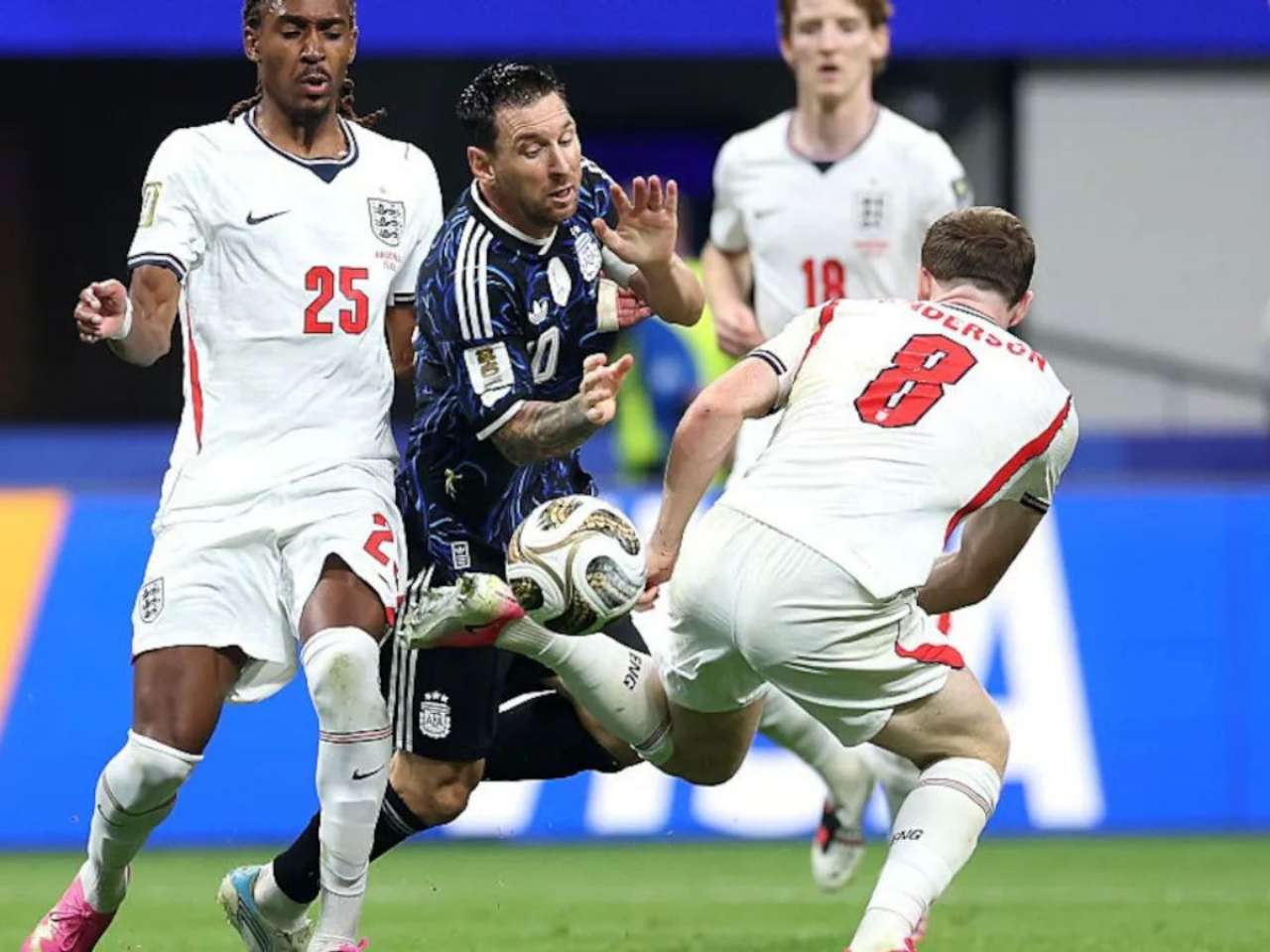
A Clash of Titans in Atlanta: Pre-Match Expectations
The anticipation leading into this semi-final was palpable, a cauldron of historical rivalry, current form, and national aspirations. Argentina, arriving in Atlanta as the reigning world champions, carried the immense pressure of defending their title. Their journey through the tournament had been marked by moments of brilliance and flashes of vulnerability, but always underpinned by the genius of Lionel Messi, who, even in his twilight years, remained the gravitational centre of their attack. His presence alone elevated every match to an event, and the prospect of him guiding his nation to another final was a narrative football fans globally yearned for.
England, under the astute guidance of Thomas Tuchel, had built a formidable squad, blending youthful exuberance with seasoned experience. Their path to the semi-finals had been impressive, characterized by structural solidity, tactical discipline, and moments of individual brilliance from players like Anthony Gordon, Morgan Rogers, and a stoic defensive line marshalled by John Stones and a commanding Jordan Pickford in goal. A nation starved of major international honours since 1966 harboured genuine belief that this young, dynamic England side could finally break the curse. The historical rivalry between the two nations, often simmering with geopolitical undertones and iconic past encounters (Maradona’s ‘Hand of God’ and solo goal in ’86, Beckham’s redemption penalty in ’02), added another layer of intensity to an already high-stakes fixture. The neutral venue of Atlanta, a city buzzing with World Cup fever, provided a magnificent backdrop for what promised to be a titanic struggle. Experts predicted a tactical battle, with Argentina’s fluid attacking play pitted against England’s disciplined defensive structure and counter-attacking prowess.
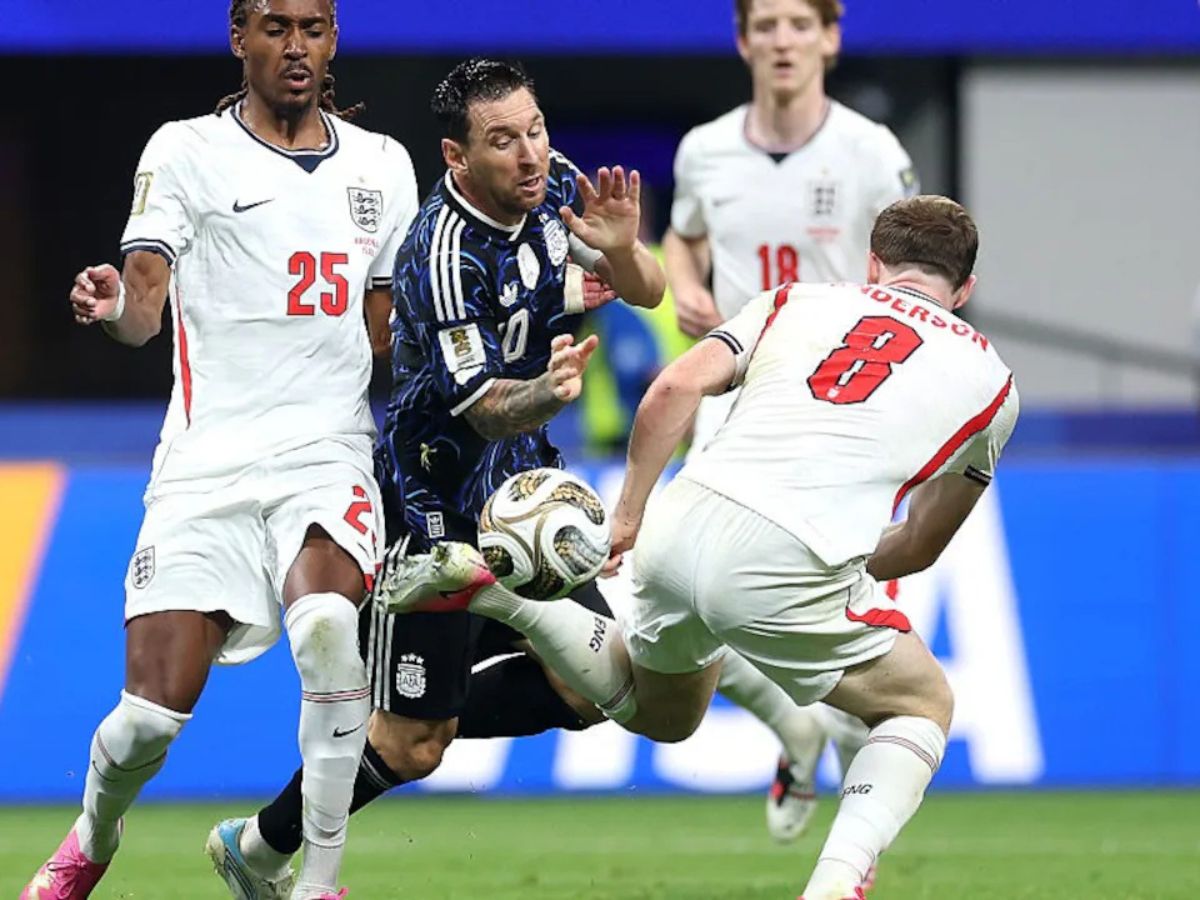)
First Half: A Tactical Chess Match and Rising Tensions
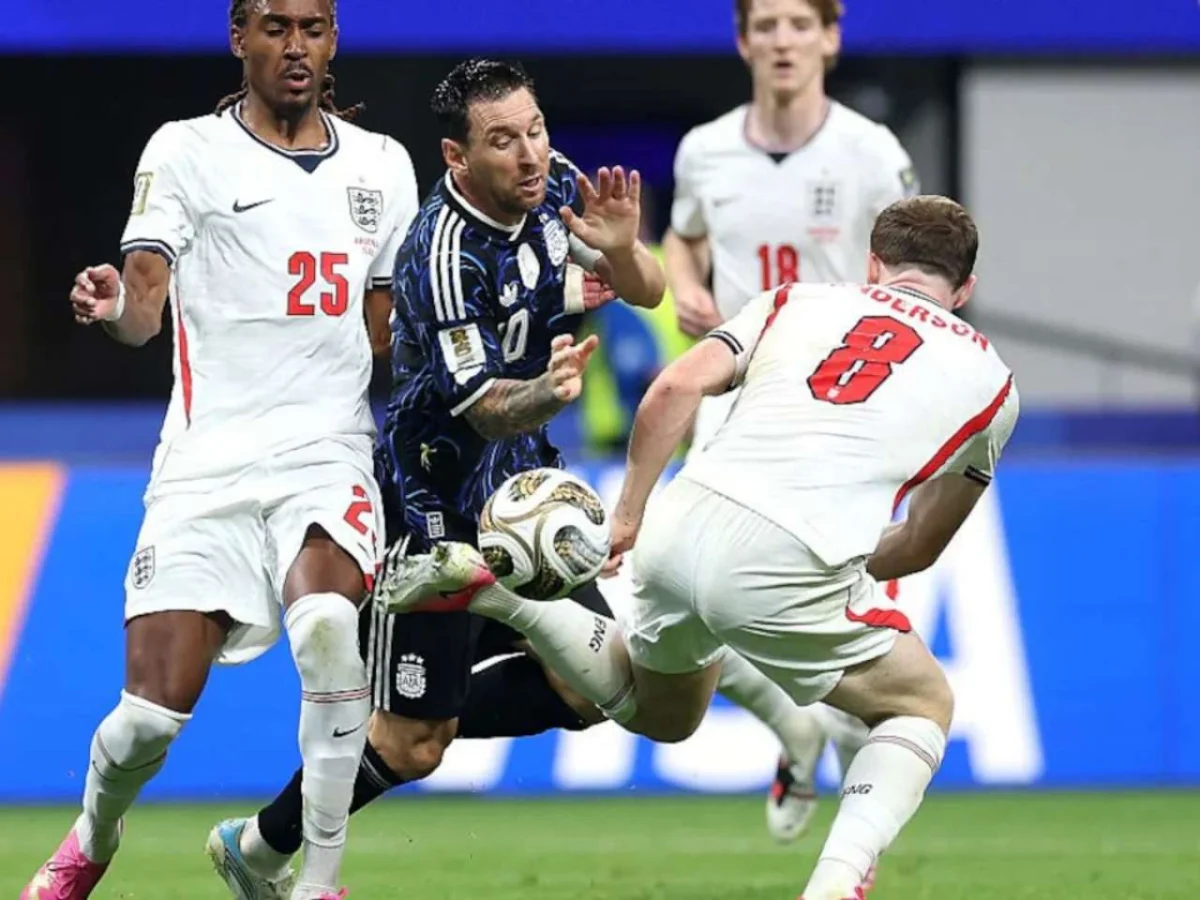
From the whistle, the match lived up to its billing as a fiercely contested semi-final. The opening 45 minutes were a tense, scrappy affair, devoid of free-flowing football but rich in tactical intrigue and physical battles. Both sides appeared cautious, prioritizing defensive solidity and midfield dominance over early attacking forays. The midfield, as anticipated, quickly became a war zone. Argentina’s classic physical approach, spearheaded by the tireless Enzo Fernández and the aggressive Lisandro Martínez, met England’s robust central pairing. Hard tackles flew in from both sides, with the referee’s whistle frequently interrupting play.
The intensity led to early yellow cards, setting a precedent for a match played on the edge. England’s dynamic midfielder Elliot Anderson was cautioned for a late challenge, quickly followed by Argentina’s Lisandro Martínez, whose uncompromising style earned him an early booking. These early cards served as a warning, yet neither side relented in their desire to win the midfield tussle. Possession statistics were relatively even, reflecting the equilibrium of the contest, but neither team managed to settle into a comfortable rhythm.

Chances were scarce, a testament to the defensive discipline of both outfits. England attempted to probe Argentina’s flanks, with Morgan Rogers showing flashes of creativity, but the final ball often lacked precision. John Stones, venturing forward for a set-piece, had a half-chance with a header at the far post, but couldn’t direct it on target. At the other end, Enzo Fernández tried his luck from distance, unleashing a powerful strike that whistled wide of Jordan Pickford’s goal, a rare moment of offensive ambition from the Albiceleste. Emiliano Martínez, Argentina’s formidable goalkeeper, was largely untroubled in the first half, reflecting England’s inability to penetrate their final third. The half-time whistle brought a collective sigh of relief from the players, allowing them a moment to regroup and strategize after a physically and mentally draining opening period. The score remained locked at 0-0, a fair reflection of a half dominated by caution and an unwillingness to commit fully forward.
England Breaks the Deadlock: Gordon’s Clinical Finish
The second half brought with it a palpable shift in tempo and ambition. The tactical shackles seemed to loosen, and both teams emerged with a renewed urgency, recognizing that a breakthrough was needed to avoid the lottery of extra time. It was England who capitalized first, injecting a surge of belief into their ranks and sending the English contingent in the stadium into raptures.
)
In the 55th minute, the deadlock was finally broken by a moment of genuine quality. Morgan Rogers, who had been a persistent threat on the right wing throughout the match, delivered a perfect, whipped cross into the Argentine penalty area. The delivery was inch-perfect, curling past the defenders and finding Anthony Gordon. The English forward, displaying superb anticipation and movement, had cleverly slipped away from his marker, Nahuel Molina, creating just enough space for himself. With a single, decisive touch, Gordon guided the ball past a helpless Emiliano Martínez, who had no chance of saving the clinical finish. The roar from the English supporters was deafening, a mixture of relief, joy, and burgeoning hope. It was a goal that encapsulated England’s tactical approach: disciplined build-up, incisive wing play, and a ruthless finish.
Argentina, momentarily stunned, reacted with a surge of aggression. Scaloni immediately urged his players forward, demanding a response. The Albiceleste began to push higher, increasing the pressure on England’s defense. However, England, buoyed by their lead, demonstrated remarkable resilience and defensive organization. A crucial moment arrived shortly after the goal when Giuliano Simeone, introduced to add fresh impetus, looked poised to pounce on a loose ball in the box, threatening an immediate equalizer. But Djed Spence, displaying incredible speed and commitment, came seemingly out of nowhere with a perfectly timed sliding tackle, thwarting Simeone’s effort and earning a thunderous ovation from his teammates.
)
Recognizing the shift in momentum and the increased attacking threat from Argentina, Thomas Tuchel made a decisive tactical move. He swapped goal-scorer Anthony Gordon for Ezri Konsa, shoring up his defensive line into a five-man back unit. This tactical adjustment aimed to absorb Argentina’s pressure, stifle their creative players, and protect the precious lead. For a significant period, it appeared to be working. Jordan Pickford, England’s number one, played out of his skin, delivering a performance of the highest calibre. He made a series of crucial saves, denying Argentina time and again. His full-stretch stop against Nico González’s powerful header, which seemed destined for the back of the net, stood out as a moment of pure brilliance, drawing gasps from both sets of fans. With every passing minute, England’s belief grew stronger, and the prospect of reaching the final seemed increasingly tangible.
Argentina’s Late Surge: Fernández Equalizes
As the clock ticked relentlessly towards the 90th minute, the narrative of the match began to shift once more. England, having held firm for so long, started to show signs of fatigue, and the defensive five-man line began to retreat deeper and deeper into their own half. This passive approach, while understandable given the stakes, invited relentless pressure from an increasingly desperate Argentina. Lionel Scaloni, sensing the vulnerability, pushed his entire squad forward, throwing caution to the wind. Defenders joined the attack, midfielders surged into advanced positions, and Messi began to pull the strings with renewed urgency.
)
The wave of Albiceleste attacks became almost incessant. Crosses rained into the box, shots were blocked, and clearances were hurried. The atmosphere inside the stadium was electric, a cacophony of Argentine cheers and English anxieties. The pressure, sustained and suffocating, finally told. With just five minutes remaining in regular time, a moment of individual brilliance broke England’s resolve and reignited Argentina’s hopes.
Enzo Fernández, who had tirelessly battled in midfield all game, found a sliver of space outside the penalty box. Receiving the ball under pressure, he took a quick touch to set himself before unleashing a swerving, venomous shot. The strike was pure, dipping and curling with incredible power, leaving Jordan Pickford with little chance. The ball flew past the outstretched fingers of the English goalkeeper and nestled into the back of the net. The stadium erupted in a deafening roar of blue and white. Suddenly, everything was even. The score was 1-1, and the momentum had swung decisively back in Argentina’s favour. The equalizer was a dagger to the heart of English hopes and a massive boost to Argentina’s belief that they could still win it in regular time.
)
Messi Magic and Lautaro’s Heroics: Stoppage-Time Drama
With the score tied at 1-1 and the clock showing 89 minutes, the prospect of extra time loomed large. Both sets of fans braced themselves for an additional 30 minutes of excruciating tension. However, the script for this semi-final had one more, utterly dramatic, twist, and it involved the man who has so often defied expectations: Lionel Messi.
As the match entered stoppage time, the Albiceleste pushed forward with a final, desperate surge. England, reeling from the equalizer, struggled to regain composure, their defensive shape momentarily compromised. Two minutes into the added time, a moment of pure genius from Messi unlocked England’s defense. Receiving the ball on the right flank, Messi, with his characteristic close control and unparalleled vision, lifted his head and saw Lautaro Martínez making a run towards the back post. With a flick of his left boot, Messi hung a cross of exquisite precision, a delicate arc that sailed over the heads of the English defenders and landed perfectly in the path of the incoming substitute.
)
Lautaro Martínez, who had only recently been introduced from the bench, displayed impeccable timing and aerial prowess. Rising above every English defender, he met Messi’s cross with a powerful, downward header. The ball arrowed past the despairing dive of Jordan Pickford, slamming into the net and sending the Argentine bench, players, and fans into an absolute frenzy. The eruption of joy from the Albiceleste faithful was deafening, a release of pent-up emotion and disbelief.
In stark contrast, England collapsed. Players fell to their knees, faces etched with despair and disbelief. The final whistle blew moments later, confirming Argentina’s astonishing 2-1 victory. It was a victory snatched from the jaws of a potential extra-time battle, a testament to their unwavering belief and the enduring magic of their captain. The scenes at the final whistle were a stark juxtaposition: unbridled Argentine celebration and profound English heartbreak. Argentina had done it again, securing their place in the 2026 FIFA World Cup final, where they would face Spain, one last challenge before they could defend their world title.
)
Post-Match Reactions: Elation and Heartbreak
The immediate aftermath of such a dramatic encounter always provides a stark contrast of emotions, and the Mercedes-Benz Stadium was a vivid theatre of elation and despair.
Scaloni Hails Resilience, Messi Reflects on Legacy
Lionel Scaloni, Argentina’s pragmatic yet passionate manager, was visibly emotional in his post-match press conference. "This team… this team never gives up," he stated, his voice thick with pride. "We knew it would be difficult, England are a fantastic side, very well organized. But we kept pushing, we kept believing. Even when we were down, the belief in our dressing room is immense. This is the spirit of Argentina. To come back like this, in a semi-final, against such a strong opponent, it shows the character of these players. We are tired, but we are ready for one more dance."
)
Lionel Messi, mobbed by reporters, spoke with a serene smile. "It was a very tough match, as we expected," he admitted. "England made it very difficult for us. But we fought until the very end. That’s what champions do. My pass to Lautaro… I just saw the space, and he made a fantastic run. It’s a dream to be in another final, especially after everything we’ve been through. We know Spain will be incredibly tough, but we will prepare, and we will give everything for our people, for our country, for this shirt."
Lautaro Martínez, the hero of the hour, was almost speechless. "It’s an incredible feeling," he gushed, barely able to contain his excitement. "To score a goal like that, in a World Cup semi-final, it’s what you dream of as a child. And with a pass from Leo… it doesn’t get any better. The whole team fought so hard. This is for all of Argentina!"
)
Tuchel’s Disappointment and England’s Future
On the other side, Thomas Tuchel faced the press with a dignified but clearly pained expression. "It’s a devastating feeling," he conceded, his voice low. "The players gave absolutely everything. They executed our plan, they fought, they led for a long time. To lose it like that, in stoppage time, it’s incredibly cruel. Football can be brutal sometimes. We defended bravely, Jordan [Pickford] was magnificent, but a moment of magic from Messi and a clinical finish… that’s why they are champions. We are heartbroken, but I am immensely proud of this team. We are young, we have learned a huge amount, and we will come back stronger. This is not the end of our journey, it’s a painful, but important, step."
Anthony Gordon, who had given England the lead, reflected on the bittersweet experience. "To score in a World Cup semi-final is a dream come true, but it means nothing when you lose," he said, his eyes still red. "We were so close. You could feel it. The stadium was rocking. We fought, we ran, we tackled. But Argentina found a way. Credit to them. It’s a tough pill to swallow, but we have to learn from this and use it to fuel us for the future."
)
The English fans, a sea of white and red, departed the stadium in stunned silence, their hopes dashed in the most dramatic fashion imaginable. Yet, amidst the disappointment, there was also a recognition of the team’s effort and the bright future that, despite this heartbreak, still beckoned for a talented young squad.
The Road Ahead: Argentina vs. Spain in the Final
With their dramatic victory, Argentina now marches on to the grandest stage in football: the FIFA World Cup 2026 final at MetLife Stadium in New Jersey. Standing between them and a historic consecutive World Cup title is a formidable opponent: Spain. The Spanish national team, renowned for their intricate passing, technical prowess, and tactical intelligence, will present a different, yet equally challenging, proposition.
)
Argentina’s quest for back-to-back titles adds immense pressure and historical significance to the final. Only a handful of nations have achieved this feat, and to do so with Lionel Messi leading the charge in what is likely his final World Cup appearance would cement his legendary status even further. The narrative of Messi potentially lifting the trophy twice as captain is a storyline that captivates the world.
The final promises to be a clash of footballing philosophies: Argentina’s blend of individual brilliance, physical tenacity, and unwavering belief against Spain’s tiki-taka mastery and disciplined collective. It will be a tactical battle, a test of nerves, and a showcase of the world’s finest talents, all vying for the ultimate prize in international football. The world will be watching, anticipating another spectacle worthy of a World Cup final.
)
An Enduring Rivalry and World Cup Lore
This semi-final between Argentina and England will undoubtedly be remembered as one of the most thrilling and emotionally charged matches in recent World Cup history. It adds another compelling chapter to an already storied rivalry between two footballing giants. The ebb and flow of the game, the tactical shifts, the individual heroics, and the sheer, unadulterated drama of a stoppage-time winner encapsulate everything that makes the FIFA World Cup the planet’s most beloved sporting event.
For Argentina, it was a victory forged in resilience and belief, a testament to their championship pedigree. For England, it was a bitter lesson in the fine margins of elite football, a painful reminder that glory can be snatched away in an instant. But beyond the joy and the sorrow, the match served as a powerful reminder of the enduring power of sport to unite and divide, to create heroes and villains, and to leave an indelible mark on the hearts of millions. As the world now turns its attention to the final, the echoes of Atlanta’s dramatic semi-final will resonate, contributing to the rich tapestry of World Cup lore for generations to come.