

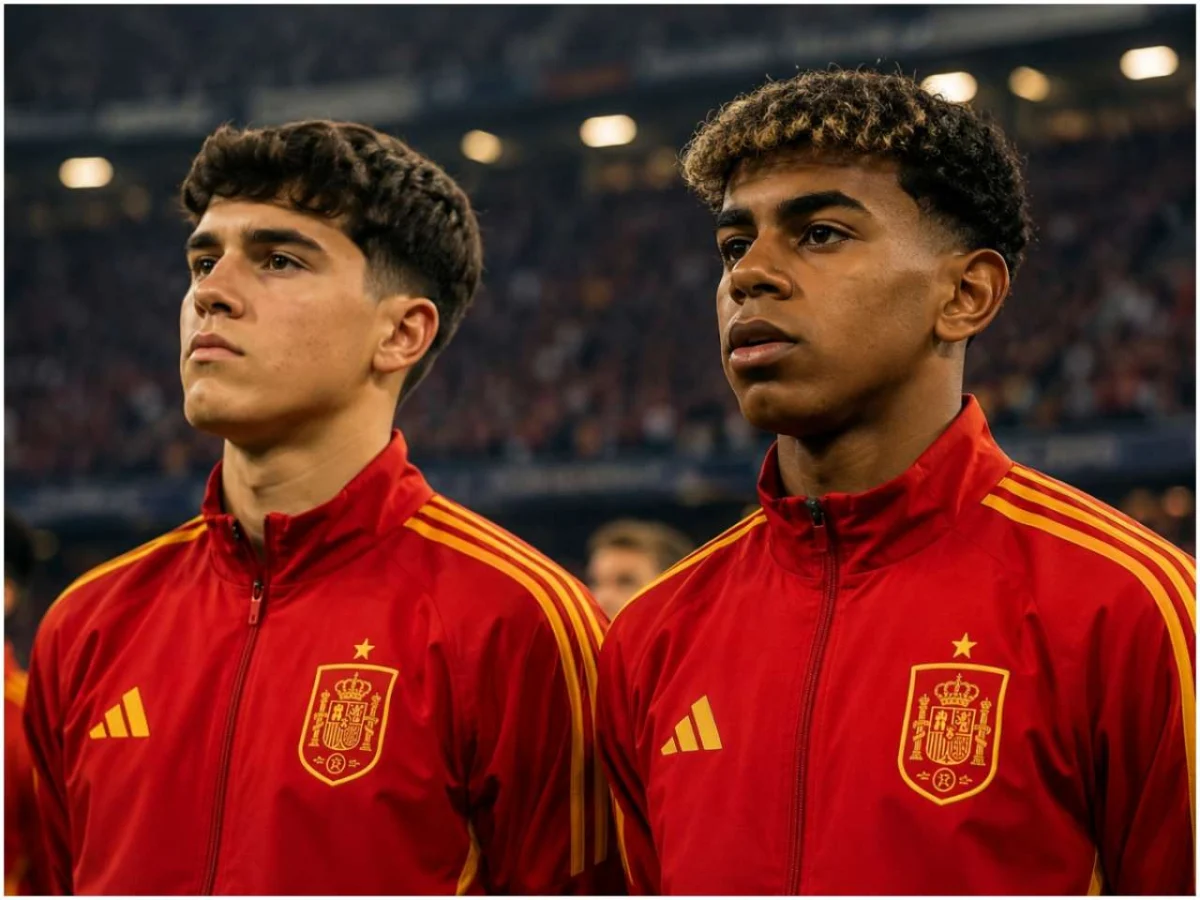
New York, New Jersey – July 15, 2026 – Spain has not only secured a coveted spot in the FIFA World Cup 2026 Final but has also etched its name into the annals of football history, even before the first whistle of their gripping semi-final clash against reigning European champions France. In a bold and unprecedented move, manager Luis de la Fuente named two prodigious teenagers, Lamine Yamal and Pau Cubarsi, in his starting XI, marking the first time any nation has fielded two players under the age of 20 in a World Cup semi-final. This historic decision underscored Spain’s faith in its burgeoning talent and paid dividends as La Roja delivered a composed 2-0 victory over Les Bleus, setting up a tantalizing final showdown.
The remarkable achievement was swiftly acknowledged by FIFA itself, which posted on its official X handle: "Spain are the first team to start a @FIFAWorldCup semi-final with two teenagers." This statement not only validated the unique record but also amplified the buzz surrounding Spain’s youthful revolution, signaling a potentially new era for international football. The triumph over France, a team laden with stars and recent tournament pedigree, was a testament to Spain’s tactical discipline, attacking flair, and the fearless integration of its next generation.
The Historic Semifinal: Spain’s Youthful Vanguard Conquers France
The build-up to the FIFA World Cup 2026 semi-final between Spain and France was charged with anticipation. Both nations arrived at this crucial juncture having navigated challenging paths through the tournament, showcasing moments of brilliance and resilience. Spain, under Luis de la Fuente, had impressed with their fluid, possession-based football, blended with a newfound directness and defensive solidity. France, guided by Didier Deschamps, relied on their formidable attacking power, spearheaded by Kylian Mbappe, and a robust midfield. The clash was billed as a strategic battle between Spain’s technical artistry and France’s athletic prowess.
Pre-Match Atmosphere and Line-up Revelation
)
Hours before kick-off at the iconic New York New Jersey Stadium, the atmosphere was electric. Thousands of fans, a sea of red and blue, converged, their chants echoing through the concourses. Speculation swirled around the starting lineups, particularly for Spain, where manager de la Fuente had shown a penchant for calculated risks throughout the tournament. However, few predicted the audacious decision to start both 19-year-old Lamine Yamal and 19-year-old Pau Cubarsi.
The official team sheet, when released, sent ripples across social media and punditry desks. Yamal, already a sensation for Barcelona and the national team, starting in a wide attacking role, was expected by many. But Cubarsi, the composed center-back, also from Barcelona, earning a starting berth in such a high-stakes encounter, was a significant statement of intent. It signified de la Fuente’s unwavering belief in their talent, temperament, and ability to perform under immense pressure. This was not just a selection; it was a philosophical declaration about the future of Spanish football.

First Half: Tactical Chess and a Crucial Breakthrough
From the opening whistle, the match unfolded as a tense tactical battle. Spain, as expected, sought to control possession, with their midfield maestros orchestrating play and looking to exploit the flanks through Yamal and Nico Williams. France, meanwhile, adopted a slightly more cautious approach, aiming to absorb pressure and unleash their rapid counter-attacks, often targeting Mbappe’s searing pace.
)
The early exchanges were tight, with both teams probing for weaknesses. Spain’s patient build-up met France’s disciplined defensive block. Cubarsi, despite his tender age, demonstrated remarkable composure at the heart of the Spanish defense, making timely interceptions and distributing the ball with intelligence. Yamal, on the other hand, was a constant menace on the right wing, his dazzling dribbling and quick changes of direction forcing French full-back Theo Hernandez to tread carefully.
The deadlock was broken in the 34th minute. A brilliant piece of intricate passing from Spain saw the ball fed into the box, where Spanish attacker Mikel Oyarzabal was brought down by a clumsy challenge from French defender Dayot Upamecano. The referee, after a brief consultation with VAR, pointed to the spot. Oyarzabal, a picture of calm amidst the cacophony, stepped up and clinically dispatched the penalty into the bottom corner, sending the goalkeeper the wrong way. The stadium erupted, and Spain took a crucial 1-0 lead into halftime, their youthful daring paying off.
)
Second Half: French Push and Spanish Resilience
The second half saw France emerge with renewed urgency, knowing they needed an equalizer. Deschamps introduced fresh legs, bringing on attacking midfielders to increase their creative impetus. Mbappe, who had been relatively subdued in the first half due to Spain’s tight marking, began to find more space and unleash a few dangerous runs. However, the Spanish defense, marshaled by the experienced Aymeric Laporte and the remarkably mature Cubarsi, held firm. Goalkeeper Unai Simon also made a couple of vital saves to deny France.
)
As France committed more players forward, gaps inevitably appeared in their defense. Spain, ever opportunistic, looked to exploit these spaces on the counter. In the 67th minute, Spain sealed their victory. A swift counter-attack saw the ball worked to right-back Pedro Porro, who had ventured forward. Porro, with a powerful and accurate shot from the edge of the box, found the back of the net, leaving the French goalkeeper with no chance. The 2-0 lead sent the Spanish contingent into delirium and effectively ended France’s hopes of reaching the final.
The remaining minutes saw France desperately trying to salvage something, but Spain expertly managed the game, maintaining possession and denying Les Bleus any clear-cut opportunities. The final whistle was met with jubilant Spanish celebrations, marking their qualification for the FIFA World Cup 2026 Final and a historic night for Spanish football.
)
Supporting Data: The Rise of a New Generation
Spain’s decision to start Lamine Yamal and Pau Cubarsi in a World Cup semi-final is not merely a statistical anomaly; it is a profound statement about the country’s footballing philosophy and the exceptional talent emerging from its renowned youth academies, particularly La Masia at FC Barcelona.
Lamine Yamal: The Electrifying Winger
Born in July 2007, Lamine Yamal has been shattering records since his professional debut. His inclusion in the semi-final starting XI further cemented his status as one of football’s most exciting prospects. Yamal holds records for being Barcelona’s youngest-ever debutant, the youngest player to score in La Liga, the youngest player to appear and score for the Spanish national team, and the youngest player to feature in both the UEFA Champions League and a major international tournament like the Euros. His game is characterized by blistering pace, mesmerizing dribbling skills, an uncanny ability to beat defenders, and a maturity in decision-making that belies his age. Playing on the right wing, he stretches defenses, creates space, and poses a constant goal threat, making him a cornerstone of Spain’s attacking strategy.
)
Pau Cubarsi: The Composed Defender
Also born in January 2007, Pau Cubarsi’s ascent has been equally meteoric. A center-back known for his exceptional ball-playing ability, tactical intelligence, and calm demeanor, Cubarsi has drawn comparisons to some of Spain’s legendary defenders. His ability to read the game, make crucial interceptions, and initiate attacks from the back makes him an ideal fit for Spain’s possession-based system. His composure under pressure in such a high-stakes match was particularly striking, highlighting his mental fortitude alongside his technical prowess. His partnership with the more experienced Laporte provided a perfect blend of youth and experience, forming a formidable barrier against the French attack.
The Record’s Significance in Historical Context
Starting two teenagers in a World Cup semi-final is unprecedented for a reason. Historically, World Cup knockout stages, especially semi-finals, are moments where experience is highly valued. Managers typically rely on seasoned veterans who have been through such high-pressure situations. While teenagers have played in World Cups before (e.g., Pelé in 1958, Michael Owen in 1998, Kylian Mbappe in 2018), it is exceptionally rare for two to start together in a semi-final. This record underscores Spain’s unique commitment to youth development and their willingness to trust talent over traditional age hierarchies. It reflects a tactical shift where raw ability and a specific skill set are prioritized, especially when they align with the team’s overall philosophy. This bold move could inspire other nations to fast-track their young talents onto the biggest stages.
)
Spain’s Enduring Youth Policy
The success of Yamal and Cubarsi is not an isolated incident but rather a continuation of Spain’s long-standing commitment to youth development. The influence of academies like La Masia, Real Madrid’s La Fábrica, and others across Spain has consistently produced world-class talent. This latest generation, embodied by Yamal and Cubarsi, seems to represent a resurgence of the technical brilliance and tactical intelligence that defined Spain’s golden era between 2008 and 2012. Their inclusion in the national team is a testament to the rigorous training, emphasis on technical skills, and exposure to high-level competition from a young age that Spanish football prides itself on.
Official Responses: Acclaim and Reflection
The historic achievement and the semi-final victory elicited a wave of reactions from official bodies, coaches, and players, all underscoring the significance of the moment.
)
FIFA’s Acknowledgment
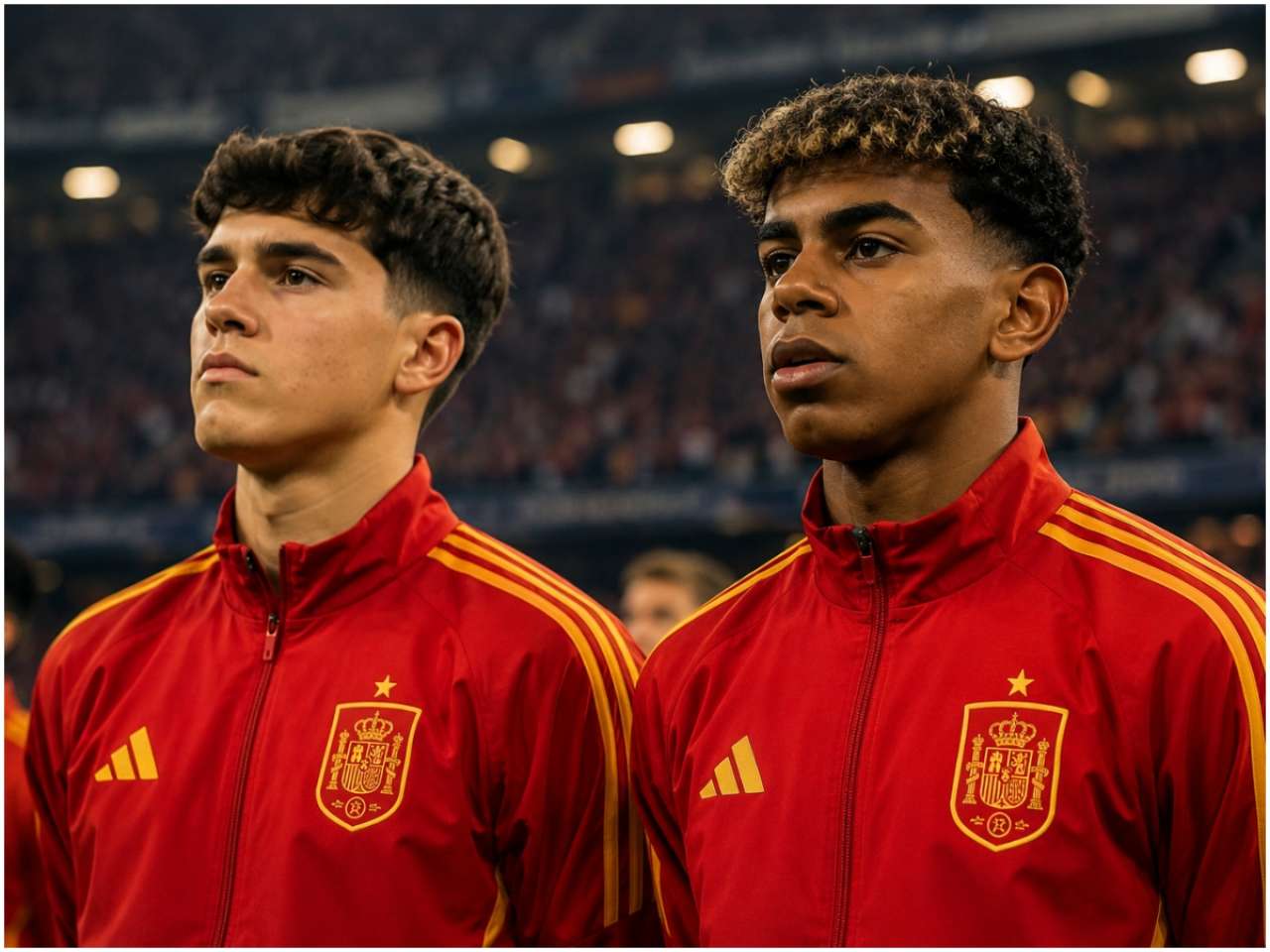
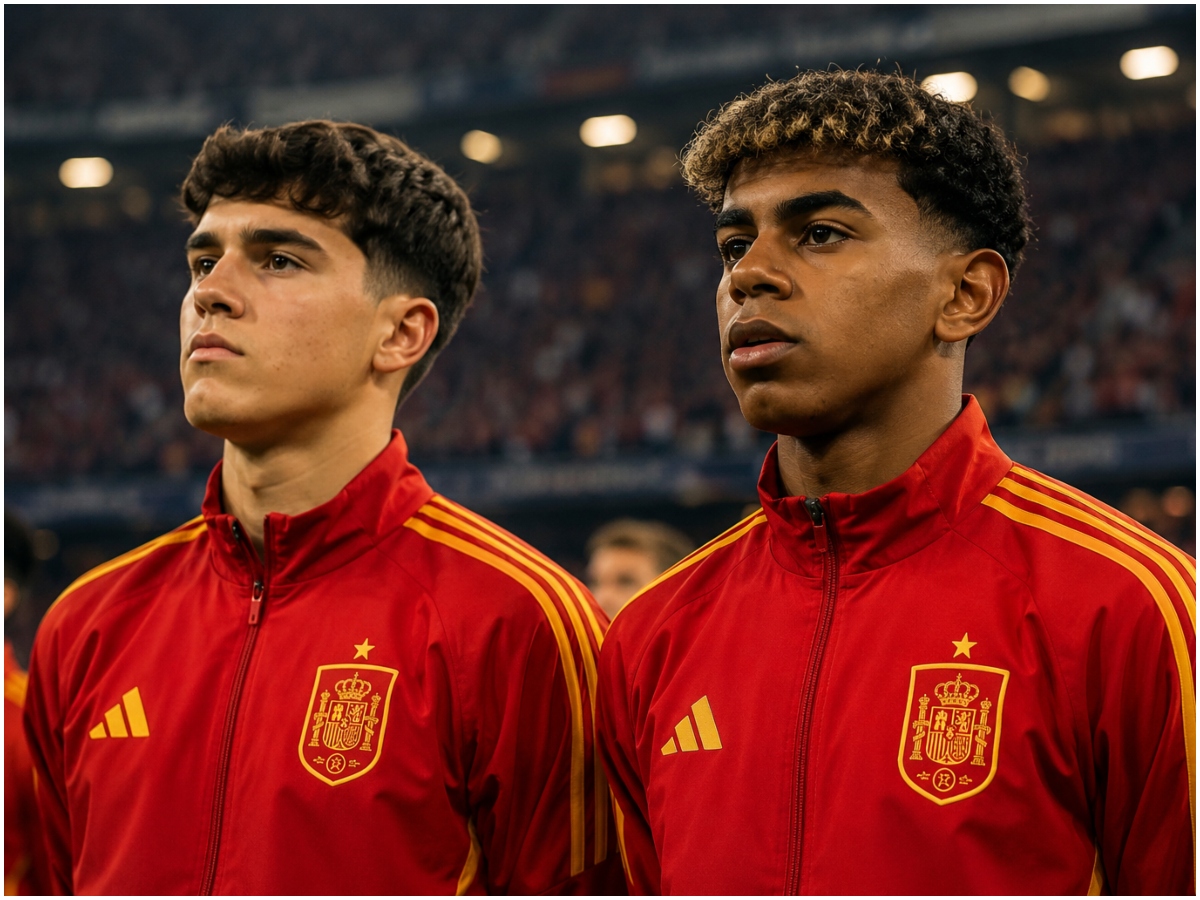
FIFA’s official recognition of the record on its X handle immediately gave global prominence to Spain’s feat. "Spain are the first team to start a @FIFAWorldCup semi-final with two teenagers," the post read, accompanied by an image of Yamal and Cubarsi. This endorsement from football’s governing body not only validated the unique statistical achievement but also served as a nod to the exciting future of the sport, where young talent is increasingly making its mark on the grandest stages.
Luis de la Fuente’s Pride and Vision
Spain’s manager, Luis de la Fuente, visibly emotional yet composed in his post-match press conference, expressed immense pride in his team’s performance and the courage shown by his young players. "This team plays with heart, with passion, and with intelligence," de la Fuente stated. "To trust Lamine and Pau in such a crucial match was a decision based on their undeniable talent and their character. They are fearless, and they represent the future, but also the present, of Spanish football. This victory is for all of Spain, and it shows what can be achieved when you believe in your youth system." His remarks highlighted his philosophy of blending experience with the youthful exuberance that has become a hallmark of this Spanish squad.
)
Didier Deschamps’ Gracious Defeat
France coach Didier Deschamps, while understandably disappointed, was gracious in defeat. "Spain played an excellent match," Deschamps conceded. "They were very organized, very technical, and they took their chances well. We pushed, but we couldn’t find the breakthrough. Congratulations to them, and good luck in the final. We will learn from this and come back stronger." Deschamps also acknowledged the quality of Spain’s young talents, implicitly recognizing the impact of players like Yamal and Cubarsi on the game.
Players’ Reactions: Joy and Focus
The Spanish dressing room was a scene of jubilation. Goal-scorer Mikel Oyarzabal reflected on the team’s unity: "This is what we’ve worked for. To reach the World Cup final is a dream come true. The young lads were incredible; they played with such maturity. We are a family, and we fight for each other."
Lamine Yamal, though modest, beamed with pride. "It’s an unbelievable feeling. To play in a World Cup semi-final, and to win, is something I’ve dreamed of since I was a child. We have one more step, and we will give everything." Pau Cubarsi echoed similar sentiments, emphasizing the team’s collective effort and their focus on the upcoming final.
)
Implications: A Final Awaits and a Legacy Begins
Spain’s historic victory and qualification for the FIFA World Cup 2026 Final carries significant implications, not just for the immediate future of the tournament but also for the broader landscape of international football.
The Road to the Final
Spain now awaits the winner of the second semi-final between footballing giants England and Argentina. Both potential opponents present unique challenges. A clash against England would pit two technically proficient European teams against each other, likely leading to a tactical battle. An encounter with Argentina, potentially featuring Lionel Messi, would be a high-stakes affair, testing Spain’s defense against one of history’s greatest attackers. The final, scheduled for July 20 at the New York New Jersey Stadium, promises to be an epic conclusion to what has been a thrilling tournament. Spain will have a few days to recover, analyze their potential opponents, and fine-tune their strategy for the ultimate prize.
)
The Legacy of Yamal and Cubarsi
The decision to start Lamine Yamal and Pau Cubarsi in a World Cup semi-final, and their subsequent impactful performances, will undoubtedly cement their places in football history. This bold move by Luis de la Fuente not only propelled Spain to the final but also provided a blueprint for other nations considering integrating exceptionally talented youth into their senior squads. Their journey could inspire a new generation of players and redefine the conventional timeline for player development at the highest level. Should Spain go on to win the World Cup, their story will become an even more profound tale of youthful triumph.
The Golden Boot Race Heats Up
The semi-final also had implications for the coveted Golden Boot award. France’s Kylian Mbappe, currently leading the race, was unable to add to his tally against Spain. His closest rival, Lionel Messi, will now have the opportunity to potentially overtake him when Argentina faces England in the second semi-final on Wednesday. The individual battle between these two titans adds another layer of intrigue to the tournament’s climax, with the final potentially serving as a decider for this prestigious individual honor.
)
Impact on Club Football
The exceptional performances of Yamal and Cubarsi on the world stage will undoubtedly further elevate their profiles at their club, FC Barcelona. Their World Cup heroics will increase their market value and underscore Barcelona’s reputation as a cradle of talent. This will bring increased scrutiny and expectation but also immense pride and recognition for the club and its youth system.
A New Era for Spain?
This run to the final, spearheaded by a blend of experienced players and fearless youth, suggests that Spain might be on the cusp of a new golden era. The tactical flexibility, mental resilience, and sheer talent displayed throughout the tournament indicate a team capable of sustained success. The World Cup 2026 final will be a defining moment for this generation of Spanish footballers, offering them the chance to engrave their names alongside the legendary teams of the past.
)
How to Watch the FIFA World Cup 2026 Final in India
For football enthusiasts in India, the highly anticipated FIFA World Cup 2026 Final will be available for streaming across the ZEE5 app and website. Fans can ensure they don’t miss a moment of the historic clash by tuning into the platform.
As Spain prepares for its ultimate challenge, the footballing world watches with bated breath, eager to see if this youthful revolution can culminate in the ultimate glory – the FIFA World Cup trophy. Their journey has already been historic, and the final chapter promises to be nothing short of captivating.
