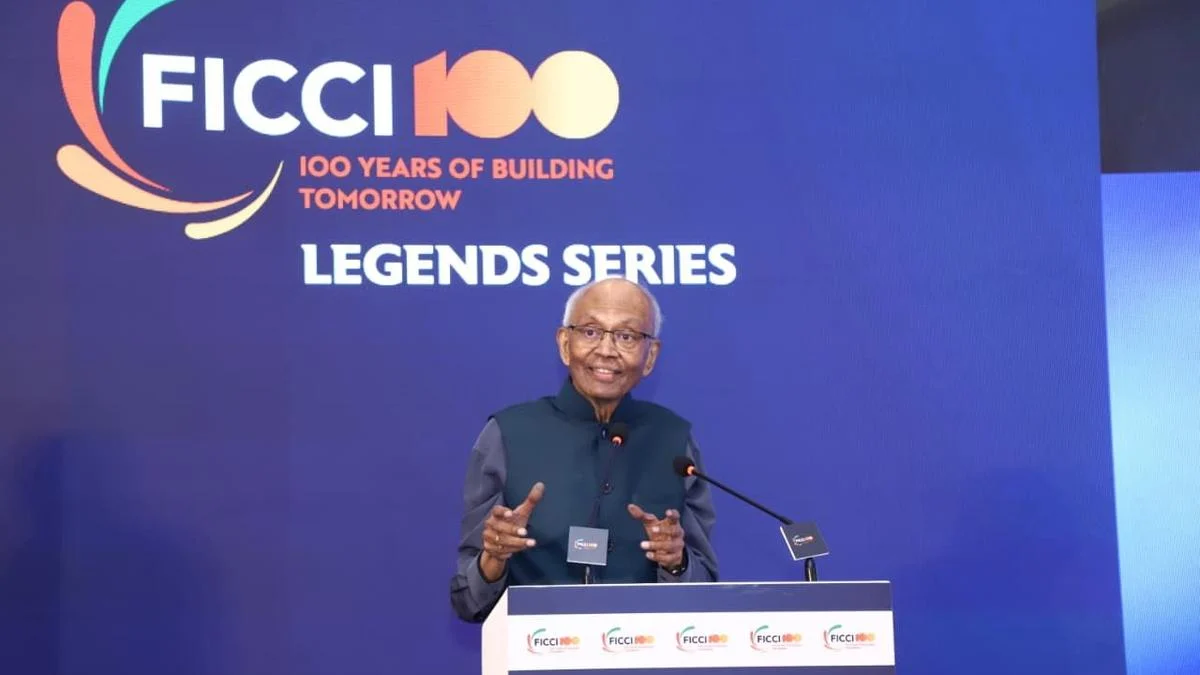
Mumbai, India – July 14, 2026 – India stands at a pivotal juncture, poised to redefine its global standing through a concerted embrace of deep-tech innovation, artificial intelligence (AI), and inclusive technologies. This was the resounding message delivered by Dr. Raghunath A. Mashelkar, a globally acclaimed scientist, Fellow of the Royal Society, and former Director General of the Council of Scientific and Industrial Research (CSIR), during his seminal address at the Federation Of Indian Chambers Of Commerce & Industry (FICCI) Legends Series. His lecture, titled “Winning Through Innovation: Lessons for Industry and Society,” underscored a transformative vision: for India to transition from a mere consumer of global technologies to a formidable creator of world-leading, affordable, and profoundly impactful solutions for millions.
The distinguished gathering, comprising industry leaders, policymakers, academics, and innovators, listened intently as Dr. Mashelkar articulated the core tenets of India’s innovation journey. He emphasized that the nation’s ascent to developed status hinges not merely on technological sophistication, but crucially on the creation of globally competitive solutions that prioritize accessibility and affordability over exclusivity. This paradigm shift, he argued, must be underpinned by deep science, strategic public-private collaboration, and a re-invigorated commitment to the Gandhian philosophy of "More for Less for More."
The Core Mandate: From Consumer to Creator
Dr. Mashelkar commenced his address by highlighting a critical evolutionary step required for India’s technological sovereignty and economic prosperity. For decades, India has adeptly adopted and adapted technologies developed elsewhere, a strategy that has served its initial growth phases. However, the next leap forward, he contended, demands a radical reorientation towards indigenous creation. "India must transition from being a consumer of global technologies to becoming a creator of world-leading innovations," he stated emphatically. This transition, he explained, necessitates a robust ecosystem where deep science research is nurtured, AI capabilities are leveraged strategically, and bold partnerships between the public and private sectors flourish.
The vision is clear: to foster an environment where Indian ingenuity not only solves domestic challenges but also offers scalable, sustainable solutions to global issues. This involves investing heavily in fundamental research, developing cutting-edge intellectual property, and cultivating a culture that celebrates risk-taking and disruptive thinking. The ambition is not merely to catch up with technologically advanced nations, but to carve out unique pathways, demonstrating how innovation can be both advanced and equitable.
Deep-Tech, AI, and Inclusive Technologies: Pillars of Progress
At the heart of Dr. Mashelkar’s vision lie three indispensable pillars: deep-tech innovation, artificial intelligence, and inclusive technologies.
Deep-Tech Innovation, he elaborated, refers to scientific and engineering breakthroughs that hold the potential to create entirely new industries or revolutionize existing ones. These are often complex, require significant upfront investment in research and development, and have long gestation periods, but offer immense long-term returns. Examples range from advanced materials and biotechnology to quantum computing and space technology. For India, deep-tech is not just about economic growth; it’s about strategic independence and global leadership in critical future domains. It implies moving beyond incremental improvements to foundational discoveries that can solve complex societal problems.
Artificial Intelligence (AI), Dr. Mashelkar stressed, is not merely a tool but a transformative force. Its applications span every sector, from healthcare diagnostics and precision agriculture to logistics and education. However, he cautioned against a passive adoption of AI. Instead, India must actively develop its own AI capabilities, tailored to its unique demographic and developmental needs. This involves fostering a skilled workforce, investing in AI research infrastructure, and creating ethical frameworks to guide its deployment. AI, when harnessed effectively, can significantly amplify human potential and accelerate problem-solving at an unprecedented scale.
Crucially, Dr. Mashelkar coupled these advanced technological aspirations with the concept of Inclusive Technologies. This pillar emphasizes that technological progress must not exacerbate societal inequalities but rather bridge them. Innovations must be designed with the "bottom of the pyramid" in mind, ensuring that their benefits reach the most vulnerable and underserved populations. This is where the Gandhian philosophy of "More for Less for More" finds its profound resonance – creating solutions that deliver superior performance ("More") with fewer resources ("Less") for a larger section of society ("More"). It challenges the conventional wisdom that high technology must necessarily be expensive or exclusive.
The Procurement Predicament: A Barrier to Indigenous Innovation
One of the most significant impediments to India’s innovation journey, according to Dr. Mashelkar, is its existing government procurement policy. He pointed out that this policy overwhelmingly favors the lowest bidder, often at the expense of quality, long-term value, and, critically, indigenous innovation. "India’s existing government procurement policy, which overwhelmingly favours the lowest bidder over innovation, has emerged as one of the biggest barriers to technological advancement and indigenous innovation," he asserted.
This "L1 (lowest bid) syndrome" stifles creativity and discourages domestic firms from investing in research and development. Why would a company pour resources into developing a cutting-edge, perhaps slightly more expensive, but vastly superior product if the government, a massive potential client, will invariably choose a cheaper, often imported, alternative? This policy inadvertently incentivizes mediocrity and dependence on foreign technologies, creating a disincentive for local innovators who aspire to produce world-class products. It perpetuates a cycle where innovation is seen as a luxury rather than a strategic necessity.
Shifting from Purchaser to Risk-Sharing Partner
To overcome this systemic hurdle, Dr. Mashelkar called for a fundamental re-evaluation and complete shift in India’s innovation ecosystem. He urged the government to transition from being merely a "purchaser of the cheapest products" to becoming a proactive "risk-sharing partner" in the innovation process. This paradigm shift would entail several crucial changes:
- Value-Based Procurement: Moving beyond price to consider the total cost of ownership, long-term benefits, performance, and the socio-economic impact of innovative solutions.
- Pre-Commercial Procurement: Government agencies could act as early adopters and testbeds for nascent Indian innovations, providing crucial initial market access and validation.
- Incentivizing R&D: Policies could be designed to reward companies that invest significantly in domestic R&D, offering preferential treatment or bonus points in bids for products developed in India.
- Strategic Partnerships: The government could co-invest in promising deep-tech startups and research initiatives, sharing the financial burden and the potential rewards, thereby de-risking innovation for the private sector.
- Setting Innovation Challenges: Instead of specifying products, the government could define problems and invite innovative solutions, fostering a competitive environment for groundbreaking ideas.
By embracing this role, the government can become a powerful catalyst, demonstrating confidence in Indian capabilities and creating a robust domestic market for high-quality, innovative products. This would not only stimulate economic growth but also build national self-reliance in critical technological domains.
The "More for Less for More" Philosophy: A Distinctly Indian Model
At the heart of Dr. Mashelkar’s discourse was the profound relevance of Mahatma Gandhi’s philosophy of "More for Less for More" in the context of modern innovation. He elucidated that India’s greatest opportunity lies in creating world-class products and technologies that deliver superior performance ("More") with fewer resources ("Less") while making them affordable and accessible to millions of people ("for More").
This philosophy challenges the conventional capitalist model, which often associates high quality and advanced features with premium pricing and exclusivity. Instead, it advocates for a model of frugal innovation or "Jugaad" innovation, elevated to a systematic, scientific, and scalable level. It’s about achieving "excellence, affordability, and inclusion" – three attributes once considered mutually exclusive – as the defining pillars of India’s innovation model.
- Excellence: Not compromising on quality or performance, but striving for world-class standards.
- Affordability: Ensuring that these excellent solutions are within reach of the common person, especially in a price-sensitive market like India.
- Inclusion: Designing technologies and services that address the needs of a diverse population, including those in rural areas or with limited access to resources.
This uniquely Indian approach, Dr. Mashelkar argued, can provide a powerful template for global sustainable development, demonstrating how technological progress can be aligned with social equity.

Demonstrating Breakthroughs Amidst Constraints
Dr. Mashelkar, himself a recipient of the prestigious Padma awards, underscored that India has repeatedly proven its capacity for breakthrough innovations even with limited resources. He cited numerous examples that embody the "More from Less for More" philosophy:
- AI-powered Tuberculosis (TB) Detection through Smartphones: Leveraging the ubiquitous smartphone camera and AI algorithms to provide rapid, affordable, and accessible TB diagnosis, particularly vital in remote areas where traditional diagnostic infrastructure is lacking. This dramatically reduces the cost and time of detection, improving public health outcomes.
- Affordable Breast Cancer Screening using Thermal Imaging: Moving away from expensive and often inaccessible mammography machines, this innovation uses non-invasive thermal imaging to detect early signs of breast cancer, making screening more comfortable, radiation-free, and affordable for a wider population.
- Digital Maternal Healthcare Platforms: Utilizing mobile technology and digital interfaces to provide expectant mothers with crucial health information, remote monitoring, and access to healthcare professionals, thereby reducing maternal and infant mortality rates, especially in rural settings.
- Non-Invasive Anaemia Detection Technologies: Developing devices that can accurately detect anaemia without the need for blood tests, offering a simple, painless, and cost-effective screening method that can be deployed widely in communities to address a pervasive public health challenge.
These examples illustrate that innovation in India is not merely about adapting existing technologies but about fundamentally reimagining solutions to fit local contexts and resource constraints, often resulting in globally relevant breakthroughs. They demonstrate a capacity to leapfrog traditional development paths by leveraging digital technologies and indigenous scientific acumen.
Beyond Best Practices: Charting "Next Practices"
Challenging Indian industry to elevate its ambition, Dr. Mashelkar urged a move beyond merely adopting global "best practices" to becoming a creator of "Next Practices." While learning from global leaders is essential, true leadership emerges when a nation innovates new methods, models, and technologies that others then aspire to emulate.
He pointed to several areas where India has already begun demonstrating this leadership:
- India’s Digital Transformation: The scale and speed of India’s digital public infrastructure (DPI) – including Aadhaar, UPI, and the Open Network for Digital Commerce (ONDC) – have created a unique digital economy model that is being studied and emulated worldwide. This "stack" approach has democratized access to financial services, identity, and commerce.
- Affordable Data Revolution: India’s telecommunications sector has driven down data costs to some of the lowest globally, making internet access pervasive and empowering millions. This has fueled digital literacy and the growth of online services.
- Deep-Tech Entrepreneurship: The burgeoning ecosystem of Indian deep-tech startups, particularly in sectors like space technology, advanced manufacturing, and biotechnology, is attracting global attention and investment. These companies are pushing the boundaries of scientific and engineering innovation.
- Green Hydrogen Initiatives: India’s ambitious National Green Hydrogen Mission aims to position the country as a global hub for green hydrogen production and export, demonstrating a commitment to sustainable energy solutions and leading in a critical future technology.
These initiatives showcase India’s potential to not just follow, but to set new global benchmarks for innovation, particularly in areas critical for sustainable development and digital inclusion.
AI as Co-Pilot, Never Autopilot: Ensuring Human-Centric Progress
As the world grapples with the rapid advancements of AI, Dr. Mashelkar offered a crucial guiding principle: "AI should serve as a co-pilot and never an autopilot." This powerful metaphor underscores the necessity of ensuring that human judgment, ethics, and compassion remain central to technological progress. While AI can augment human capabilities, automate mundane tasks, and process vast amounts of data, it must always operate under human oversight and direction.
This implies:
- Ethical AI Development: Prioritizing fairness, transparency, accountability, and privacy in the design and deployment of AI systems.
- Human-in-the-Loop: Ensuring that critical decisions, especially those with significant societal impact, retain human intervention and review.
- Skill Development: Focusing on upskilling the workforce to collaborate effectively with AI, rather than fearing job displacement.
- Preserving Human Values: Using AI to enhance human well-being, creativity, and connection, rather than allowing it to diminish them.
This human-centric approach to AI development is vital for building trust, mitigating risks, and ensuring that AI serves humanity’s best interests, rather than dictating them.
Industry’s Role: Beyond Growth, Towards Value Creation
Concluding the session, Rajvardhan V. Kanoria, Past President of FICCI and Chairman & Managing Director of Kanoria Chemicals & Industries Ltd., echoed Dr. Mashelkar’s sentiments, reinforcing the urgency of the innovation mandate for Indian industry. "Innovation is no longer confined to laboratories or research institutions. It is the defining force that will determine India’s economic competitiveness, technological leadership and inclusive growth in the decades ahead," Mr. Kanoria stated.
He further emphasized that the challenge before industry transcends mere growth. "The challenge before industry is not simply to grow bigger, but to create solutions that generate greater value while benefiting a much larger section of society," he highlighted. This perspective calls upon corporations to view innovation not just as a means to increase profits, but as a strategic imperative for societal impact. It encourages businesses to integrate social responsibility and inclusivity into their core innovation strategies, recognizing that long-term sustainable growth is inextricably linked to broad-based prosperity.
Implications for a Developed India
The insights from Dr. Mashelkar’s address carry profound implications for India’s journey towards becoming a developed nation.
Economic Implications: A successful transition to a creator economy, driven by deep-tech and AI, would lead to higher-value exports, reduced reliance on imported technologies, and the creation of high-skilled jobs. It would also foster a vibrant startup ecosystem, attracting significant domestic and foreign investment. The "More for Less for More" philosophy could unlock massive new markets both domestically and globally, particularly in developing economies, by offering high-quality, affordable solutions. This would enhance India’s economic resilience and global competitiveness.
Social Implications: Focusing on inclusive technologies means addressing fundamental challenges in healthcare, education, agriculture, and infrastructure for the masses. Innovations in these areas can significantly improve quality of life, reduce disparities, and empower marginalized communities. Affordable solutions in critical sectors like health and energy can elevate living standards for millions, contributing to human development indices and social stability. The "co-pilot" approach to AI ensures that technological advancement enhances human capabilities and decision-making, rather than displacing or devaluing them, leading to a more equitable distribution of benefits.
Global Leadership Implications: By pioneering "Next Practices" and demonstrating how advanced technology can be leveraged for inclusive growth, India can establish itself as a thought leader and a model for sustainable development, especially for other developing nations. Its unique approach to digital public infrastructure, frugal innovation, and ethical AI could become a blueprint for a more equitable and technologically advanced world order. This would significantly enhance India’s soft power and its influence on the global stage.
Policy and Governance Implications: The call for government to become a risk-sharing partner demands significant policy reforms in procurement, R&D funding, and regulatory frameworks. It necessitates a proactive and agile government that can adapt to rapid technological changes, foster collaboration between public and private sectors, and create an enabling environment for innovation to thrive. This also implies investing heavily in human capital development, ensuring a continuous supply of skilled talent for deep-tech and AI domains.
In essence, Dr. Mashelkar’s vision is a clarion call for India to harness its intellectual capital and entrepreneurial spirit to forge a future where technological prowess is inextricably linked with societal welfare. The path to a developed India, he illuminated, is paved with innovation that is not just advanced, but also affordable, accessible, and ultimately, deeply human-centric.