

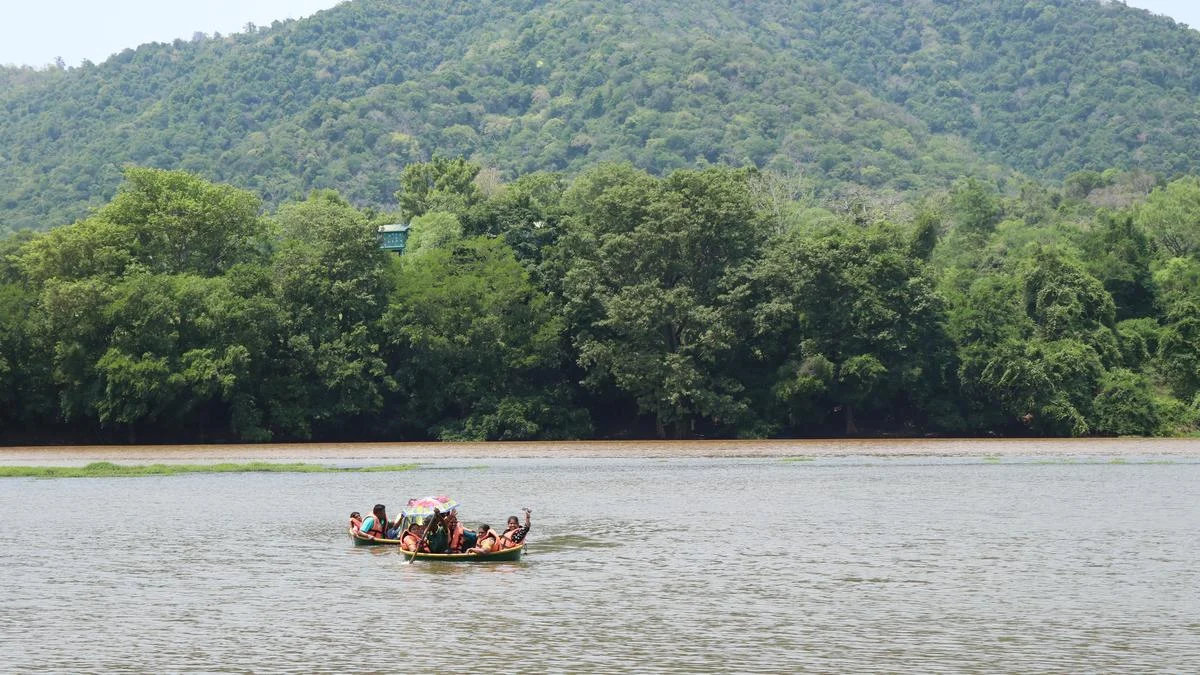
COIMBATORE, TAMIL NADU — As the morning sun pierces through the mist of the Karamadai Forest Range, the rhythmic splash of a wooden oar against the shimmering waters of the Bhavani River signals the start of another day at Baralikadu. Located approximately 70 kilometers from the bustling industrial hub of Coimbatore, this secluded eco-tourism destination has emerged as a beacon of hope for sustainable development. What began nearly two decades ago as a modest experiment by the Tamil Nadu Forest Department has blossomed into a multi-crore enterprise that balances the delicate scales of environmental preservation and tribal empowerment.

Main Facts: A Synergy of Nature and Livelihood
Baralikadu is not merely a weekend getaway; it is a sophisticated community-based conservation model. Situated at the foothills of the Nilgiris, the site serves as the catchment area for the Pilloor Dam, a critical lifeline providing drinking water to millions in Coimbatore. The project is managed by the Karamadai Forest Range in collaboration with the indigenous Irula community, who have inhabited these forests for generations.
The core of the Baralikadu experience revolves around "responsible immersion." For a regulated fee, visitors are treated to a 45-minute coracle ride across the Bhavani, a traditional tribal lunch prepared by local self-help groups, and cultural performances that offer a window into the ancestral heritage of the Irulas.

The success of the model is reflected in its numbers. Since its inception, the initiative has generated over ₹7.5 crores in revenue. More importantly, it has provided a steady source of income for over 100 tribal families across 20 different settlements. By transforming the forest’s traditional guardians into its primary stakeholders, the Forest Department has successfully mitigated local reliance on illegal timber felling and poaching, replacing them with a robust hospitality economy.
Chronology: From Necessity to Enterprise (2007–2024)
The evolution of Baralikadu from a remote tribal hamlet to a premier eco-tourism site is a story of administrative vision meeting indigenous skill.

- Pre-2007: The Era of Isolation: For the Irula people of Poochamarathur and surrounding hamlets, the river Bhavani was both a provider and a barrier. To reach the nearest road-connected villages, residents faced a grueling 20-kilometer trek through dense forest. The alternative was a 10-minute crossing via coracle—a traditional circular boat. At the time, the community survived on subsistence farming and daily wage labor, often struggling with seasonal unemployment.
- 2007: The Genesis: The concept was the brainchild of I. Anwardeen, then a forest official and currently the Principal Chief Conservator of Forests (Research and Education). Recognizing the natural beauty of the backwaters and the innate rowing skills of the local women and men, the Forest Department invested a seed capital of approximately ₹2 lakhs. The goal was simple: create an alternative income source to ensure the forest remained sustainable for future generations.
- 2010–2018: Scaling Up: As word of mouth spread, Baralikadu transitioned from a local secret to a state-wide attraction. The Forest Department introduced a structured booking system and partnered with the "Thamarai Self-Help Group" (SHG) to manage catering. Modern safety standards were implemented, including the transition from bamboo-and-hide coracles to more durable fiber-reinforced plastic (FRP) versions equipped with life jackets.
- 2019–Present: Digital Integration and Sustainability: Today, Baralikadu operates through a streamlined online portal (coimbatorewilderness.com). To prevent ecological degradation, the department introduced a strict cap of 250 visitors per day, primarily on weekends, ensuring the "carrying capacity" of the reserve forest is never exceeded.
Supporting Data: The Socio-Economic Impact
The impact of the Baralikadu project is measurable across three key pillars: economic upliftment, social empowerment, and environmental stability.
Economic Metrics:
The revenue generated by the project is not funneled into a general state fund but is instead recirculated into the local ecosystem.

- Livelihood: Families involved in the project, ranging from coracle operators to cooks and performers, earn between ₹25,000 and ₹30,000 per month during peak seasons—a figure significantly higher than the average rural wage in the region.
- Reinvestment: Revenue supports the maintenance of anti-poaching camps and provides funding for human-animal conflict mitigation measures, such as solar fencing for tribal farmlands.
Social Empowerment:
The project has fundamentally altered the social fabric of the Irula settlements. Thaiamma and Tamil Selvi, members of the Thamarai SHG, note that the initiative has provided tribal women with financial independence and the confidence to interact with a global audience. The "Poochamarathur Eco Stay," a community-run accommodation, allows visitors to stay overnight, further extending the economic benefits to the hamlet.
The Gastronomic Connection:
The food served at Baralikadu is a data point in itself for biodiversity. The menu features Ragi Kali (finger millet balls), spinach foraged from the forest, and dishes flavored with Kanthari (bird’s eye chillies) and wild sweet potatoes. By serving traditional fare, the community ensures the preservation of indigenous agricultural practices and provides a market for local forest produce.

Official Responses: The Philosophy of "Shared Custodianship"
Forest officials emphasize that Baralikadu is a conservation project disguised as a tourism venture.
Joseph Stalin, the Karamadai Forest Range Officer, underscores the importance of regulation. "The idea was never to maximize profit, but to maximize sustainability," Stalin explains. "We monitor plastic use rigorously. We prohibit the use of soaps or detergents in the river to protect the aquatic ecosystem. If we wanted the forests to remain for the next generation, we had to make the local people the primary beneficiaries of its protection."

I. Anwardeen, reflecting on the project’s origins, recalls the "effortless grace" with which tribal women rowed across the Bhavani during his initial inspections. "The landscape was breathtaking, but the human element was more compelling," he says. "We saw that the crossing was effortless for them, even with babies in their arms. By becoming partners with them, we didn’t just build a tourist spot; we built a model where the community guards the forest because the forest, in turn, provides for them."
The department also notes that the presence of tourism has led to infrastructure improvements that were long overdue. The project was the catalyst for bringing electricity to several remote settlements and ensuring that water from the Pilloor Dam, which once flowed past the hamlets to the city, was finally diverted to support local tribal agriculture.

Implications: A Blueprint for the Future of Indian Eco-Tourism
The "Baralikadu Model" carries significant implications for how India manages its protected areas in the face of rising domestic tourism.
- Mitigating Human-Wildlife Conflict: By providing a lucrative alternative to agriculture and cattle grazing in deep forest areas, the project reduces the frequency of human-animal encounters. When the community sees the forest as a source of "hospitality income," there is a natural incentive to protect the wildlife that tourists come to see, such as the elephants and leopards frequently spotted near the banks.
- Cultural Preservation: In many parts of India, tribal cultures are fading as younger generations migrate to cities. Baralikadu’s cultural troupe, which uses traditional instruments like the porai, thavilu, and pogal, provides a platform for the youth to reclaim their heritage. As Raja, a member of the cultural troupe, puts it: "Our songs are our history. By performing for visitors, we ensure our culture survives the next generation."
- Responsible Gen Z Engagement: The project has successfully tapped into the "Gen Z" and "Millennial" travel trend that favors "authentic" and "low-impact" experiences over luxury. Visitors like Anushka from Mumbai represent a new demographic of travelers who are willing to pay for the privilege of "dipping their hands into an open stream" and engaging in "silent tourism."
- Replicability: The success of Baralikadu has prompted the Tamil Nadu government to look at other forest ranges for similar community-led models. However, officials warn that the success depends on the "bottom-up" approach—where the community leads and the department facilitates—rather than a "top-down" commercial takeover.
As dusk settles over the Karamadai range and the last coracle is docked, the echoes of the porai drum linger in the air. Baralikadu stands as a testament to the fact that when indigenous wisdom is paired with progressive administration, the result is a landscape where both the people and the planet can thrive. For the traveler, it is a day of sun and water; for the Irulas, it is the reclamation of their rightful place as the heartbeat of the forest.
