

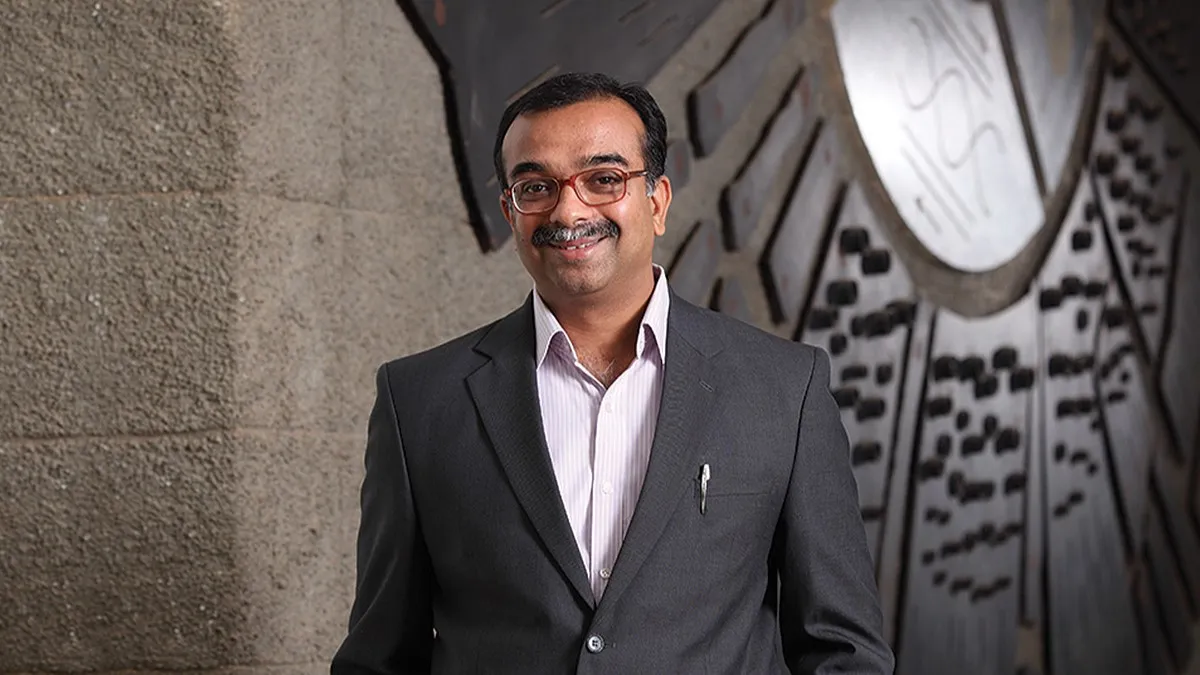
NEW DELHI — In a move that signals a strategic shift toward strengthening the nexus between fundamental research and industrial application, the Government of India has officially appointed Professor Umesh V. Waghmare as the Secretary of the Department of Science and Technology (DST). The appointment, cleared by the Appointments Committee of the Cabinet (ACC) on July 7, 2026, brings one of the nation’s most distinguished theoretical physicists to the helm of India’s primary scientific funding and policy-making body.
Professor Waghmare, a veteran academician known for his pioneering work in computational material science, assumes the mantle at a critical juncture for Indian science. He succeeds Professor Abhay Karandikar, who transitioned to a leadership role at NITI Aayog earlier this year. The interim period was managed by Dr. Rajesh Gokhale, Secretary of the Department of Biotechnology (DBT), who held the DST portfolio as an additional charge until Prof. Waghmare’s formal induction.
The Core Mandate: Main Facts of the Appointment
The Department of Science and Technology serves as the backbone of India’s scientific infrastructure, overseeing everything from grassroots innovation to multi-billion-dollar missions in Quantum Computing, Artificial Intelligence, and Semiconductor development. Prof. Waghmare’s appointment is seen as a move to bring rigorous, data-driven, and theoretical precision to the department’s administrative and strategic functions.
According to the official notification, Prof. Waghmare will serve as Secretary from the date of assuming charge until he reaches the age of 60. His primary responsibility will be to steer the "Anusandhan National Research Foundation" (ANRF) and ensure that India’s research output translates into tangible technological sovereignty.
His background is uniquely suited for this. Unlike traditional administrators, Waghmare is an "applied physicist" whose work lives at the intersection of pure theory and industrial utility. His appointment underscores a government philosophy that views basic science not as an isolated academic pursuit, but as the indispensable engine of the "Viksit Bharat" (Developed India) vision.
A Career Defined by Excellence: The Chronology of a Physicist
The trajectory of Professor Waghmare’s career offers a roadmap of academic rigor and international collaboration. His journey began at the prestigious Indian Institute of Technology (IIT) Bombay, where he earned a Bachelor of Technology in Engineering Physics in 1990. Even then, his potential was evident; he graduated with the Institute Silver Medal, a distinction reserved for the most elite performers in the cohort.

Seeking to deepen his understanding of the physical world, Waghmare moved to the United States for his doctoral studies. In 1996, he earned his PhD in Applied Physics from Yale University, a global hub for theoretical research. This was followed by a formative four-year period (1996–2000) as a postdoctoral researcher at Harvard University. During his time at Harvard, Waghmare worked at the cutting edge of condensed matter physics, developing the computational frameworks that would later define his career.
Returning to India, he joined the Jawaharlal Nehru Centre for Advanced Scientific Research (JNCASR) in Bengaluru. Over the decades, he rose through the ranks to become a Professor and eventually the President of the Theoretical Sciences Unit. JNCASR, an autonomous institution under the DST, has long been a crown jewel of Indian research, and Waghmare’s leadership there prepared him for the national stage.
Supporting Data: The Science of Computational Design
To understand why Prof. Waghmare was chosen for this role, one must look at the specific nature of his scientific contributions. He specializes in the computational design of materials, a field that uses the laws of physics to predict how new materials will behave before they are ever created in a lab.
Bridging the Length and Time Scales
One of the greatest challenges in physics is "scale." Atoms operate on a microscopic scale (angstroms), while industrial products operate on a macroscopic scale (meters). Traditionally, there was a gap in understanding how atomic vibrations and electron movements translated into the strength or conductivity of a solid block of metal or ceramic.
Prof. Waghmare’s research successfully bridged this gap. Using Quantum Mechanical Density Functional Theory (DFT) and statistical mechanics, he developed models that can predict material behavior across:
- Length: From a few atoms to hundreds of nanometers.
- Time: From a femtosecond (a millionth of a billionth of a second) to tens of nanoseconds.
This "first principles" approach means scientists do not need to rely on trial-and-error experimentation, which is costly and slow. Instead, they can use Prof. Waghmare’s equations to "see" the future of a material’s performance.

The Ferroelectric Breakthrough
The most significant "supporting data" for Waghmare’s impact lies in his work with ferroelectric materials. These materials are essential for modern life, found in everything from medical ultrasound sensors to the "smart" memory chips in smartphones.
Historically, the most effective ferroelectric materials have relied on lead (specifically Lead Zirconate Titanate, or PZT). Lead is highly toxic, creating massive environmental hazards during manufacturing and disposal. For decades, the global electronics industry—a billion-dollar sector—has searched for a lead-free alternative that doesn’t sacrifice performance.
Prof. Waghmare achieved what many thought impossible: he theoretically predicted a lead-free ferroelectric material that possessed the necessary properties for industrial use. His predictions were subsequently verified by experimentalists, opening the door to "green" electronics and detoxifying a vital global supply chain.
Official Recognition and Global Standing
The scientific community has long recognized Waghmare as a titan in his field. In 2015, he was awarded the Infosys Science Prize in the ‘Engineering and Computer Science’ category. The citation for the award specifically lauded his "fundamental contributions to providing a much-needed bridge between the microscopic details of a material and its properties."
It is rare for a physicist to win in the Engineering category, but this highlights Waghmare’s unique value: he applies the most abstract concepts of physics to solve the most concrete problems of engineering.
In addition to the Infosys Prize, he is a Fellow of all three major science academies in India:

- The Indian National Science Academy (INSA)
- The Indian Academy of Sciences (IASc)
- The National Academy of Sciences, India (NASI)
His appointment as DST Secretary is, in many ways, the culmination of a career dedicated to proving that India can lead the world in high-tech innovation through the power of theoretical excellence.
Strategic Implications: What Lies Ahead for DST?
As Prof. Waghmare takes charge of the DST, several high-stakes priorities await his leadership. His appointment comes at a time when the Indian government is aggressively pushing for "Atmanirbharta" (Self-Reliance) in critical technologies.
1. The Semiconductor Mission
India is currently investing billions to establish a domestic semiconductor ecosystem. Waghmare’s expertise in material science is directly relevant here. Semiconductors are, at their core, a triumph of material engineering. Having a Secretary who understands the atomic-level behavior of silicon, gallium nitride, and other substrates will be invaluable in vetting technologies and directing research grants.
2. The National Quantum Mission
The DST is the lead agency for the National Quantum Mission (NQM). Quantum technology relies on the very principles Waghmare has spent his life studying—quantum mechanics and density functional theory. His ability to distinguish between genuine scientific breakthroughs and "hype" will ensure that taxpayer money is funneled into viable quantum communication and computing projects.
3. Strengthening the ANRF
The newly established Anusandhan National Research Foundation (ANRF) aims to increase the R&D spend in India by involving the private sector. Waghmare’s experience in "materials of industrial relevance" makes him the ideal diplomat to bridge the gap between ivory-tower academia and the profit-driven corporate world.
4. Environmental Sustainability
Following his success with lead-free ferroelectrics, there is an expectation that the DST under Waghmare will prioritize "Green Science." This includes the development of new materials for carbon capture, more efficient battery chemistries for electric vehicles, and sustainable alternatives to rare-earth minerals.

Conclusion: A New Era for Indian Science
The appointment of Professor Umesh V. Waghmare represents a sophisticated choice by the Appointments Committee of the Cabinet. It moves away from purely administrative appointments toward a model where the leader of the DST is a practitioner of the very science they are meant to promote.
By placing a theoretical physicist with a track record of industrial application at the helm, the government has sent a clear message: India is no longer content with just "doing science"; it intends to design the future, one atom at a time. As Waghmare settles into his office in New Delhi, the scientific community watches with high expectations, hopeful that his "first principles" approach will bring a new era of clarity, innovation, and global competitiveness to Indian research and development.
