

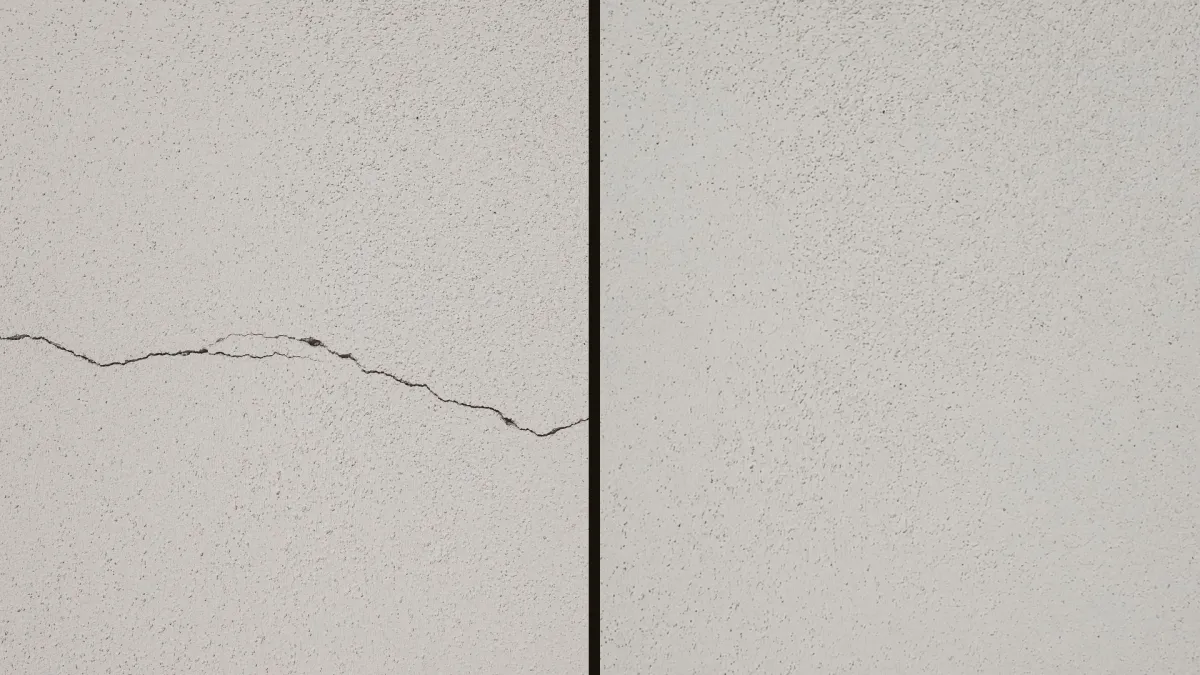
KHARAGPUR — In the high-stakes world of structural engineering, the difference between a minor maintenance check and a catastrophic failure often lies in the invisible realm of micro-cracking. For decades, the pursuit of "self-healing" materials—substances capable of repairing themselves without human intervention—has been a holy grail for scientists. However, the design of these materials has been hindered by the sheer computational complexity required to predict their behavior.
In a landmark study, researchers at the Indian Institute of Technology (IIT) Kharagpur have announced the development of a high-speed mathematical framework that promises to revolutionize the manufacture of smart materials. By bypassing traditional, labor-intensive computer simulations, this new tool allows engineers to predict the self-repair process with unprecedented speed and accuracy, potentially ushering in an era of "immortal" infrastructure and ultra-safe aerospace components.
Main Facts: A Thousand-Fold Leap in Design Efficiency
The core of the breakthrough lies in a mathematical formula that predicts how a liquid healing agent moves through a damaged material. Traditionally, designing these materials required 3D numerical simulations that could take days or even weeks to process a single structural variation. The IIT Kharagpur model performs these calculations at a rate at least 1,000 times faster than current software.
The research focuses specifically on elastomers—rubbery, elastic polymers—embedded with a network of microscopic, pressurized channels. When the material is punctured or cracked, the internal pressure acts as a mechanical pump, forcing a healing fluid into the wound. The fluid then hardens, restoring the material’s structural integrity.
Key highlights of the research include:

- The Mechanism: Use of pre-compressed elastomer matrices to provide the "pumping" force for healing.
- The Innovation: A mathematical model based on the conservation of energy rather than traditional fluid dynamics simulations.
- The Result: Instantaneous feedback for designers on variables such as channel radius, material stiffness, and fluid viscosity.
Chronology: From Biological Mimicry to Mathematical Precision
The journey toward this mathematical breakthrough began with the study of biomimetics—the imitation of the models, systems, and elements of nature for the purpose of solving complex human problems.
Phase 1: The Biological Blueprint
The researchers looked toward the human circulatory system. When a person receives a cut, the body doesn’t wait for external aid; internal pressure and chemical signals send blood to the site, which then clots to form a scab. Early self-healing materials attempted to replicate this using microscopic capsules. However, these were "one-and-done" solutions; once a capsule was broken, that specific area could not be healed again.
Phase 2: The Shift to Vascular Networks
To address the "one-time use" limitation, engineers moved toward vascular networks—tiny pipes filled with healing agents. The challenge here was capillary action. While natural wicking can draw fluid into a crack, it is often too weak to fill large gaps or overcome the resistance of thick, viscous "glues."
Phase 3: The Introduction of Pressurization
The IIT Kharagpur team focused on a more modern approach: the pressurized system. By "squeezing" the rubbery matrix during the manufacturing phase, they stored potential energy within the material. This turned the entire structure into a dormant pump, waiting for a crack to release the energy and drive the healing fluid home.
Phase 4: Solving the Computational Bottleneck
While the pressurized system worked in the lab, designing it for specific industrial applications was a nightmare. Calculating the Fluid-Structure Interaction (FSI)—how the shrinking walls of the channels affect the speed of the fluid—required massive supercomputing power. This led the Kharagpur team to develop their energy-based mathematical shortcut, which was recently validated and published.

Supporting Data: Energy Conservation and Predictive Modeling
The researchers’ mathematical framework is built on a fundamental law of physics: the balance of energy. Instead of calculating the movement of every molecule of fluid (the "brute-force" numerical approach), the team tracked two primary energy states:
- Strain Energy: The pent-up energy stored in the compressed rubber.
- Viscous Dissipation: The energy lost to friction as the thick healing fluid flows through the microscopic channels.
By creating an equation where the release of strain energy is balanced against the friction of the fluid, the researchers could map the precise volume and velocity of the healing agent over time.
Technical Specifications
The model assumes the use of a Newtonian fluid—a liquid like water or thin oil that maintains a constant viscosity regardless of the force applied to it. The material matrix is modeled as a linearly elastic elastomer, ensuring that the "squeeze" and "release" of the rubber follow predictable, repeatable patterns.
In comparative tests, the mathematical model’s predictions for "fluid delivery time" and "filling volume" matched the results of 3D computer simulations with near-perfect accuracy, while requiring only a fraction of the processing power. This allows engineers to conduct thousands of "virtual trials" in the time it previously took to conduct one.
Official Context and Researcher Perspectives
The team at IIT Kharagpur emphasizes that this tool is not merely an academic exercise but a practical instrument for industrial reform. According to the study’s findings, the ability to "instantly tweak" variables is what will finally move self-healing materials from the laboratory to the assembly line.

"Earlier, researchers had to rely on advanced, highly intensive 3D computer software," the report notes. "The new mathematical method achieves the highly accurate results needed but operates at least a thousand times faster… This means engineers can now instantly tweak variables, such as the radius of the microscopic channels or the rubber’s stiffness."
While the results are transformative, the researchers maintain a cautious stance regarding the model’s current limitations. They acknowledge that the framework assumes a "uniform" shrinkage of the channels and relies on the fluid being Newtonian. Future iterations of the model are expected to incorporate non-Newtonian fluids (liquids that thicken or thin under stress) and more complex, non-linear geometries to broaden the tool’s applicability.
Implications: A Paradigm Shift for Safety and Sustainability
The ramifications of a faster design cycle for self-healing materials extend across almost every facet of modern industry.
1. Aerospace and Defense
In the aviation industry, "fatigue" is the enemy. Micro-cracks in fuselage skins or engine components are often undetectable during standard inspections. By integrating pressurized self-healing elastomers into these components, aircraft could theoretically repair structural damage mid-flight. The IIT Kharagpur tool allows aerospace engineers to design these systems to be lightweight enough for flight while remaining robust enough to handle the extreme pressures of high-altitude travel.
2. The Electronics Revolution
Consumer electronics—from smartphones to wearable health monitors—frequently fail due to internal circuit fatigue or cracked casings. Self-healing polymers could extend the lifespan of these devices by years. This not only provides value to the consumer but addresses the growing global crisis of e-waste.

3. Infrastructure and Renewable Energy
Wind turbine blades are subjected to immense stress and environmental wear, often leading to cracks that are expensive and dangerous to repair. Self-healing materials designed using this new mathematical model could allow these blades to maintain themselves, reducing downtime and lowering the cost of renewable energy. Similarly, in civil engineering, "smart" seals and joints in bridges and tunnels could autonomously respond to seismic stress or wear.
4. Environmental Stewardship
The most profound implication may be ecological. The modern world is built on polymers that are often discarded at the first sign of damage. By making materials more durable and self-reliant, we can significantly reduce industrial plastic waste. This aligns with the broader goal of a circular economy, where the "life" of a product is extended indefinitely through intrinsic resilience.
Conclusion: Engineering the Future of Autonomy
The research emerging from IIT Kharagpur represents more than just a faster way to do math; it represents a shift in how humanity interacts with the physical world. For the history of civilization, humans have been the "doctors" of their machines, constantly diagnosing and repairing the tools they build.
With the advent of this rapid design tool, the transition toward truly autonomous materials has been accelerated. By bridging the gap between complex physics and practical engineering, the researchers have provided the roadmap for a future where our buildings, vehicles, and devices possess the same regenerative spirit as the biological systems that inspired them. As these mathematical models are refined and adopted by global industries, the era of "catastrophic failure" may eventually give way to an era of permanent, silent repair.
