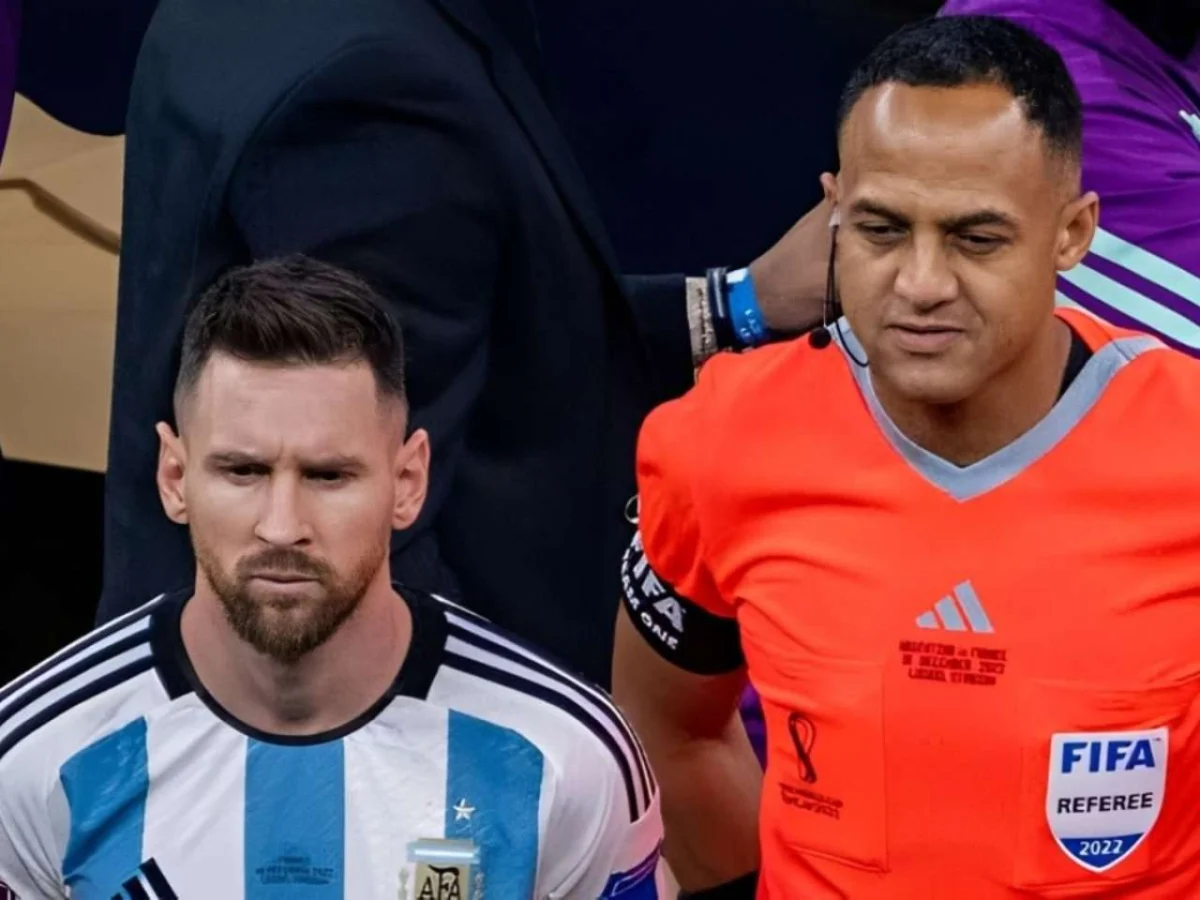
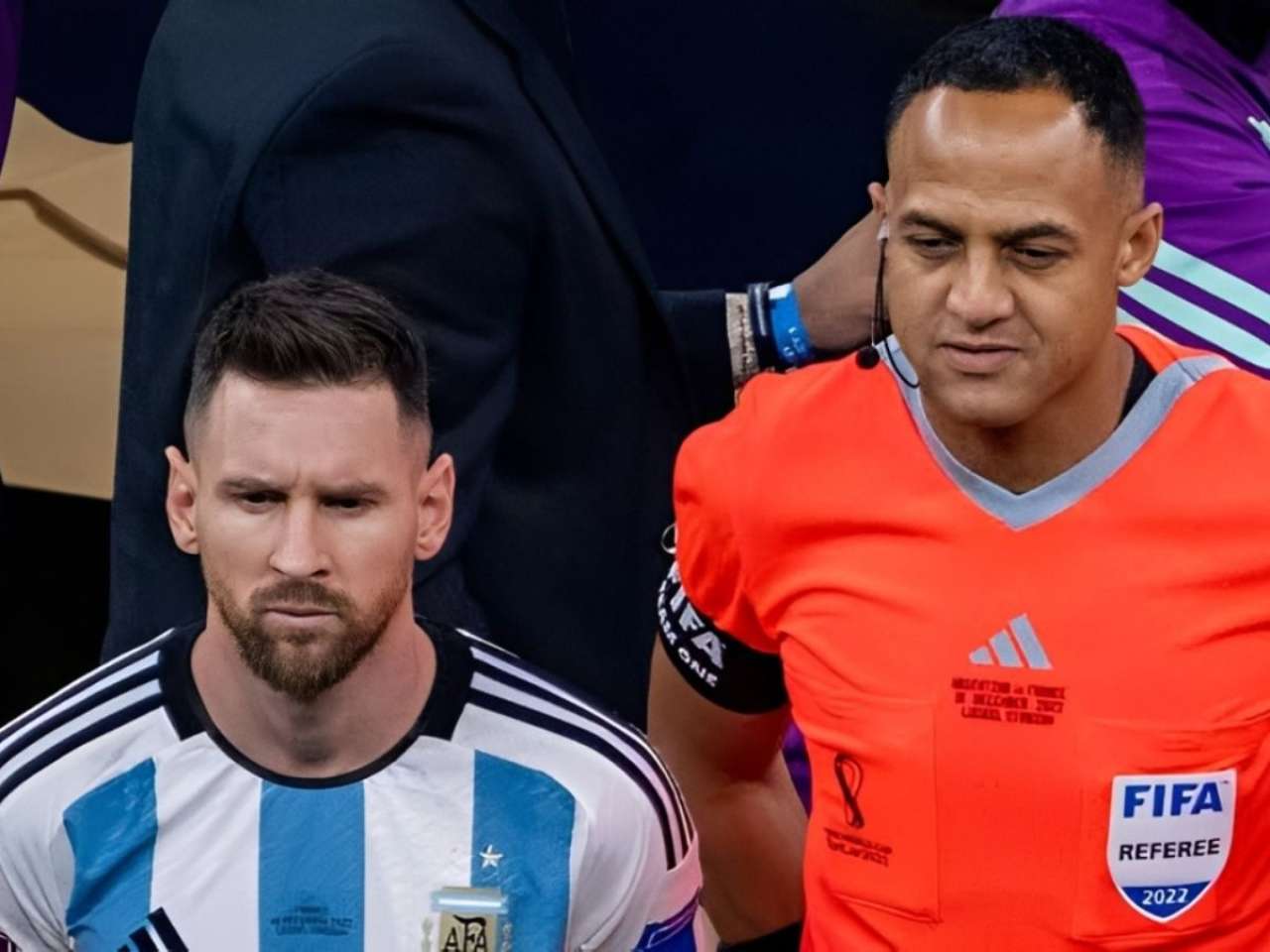
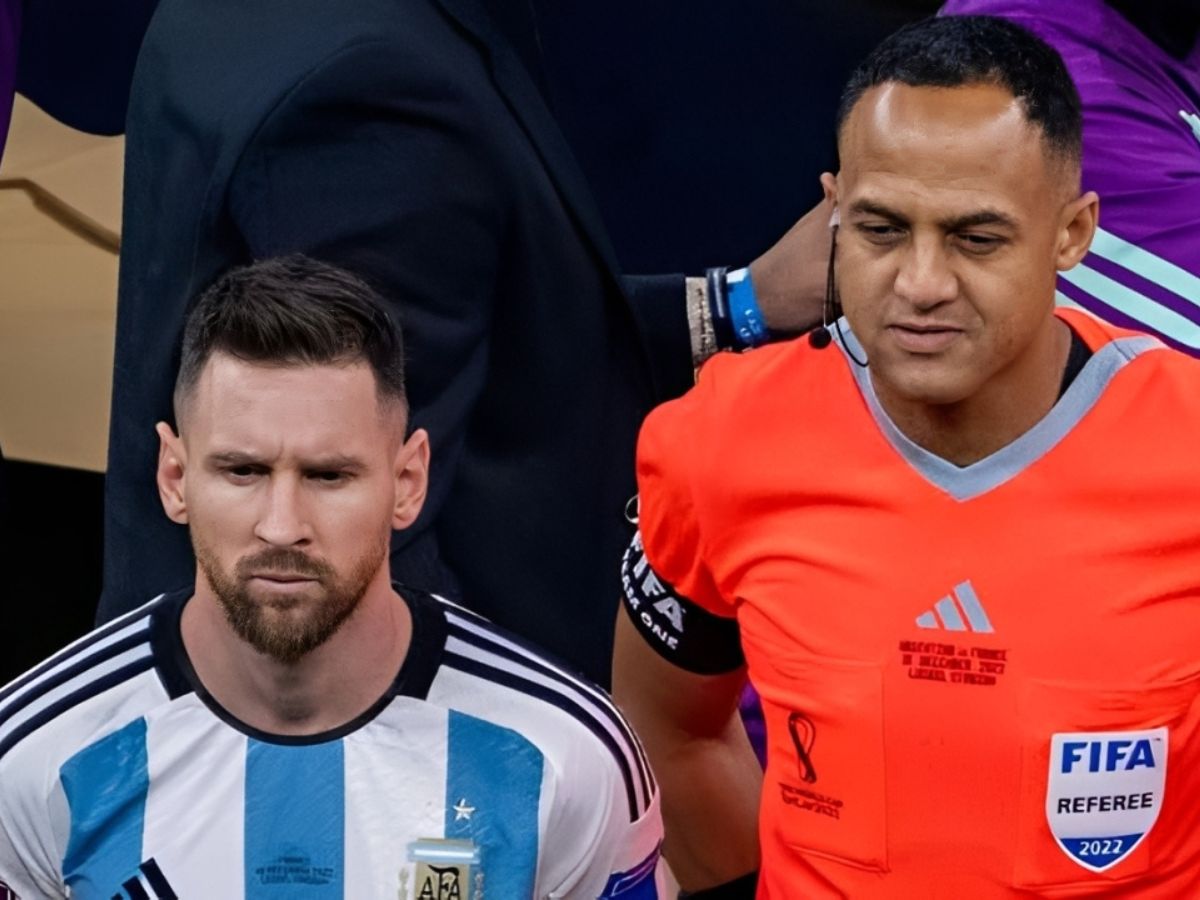
Atlanta, USA – The FIFA World Cup 2026 semi-final clash between historic rivals England and Argentina, set to electrify Atlanta Stadium tonight, has been overshadowed by an intense pre-match debate following FIFA’s appointment of American referee Ismail Elfath. His selection, particularly given his recent officiating record in matches involving Lionel Messi and Argentina, has become one of the most fervent talking points, casting an unprecedented spotlight on the man in the middle even before kickoff.
The stakes could not be higher. England and Argentina, two footballing titans with a deep-seated rivalry forged in World Cup history, are battling for a coveted spot in the final. Yet, the discourse leading up to this monumental fixture is less about tactical formations or star players, and more about the perceived impartiality of the referee. Fans, pundits, and former players alike are scrutinizing Elfath’s past decisions, fueling a narrative that questions the fairness of his assignment in a match of such global magnitude.
The Appointment That Shook the World Cup
FIFA’s decision to entrust the semi-final whistle to Ismail Elfath, a Moroccan-born American official, alongside his compatriots Corey Parker and Kyle Atkins as assistant referees, marks a historic moment for American officiating. Maurizio Mariani from Italy will serve as the fourth official. This trio is making history as the first all-American team to officiate a men’s World Cup semi-final, a testament to their ascent within the international refereeing ranks. They have already overseen three significant matches in this tournament: Japan’s thrilling 2-2 draw with the Netherlands, Spain’s narrow victory over Uruguay, and Norway’s surprising comeback against Brazil, all without major controversy.
However, the celebratory tone around their historic appointment has been muted by the fervent discussion surrounding Elfath’s perceived connections to Lionel Messi and the Argentine national team. This isn’t merely a casual observation; it’s a narrative built on specific incidents and an undeniable statistical pattern that has ignited a firestorm across social media and traditional sports media alike.
)
Historical Context of a Fiery Rivalry
To truly grasp the intensity of the current debate, one must understand the profound historical rivalry between England and Argentina. Their encounters on the pitch transcend mere sport, often carrying political and cultural undertones. From the infamous "Hand of God" goal by Diego Maradona in 1986, followed by his breathtaking solo effort in the same quarter-final, to the contentious red card shown to David Beckham in 1998, their World Cup clashes have consistently been laced with drama, controversy, and raw emotion.
Each match between these two nations is a powder keg, meticulously dissected and remembered for generations. The appointment of a referee who, in the eyes of many, carries a perceived bias, adds an explosive new layer to an already volatile fixture. For English fans, memories of past perceived injustices resurface, while Argentine supporters often feel their national heroes are unfairly targeted. In such an environment, the neutral arbiter’s integrity is paramount.

The Weight of the Semi-Final Stage
A World Cup semi-final is not just another game; it is a pinnacle of global sport, a crucible where legacies are forged and dreams shattered. The pressure on players, coaches, and indeed, officials, is immense. Every decision, every whistle, every moment of hesitation or conviction can alter the course of history. In this context, any pre-existing narrative about a referee’s potential bias amplifies the pressure tenfold. The fear is not just of a wrong call, but of a call that appears to confirm a pre-existing suspicion, regardless of its objective correctness. This heightened scrutiny means Elfath isn’t just officiating a game; he’s stepping into a minefield of expectation, suspicion, and historical baggage.
Ismail Elfath: A Profile in Progression
Ismail Elfath’s journey to the pinnacle of international refereeing is far from conventional, showcasing a remarkable blend of personal ambition, academic prowess, and unwavering dedication to the sport. Born in Casablanca, Morocco, Elfath immigrated to the United States as a teenager, embarking on a path that would see him earn a mechanical engineering degree from the University of Texas. His early sporting passion saw him play as a striker for a local club, Austin Lightning, a formative experience that ironically laid the groundwork for his future career.
)
From Casablanca to the MLS Pitch
Elfath’s transition from player to referee was sparked by his own frustrations on the field. Tired of what he perceived as inconsistent or incorrect officiating, he took the proactive step of attending a refereeing clinic. What began as an attempt to understand the game better quickly blossomed into a new calling. He started officiating youth and high school games, balancing this burgeoning passion with a demanding career in tech sales.
His ascent through the refereeing ranks was swift and decisive. By 2011, Elfath was recognized for his potential, serving as a fourth official in Major League Soccer (MLS). The following year, he earned his stripes as a center referee, taking charge of games with the whistle in hand. His consistent performance, adherence to the rules, and calm demeanor quickly caught the attention of FIFA, which added him to its prestigious international list of referees in 2016. This marked his official entry onto the global stage, opening doors to major international tournaments.
)
A Pioneer in VAR Technology
Beyond his on-field duties, Elfath holds a unique place in the history of football technology. In 2016, during an experimental phase, he delivered the first-ever on-field Video Assistant Referee (VAR) review in a match between New York Red Bulls II and Orlando City B. This pioneering moment underscored his willingness to embrace innovation and adapt to the evolving landscape of modern football. His experience with VAR, from its nascent stages to its current widespread application, provides him with an intimate understanding of the system, a crucial asset in today’s high-stakes matches where technology plays an integral role in decision-making.
International Acclaim and Resilience
Elfath’s international résumé is extensive and impressive, reflecting a career consistently marked by high-profile appointments. He has officiated at the Under-20 World Cup final in 2019, the Tokyo Olympics, and various editions of the Africa Cup of Nations. His experience extends to two previous senior World Cups, where he garnered valuable experience. He was twice named MLS Referee of the Year, in 2020 and 2022, solidifying his reputation as one of the best officials in North America.
)
At the 2022 World Cup in Qatar, Elfath took charge of significant group stage matches, including Portugal vs. Ghana and Cameroon’s surprising victory over Brazil, before officiating the tense Japan–Croatia round-of-16 clash. His competence was further acknowledged when he was appointed as the fourth official for the tournament final, a memorable encounter where Argentina triumphed over France in a penalty shootout. This specific involvement, even in a supporting role, would later become a critical component of the "pro-Messi" narrative.
Elfath’s road to the 2026 World Cup semi-final, however, was not without its trials. He suffered a serious knee injury during the 2024 Copa America, necessitating multiple surgeries and a grueling rehabilitation process. This threatened to derail his career at its peak. Yet, through sheer determination and professional medical support, he made a remarkable recovery, returning to the field by September 2025. He quickly regained his form, demonstrating his resilience by taking charge of the 2025 Intercontinental Cup final, a performance that undoubtedly cemented his readiness for the World Cup’s penultimate stage.
)
The "Pro-Messi" Accusations: A Deep Dive into the Data
The "pro-Messi" talk surrounding Ismail Elfath is not merely speculative chatter; it’s a narrative meticulously constructed by critics based on a series of observable patterns and specific incidents. While FIFA staunchly defends its officials, the data points highlighted by fans and pundits present a compelling, albeit circumstantial, case that has fueled the current controversy.
Inter Miami’s Unblemished Record Under Elfath
The most striking piece of evidence cited by those questioning Elfath’s impartiality is his flawless record refereeing Inter Miami games since Lionel Messi’s arrival. Under Elfath’s whistle, Inter Miami has played five matches, securing five emphatic victories. This perfect winning streak, for a team often bolstered by the individual brilliance of Messi, raises eyebrows.
)
- 4-0 victory over Charlotte: A dominant performance where Messi was influential.
- Leagues Cup final vs. Nashville: A dramatic final decided by penalties, where controversial calls were later highlighted.
- 3-1 league win (also vs. Nashville): Another win against a familiar foe, with key decisions in Miami’s favor.
- 4-1 battle with New England: Messi again playing a pivotal role in a comfortable win.
- High-scoring 4-2 against Orlando City: A match featuring a contentious red card incident.
In nearly all these matches, Messi was a central figure, scoring multiple goals and providing crucial assists. While a perfect record could be attributed to Miami’s quality, the sheer consistency under one particular referee, especially given Messi’s star power, has become a significant talking point. The perception is that Messi receives a level of protection or favorable treatment that tips the scales.
Key Incidents Fueling the Fire: Nashville and Orlando
Beyond the overall win-loss record, two specific incidents from Elfath-officiated matches involving Messi have become flashpoints for criticism:
)
-
2023 Leagues Cup Final (Inter Miami vs. Nashville): This match is frequently referenced. Early in the game, Elfath booked Nashville’s Aníbal Godoy for what many observers, including former players and commentators, considered a routine, fair challenge on Messi. The booking was seen as disproportionate and overly protective of the star player, setting a precedent for the rest of the game. Later in the same match, Miami was awarded a highly questionable free-kick after a tangle between Godoy and Sergio Busquets, a decision that again appeared to favor Miami in a crucial moment. These calls were immediately highlighted as evidence of a pattern of "protecting football’s top stars," a narrative that has since taken firm root. Critics argued that such subjective decisions, particularly in tightly contested games, have a profound impact on momentum and outcome.
-
March 2026 MLS Match (Inter Miami vs. Orlando City): Another incident that further solidified the perception occurred during a late counterattack. Orlando City’s Colin Guske was shown a second yellow card, leading to his dismissal, for what was widely regarded as a relatively soft foul on Messi. Adding to the controversy, Messi himself was seen appealing to the referee for the card, an act that some found unsporting and influential. Guske walked, Messi scored shortly after, and Miami secured the win. This specific sequence – Messi’s appeal, the soft foul, the red card, and Miami capitalizing – became a potent symbol for those arguing Elfath’s bias. The decision drastically altered the game’s balance at a critical juncture, leaving Orlando players and fans seething.
)
These moments, captured on camera and replayed endlessly, provide the "smoking gun" for those who believe Elfath has a propensity to favor Messi’s team. The consistency of these types of calls, particularly in close games, suggests a pattern that goes beyond mere coincidence for many observers.
The 2022 World Cup Final Connection
While Elfath was not the main referee for the 2022 World Cup final where Argentina defeated France, his role as the fourth official further weaves him into the narrative. For some, his proximity to Argentina’s ultimate triumph, combined with his subsequent track record with Messi’s club team, adds another layer to the perceived connection. It subtly reinforces the idea that he is part of an ecosystem that, consciously or unconsciously, supports the global icon. While a fourth official’s influence on the main game is limited, the psychological link, however tenuous, contributes to the overall perception of bias.
)
FIFA’s Stance and Official Responses
In the face of mounting public scrutiny, FIFA, as the governing body of world football, has a vested interest in upholding the integrity of its competitions and the impartiality of its officials. Their official responses, while predictable, are crucial in attempting to quell the debate.
Defending the Selection Process
A spokesperson for FIFA, speaking on condition of anonymity due to the sensitive nature of the topic, issued a firm statement defending the organization’s referee appointment protocols. "FIFA stands unequivocally by its rigorous and merit-based referee selection process," the spokesperson affirmed. "Appointments for such high-stakes matches, especially a World Cup semi-final, are the culmination of extensive evaluations based on consistent performance, deep understanding of the Laws of the Game, and proven ability to handle pressure. Mr. Elfath and his officiating team have demonstrated exceptional competence across numerous international fixtures, including previous World Cup matches. Any suggestion of bias is unfounded, speculative, and ultimately undermines the professionalism and integrity of our dedicated officials."
)
The statement emphasized that every official undergoes continuous assessment, physical and technical tests, and psychological evaluations to ensure they are prepared for the demands of the sport’s biggest stage. FIFA’s stance is that a referee’s past assignments are a testament to their experience, not an indicator of partiality.
National Federations Weigh In
The Football Association (FA) of England and the Argentine Football Association (AFA) have largely maintained a diplomatic and professional front, adhering to standard protocols.
)
A representative from the English FA stated, "We have full confidence in FIFA’s appointment process and the professionalism of the officiating team selected for the semi-final. Our focus, and that of our players and coaching staff, remains solely on the match ahead and ensuring our team is optimally prepared for this monumental challenge. We trust that the game will be officiated fairly and within the spirit of the game." This carefully worded statement avoids directly addressing the controversy while subtly underscoring the expectation of fairness.
Similarly, the Argentine FA issued a brief response: "The AFA respects FIFA’s decisions regarding match official appointments and trusts in the fairness and expertise of the selected refereeing team. Our national team is concentrated on delivering their best performance on the field and competing at the highest level for a place in the World Cup final." The AFA’s response, like England’s, seeks to deflect attention from the controversy and onto the match itself.
)
Ismail Elfath himself, through past interviews and statements released via FIFA, has consistently reiterated his commitment to impartiality. In a prior statement concerning the pressures of refereeing, he remarked, "Every time I step onto the pitch, my sole objective is to apply the Laws of the Game fairly and consistently, regardless of the teams or players involved. The integrity of the game is paramount, and it’s a responsibility I take incredibly seriously."
Implications for the Match and Beyond
The pre-match furor surrounding Ismail Elfath’s appointment carries significant implications, not only for the England vs. Argentina semi-final but also for the broader landscape of international football and the perception of officiating.
)
Unprecedented Pressure on the Man in the Middle
The immediate consequence of this debate is the immense and almost unprecedented pressure now resting squarely on Ismail Elfath’s shoulders. Every single decision he makes – from routine fouls to offside calls, from yellow cards to potential penalty awards – will be meticulously scrutinized. Fans from both sides, already predisposed to find fault, will be watching with a magnifying glass. Any call that benefits Argentina, no matter how objectively correct, will be viewed through the lens of perceived bias. Conversely, any call against Argentina, especially one involving Messi, could lead to accusations of overcompensation.
This level of intense scrutiny can inadvertently affect a referee’s performance. While officials are trained to operate under pressure, the weight of a globally amplified narrative can introduce an unconscious element of self-awareness or caution. Elfath will have to demonstrate extraordinary mental fortitude to remain completely detached and objective in such a charged atmosphere. The performance of his American assistant referees, Corey Parker and Kyle Atkins, will also be under the microscope, as any perceived collective bias could undermine the historic nature of their appointment.
)
The Integrity of the Game and Fan Trust
At a deeper level, the controversy touches upon the fundamental integrity of the sport. Football relies heavily on the trust that fans place in the fairness of the game and the impartiality of its officials. When doubts about a referee’s neutrality emerge, particularly in a match of this magnitude, it erodes that trust. For many, the perception of bias, even if unsubstantiated by objective analysis, is as damaging as actual bias.
This erosion of trust can lead to cynicism, with fans questioning the outcomes of matches and the validity of tournaments. In an era dominated by social media, where narratives can spread like wildfire, such controversies can have a lasting impact on how FIFA and its competitions are viewed. It puts FIFA in a difficult position, as defending its officials is necessary, but failing to address legitimate concerns can further alienate its audience.
)
A Precedent for Future Appointments?
Looking ahead, this controversy could set a significant precedent for future high-profile referee appointments. FIFA may need to re-evaluate its communication strategies around controversial selections or even consider adjustments to its appointment criteria. The debate highlights the increasing power of public perception and the need for greater transparency in decision-making processes, especially when it involves officials with a history that could be interpreted as problematic.
Could this lead to FIFA becoming more conservative in appointing referees who have officiated a particular star player or team frequently? Or will it double down on its current merit-based system, arguing that yielding to public pressure would be a greater disservice to the sport? The outcome of the semi-final and the subsequent analysis of Elfath’s performance will undoubtedly shape these discussions.
)
Conclusion
As England and Argentina prepare to renew their storied rivalry on the grand stage of the World Cup semi-final, the narrative surrounding referee Ismail Elfath ensures that the man in the middle will be as much a part of the spectacle as the players themselves. His journey from Casablanca to the pinnacle of American officiating, marked by resilience and pioneering spirit, has now converged with a storm of pre-match controversy rooted in his past interactions with Lionel Messi.
Whether the "pro-Messi" accusations hold objective merit or are merely a byproduct of social media amplification and pre-existing rivalries, Elfath faces an unparalleled test of character and professionalism. Every whistle, every card, every crucial decision will be dissected with unprecedented intensity. For the sake of the beautiful game, and the integrity of the World Cup, the hope is that the focus will ultimately return to the extraordinary football on display, and that Elfath’s performance will rise above the surrounding clamor, ensuring a fair and memorable contest that will be remembered for the brilliance of the players, not the controversies of the officiating. The world watches, not just for a winner, but for a match officiated beyond reproach.