

By Shivani Naik, Assistant Editor, The Indian Express
Jul 16, 2026 05:50 PM IST
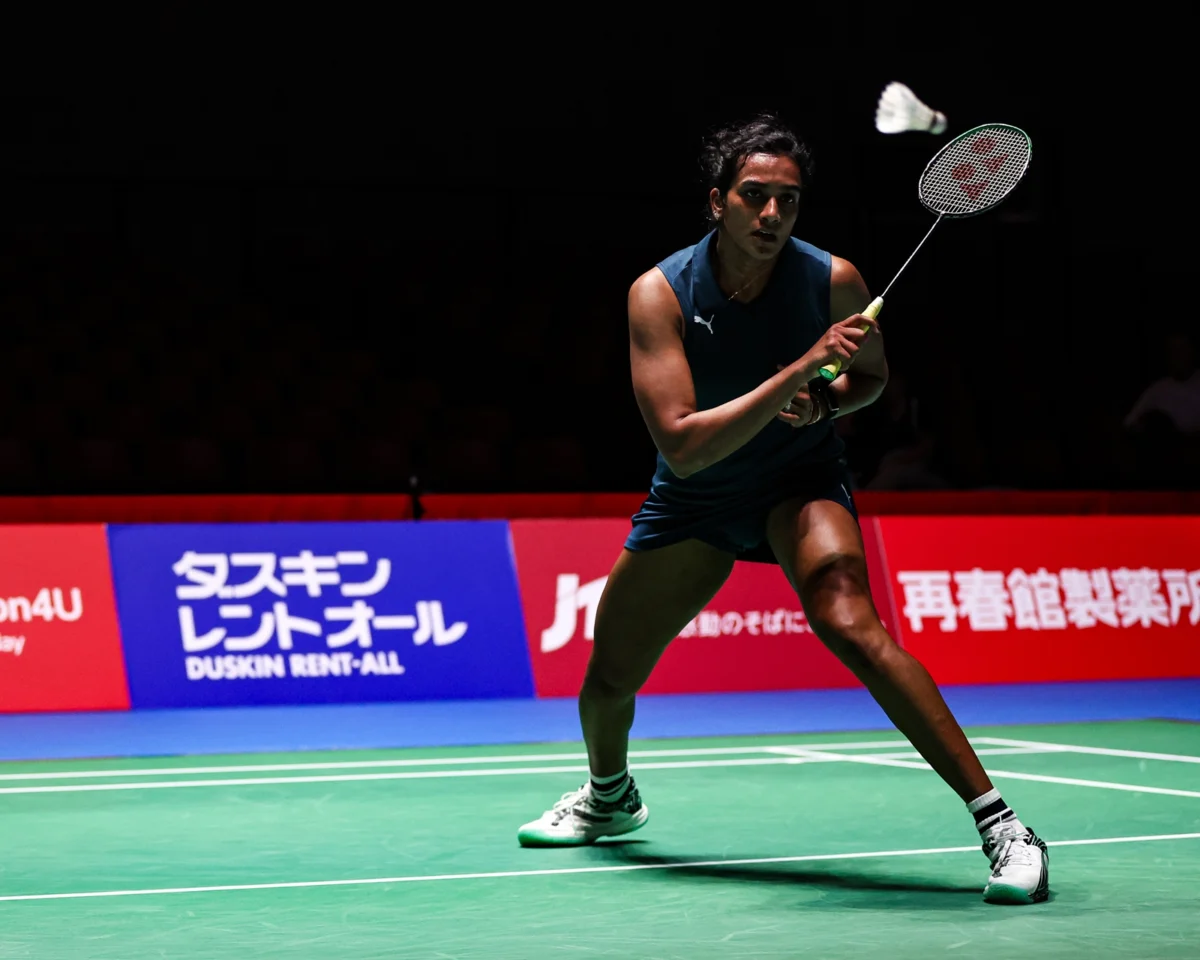
TOKYO, Japan – In a performance that offered a tantalizing glimpse into the future of badminton, Indian superstar PV Sindhu asserted her dominance at the Super 750 Japan Open, dispatching China’s fifth seed Han Yue with a commanding 21-16, 21-14 victory. While the scoreline itself was impressive, securing her a coveted spot in the quarterfinals against arch-rival Nozomi Okuhara, it was the manner of Sindhu’s triumph that sent ripples through the badminton world. Her aggressive, front-loaded strategy mirrored precisely the tactical demands of the BWF’s upcoming 15×3 scoring format, set to be introduced next season. This proposed change, promising shorter, more intense matches, appears to be a veritable godsend for attacking players, none more so than Sindhu, who now looms large, both literally and figuratively, over the current Top 9 contenders.
The two-time Olympic medalist, currently ranked World No. 10, showcased a relentless offensive prowess against Han Yue, a player she now leads 8-1 in their head-to-head encounters. Han Yue, often considered a punching bag for the Indian, found herself overwhelmed by a calculated aggression that began mid-game and rarely relented. This strategic blueprint, which sees Sindhu switch on an attacking window around the 7-point mark and maintain its intensity, is a clear indicator of how she plans to leverage the shorter, high-stakes rallies inherent in the 15×3 format. For a player of Sindhu’s calibre, known for her powerful smashes and imposing court presence, this shift could not be more timely, potentially ushering in a formidable new chapter in her illustrious career.
The Tactical Blueprint: Dissecting Sindhu’s Masterclass Against Han Yue
Sindhu’s quarterfinal berth was earned through a display of tactical intelligence and raw power, particularly evident in her second-round clash with Han Yue. The match, though decided in straight sets under the current 21×3 scoring system, offered a compelling real-time demonstration of how Sindhu is already adapting her game to the anticipated pace of the 15×3 format.
First Game: The Calculated Turnaround
The initial exchanges saw Han Yue attempt to exploit a perceived vulnerability in Sindhu’s game. The Chinese shuttler diligently pursued a single scheme: drawing Sindhu wide to her backhand, forcing her to twist and stretch. This tactic bore fruit early, with Han Yue establishing a 6-3 lead. However, Sindhu, ever the astute strategist, quickly diagnosed the pattern. This early passage of play served as a crucial reconnaissance mission for the Indian.
Instead of passively accepting the backhand trap, Sindhu unleashed an understated yet highly effective lateral movement. She subtly shifted left, positioning herself underneath the shuttle, effectively converting what was intended as a backhand challenge into a forehand opportunity. From this adjusted position, she unleashed an expansive, wide smash, punishing Han Yue and swiftly leveling the score at 7-7. This moment was the pivot. It marked the precise point where Sindhu “switched on” her attacking window, a strategic decision that would define the rest of the match.
With the momentum seized, Sindhu diversified her attack. She relentlessly targeted Han Yue’s backhand, employing a combination of whippy pushes to the deep corners and delicate drops right at the net. A perfectly executed backhand lob, landing precisely in the corner pocket, propelled her to an 11-8 lead. This aggressive phase, sustained and varied, highlighted Sindhu’s ability to dictate play and overwhelm her opponent.
Crucially, the knowledge that she would need to sustain this scorching attack pace for a fewer number of points—a characteristic of the impending 15×3 format—lent Sindhu a newfound freedom and confidence, particularly at the net. Her net play, an area of significant improvement in what many are calling her "3.0 version," was exceptional. Given her imposing height, Sindhu often plays from a slightly further distance at the net than many of her peers, yet her deceptive, loopy popping tumbles proved highly effective. While the top four elite players might engage her in tight, eyeball-to-eyeball net duels, most other opponents, including Han Yue, simply wilted under this pressure.
The crescendo of Sindhu’s offensive in the first game came at 14-10, with a blistering body smash aimed squarely at Han Yue’s shoulder. This point epitomized her belligerent approach. She quickly reached 15-11, a scoreline that, under the new format, would have concluded the game. However, under the 21-point system, this is often where Sindhu’s "Achilles heel" of late-game nervousness can manifest. True to form, her lead narrowed to a single point at 17-16. Yet, this time, Sindhu did not falter. She maintained her composure, continuing her aggressive net play, and impressively secured the next four points to close out the game 21-16. This ability to navigate a traditional pressure point and still finish strong speaks volumes about her current mental fortitude and refined tactical approach.
Second Game: Riding the Drift and the Early Kill
Entering the second game, Sindhu was visibly emboldened, particularly by the drift in the arena. Playing against the drift, her immense power became an even greater asset, allowing her to hit through opponents with even more authority, while the drift itself acted as an ally, preventing the shuttle from blowing out of bounds. This combination proved devastating for Han Yue.
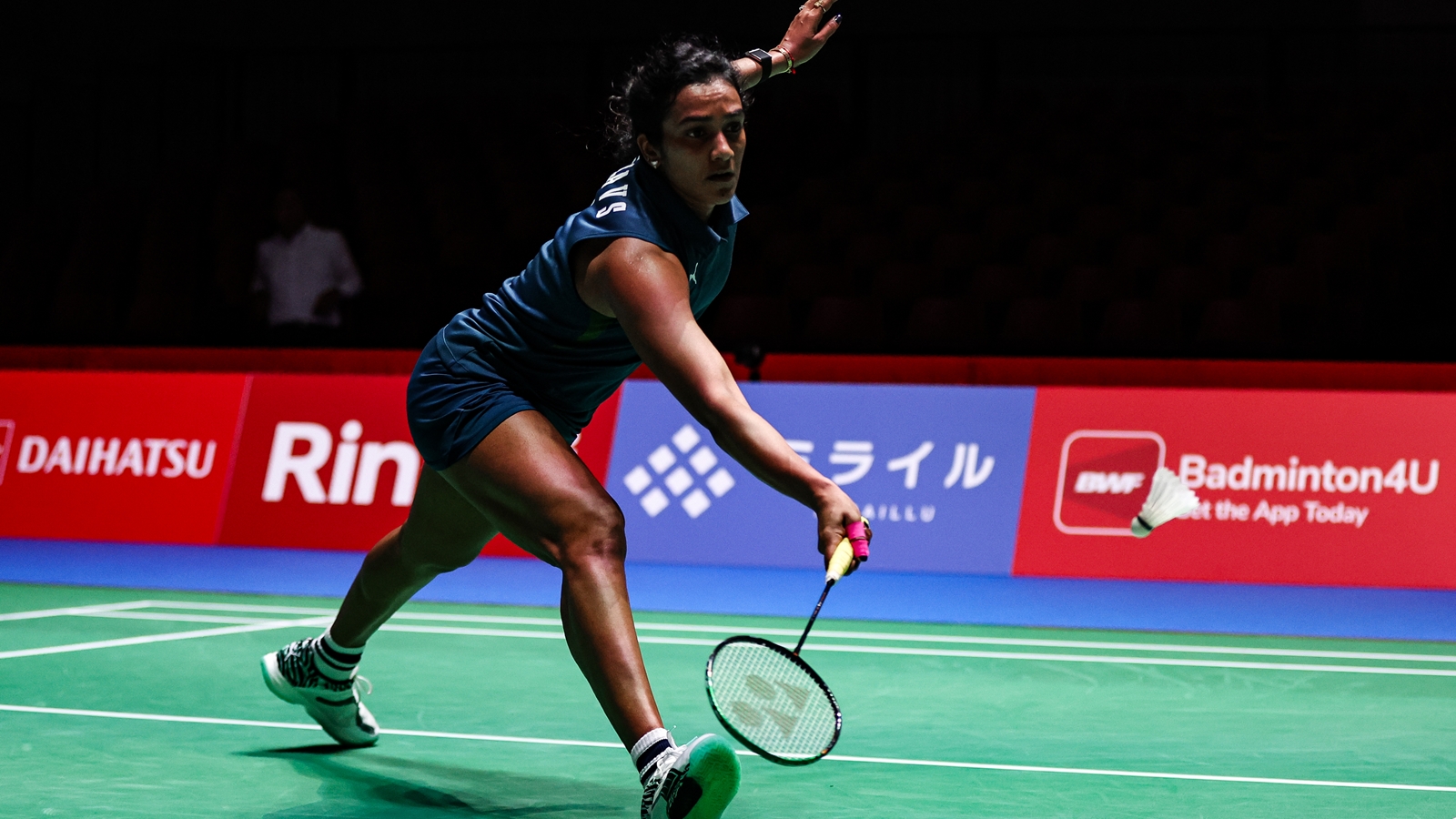
Sindhu quickly established an almost ridiculous 8-0 lead, a testament to her unyielding aggression and the strategic advantages she leveraged. Had the 15×3 format been in play, this game would have been a quick 15-7 victory for Sindhu, illustrating the stark difference in game length and intensity. Unhindered by the traditional 21-point structure, Sindhu simply gallivanted to a dominant 21-14 win in a mere 35 minutes, a testament to her efficient and destructive play. The match against Han Yue served not just as a victory, but as a compelling live trial for Sindhu’s readiness for the next generation of badminton scoring.
Supporting Data: The 15×3 Advantage and the Women’s Singles Landscape
The impending shift to the 15×3 scoring system by the Badminton World Federation (BWF) is poised to be one of the most significant rule changes in recent memory. For players like PV Sindhu, it represents a profound strategic advantage, potentially revitalizing her career and elevating her standing in the global hierarchy.
The "Godsend" of 15×3 for Attacking Players
The current 21×3 format, while traditional, often allows for longer rallies and more opportunities for defensive players to wear down their opponents or for attacking players to falter under sustained pressure. The 15×3 system, by design, will drastically shorten games, demanding immediate aggression and fewer unforced errors. This is where Sindhu shines.
Her primary strength lies in her explosive power, her reach, and her ability to dictate rallies from a dominant attacking position. In a 15-point game, there is less room for passive play or for opponents to slowly build momentum. Players must be "dialled in" from the first serve, launching into offensive strategies much earlier. This plays directly into Sindhu’s hands. As demonstrated against Han Yue, her ability to switch on an attacking window from the 7-point mark, and then maintain that ballistic pace, becomes a match-winning trait in a shorter format. She can build a substantial cushion more rapidly, making it exceedingly difficult for opponents to mount a comeback.
Crucially, the 15×3 format directly addresses Sindhu’s historical "Achilles heel"—her occasional tendency to "clam" or become nervous when closing out games from points 17 onwards in the 21-point system. In the 15-point format, by the time she reaches 13 or 14 points, her aggressive window would ideally have already secured a significant lead, eliminating the prolonged, high-pressure endgame scenarios that have sometimes plagued her. She builds her cushion earlier, reducing vulnerability. This is not merely a hypothetical advantage; her performance against Han Yue clearly illustrated her comfort and efficacy in executing an accelerated, high-intensity game plan.
The Evolving Women’s Singles Elite
Beyond the formidable quartet of An Se-young, Wang Zhi Yi, Akane Yamaguchi, and Chen Yufei, the current landscape of women’s singles badminton is widely perceived to be experiencing a period of relative weakness. Players such as Han Yue, Putri Wardani, Ratchanok Intanon, Pornpawee Chochuwong, and Aya Ohori (often grouped with Miyazaki) are talented but often lack the consistent firepower or defensive solidity to withstand a sustained, belligerent attack from a player of Sindhu’s stature.
Sindhu’s imposing physical presence, combined with her powerful smashes and improved net game, makes her particularly adept at exploiting this perceived weakness. Her ability to force opponents onto the defensive from the outset, especially with the strategic adjustments seen in her 3.0 version, means these players struggle to parry her relentless offensive. The 15×3 format will only amplify this advantage, as there will be even less time for these mid-tier players to find their rhythm or recover from an early deficit. Sindhu’s style, characterized by early aggression and a dominant court presence, is uniquely suited to thrive in this environment, allowing her to capitalize on the shorter scoring structure to overwhelm opponents before they can settle.
Sindhu’s Current Form and Evolution
Currently ranked World No. 10, Sindhu is demonstrating a mid-consistent form, reaching her sixth quarterfinal from ten tournaments played this season, alongside semi-final appearances at the Malaysia and Australia Opens. Her recent performances suggest a player who is not only physically strong but also strategically evolving. The "3.0 version" of Sindhu is characterized by several key improvements: enhanced net play, where her height allows for unique angles and deceptive tumbles; better lateral movement that transforms defensive situations into attacking opportunities; and a more consistent application of her formidable power. These refinements, particularly her ability to adjust her game plan mid-match as seen against Han Yue, indicate a player who is not just relying on raw talent but also on refined tactical acumen.
A Storied Rivalry Renewed: Sindhu vs. Okuhara
The quarterfinal clash against Japan’s Nozomi Okuhara is more than just another match; it is a rekindling of one of badminton’s most storied and captivating rivalries. The tantalizing prospect of Sindhu versus Okuhara emerged after top seed An Se-young regrettably withdrew due to injury, conceding her match against the Japanese veteran.
Their rivalry is legendary, marked by epic encounters that have etched themselves into the annals of badminton history. Both players, now 31 years old, have traded blows on the grandest stages, most notably their unforgettable 2017 World Championships final in Glasgow, a match widely considered one of the greatest women’s singles finals ever played, which Okuhara narrowly won. Two years later, Sindhu avenged that loss in spectacular fashion, storming to her own World Championship crown in Basel in 2019, defeating Okuhara in a dominant display.
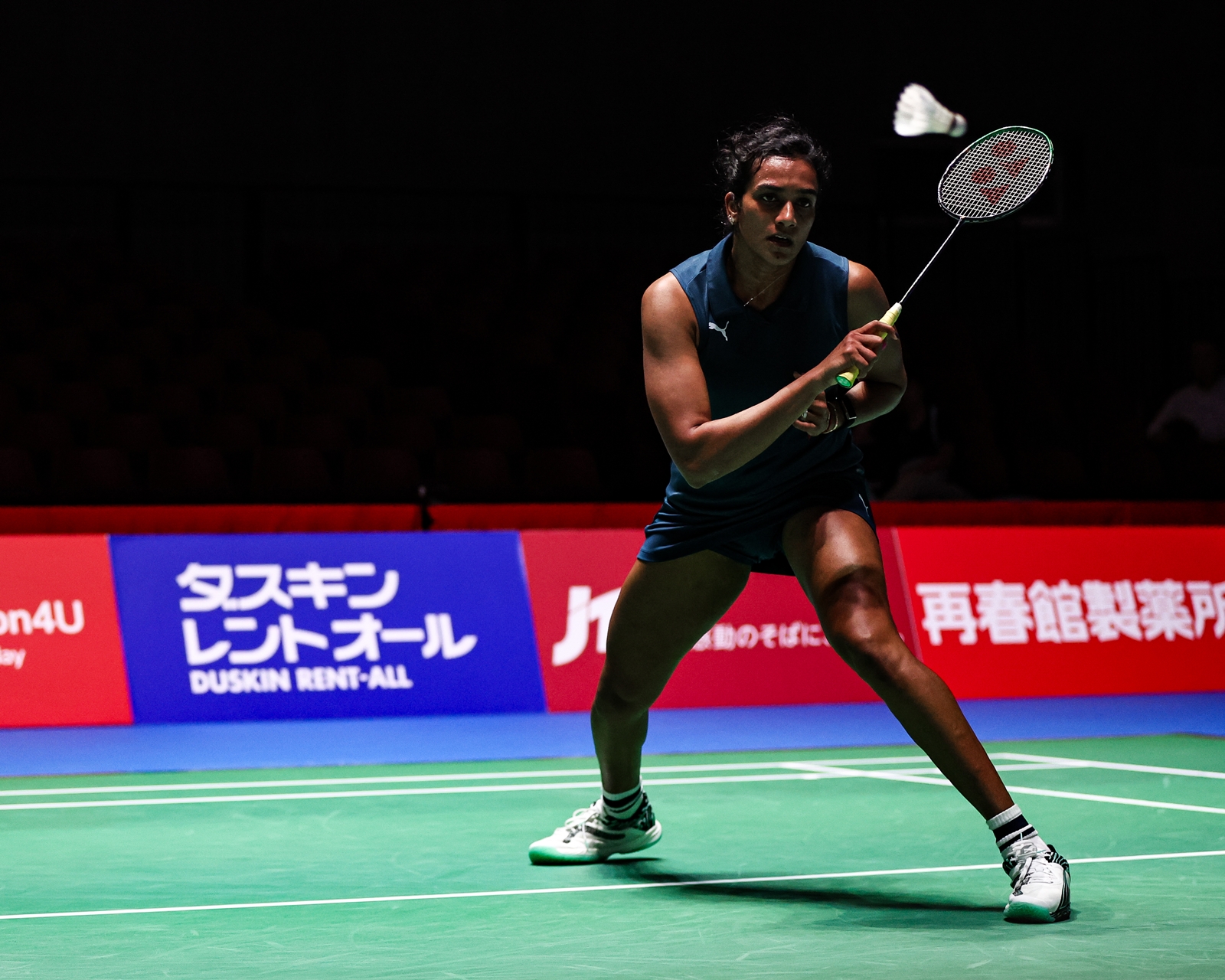
Beyond the literal World Championship trades, their rivalry is characterized by a unique blend of intense competition and mutual respect, often described as close friends off the court. Their head-to-head record underscores the parity between them, with Sindhu holding a slight edge at 11-9. Even in the four matches since their Basel showdown, they have split the victories 2-2, highlighting the enduring balance of power.
In terms of recent form, Okuhara has shown flashes of her former brilliance, securing titles at smaller tournaments like Orleans and reaching semi-finals at events such as the Australia Open, Swiss Open, and Indonesia Masters. However, she has yet to make consistently deep inroads into the higher-tier Super 750+ meets, a level where Sindhu has shown more consistent quarterfinal and semi-final appearances.
Despite Okuhara’s recent successes in lower-tier tournaments, Sindhu starts this quarterfinal as the slight favourite. Her current form, coupled with the strategic advantages she seems to be harnessing, positions her well. However, in a rivalry as deep and personal as this, form can often take a backseat to sheer will and familiarity. In a "football season" that often sees other sports struggling for mainstream attention, a clash between these two stubborn veterans, ranked World No. 10 and 11 respectively, promises to "ring a bell" and deliver the kind of high-octane drama that badminton thrives on. Their impending duel is not just a quarterfinal; it’s a narrative-rich encounter that transcends rankings and promises a spectacle.
Implications: A Reshaped Future for Badminton and Sindhu’s Legacy
The discussion around the 15×3 format, coupled with Sindhu’s recent tactical shifts, points towards significant implications for her career, Indian badminton, and the global landscape of the sport.
For PV Sindhu: A Career Rejuvenator
The introduction of the 15×3 format could very well be the catalyst for a profound resurgence in PV Sindhu’s career. Her inherent strengths—power, height, aggressive court coverage, and a devastating smash—are perfectly aligned with the demands of shorter, more intense games. This format provides her with a framework to capitalize on her early aggression and minimize the impact of her past struggles with closing out longer games. It allows her to dictate the pace from the start, building unassailable leads quickly. This strategic advantage could translate into a renewed push for major titles, including the World Championships and, crucially, the Olympic Games. If she can consistently adapt and master this format, it could solidify her legacy not just as an Olympic medalist but as a pioneer in adapting to evolving game dynamics. She is poised to be at the forefront of this new tactical era.
For Indian Badminton: A Shift in Development
The article notes that the 15×3 format is a "godsend for most attacking Indians." This suggests a broader impact on player development and coaching philosophies within India. Indian badminton has, for generations, produced players known for their flair and attacking prowess. A shorter format would undoubtedly encourage the development of even more aggressive, powerful players who can seize early leads and maintain high-intensity play throughout. This could lead to a strategic shift in training methodologies, emphasizing explosive power, quick decision-making, and mental resilience from the very first point. India, with its growing pool of talent, could find itself particularly well-suited to thrive under this new scoring system, potentially fostering a new generation of champions who are naturally aligned with its demands.
For Global Badminton: Speed, Excitement, and New Dynamics
The BWF’s move to introduce the 15×3 format is a strategic gamble aimed at enhancing the sport’s appeal. In an increasingly competitive global sports market, shorter, more dynamic matches are seen as a way to attract new audiences and retain existing ones. The implications are far-reaching:
- Increased Pace and Intensity: Every rally will carry more weight, demanding higher intensity from the outset and leaving less room for error or slow starts.
- Tactical Evolution: Coaches and players will need to re-evaluate their strategies, focusing on early breakthroughs and sustained aggression rather than prolonged battles of attrition. Defensive specialists might find themselves at a disadvantage, needing to develop more offensive weapons.
- Player Fitness: While games are shorter, the cumulative intensity of multiple 15-point matches in a tournament could still demand peak physical conditioning, albeit perhaps a different kind—more explosive power and recovery.
- Broadcast Appeal: Shorter matches mean more matches can be broadcast in a given window, potentially increasing viewership and commercial opportunities.
- Mental Resilience: The pressure to perform from the very first point will be immense, placing a premium on mental toughness and the ability to execute under immediate high-stakes conditions.
As Shivani Naik, with her renowned "technical storytelling" and "tactical deep dives," expertly points out, the shift is not merely cosmetic. It will fundamentally alter the biomechanics, tactics, and psychological grit required of athletes. Matches like Sindhu vs. Okuhara, already a classic, will take on an even more electrifying dimension under the new format, perhaps truly "ringing a bell" and capturing the imagination of sports fans worldwide. The Japan Open, and Sindhu’s commanding performance, serves as a powerful preview of this exciting, fast-paced future for badminton.
© The Indian Express Pvt Ltd
