

Sharpen Your Gaze: New Visual Puzzle Challenges Keen Observers in New Delhi
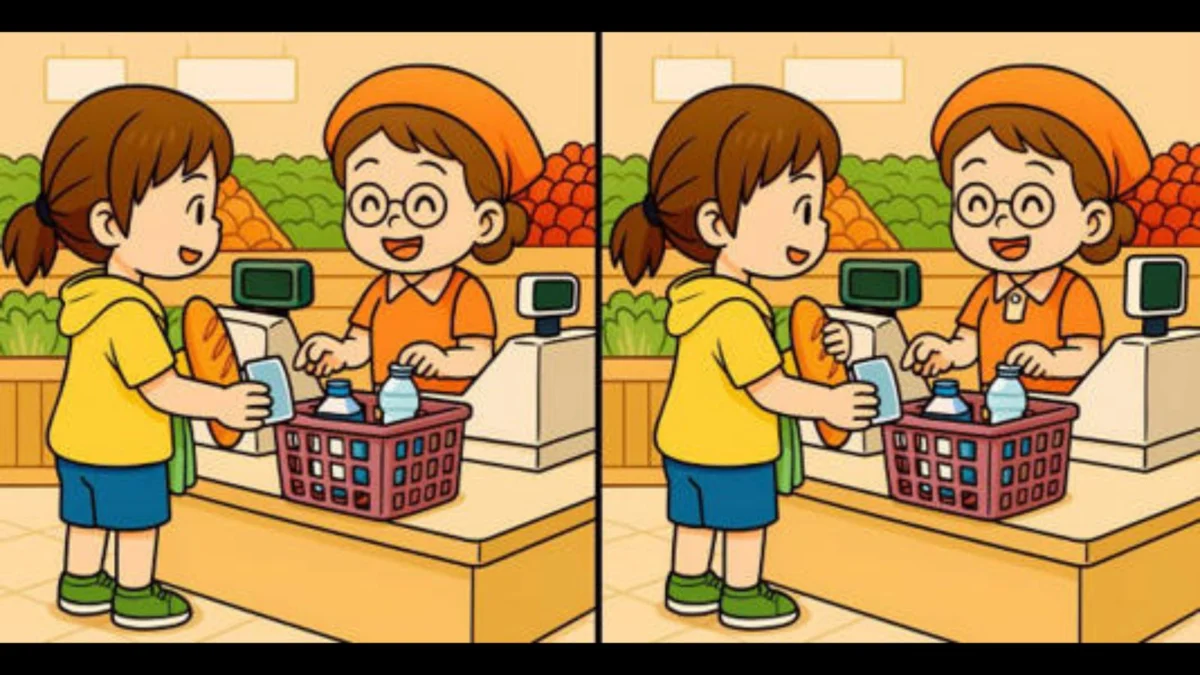
New Delhi, July 16, 2026 – In a digital age saturated with fleeting content, a new visual challenge is captivating the attention of residents across New Delhi, offering a refreshing respite for the mind and a rigorous test of observational prowess. A meticulously crafted "spot the difference" puzzle, featuring a seemingly ordinary supermarket checkout scene, has been released, inviting individuals to engage with their surroundings on a deeper level. This interactive brain teaser, designed to enhance cognitive skills, promises to engage both casual observers and dedicated puzzle enthusiasts alike.
The puzzle, presented as a side-by-side comparison of two nearly identical images, depicts a young girl diligently purchasing groceries as a cashier prepares to process her items. At first glance, the scenes appear indistinguishable, a testament to the subtlety of the alterations. However, lurking within the seemingly mundane, three discrepancies have been artfully concealed, demanding a keen eye and focused attention to uncover. This latest offering from "Great Detective Cookie," a known purveyor of engaging brain teasers, continues a tradition of stimulating mental acuity through accessible and enjoyable visual challenges.
The Rise of Cognitive Challenges in a Fast-Paced World
The increasing popularity of "spot the difference" puzzles, and similar brain teasers, can be attributed to a growing awareness of the importance of cognitive health in our increasingly digital and fast-paced lives. As Neha Cadabam, Senior Psychologist and Executive Director at Cadabam’s Hospitals, explains, these puzzles are far more than simple pastimes. They are sophisticated tools for cognitive enhancement, actively engaging a multitude of mental faculties.
"Spot-the-difference puzzles engage several cognitive functions simultaneously rather than testing attention alone," Cadabam elaborates. "Visual attention is certainly central because the brain must scan two nearly identical images and detect subtle inconsistencies. However, these puzzles also activate visual processing skills, working memory, and cognitive flexibility."
This multifaceted engagement means that regularly participating in such challenges can contribute to a more robust and agile mind. The act of comparing images, identifying minute variations, and retaining information temporarily to make these comparisons, strengthens the brain’s ability to process visual data and recognize patterns. This, in turn, can translate to improved performance in everyday tasks that require meticulous observation and attention to detail.
Deconstructing the Challenge: More Than Meets the Eye
The supermarket checkout scene, while common, serves as an ideal canvas for this cognitive exercise. The abundance of everyday objects – from the variety of groceries to the details of the shopping basket and the checkout counter – provides ample opportunity for subtle alterations. These are not overt changes designed to be instantly obvious, but rather nuanced shifts that require deliberate scrutiny.
Cadabam advises participants to adopt strategic approaches when tackling such puzzles. "As individuals compare images, the brain temporarily stores visual information from one image while matching it with the other. This process strengthens visual memory and pattern recognition. Problem-solving skills also come into play because the brain develops search strategies, prioritizes areas of focus, and continuously evaluates whether a perceived difference is meaningful."
The common pitfall, Cadabam notes, is the tendency to "glance" rather than "observe." Our brains are wired to process information efficiently, often by focusing on the most prominent features. This can lead to overlooking the very details that make these puzzles so rewarding. The challenge, therefore, lies not just in finding the differences, but in consciously overriding this natural inclination towards broad strokes and delving into the finer points.
A Strategic Approach to Unlocking the Differences
For those finding the current puzzle particularly elusive, Cadabam offers practical guidance. "Need a hint? Don’t spend all your time looking at the people," she suggests. "Compare the groceries, the shopping basket, and the checkout counter. Then shift your attention to the background and the cashier’s side of the counter. Looking at one section at a time often works better than scanning the entire picture all at once."
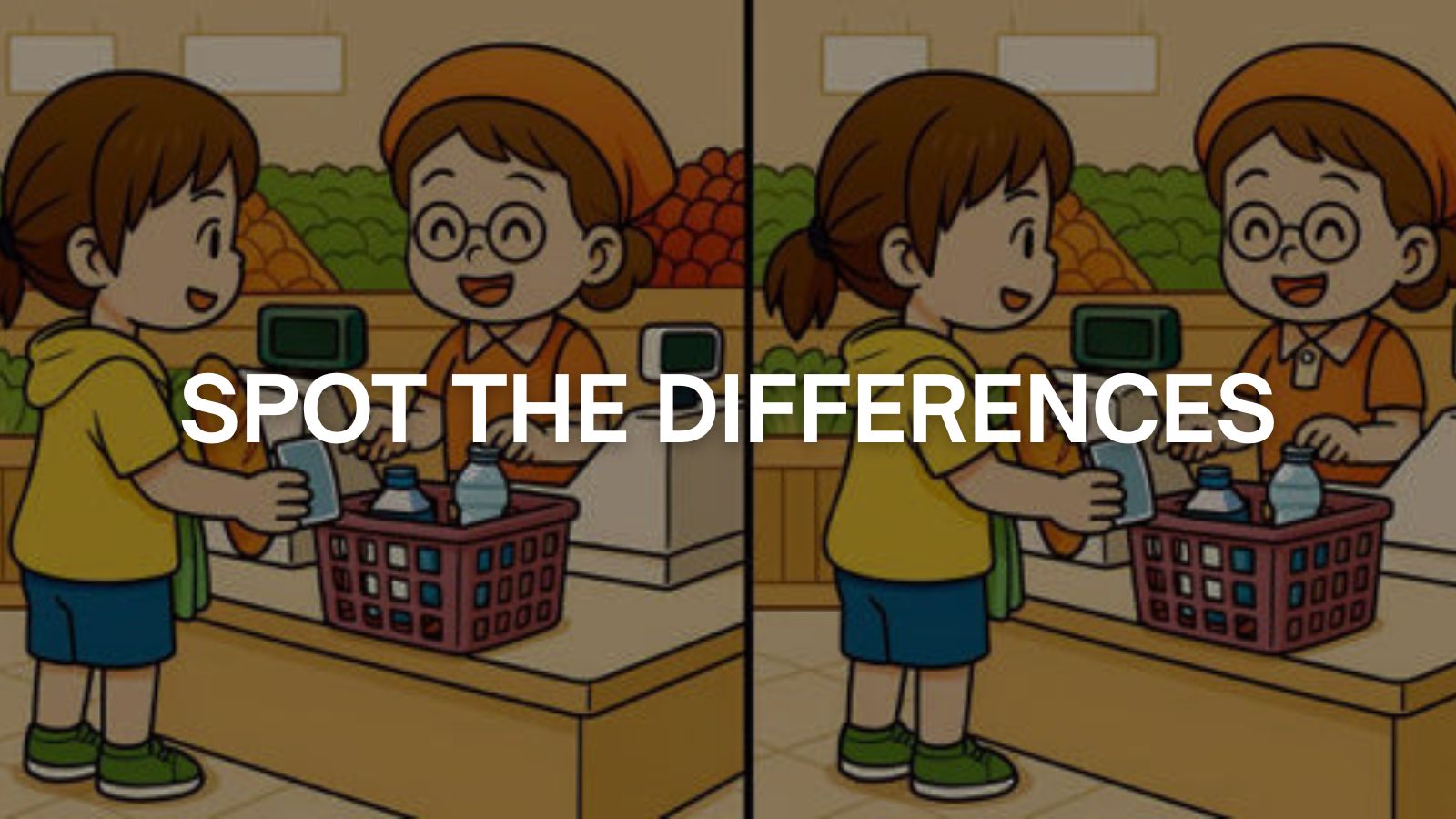
This methodical approach breaks down the visual field into manageable segments, reducing the cognitive load and allowing for a more systematic search. By focusing on specific areas, participants can train their brains to become more attuned to anomalies within those regions before moving on to the next. This not only increases the chances of success but also reinforces the practice of focused observation.
The puzzle explicitly challenges participants to set a timer for 20 seconds, adding an element of urgency and encouraging rapid information processing. This time constraint simulates real-world scenarios where quick decision-making and efficient analysis are crucial. It pushes individuals to refine their search strategies and rely on their developing visual memory and pattern recognition skills.
The Psychological Underpinnings of Cognitive Engagement
Beyond the immediate satisfaction of solving a puzzle, the psychological benefits of these activities are significant. Cadabam highlights that engaging with these visual challenges offers a potent form of active cognitive engagement. "From a psychological perspective, she highlights that these puzzles provide a form of active cognitive engagement because they require sustained concentration, rapid information processing, and coordination between attention and memory systems."
This sustained concentration is vital in an era where our attention spans are constantly tested by digital distractions. The ability to focus on a single task, to filter out irrelevant stimuli, and to maintain that focus over a period of time is a critical skill that can be honed through activities like these puzzles. Furthermore, the rapid information processing required to compare two images and identify differences in a limited timeframe trains the brain to work more efficiently.
The coordination between attention and memory systems is also a key takeaway. The brain must not only pay attention to the details present in each image but also retain a mental representation of one image to compare it with the other. This constant interplay between attending to new information and recalling previously processed information strengthens the neural pathways involved in both attention and memory, contributing to overall cognitive resilience.
A Weekly Dose of Mental Gymnastics
The "Great Detective Cookie" puzzle is not a one-off event but part of a recurring series. The article teases the reveal of the solution to the current puzzle and promises a brand-new visual mystery for the following week, encouraging a sustained commitment to cognitive engagement. This weekly cadence provides a consistent opportunity for individuals to practice and improve their mental skills, fostering a habit of active learning and cognitive exploration.
The inclusion of a "Click to see the answer to last week’s challenge" feature, although currently empty in the provided text, suggests a commitment to transparency and a learning process for participants. This allows those who struggled to understand the hidden discrepancies and learn from the experience, further enhancing the educational value of the puzzle. The implication is that each week’s puzzle builds upon the skills developed in previous weeks.
The article concludes by emphasizing the collaborative nature of such challenges, implicitly suggesting that sharing the experience and discussing strategies can further enhance learning and engagement. While the provided content focuses on individual cognitive benefits, the social aspect of puzzle-solving, whether through online forums or in-person discussions, can amplify its positive impact.
In essence, this seemingly simple "spot the difference" puzzle serves as a potent reminder that mental fitness is as crucial as physical fitness. By engaging with these challenges, individuals in New Delhi and beyond are not just passing the time; they are actively investing in their cognitive health, sharpening their minds, and preparing themselves for the complexities of an ever-evolving world. The supermarket scene, a mundane backdrop for our daily lives, transforms into a vibrant training ground for the mind, proving that even the smallest details can hold the greatest significance when we take the time to truly observe.
