Doha, Qatar – July 16, 2026 – Argentina has once again demonstrated their remarkable resilience and championship pedigree, securing a dramatic 2-1 comeback victory against England in a pulsating FIFA World Cup 2026 semifinal. The defending champions booked their spot in a record seventh World Cup final, but their triumph was immediately overshadowed by a contentious offside decision involving superstar Lionel Messi that led to their crucial equaliser.
The thrilling encounter, played out in front of a capacity crowd at Lusail Stadium, saw Argentina claw their way back from a deficit for the second time in the tournament. Enzo Fernandez’s 85th-minute volley, which drew them level, became the focal point of an intense debate, with England players and fans vehemently protesting Messi’s involvement in the build-up. Despite immediate appeals and widespread media speculation, the Video Assistant Referee (VAR) ultimately upheld the goal, ruling Messi to be onside by the narrowest of margins. Lautaro Martinez then sealed Argentina’s dramatic progression with a stoppage-time winner, sending the Albiceleste faithful into raptures and crushing English hopes.
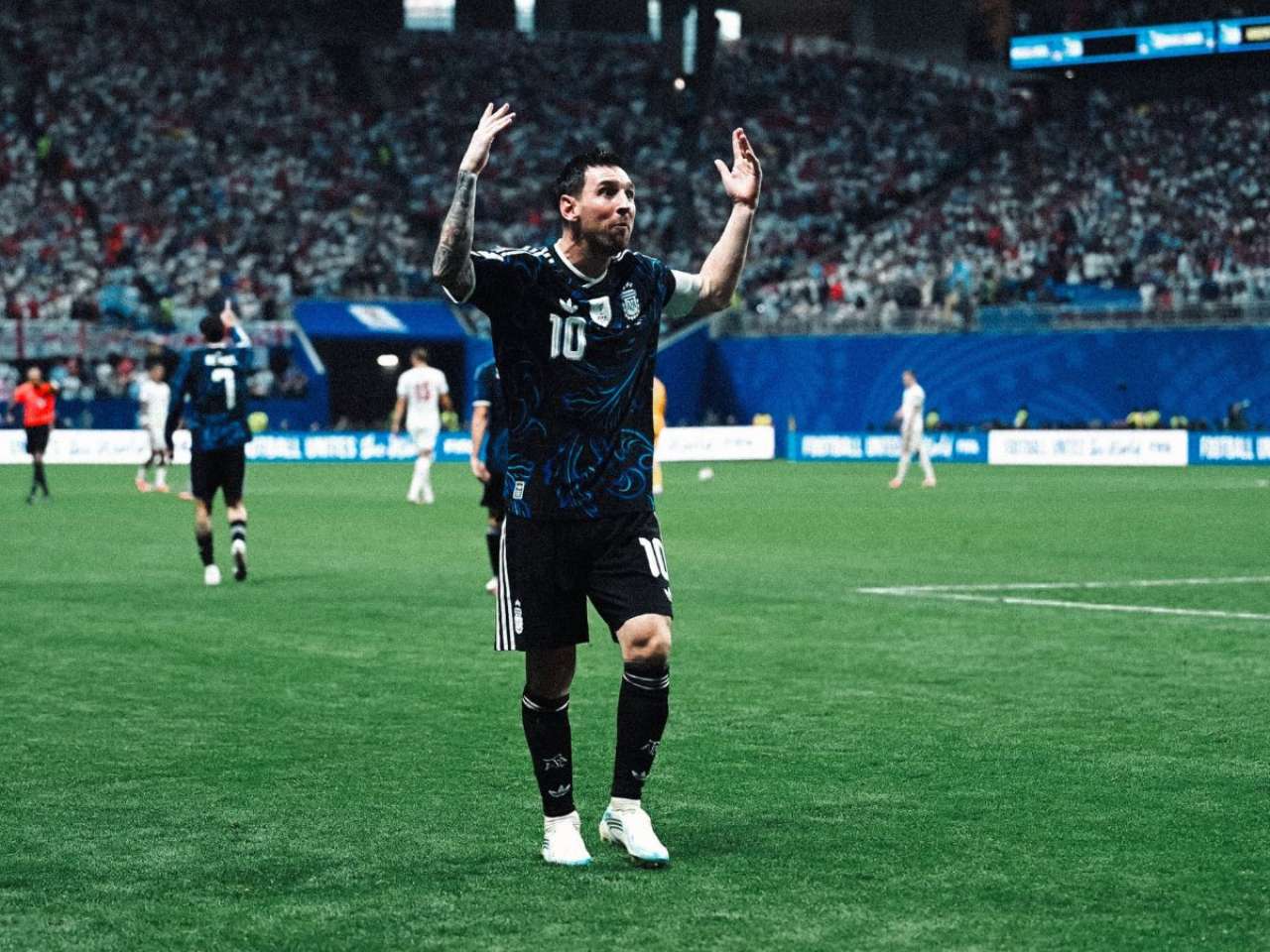
The victory propels Argentina into a showdown with Spain for the coveted trophy, as they aim to become the first nation in 64 years to win back-to-back World Cups. For England, the defeat means a battle for third place against France, leaving them to ponder what might have been, particularly regarding the contentious decision that shifted the momentum of the game.
Chronology of a Semifinal Thriller
The atmosphere was electric as two footballing giants, steeped in rich World Cup history and rivalry, clashed for a place in the final. The opening exchanges were cagey, with both teams demonstrating tactical discipline. England, buoyed by their strong defensive record throughout the tournament, sought to contain Argentina’s attacking flair, while Argentina, spearheaded by Messi, probed for openings with their characteristic fluid passing.
)
The first half concluded goalless, a testament to the high stakes and the quality of both defences. Neither side managed to create a truly clear-cut opportunity, with midfield battles dominating proceedings and chances often fizzling out in the final third. The tension was palpable, building towards an inevitable breakthrough.
The second half exploded into life. In the 55th minute, England seized the initiative. A swift counter-attack saw Jude Bellingham surge through midfield, releasing Bukayo Saka down the right flank. Saka’s perfectly weighted cross found Anthony Gordon, who had made an intelligent run into the box, and the winger clinically finished past the Argentine goalkeeper, sending the English contingent into delirium. The goal gave England a vital lead and seemed to put them in control, forcing Argentina to chase the game.

As the clock ticked down, Argentina intensified their pressure. England defended resolutely, absorbing wave after wave of attack, but the defending champions’ relentless spirit refused to wane. With just five minutes remaining in regular time, the moment of controversy, and ultimately, the equaliser, arrived.
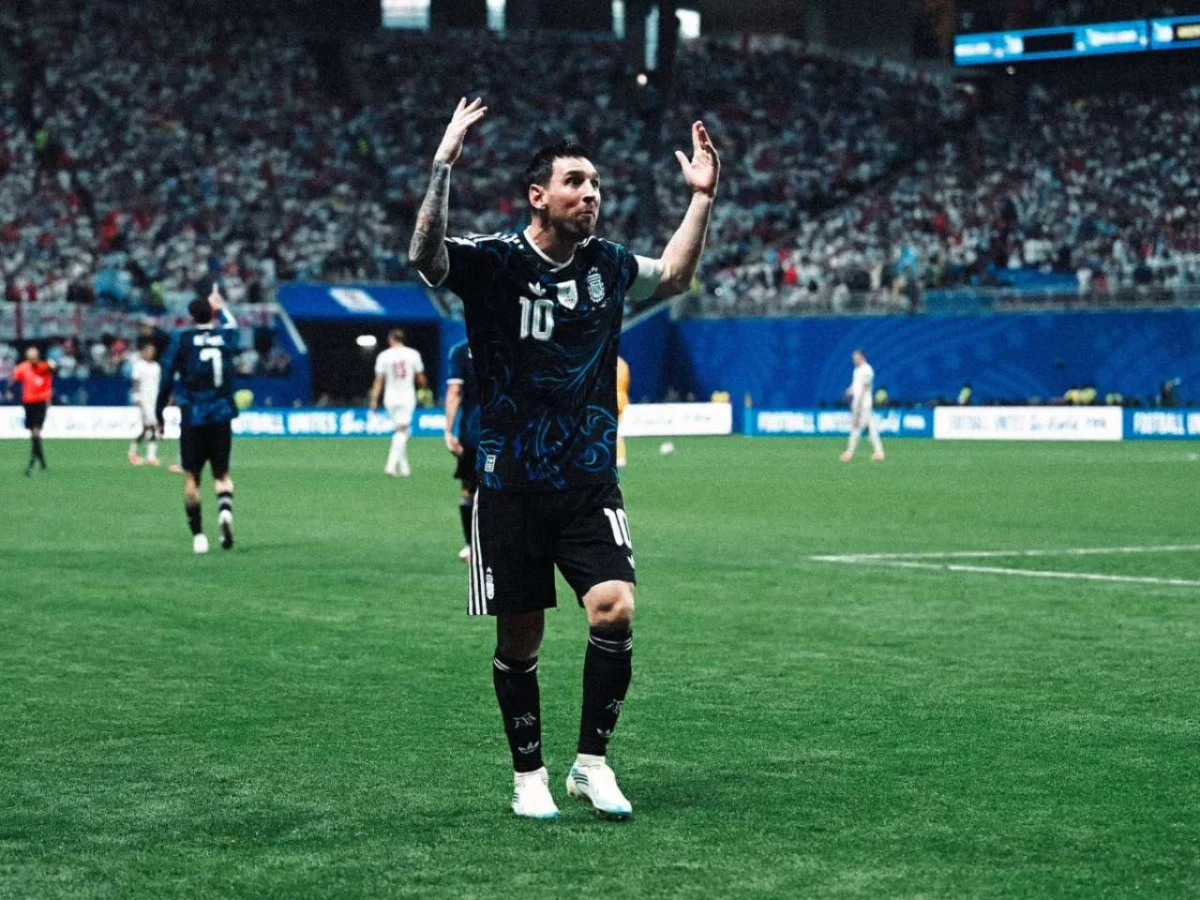
Argentina won a corner on the left side. Messi, opting for a short corner, received the ball back from a teammate just outside the box. As he gathered possession and prepared to drive into a dangerous area, the English defence immediately raised their hands, convinced that Messi had strayed offside when the ball was played to him. Messi, seemingly oblivious to the protests, executed a sublime pass into the box, finding Enzo Fernandez. Fernandez, with exquisite technique, smashed a powerful volley into the net, levelling the score at 1-1 and igniting a firestorm of debate.
)
The referee, amidst fervent English protests, pointed to the centre circle, indicating a goal. However, the decision was immediately referred to VAR. The stadium held its breath as the VAR team meticulously reviewed the footage, focusing intensely on Messi’s position at the precise moment the ball left his teammate’s foot during the short corner routine. Replays on the stadium screens showed a razor-thin margin, with lines drawn to determine the exact positioning. After several tense minutes, the VAR official communicated the decision: goal stands. Messi was deemed to be just onside.
The decision was met with a mixture of relief and fury. Argentine players celebrated wildly, emboldened by their comeback. English players, visibly distraught, surrounded the referee, their frustration palpable. The controversy, however, only served to galvanize Argentina further.
)
Deep into stoppage time, with the match seemingly headed for extra time, Argentina delivered the decisive blow. A quick interchange of passes in midfield opened up the English defence, and Lautaro Martinez, finding space inside the area, fired a low shot past the English goalkeeper. The net bulged, and the stadium erupted. It was a clean, undeniable strike that secured a dramatic 2-1 victory for Argentina, sending them to their second consecutive World Cup final and their third since the turn of the millennium.
The Offside Conundrum: Understanding IFAB Law 11 and VAR
The controversy surrounding Messi’s involvement in Argentina’s equaliser hinges entirely on the interpretation and application of Law 11 of the Laws of the Game, as governed by the International Football Association Board (IFAB), and the precise technology employed by VAR.
)
IFAB Law 11: The Offside Rule
Law 11 states that a player is in an offside position if:
- Any part of their head, body or feet is nearer to the opponents’ goal line than both the ball and the second-to-last opponent.
- However, a player is not in an offside position if they are level with the second-to-last opponent or the last two opponents.
Crucially, being in an offside position is not an offence in itself. An offence only occurs if a player, being in an offside position, becomes involved in active play by:
)
- Interfering with play (playing or touching the ball passed or touched by a teammate).
- Interfering with an opponent (preventing an opponent from playing or being able to play the ball by obstructing the opponent’s line of vision, challenging an opponent for the ball, clearly attempting to play a ball which is close when this impacts on an opponent, or making an obvious action which clearly impacts on the ability of an opponent to play the ball).
- Gaining an advantage by playing the ball or interfering with an opponent when it has rebounded or been deflected off the goalpost, crossbar, an official or an opponent, or had a deliberate save by any opponent.
The key phrase here is "at the moment the ball is played or touched by a teammate." The VAR review focused on this exact millisecond, assessing Messi’s position relative to the second-to-last English defender when his teammate made the pass from the short corner.
VAR’s Role and Semi-Automated Offside Technology
The Video Assistant Referee (VAR) system, first fully implemented at the 2018 World Cup, is designed to correct "clear and obvious errors" and "serious missed incidents" in four match-changing situations: goals, penalty incidents, direct red cards, and mistaken identity. In the case of offside, VAR provides an objective review of factual decisions.
)
For the FIFA World Cup 2026, the technology has advanced further with the widespread use of semi-automated offside technology. This system utilizes 12 dedicated tracking cameras mounted underneath the stadium roof, which track 29 data points on each player’s body at 50 frames per second. These data points cover all limbs and extremities relevant to the offside rule. A sensor inside the match ball sends data 500 times per second, providing highly accurate detection of the kick point.
This combination of limb-tracking data and ball data is processed by an artificial intelligence (AI) system, which automatically generates a 3D model of the players’ positions and the ball’s trajectory. When a potential offside incident occurs, the system can almost instantly alert the VAR officials. The VAR then visually validates the system’s proposed offside line and the exact kick-point, communicating the decision to the on-field referee. This technology aims to eliminate human error in drawing lines and determining the precise moment of the pass, making offside calls far more accurate, albeit often by mere centimetres.
)
In Messi’s case, the semi-automated system would have meticulously analysed the exact position of his body parts (shoulder, foot, etc.) relative to the second-to-last English defender at the moment his teammate struck the ball. The VAR’s ruling that Messi was "just onside" implies that, despite visual ambiguity for the naked eye and even standard replays, the technological analysis determined that no part of his body relevant to the offside rule was ahead of the second-to-last defender. This precision, while frustrating for the aggrieved party, is the very purpose of the advanced VAR system. It removes the subjective element from what is fundamentally an objective measurement.
Historical Parallels and Enduring Debates
World Cup history is littered with controversial goals and decisions, particularly those involving offside. Diego Maradona’s infamous "Hand of God" goal against England in 1986 remains a prime example of a non-VAR era decision that shaped destiny. More recently, VAR itself has been at the centre of numerous debates, with its application sometimes criticized for breaking the flow of the game or for inconsistent rulings.
)
Argentina, in particular, has a history of pivotal moments marked by controversy. From Maradona’s genius to more recent VAR-influenced decisions, their path in major tournaments often seems intertwined with dramatic, debatable calls. This semi-final incident, while ultimately validated by technology, adds another chapter to this rich, often contentious, narrative. The debate over whether the spirit of the game is served by such marginal, technologically-driven decisions will undoubtedly continue, regardless of their factual accuracy.
Official Responses and Lingering Frustration
The aftermath of the match saw contrasting emotions and official statements from both camps.
)
Argentina’s Triumph and Resilience
For Argentina, the overriding sentiment was one of immense pride and belief. Lionel Messi, speaking after the match, encapsulated the team’s spirit. "We dug deep," he stated. "England made it very difficult for us, but this team never gives up. We showed our fighting spirit, our belief in each other, and that’s why we are in the final. VAR made the correct decision, it was a close call, but the technology is there for a reason, and it confirmed we were onside."
Head coach Lionel Scaloni echoed Messi’s sentiments, emphasizing the team’s mental fortitude. "Our belief is unbreakable. Even when we went behind, I knew this team had the character to come back. The VAR decision was reviewed thoroughly, and the outcome speaks for itself. We respect the process, and now we focus on Spain. This is a special group, and they deserve this opportunity." Enzo Fernandez, the goalscorer, expressed his elation, crediting Messi’s vision: "It was an incredible feeling to score such a crucial goal. Leo’s pass was perfect; he creates magic even in the tightest spaces. We are one step closer to our dream."
)
England’s Disappointment and Scrutiny
On the English side, disappointment was palpable, tinged with frustration over the offside call. Manager Gareth Southgate, while commending his team’s effort, openly questioned the decision. "I’m incredibly proud of my players; they left everything on the pitch. To lose in this manner, after being so close, is gut-wrenching. The offside decision for their first goal is incredibly difficult to take. From our perspective on the touchline, and what my players saw, it looked offside. VAR is there to bring clarity, but when decisions are made by such fine margins, it’s hard to accept when they go against you in a semi-final. We will review the incident, but right now, the pain is immense."
Captain Harry Kane added, "We gave it our all. We thought we had the lead and were controlling the game. When the equaliser went in, there was a collective feeling that it was offside. VAR looked at it, and they made their decision, but it’s tough. These are the moments that define tournaments, and this one didn’t go our way." English pundits and media outlets immediately dissected the decision, with many expressing outrage and fueling the debate further, questioning the efficacy and fairness of such marginal calls in high-stakes matches.
)
FIFA and IFAB’s Stance
While no immediate official statement was issued by FIFA or IFAB directly on this specific incident, their consistent stance has been to defend the integrity and accuracy of the semi-automated offside technology. Officials have repeatedly emphasized that the system provides objective, data-driven decisions that are superior to human visual assessment. The philosophy is that while a decision may appear controversial or even incorrect to the human eye, the technology provides a precise, factual basis for the ruling, leaving no room for subjective interpretation of player position or kick point. The goal is to eliminate human error in factual decisions, even if it leads to emotionally charged outcomes due to incredibly fine margins.
Implications: A Final Showdown and Enduring Legacies
Argentina’s victory sets up a tantalizing final against Spain, who overcame France in the other semi-final. The clash will pit two tactical powerhouses against each other, both vying for global supremacy.
)
Argentina’s Quest for Immortality
For Argentina, the final represents a chance at immortality. A victory would not only secure their fourth World Cup title but also make them the first team since Brazil in 1958 and 1962 to win back-to-back World Cups. The weight of history and expectation will rest heavily on their shoulders, particularly on Lionel Messi. Widely considered the greatest player of all time, another World Cup trophy would cement his unparalleled legacy, potentially marking a fairytale ending to what is widely speculated to be his final World Cup appearance. The narrative of Messi leading his nation to consecutive triumphs would elevate him to an almost mythical status in the pantheon of sporting legends.
England’s Reflection and Future
For England, the journey ends in heartbreak, but their campaign has shown promise. The third-place playoff against France offers a chance to finish the tournament on a high note and secure a respectable position. Manager Gareth Southgate will face scrutiny, but the young talent within the squad, including the likes of Jude Bellingham, Bukayo Saka, and Anthony Gordon, suggests a bright future. The experience of reaching another semi-final, despite the ultimate disappointment, will undoubtedly serve as a crucial learning curve for this generation of English players. The task now is to regroup, learn from the narrow defeat, and build towards future successes.
)
The Golden Boot Race and VAR’s Future
The final and the third-place playoff will also see the continuation of the fascinating Golden Boot race between Lionel Messi and Kylian Mbappe. Both players have been instrumental for their respective nations, and their individual battle for the top scorer award adds another layer of intrigue to the tournament’s conclusion.
The controversial offside decision involving Messi will undoubtedly reignite the global debate surrounding VAR. While the technology aims for ultimate fairness and accuracy, incidents like this highlight the emotional impact of such marginal calls, especially when they occur in critical moments of high-stakes matches. The ongoing challenge for FIFA and IFAB will be to balance technological precision with the human element and perception of the game, ensuring that the spirit of football remains intact even as its officiating evolves.
)
As the world eagerly awaits the final showdown between Argentina and Spain, the echoes of the semi-final drama, particularly the contentious offside call, will resonate, reminding everyone that in football, glory and controversy often walk hand-in-hand. The trophy will either head back to Europe or stay in South America, and the answer is just days away.