

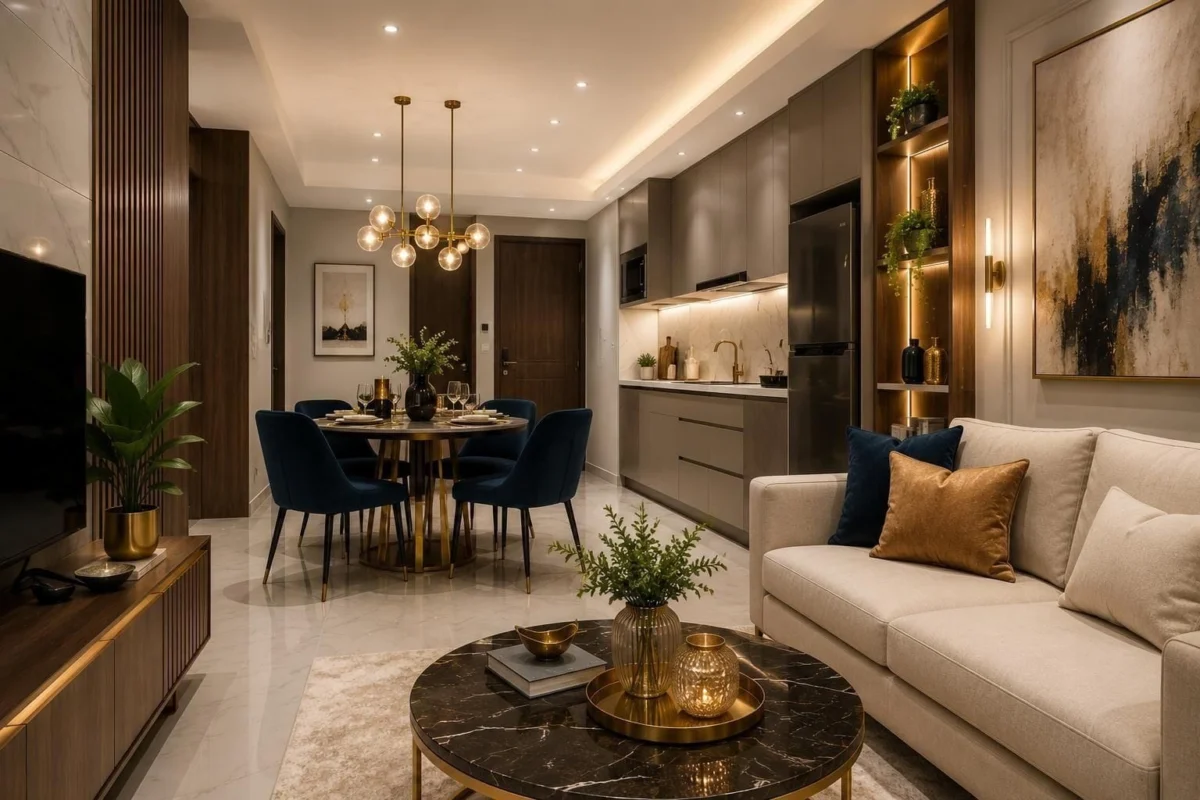
In the rapidly evolving tapestry of global urbanism, the traditional markers of prestige are undergoing a radical transformation. For decades, the "dream home" was synonymous with sprawling estates, multi-car garages, and vast, often underutilized square footage. However, as the world’s Tier-1 and Tier-2 cities grapple with unprecedented population density and skyrocketing real estate prices, a new philosophy is emerging. The era of "bigger is better" is being replaced by an era of "better is essential."
Today, luxury is no longer a metric of size; it is a metric of intelligence, efficiency, and emotional resonance. As homeowners increasingly opt for smaller, more central residences, the architectural and interior design industries are pivoting to answer a critical question: How can a compact space deliver a premium, high-end living experience without expanding its physical footprint?
Main Facts: The Shift from Quantity to Quality
The current trend toward compact luxury is driven by a confluence of economic and lifestyle factors. In major metropolitan hubs, real estate prices have outpaced wage growth, making large-scale properties inaccessible for many. Simultaneously, a demographic shift—led by millennials and Gen Z—prioritizes location, proximity to work, and "experience" over the maintenance burdens of a large estate.
The core of this movement lies in the concept of "Efficient Luxury." This philosophy posits that a well-designed 500-square-foot apartment can offer a higher quality of life than a poorly planned 2,000-square-foot house. Modern luxury is defined by the seamlessness of one’s daily routine, the tactile quality of materials, and the ability of a space to adapt to the occupant’s needs.
Industry experts note that "modest" no longer means "basic." A small home can feature state-of-the-art automation, artisanal finishes, and bespoke furniture that elevate it to the status of a "jewel box" home—small in scale but immense in value and detail.
Chronology: The Evolution of the Urban Dwelling
To understand where we are going, we must look at how the perception of the "home" has changed over the last century:
- The Post-War Era (1950s–1980s): The rise of the suburb. Success was measured by the "McMansion"—large homes on large plots of land. Internal space was divided into rigid, single-use rooms (formal dining rooms, guest parlors).
- The Tech Boom & Urban Migration (1990s–2010s): As jobs moved back to city centers, apartments became more popular. However, the design remained traditional, often resulting in cramped, dark units that tried to mimic larger houses on a smaller scale.
- The Modern Pivot (2020–Present): Post-pandemic life redefined our relationship with our four walls. With the rise of hybrid work and a focus on "wellness," the home became a sanctuary. The focus shifted toward "Intelligent Design," where every inch must justify its existence through function or beauty.
This chronology shows a clear trajectory: we have moved from external displays of wealth (size) to internal experiences of comfort (design).
Supporting Data: The Pillars of Effective Compact Design
Creating a luxury experience in a small footprint requires a sophisticated understanding of several architectural pillars.
1. Effective Spatial Planning and Circulation
The foundation of any successful small home is the floor plan. Designers now utilize "Open Planning" techniques to eliminate unnecessary partitions that "eat" space. By analyzing "human circulation"—the paths people take as they move through a home—architects can remove obstructions and create a sense of flow. Visual continuity is key; when the eye can travel from one end of a home to the other without hitting a wall, the brain perceives the space as significantly larger.
2. The Power of Natural Light and Layered Illumination
Light is perhaps the most effective tool in the designer’s kit for expanding perceived space. Large, floor-to-ceiling windows and the strategic use of mirrors can double the visual volume of a room.
Beyond natural light, "Layered Lighting" is essential for luxury. This involves a three-tier approach:
- Ambient Lighting: General illumination for visibility.
- Task Lighting: Focused light for cooking, reading, or working.
- Accent Lighting: Used to highlight architectural features or art, adding depth and "drama" to the space.
3. Multifunctionalism and the "Swiss Army" Home
In a compact luxury home, furniture must work twice as hard. The "multipurpose" trend has evolved from clunky sofa-beds to sophisticated, custom-engineered solutions. Think of dining tables that fold into wall art, or "smart" storage hidden beneath raised flooring. The goal is to prevent the home from feeling like a warehouse while ensuring all necessities are tucked away, maintaining a "minimalist luxury" aesthetic.
4. Materiality and the "Touch" Factor
In a small space, occupants are closer to the surfaces around them. This makes the choice of materials critical. Using a coherent palette of high-end, natural materials—such as marble, sustainable hardwoods, and brushed metals—creates a sense of unity. When the same flooring runs throughout the entire unit, it blurs the boundaries between rooms, making the entire home feel like one expansive suite.
Official Responses: The Designer’s Perspective
Leading the charge in this design revolution are firms like Stories Design Studio, which specializes in translating complex human needs into physical spaces. The studio’s approach emphasizes that the design process for a 400-square-foot studio is often more rigorous than that of a mansion because there is zero margin for error.
Revathi Rao Gurram, Founder and Design Principal at Stories Design Studio, emphasizes that the human element must precede the floor plan. "Creating a small house needs more imagination, not less," Gurram states. "When every square foot is designed keeping in mind the occupants of the house, even a small house can be spacious, practical, and very personal to you. The essence of luxury lies in its functionality and not in its size."
This sentiment is echoed across the industry. Developers are increasingly partnering with specialized interior designers at the pre-construction stage to ensure that "compact" does not mean "compromised." The consensus among professionals is that a "people-centered design" approach—where the space adapts to the user rather than the user struggling to fit into the space—is the ultimate luxury.
Implications: The Future of Urban Living
The shift toward compact luxury has profound implications for the future of real estate and urban planning.
1. Sustainability and Environmental Impact:
Smaller homes require fewer materials to build and significantly less energy to heat and cool. As the global focus on "Green Building" intensifies, the compact luxury home stands as a model for sustainable urban living. It proves that a high-end lifestyle does not have to come at the cost of a massive carbon footprint.
2. Economic Accessibility of "Prime" Locations:
By perfecting the small-format luxury home, developers can offer "premium" living in the heart of the city’s most desirable districts. This allows a broader range of professionals to live near their workplaces, reducing commute times and improving overall urban productivity and well-being.
3. The Rise of Customization:
As homes get smaller, the demand for "bespoke" solutions will rise. Standard, mass-produced furniture often fails in compact environments. This is fueling a boom in the custom joinery and "made-to-measure" furniture markets, where pieces are designed to fit specific nooks, maximizing every available inch of vertical and horizontal space.
4. Psychological Well-being:
There is a growing body of research suggesting that cluttered, oversized, and poorly maintained homes can increase stress. In contrast, a well-organized, light-filled, and intentionally designed compact home can foster a sense of calm and "Zen." The "wellness focus" of modern buyers is perfectly aligned with the principles of compact luxury.
Conclusion: The Soul of the Home
As urban landscapes continue to densify, the narrative of the "big house" is being rewritten. We are entering an age where luxury is defined by the thoughtfulness of a corner, the warmth of a sunlit nook, and the intelligence of a hidden storage wall.
Ultimately, a home is not merely a collection of square feet; it is a backdrop for a life well-lived. Whether a residence is 400 or 4,000 square feet, its value is determined by how well it serves the people within it. In the new urban economy, the most valuable luxury is not space—it is design.
Disclaimer: This report provides information based on current industry trends and expert insights. Real estate markets are subject to change, and readers are encouraged to verify specific property details and market data independently. The views expressed by design professionals reflect current architectural philosophies and may vary based on individual project requirements.
