

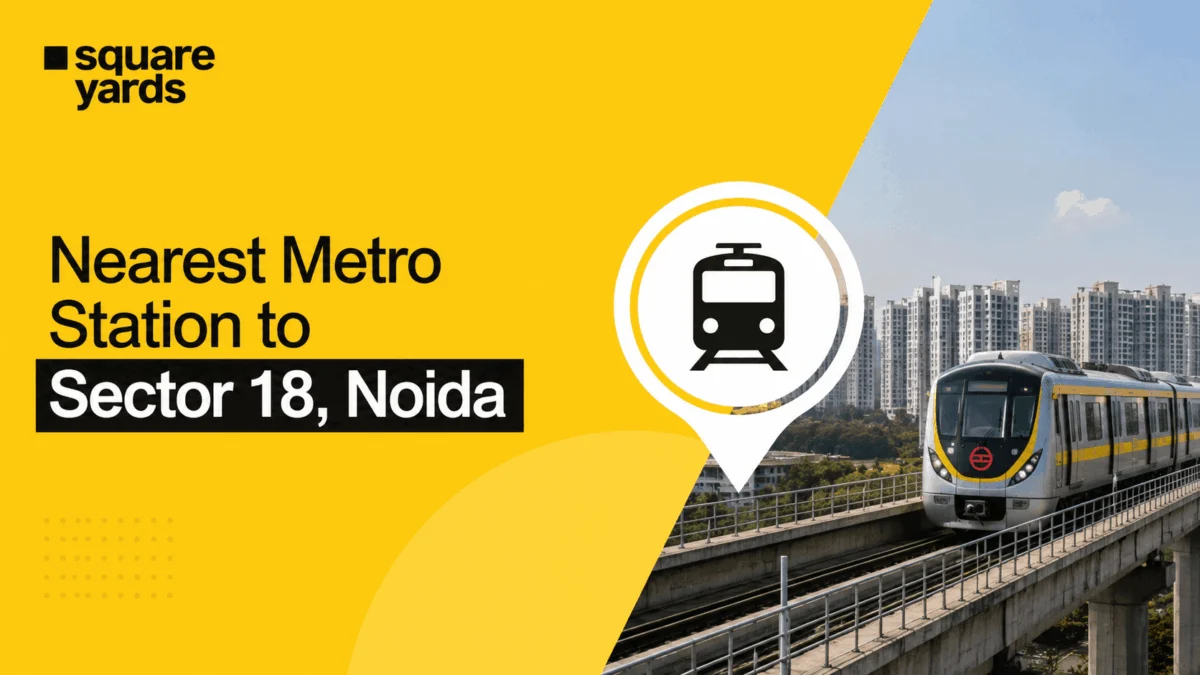
Noida Sector 18 stands as a testament to the transformative power of infrastructure-led urban development. Often referred to as the "Connaught Place of Noida," this sector has transitioned from a localized retail pocket into a massive commercial and entertainment powerhouse. At the heart of this metamorphosis is the Delhi Metro’s Blue Line, specifically the Noida Sector 18 station, which serves as the primary artery for the thousands of shoppers, office-goers, and commuters who converge here daily.
Main Facts: The "Zero-Kilometer" Advantage
The defining characteristic of Sector 18 is its "Zero-Kilometer" connectivity. Unlike many other commercial hubs in the National Capital Region (NCR) where the metro station requires a secondary commute via rickshaw or bus, the Noida Sector 18 Metro Station is integrated directly into the sector’s fabric.
The Transit Core
The station, situated on the Blue Line (Line 3/4), is elevated and sits right above the bustling Atta Market. For most visitors, the walk from the platform to major retail landmarks like DLF Mall of India, The Great India Place (GIP), or the traditional storefronts of Atta Market is a mere five to seven minutes. This accessibility has effectively eliminated the "last-mile" barrier that plagues other emerging markets in Noida.
A Diverse Ecosystem
Sector 18 is not just a shopping destination; it is a complex ecosystem. It houses:
- Retail Giants: DLF Mall of India (one of the country’s largest), GIP Mall, and Gardens Galleria.
- Traditional Markets: Atta Market, famous for its street food and affordable apparel.
- Commercial Hubs: Modern office complexes like Wave One and Ocean Plaza.
- Media Presence: Its proximity to Sector 16A (Film City) makes it the default leisure hub for the media industry.
Chronology: From Local Market to Regional Titan
The trajectory of Sector 18 can be traced through the expansion of the Delhi Metro and the subsequent real estate boom.
2009: The Blue Line Revolution
The most significant milestone occurred in November 2009, when the Delhi Metro Rail Corporation (DMRC) extended the Blue Line from Yamuna Bank into Noida. The opening of the Sector 18 station immediately shifted the center of gravity for retail in the NCR. Before 2009, reaching Sector 18 from Delhi involved a tedious commute over the DND Flyway or the Kalindi Kunj bridge. The metro brought the sector within 30 minutes of Central Delhi (Rajiv Chowk).
2011–2016: The Mall Explosion
Following the ease of access provided by the metro, the mid-2010s saw the development of "mega-malls." The footfall guaranteed by the metro station justified the massive capital expenditure required for projects like the DLF Mall of India. During this period, Sector 18 transitioned from a "weekend destination" to a "daily-traffic hub."
2017: The Magenta Line Integration
The inauguration of the Botanical Garden interchange station (just one stop away from Sector 18) in 2017 provided the second major boost. By connecting the Blue Line with the Magenta Line, commuters from South Delhi (Hauz Khas, Greater Kailash) and the Indira Gandhi International Airport could reach Sector 18 without having to navigate the congested Mandi House or Rajiv Chowk interchanges.
Supporting Data: Connectivity and Logistics
To understand the scale of Sector 18’s dominance, one must look at the technical data governing its transit network.
Metro Station Proximity Matrix
The following table outlines the strategic positioning of Sector 18 relative to its neighboring stations:
| Metro Station | Metro Line | Distance from Sector 18 | Walking Time | Accessibility Note |
|---|---|---|---|---|
| Noida Sector 18 | Blue Line | 0 km | 5–6 min | Directly serves the main market and malls. |
| Botanical Garden | Blue & Magenta | ~1.1 km | 14–16 min | Crucial interchange for South Delhi/Airport. |
| Noida Sector 16 | Blue Line | ~2 km | 25–29 min | Serves the Film City and IT pockets. |
| Noida Sector 15 | Blue Line | ~3 km | 35+ min | Primarily residential; not practical for walking. |
Operational Timings
The efficiency of the sector is supported by the high frequency of trains. During peak hours (8:00 AM – 11:00 AM and 5:00 PM – 8:00 PM), trains arrive every 3 to 5 minutes.
- Toward Noida Electronic City: First train ~5:53 AM; Last train ~11:15 PM.
- Toward Dwarka Sector 21: First train ~6:06 AM; Last train ~12:11 AM.
Last-Mile Connectivity Options
While walking is the preferred method for those visiting the malls, the sector offers a robust internal transport network for those heading to deeper pockets of the market:
| Transport Option | Availability | Typical Fare | Best For |
|---|---|---|---|
| E-Rickshaw | High (Market areas) | ₹10–₹30 | Quick hops to Atta Market or Wave One. |
| Auto-Rickshaw | High (Both gates) | ₹20–₹80 | Reaching Sector 19 or Sector 27. |
| App-based Cabs | 24/7 | ₹80–₹250 | Cross-city travel or late-night returns. |
| DTC/NMRC Buses | Frequent | ₹10–₹25 | Budget travel to Greater Noida or Delhi. |
Official Perspectives and Urban Planning
Urban planners often cite Sector 18 as an accidental success in Transit-Oriented Development (TOD). While the sector wasn’t originally designed with the "live-work-play" density of modern TODs, the DMRC’s intervention retroactively turned it into one.
The DMRC’s Role
According to DMRC operational reports, the Sector 18 station consistently ranks among the highest-footfall stations in the Noida segment of the Blue Line. Officials note that the station was designed with multiple exit gates to distribute traffic between the traditional Atta Market and the modern commercial developments, a strategy that has successfully prevented "bottlenecking" during peak holiday seasons.
The "CP" Comparison
Journalists and urban historians often compare Sector 18 to Delhi’s Connaught Place. Like CP, Sector 18 features a central metro hub surrounded by concentric circles of commerce. However, unlike CP’s colonial architecture, Sector 18 is a vertical jungle. "The metro is the equalizer here," says a local urban consultant. "It brings the high-end luxury shopper from South Delhi and the budget hunter from East Delhi to the same platform."
Implications: Real Estate and Future Outlook
The synergy between the metro and the market has created a unique real estate climate in Sector 18, characterized by high demand but polarized asset classes.
Commercial Real Estate: The "Sure Thing"
For commercial investors, Sector 18 remains the "gold standard" in Noida. The presence of the metro station ensures a constant stream of footfall that is relatively immune to economic downturns.
- Price Trends: Commercial spaces range from ₹10,500 to ₹16,700 per sq. ft., with premium spots near the metro fetching even higher rentals.
- Retail Resilience: Even as new "high-street" projects emerge in Sectors 150 or 129, Sector 18 maintains its lead because it is the most accessible point for the mass-market consumer.
Residential Real Estate: A Complex Picture
The residential market in Sector 18 is an anomaly. Because the sector was built "shops first," the housing stock is often older and lacks the gated-community amenities found in newer Noida sectors.
- The Buyer’s Dilemma: Investors often look at Sector 18 for high rental yields from working professionals who value the 5-minute walk to the metro. However, for families seeking quietude, the noise and congestion of the metro-adjacent market are significant deterrents.
- Comparative Pricing: At roughly ₹10,000–₹12,000 per sq. ft., residential prices are high due to land value, but the "lifestyle" value is often higher in Sector 15 or Sector 44.
The RRTS Factor: The Next Frontier
The future of Sector 18’s connectivity lies in the Delhi-Meerut Regional Rapid Transit System (RRTS). The New Ashok Nagar RRTS station is located in close proximity to the Noida-Delhi border. Once operational, it will allow commuters from Meerut, Ghaziabad, and Modinagar to reach the vicinity of Sector 18 in record time. This is expected to trigger a further spike in commercial property values as the "catchment area" for Sector 18 expands beyond the NCR into Western Uttar Pradesh.
Conclusion: The Challenges of Success
While the metro has been the catalyst for Sector 18’s growth, it has also brought challenges. The "Saturday evening rush" has become legendary, with the stretch between the metro station and the malls becoming nearly impassable for vehicles.
For the visitor, the advice remains consistent: the metro is not just the best way to reach Sector 18—it is often the only practical way. As the sector continues to densify with new office towers like Wave One nearing completion, the dependency on the Blue Line will only deepen. Sector 18 stands as a clear example that in the modern Indian city, a locality’s value is no longer determined by its roads, but by the tracks that run beneath or above them.
Frequently Asked Questions
1. What is the nearest metro station to Sector 18 Noida?
The Noida Sector 18 station on the Blue Line is the primary station, located directly within the sector.
2. How do I reach Sector 18 from South Delhi?
The fastest route is taking the Magenta Line to Botanical Garden and then switching to the Blue Line for a one-stop journey to Sector 18.
3. Is Sector 18 a good place to buy a house?
It is excellent for rental income due to its proximity to the metro and offices. However, those seeking quiet, gated communities may prefer neighboring sectors like 15 or 44, as Sector 18 is primarily commercial and very crowded.
4. Are there any interchanges near Sector 18?
No, the Sector 18 station itself is not an interchange. The nearest interchange is Botanical Garden (Blue/Magenta Lines), located about 1.1 km away.
5. How far is the Delhi Airport from Sector 18 via Metro?
By using the Magenta Line from Botanical Garden, one can reach the IGI Airport (Terminal 1) in approximately 45–50 minutes, making it one of the most accessible commercial hubs from the airport.
