

Bengaluru, India – The Indian electric two-wheeler landscape is on the cusp of a significant shift as Simple Energy, the Bengaluru-based electric vehicle (EV) manufacturer known for its high-performance credentials, prepares to enter the mainstream family scooter market. The company has officially confirmed that it will unveil its first family-oriented electric scooter on September 2, 2026.
This upcoming launch represents a strategic pivot for Simple Energy. Having previously focused on the premium, performance-heavy "enthusiast" segment with models like the Simple One and the ultra-long-range Simple Ultra, the company is now turning its sights toward the high-volume "family" category. This segment, currently dominated by legacy players and established startups, prioritizes practicality, comfort, and reliability over raw acceleration and top-end speed.
While the company has remained tight-lipped regarding the official branding, trademark filings and industry leaks strongly suggest the new model will be christened the Simple Arrive.
1. Main Facts: Bridging the Gap Between Performance and Practicality
The primary objective of the Simple Arrive is to provide a balanced ecosystem for the urban Indian family. Unlike the Simple One, which was designed to challenge the limits of torque and range, the Arrive is engineered for the daily commute, grocery runs, and the school drop-off.

Key Launch Details:
- Official Unveil Date: September 2, 2026.
- Expected Nomenclature: Simple Arrive and Simple Arrive Plus (based on trademark filings).
- Target Segment: Family-oriented electric scooters.
- Core Competitors: TVS iQube, Bajaj Chetak, and Ather Rizta.
- Manufacturing Philosophy: Heavy emphasis on in-house R&D and "Make in India" components.
The "Arrive" is expected to be more than just a watered-down version of the Simple One. It features a completely redesigned chassis and bodywork aimed at maximizing floorboard space, seat length, and under-seat storage—the three "holy grails" of the Indian family scooter market.
2. Chronology: The Evolution of Simple Energy
To understand the significance of the Simple Arrive, one must look at the trajectory of Simple Energy over the last few years.
- August 2021: Simple Energy first made headlines with the launch of the Simple One, promising industry-leading range and performance. The product faced several delays but established the brand as a serious technological contender.
- Early 2024: The company ramped up its delivery schedules and began expanding its service network across Tier-1 and Tier-2 cities in India.
- Mid-2025: Simple Energy introduced the Simple Ultra, a flagship model featuring a massive battery pack and a claimed IDC (Indian Drive Cycle) range of up to 400 km. This solidified their reputation in the performance and "range-anxiety-free" niche.
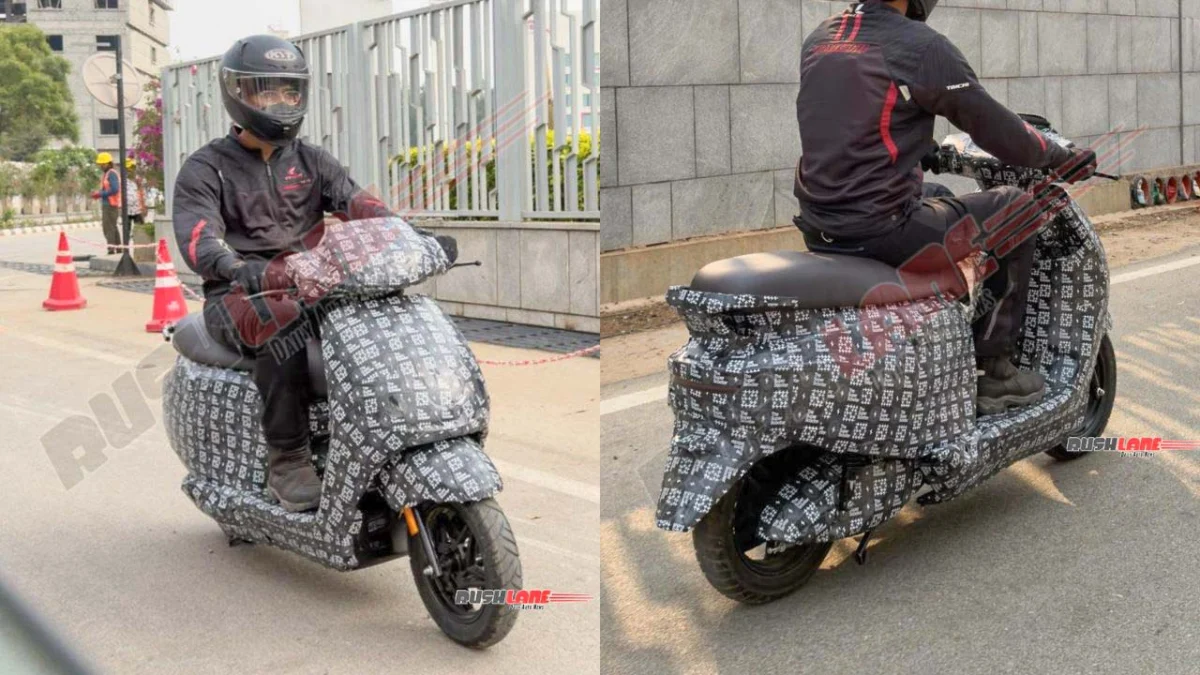
- March 2026: The first "spy shots" of a camouflaged, bulkier, and more utilitarian scooter surfaced on public roads. These images sparked rumors of a "family scooter" in the works.
- July 2026: Patent filings emerged, showcasing a design that departed from the sharp, aggressive lines of the Simple One in favor of a softer, more approachable aesthetic.
- August 2026: Simple Energy officially announces the September 2nd launch date, signaling their readiness to take on the mass market.
3. Supporting Data: Design, Engineering, and Market Positioning
Design and Ergonomics: Spied and Analyzed
The recent spy shots and patent documents provide a comprehensive look at what the Simple Arrive will offer. The design philosophy focuses on "cleanliness and utility."

- Front Fascia: The Arrive features a dual-chamber LED headlamp setup mounted on the apron. This provides a wider light throw, essential for poorly lit suburban roads.
- Braking and Suspension: The test mules were equipped with a front disc brake and telescopic front forks, ensuring a stable and comfortable ride. The rear is expected to feature a twin-shock setup to handle the weight of two adult passengers and additional luggage.
- Seating and Utility: One of the most prominent features is the long, flat seat. Unlike the stepped seats of performance scooters, a flat seat allows for better posture for the pillion and more flexibility for riders of various heights.
- Storage and Floorboard: The scooter boasts a spacious, flat footboard, designed to carry grocery bags or small parcels. Additionally, a storage cubby behind the front apron and a sturdy center stand reinforce its family-first identity.
Technical Speculation
While official specifications are reserved for the September 2nd event, industry experts anticipate a battery configuration optimized for efficiency. It is likely that Simple Energy will utilize a version of the 3.7 kWh battery unit seen in the Simple One S, or perhaps a slightly smaller, more cost-effective fixed battery pack to keep the price competitive.
The motor is expected to be a mid-mounted unit. This placement provides better weight distribution and balance compared to hub-mounted motors, which is a critical factor for a scooter intended to carry varying loads.
The Sales Landscape: Why the Shift?
Data from June 2026 highlights why Simple Energy is making this move. The top three selling electric scooters in India—the TVS iQube, Bajaj Chetak, and Ather Rizta—collectively surpassed 100,000 units in monthly sales.
These figures dwarf the sales of high-performance models. Consumers in the family segment are less concerned with a 0-40 km/h sprint time and more concerned with:

- Serviceability: A robust network for repairs.
- Reliability: Consistent performance in diverse weather conditions.
- Space: The ability to carry a family of two (and often a child) comfortably.
By launching the Arrive, Simple Energy is positioning itself to capture a slice of this 1-lakh-plus monthly unit market.
4. Official Responses and Manufacturing Philosophy
Simple Energy has long maintained that its competitive edge lies in its vertical integration. The company’s R&D operations cover everything from software and vehicle technology to the development of the electric powertrain.
In recent statements, the company emphasized its commitment to indigenous innovation. Simple Energy claims to be the first Indian Original Equipment Manufacturer (OEM) to commercially manufacture heavy rare earth-free electric motors.
The significance of Rare Earth-Free Motors:
Most EV motors rely on neodymium and dysprosium—materials largely controlled by global monopolies, primarily in China. By developing motors that do not rely on these "heavy rare earths," Simple Energy achieves three goals:

- Sustainability: Reducing the environmental impact associated with rare-earth mining.
- Supply Chain Security: Insulating the company from global geopolitical fluctuations and price hikes in the rare-earth market.
- Cost Efficiency: Potentially lowering the Bill of Materials (BoM), which can be passed on to the consumer as a lower purchase price.
"The upcoming product is a culmination of years of in-house research," a company spokesperson noted. "We aren’t just assembling parts; we are engineering a solution tailored for the Indian household."
5. Implications: What the ‘Simple Arrive’ Means for the Industry
The launch of the Simple Arrive has several far-reaching implications for the Indian EV ecosystem.
A Challenge to the "Big Three"
For the past year, the "Big Three" (TVS, Bajaj, and Ather) have enjoyed a relatively stable dominance in the family segment. Simple Energy’s entry brings a "tech-first" approach to a segment that has traditionally been more conservative. If Simple can offer a family scooter with the same software sophistication as the Simple One—such as over-the-air (OTA) updates, advanced navigation, and geofencing—at a price point that matches the Bajaj Chetak or TVS iQube, it could disrupt the current hierarchy.
The "Plus" Strategy
The trademarking of both "Arrive" and "Arrive Plus" suggests a tiered pricing strategy.

- Simple Arrive: Likely a base model with a smaller battery or fewer smart features, targeting the price-sensitive buyer.
- Simple Arrive Plus: A premium version with a larger range, faster charging capabilities, and perhaps a touchscreen instrument cluster.
This dual-model approach allows the brand to compete simultaneously with the entry-level variants of the Ola S1 series and the premium variants of the Ather Rizta.
Brand Perception Shift
Until now, Simple Energy has been viewed as a "niche" player—a company for those who want the fastest or the longest-range scooter. The Arrive will test the brand’s ability to handle mass-market expectations. Success in this segment requires a massive expansion of the "Simple Stores" and service centers. If the Arrive takes off, Simple Energy will transition from a boutique EV maker to a mainstream household name.
Strengthening the "Make in India" Narrative
By utilizing in-house motors and software, Simple Energy is setting a benchmark for other Indian startups. Their success would prove that Indian companies can innovate at the component level, rather than just importing kits from overseas.
Conclusion: The Road to September 2nd
As the September 2nd reveal approaches, the stakes for Simple Energy could not be higher. The "Simple Arrive" is not just another product; it is a declaration of intent. It signals that Simple Energy is ready to step out of the shadow of "performance specs" and into the reality of the Indian street.
With a focus on rare earth-free technology, family-centric ergonomics, and a proven track record of range efficiency, the Arrive has the potential to be the "Maruti 800" moment for Simple Energy—a vehicle that brings the brand to the masses. All eyes will now be on the official pricing and the final specifications, which will ultimately determine if the Arrive can truly "arrive" at the top of the sales charts.
