

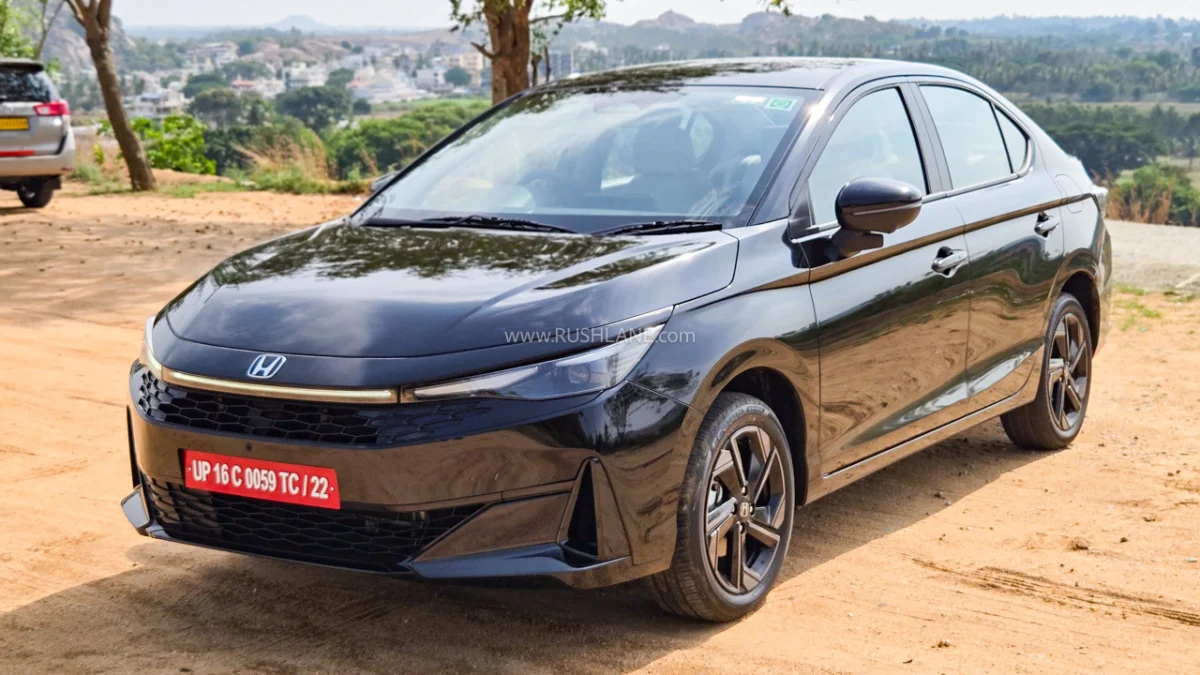
The Indian automotive sector in 2026 continues to be a landscape of shifting preferences and economic resilience. While the "SUV wave" remains the dominant force in the passenger vehicle segment, the sedan category—often considered the traditional backbone of the Indian middle-class dream—has shown a remarkable ability to adapt and survive. As the half-year mark concludes, the sales figures for June 2026 and the broader second quarter (Q2) of the year reveal a market defined by the absolute dominance of entry-level models and a fierce, high-stakes battle in the mid-size segment.
Main Facts: A Story of Annual Growth and Monthly Correction
In June 2026, the sedan segment recorded a combined sales volume of 31,183 units across the nine major models tracked in this report. This represents a healthy year-on-year (YoY) growth of 10.05% compared to the 28,335 units sold in June 2025. This annual increase suggests that despite the rising popularity of compact and mid-size SUVs, there remains a dedicated consumer base for the three-box silhouette, driven largely by fuel efficiency, ride comfort, and the prestige associated with the sedan body style.
However, the month-on-month (MoM) data paints a more complex picture. Compared to the robust 37,055 units sold in May 2026, June witnessed a significant decline of 15.85%. This sequential dip is attributed to several seasonal factors, including the onset of the monsoon in many parts of the country, which traditionally slows down retail footfalls, and a correction following high inventory loading in the preceding month.
The highlight of the report is the unwavering hegemony of the Maruti Suzuki Dzire. Holding a staggering 57.40% market share in June, the Dzire remains the primary volume driver for the segment. In the mid-size category, the Volkswagen Virtus and Skoda Slavia continue their "internal" rivalry within the Volkswagen Group, while the venerable Honda City staged a surprising comeback in the quarterly rankings.

Chronology: From Q2 Optimism to June’s Strategic Cooling
To understand the June figures, one must look at the trajectory of the second quarter (April–June) of 2026. The quarter began with high momentum, fueled by festive regional holidays and a stable economic outlook.
- April-May 2026: The segment saw an aggressive push from manufacturers. Maruti Suzuki and Hyundai leveraged their extensive dealer networks to fulfill a backlog of orders. During this period, sedan sales remained buoyant, contributing to a cumulative Q2 volume of 1,03,456 units—a 17.74% jump from the 87,868 units recorded in Q2 2025.
- The May Peak: May 2026 represented the zenith of the quarter, with 37,055 units. This was driven by aggressive fleet sales for the Dzire and Aura, alongside refreshed marketing campaigns for the "German twins" (Virtus and Slavia).
- The June Correction: As June arrived, the market saw a planned reduction in dispatches. Manufacturers shifted focus toward clearing existing dealer stock before the transition into the second half of the year. While YoY growth remained positive, the MoM decline of nearly 16% across the board signaled a cooling period.
Supporting Data: Segment-Wise Performance
The Sub-4-Metre Giants
The sub-compact sedan segment remains the "bread and butter" of the category, accounting for nearly 86% of total sales in June.
- Maruti Suzuki Dzire: With 17,899 units sold in June, it remains the undisputed king. Although it saw a 27.08% MoM drop from its May high of 24,546 units, its YoY growth of 15.60% proves its long-term stability. For the entire Q2, the Dzire clocked 66,025 units, representing over 63% of the total sedan market.
- Hyundai Aura: Securing the second spot, the Aura sold 5,977 units in June. Unlike many of its peers, the Aura bucked the MoM trend, growing by 17.73% over May. Its Q2 total reached 15,641 units, a 5.24% YoY increase.
- Honda Amaze: The Amaze continues to be a vital pillar for Honda Cars India. Selling 2,937 units in June (+29.16% YoY), it maintained a steady performance. Its Q2 growth was particularly impressive, rising 34.37% YoY to 8,453 units.
The Mid-Size Battleground
This segment caters to enthusiasts and executive buyers, where features and driving dynamics outweigh pure utility.
- Volkswagen Virtus vs. Skoda Slavia: The Virtus took the lead in June with 1,195 units, despite a sharp YoY decline of 32.79%. However, the Skoda Slavia is breathing down its neck with 1,083 units. Notably, the Slavia was one of the few models to show positive growth in both YoY (+20.87%) and MoM (+25.78%) metrics in June.
- Honda City: The City remains the sentimental favorite. While its June sales were modest at 745 units (a 39.28% MoM drop), its Q2 performance was a highlight, growing 33.81% YoY to 2,149 units, narrowly beating out the Hyundai Verna for the quarter.
- Hyundai Verna: The Verna faced a challenging quarter, with sales slipping 22.05% YoY in Q2 to 2,142 units. In June alone, it recorded 554 units, a 31.86% YoY decline.
The Niche and EV Space
- Tata Tigor/EV: The combined sales of the internal combustion engine (ICE) and electric versions of the Tigor stood at 602 units in June and 2,095 units for Q2. This represents a significant 33.70% YoY decline for the quarter, suggesting increased competition from entry-level electric SUVs.
- Toyota Camry: As a premium, strong-hybrid offering, the Camry remains a niche player. It sold 191 units in June (+6.11% YoY) and 582 units in Q2, indicating a small but loyal following for luxury hybrids.
Official Responses and Industry Sentiment
While official statements from individual manufacturers regarding the June dip have been cautious, industry analysts suggest a strategic pivot.

A spokesperson from a leading market research firm noted: "The June 2026 data reflects a maturing market. The 10% YoY growth proves that sedans are not ‘dying’ as previously predicted, but rather consolidating. The heavy MoM decline is a classic ‘monsoon lull’ compounded by the fact that the industry is preparing for a slew of festive launches in Q3."
Maruti Suzuki sources indicate that the Dzire’s performance is bolstered by a nearly equal split between private buyers and the growing demand from ride-hailing aggregators, who prioritize the Dzire for its low cost of ownership and high resale value. Meanwhile, European brands like Volkswagen and Skoda continue to emphasize "safety and build quality" over volume, which explains the lower but consistent numbers for the Virtus and Slavia.
Honda Cars India expressed satisfaction with the City’s Q2 growth, attributing the 33% rise to the success of the ADAS (Advanced Driver Assistance Systems) features and the strong-hybrid (e:HEV) variants which have found favor among urban commuters looking for fuel efficiency without sacrificing performance.
Implications: What Lies Ahead for the Sedan?
The 2026 data reveals several critical implications for the future of the Indian automotive market:

- The SUV Co-existence: The sedan is no longer the "default" choice, but it has found a sustainable niche. The 17.74% Q2 growth suggests that while SUV sales are higher, the sedan market is expanding in absolute terms, even if its relative market share is smaller than a decade ago.
- The Dominance of the "Big Three": The Dzire, Aura, and Amaze control nearly 90% of the entry-level market. For any new entrant to succeed, they must break the "reliability and service" moat built by Maruti, Hyundai, and Honda.
- The Hybrid Transition: The growth of the Honda City in Q2 and the steady performance of the Toyota Camry suggest that sedan buyers are increasingly open to hybrid technology. As fuel prices remain a concern, the "Efficiency of a Sedan + Hybrid Tech" formula could be the key to the segment’s long-term survival.
- The EV Challenge: The decline of the Tata Tigor suggests that as more EV SUVs enter the market at lower price points, entry-level electric sedans may struggle unless they offer significant advantages in range or cabin space.
In conclusion, June 2026 serves as a reminder of the sedan’s resilience. While the month saw a sequential pullback, the quarterly growth of nearly 18% paints a picture of a segment that is very much alive. As manufacturers prepare for the festive season in the second half of the year, the battle for the "boot" is expected to intensify, with updated models and aggressive financing schemes likely to drive the next wave of growth.
