

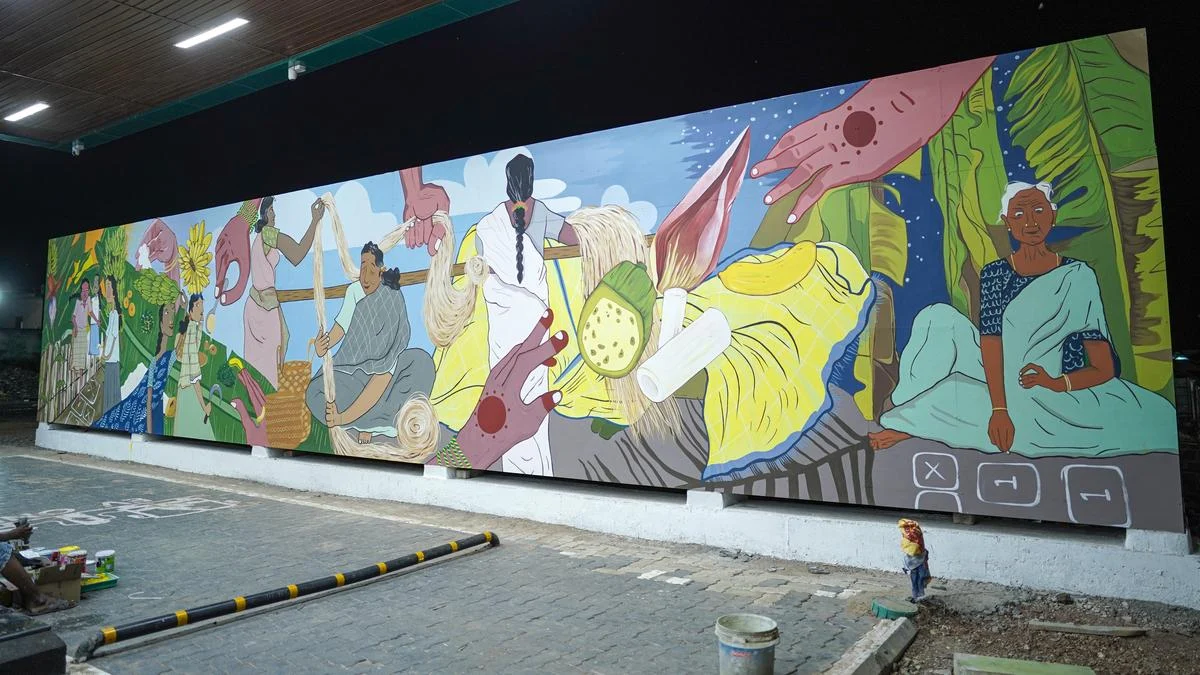
Khammam, Telangana – In a move that beautifully intertwines art, environmental consciousness, and cultural heritage, a sprawling mural has transformed the façade of Lepakshi, a popular multicuisine restaurant located at the Pullur toll plaza, approximately 26 kilometers from Khammam. This visually captivating artwork, measuring an impressive 50 feet 2 inches by 10 feet 6 inches, is more than just a splash of color; it is a profound narrative celebrating the enduring spirit of sustainability, passed down through generations, and the remarkable life cycle of the banana plant, a symbol of zero-waste living.
The project is a significant contribution to ChargeZone’s Shwa Art Initiative, a forward-thinking program dedicated to reimagining electric vehicle (EV) supercharging stations as vibrant cultural hubs. These spaces are designed to foster meaningful dialogue around sustainability, community engagement, and the integration of ecological principles into our daily lives. At the heart of this initiative is Mounica Tata, a self-taught illustrator, writer, entrepreneur, and art educator, who conceptualized and brought this powerful vision to life.
The Art of Enduring Practices: A Dual Narrative Unveiled
The mural at Pullur toll plaza masterfully weaves together two compelling narratives. The first narrative pays homage to the eco-friendly practices that have been meticulously preserved and transmitted through generations of women. These are the unspoken traditions, the everyday wisdom that has kept communities in harmony with nature for centuries. The second narrative delves into the complete life cycle of the banana plant, a plant that embodies the essence of sustainability, demonstrating how every part of it can be utilized, leaving absolutely nothing to waste.
This artistic endeavor seeks to elevate sustainability from a fleeting trend to a deeply ingrained way of life. As Mounica Tata articulates, "Sustainability was a way of life in India, especially for our parents and grandparents in South India. I wanted the mural to feel relatable and accessible, while leaving room for people to interpret it in their own way." This intention is palpable in the artwork, which invites viewers to connect with familiar imagery and resonate with the underlying message of conscious living.
A Collaborative Masterpiece: Bringing Vision to Reality
The execution of this monumental mural was a testament to collaborative artistry. Utilizing water-based acrylic emulsions, ideal for large-scale wall paintings, alongside acrylic paints, the artwork was meticulously crafted on-site. A dedicated team of three talented artists from the collective "Charly and the Boys" brought Mounica Tata’s vision to life over a dedicated period of 10 days. Their skill and dedication have resulted in a mural that is not only aesthetically striking but also rich in cultural and environmental significance.
The mural’s technical specifications highlight the scale and ambition of the project. The dimensions of 50 feet 2 inches by 10 feet 6 inches mean that the artwork commands a significant presence, transforming a utilitarian space into an engaging canvas for social commentary and artistic expression. The use of high-quality paints ensures the longevity and vibrancy of the mural, allowing it to serve as a beacon of inspiration for years to come.
The Shwa Art Initiative: Transforming Infrastructure into Cultural Spaces
The Pullur toll plaza mural is a prime example of ChargeZone’s broader Shwa Art Initiative. This ambitious program aims to democratize art and embed it within the fabric of everyday public spaces, particularly at EV charging stations. The initiative acts as a catalyst, bringing together a diverse array of emerging artists and collectives whose practices are deeply rooted in ecology, identity, and the dynamics of public space.

The initiative’s roster of participating artists and collectives reads like a who’s who of contemporary Indian art focused on social and environmental themes. This includes the Aravani Art Project, known for its empowering narratives; Mounica Tata, the visionary behind the Pullur mural; Elwin Charly, whose artistic voice resonates with community engagement; Trespassers, a collective exploring the intersection of art and urban environments; A Kill 108 Collective, known for its impactful visual storytelling; Sadhna Prasad, whose work often delves into ecological concerns; Paperplane Studio, a platform for diverse artistic expressions; and Sayan Mukherjee, an artist whose work frequently touches upon identity and belonging.
A key feature of the Shwa Art Initiative is the integration of technology to enhance the viewer’s experience. Each mural is accompanied by a QR code. Upon scanning, this code directs users to a dedicated Shwa microsite (shwa.chargezone.co.in). This digital platform serves as a comprehensive repository of information, offering high-resolution images of the artwork, detailed artist profiles, and in-depth background stories that provide context and deeper understanding of each installation. This innovative approach ensures that the art transcends its physical presence, offering an interactive and educational dimension to the public.
The Shwa Art Initiative is strategically deployed across key transportation corridors throughout India, maximizing its reach and impact. Notable locations include the Hyderabad-Vijayawada route (Suryapet, Pullur, Rajahmundry), the Chennai-Bengaluru corridor (Vellore, Chittoor, Krishnagiri, Ambur), the Chennai-Villupuram stretch (Villupuram), the Vadodara-Bharuch/Mumbai axis (Karjan), and the Delhi-Chandigarh highway (Ambala). This widespread presence ensures that the message of sustainability and art’s transformative power reaches a diverse audience, becoming an integral part of the travel experience.
The Banana Plant: A Symbol of Zero-Waste and Cultural Resonance
Mounica Tata’s choice of the banana plant as a central motif for the mural is deeply symbolic and culturally resonant. Originally from Hyderabad and now based in Bengaluru, Mounica was particularly drawn to the banana plant’s inherent material possibilities and its profound significance in Indian culture.
"Every part of the banana plant is used; nothing goes to waste," Mounica explains, highlighting its inherent sustainability. "It’s deeply woven into everyday life and rooted in the cultural identity of Telangana and Andhra Pradesh." Her research revealed an astonishing array of sustainable practices associated with the plant. From the strong fibers used to craft sarees, baskets, and bags, to its ubiquitous presence in kitchens, temples, agriculture, and traditional home remedies, the banana plant is a testament to nature’s ingenuity and human resourcefulness.
"I brought sustainability into the kitchen because that’s where many of us learn life’s most enduring lessons," she emphasizes. This statement underscores the mural’s connection to domesticity, tradition, and the foundational learning that shapes our understanding of the world and our place within it. The kitchen, often considered the heart of the home, becomes a metaphor for the ingrained nature of sustainable practices passed down through generations.
A Visual Tapestry of Time and Tradition
The mural unfolds as a captivating visual journey, meticulously illustrating the passage of time. It depicts the transformation of girls into women and the transition from dawn to dusk, symbolizing the natural succession of generations. This cyclical representation of time is interwoven with a rich tapestry of local motifs and cultural elements that are deeply embedded in the fabric of Telangana and Andhra Pradesh.

Viewers will recognize children engaged in the playful act of tokkudu billa (hopscotch), evoking the innocence and joy of childhood. Lush banana plantations serve as a backdrop, underscoring the plant’s importance. Intricate ikat patterns, inspired by the traditional sarees worn by women, add a layer of textile artistry and cultural pride. The vibrant hue of gorintaaku (henna) adorning hands speaks to celebratory traditions and personal adornment, while the inclusion of Bathukamma flowers, integral to the Telangana floral festival, further solidifies the mural’s connection to local culture and rituals.
Collectively, these elements celebrate the profound intergenerational exchange of culture, wisdom, and everyday practices that quietly, yet powerfully, sustain communities. The mural is not just a static artwork; it is a dynamic narrative that invites viewers to reflect on their own heritage, their connection to nature, and the enduring value of sustainable living.
The Implication: Art as a Catalyst for Change
The mural at Pullur toll plaza, and indeed the entire Shwa Art Initiative, carries significant implications beyond its artistic merit. By transforming functional infrastructure into spaces that provoke thought and inspire conversation, ChargeZone is demonstrating a progressive approach to corporate social responsibility.
The initiative strategically leverages the ubiquitous presence of EV charging stations to disseminate messages of environmental awareness. As electric vehicles become increasingly common, these stations are becoming nodes of community interaction and travel hubs. Imbuing these spaces with art that champions sustainability ensures that these messages are delivered to a broad and diverse audience, including commuters, travelers, and local residents.
Furthermore, by championing emerging artists and collectives, the Shwa Art Initiative provides a vital platform for their work, amplifying their voices and supporting their engagement with critical social and environmental issues. The integration of QR codes and the dedicated microsite fosters a deeper level of engagement, moving beyond passive observation to active learning and participation.
In a world increasingly grappling with the urgent realities of climate change and the need for sustainable development, art has emerged as a powerful and accessible medium for communication and advocacy. The mural at Pullur toll plaza stands as a vibrant testament to this, proving that art can not only beautify our surroundings but also inspire us to embrace a more conscious and sustainable future, one brushstroke at a time. It is a reminder that the wisdom of our ancestors, combined with modern innovation, holds the key to a harmonious coexistence with our planet.
