

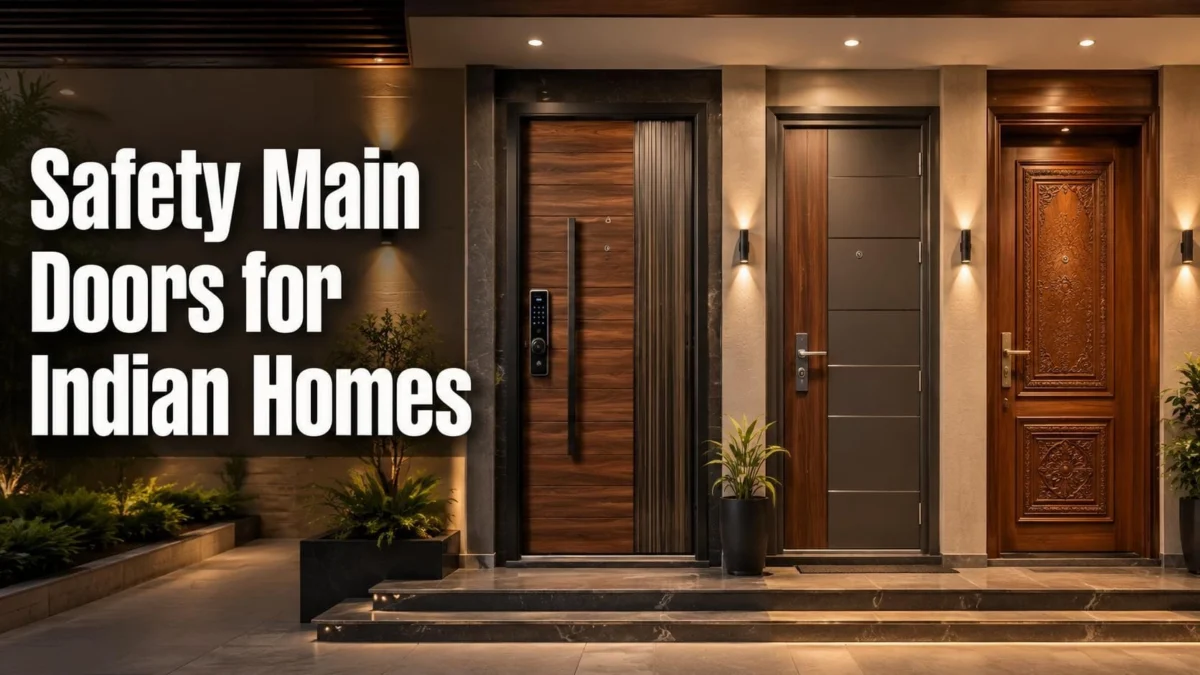
The front entrance of a home has transitioned from being a mere point of ingress to a sophisticated statement of security, technology, and architectural identity. In the contemporary Indian real estate landscape, the "safety main door" is no longer viewed as a secondary attachment but as a primary structural investment. As urban density increases and the demand for smart home integration grows, homeowners are seeking solutions that harmonize the "fortress" mentality with high-end curb appeal.
This report explores the shifting paradigms of entrance security, detailing ten industry-leading designs that define modern Indian households, supported by historical context, technical data, and expert implications.
1. Main Facts: The Intersection of Security and Aesthetics
The Indian door industry is currently witnessing a CAGR (Compound Annual Growth Rate) of approximately 7-9%, driven by the housing boom and an increased focus on home security. The "safety door" is uniquely an Indian architectural phenomenon, often involving a dual-gate system—a heavy outer grill or mesh followed by a primary wooden or metal door.
Key Drivers of Modern Door Design:
- Material Hybridization: The mixing of organic materials (hardwoods) with industrial reinforcements (steel cores).
- Technological Integration: The shift from mechanical lever locks to IoT-enabled biometric systems.
- Climatic Resilience: The need for materials that can withstand India’s extreme monsoons and high humidity without warping or corroding.
2. Chronology: From Ancient Fortifications to Digital Gateways
To understand the current state of safety main door designs, one must look at the evolution of domestic security in the Indian subcontinent.
The Era of Massive Timber (Pre-20th Century)
Historically, Indian entrances were characterized by massive teak or rosewood gates, often reinforced with iron spikes (originally to deter war elephants) and heavy brass chains. Security was derived from pure mass and density.
The Industrial Transition (1950s – 1990s)
With the rise of urban apartments, the "Collapsible Gate" became the standard for security. These were functional but lacked aesthetic value, often making homes feel like commercial cages. This era prioritized steel and iron bars over design.
The Aesthetic Security Movement (2000s – 2015)
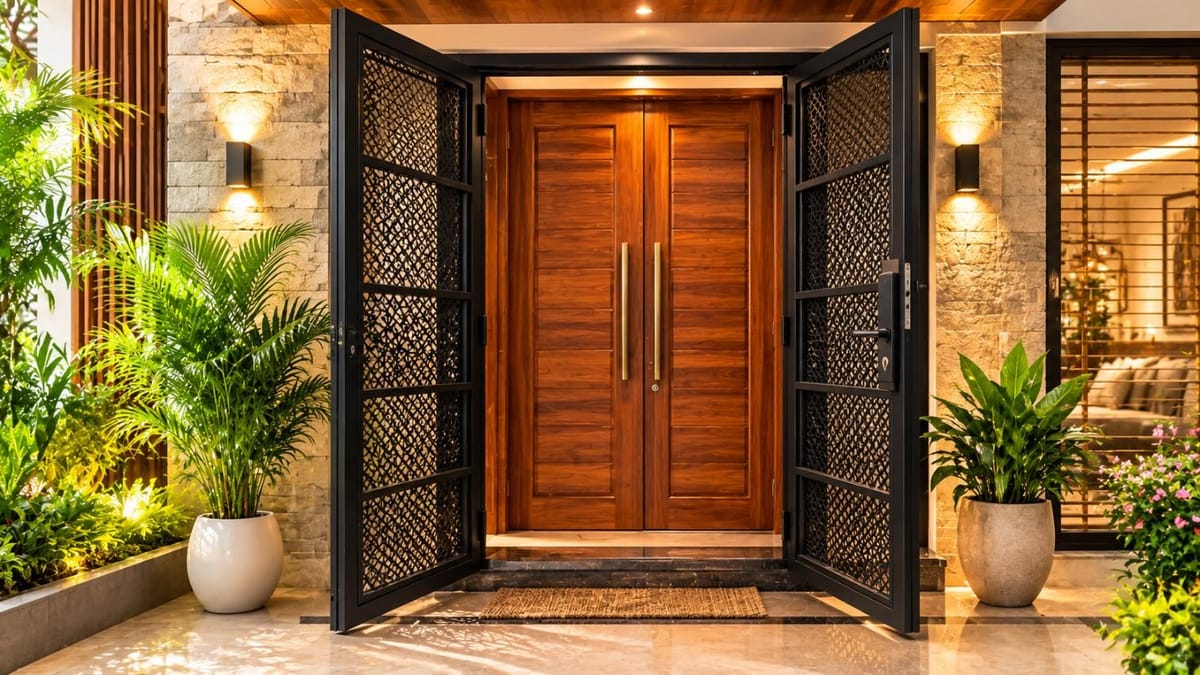
Homeowners began demanding beauty alongside brawn. This led to the rise of decorative wrought iron gates and the "Double Door" system, where the outer security door featured intricate "jaali" (grid) work.
The Smart Home Era (2016 – Present)
The current phase is defined by "Invisible Security." Digital locks, concealed steel reinforcements, and high-tensile mesh allow for a minimalist look while providing higher protection than the bulky gates of the past.
3. Supporting Data: 10 Best Safety Main Door Designs for Indian Homes
Based on market trends and structural durability, the following ten designs represent the pinnacle of modern home security.
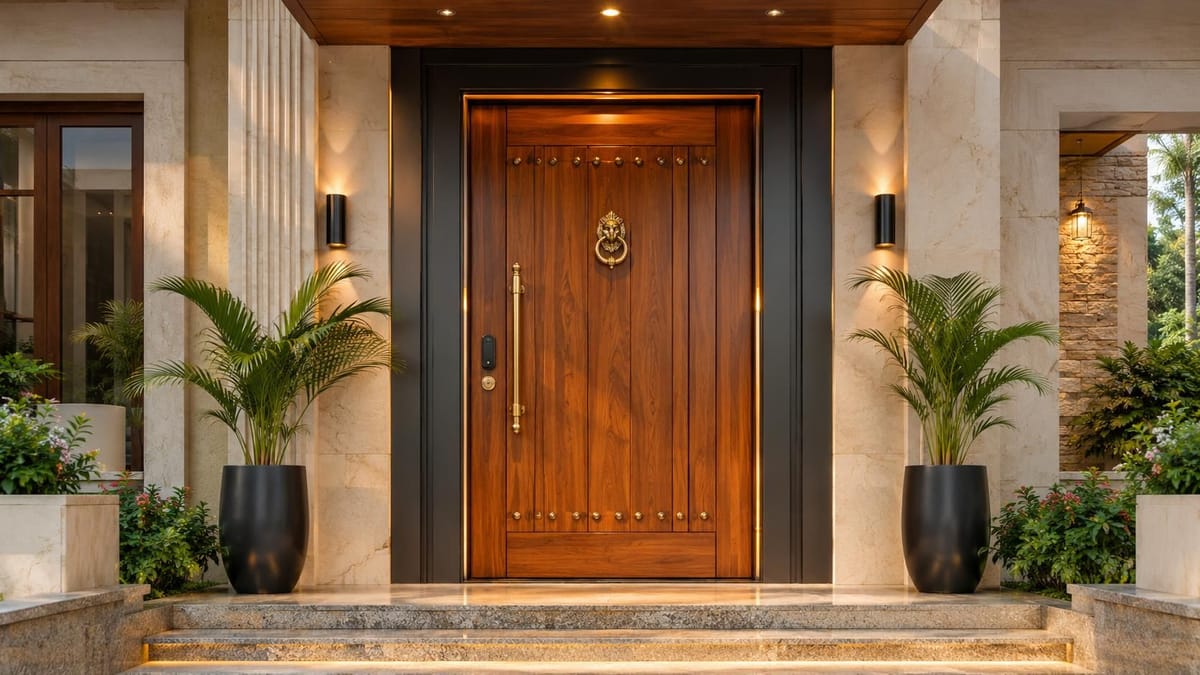
1. Double Door Safety System with Heavy Bolts
The double-door layout remains a favorite for independent bungalows and spacious apartments. It utilizes a "primary-secondary" logic. The outer door, often a steel frame with a grill, acts as the first line of defense, allowing for ventilation and light while the inner solid wood door remains closed.
- Technical Advantage: Provides a buffer zone that prevents direct access to the primary lock from the outside.
2. Solid Teak Wood Door with Concealed Steel Core
Teak is prized for its natural oils and resistance to termites. However, wood can be breached by heavy impact. Modern engineering solves this by sandwiching a 2mm to 4mm steel plate between two teak panels.
- Data Point: Hybrid doors increase the time required for a manual breach by nearly 400% compared to standard wooden doors.
3. Modern Metal Grill Door with Frosted Glass Panels
For narrow urban homes, light is a luxury. This design uses high-gauge iron frames to secure thick, tempered frosted glass.
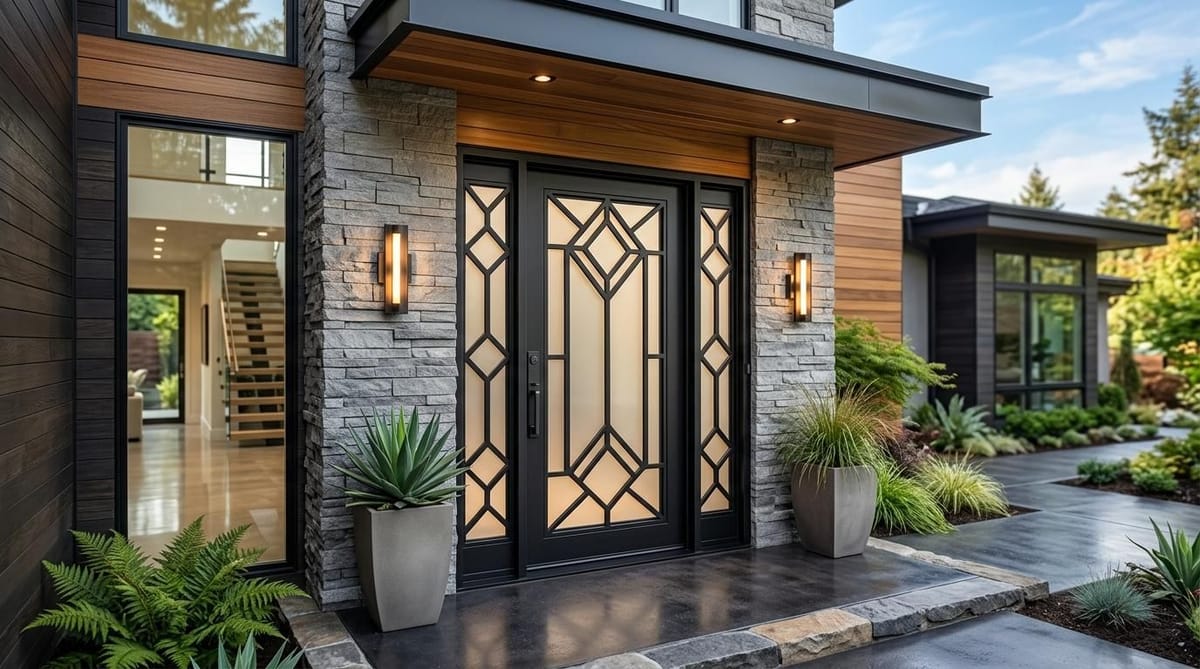
- Privacy Physics: The frosting allows 70% of light to pass through while obscuring shapes, ensuring that intruders cannot survey the interior layout of the home.
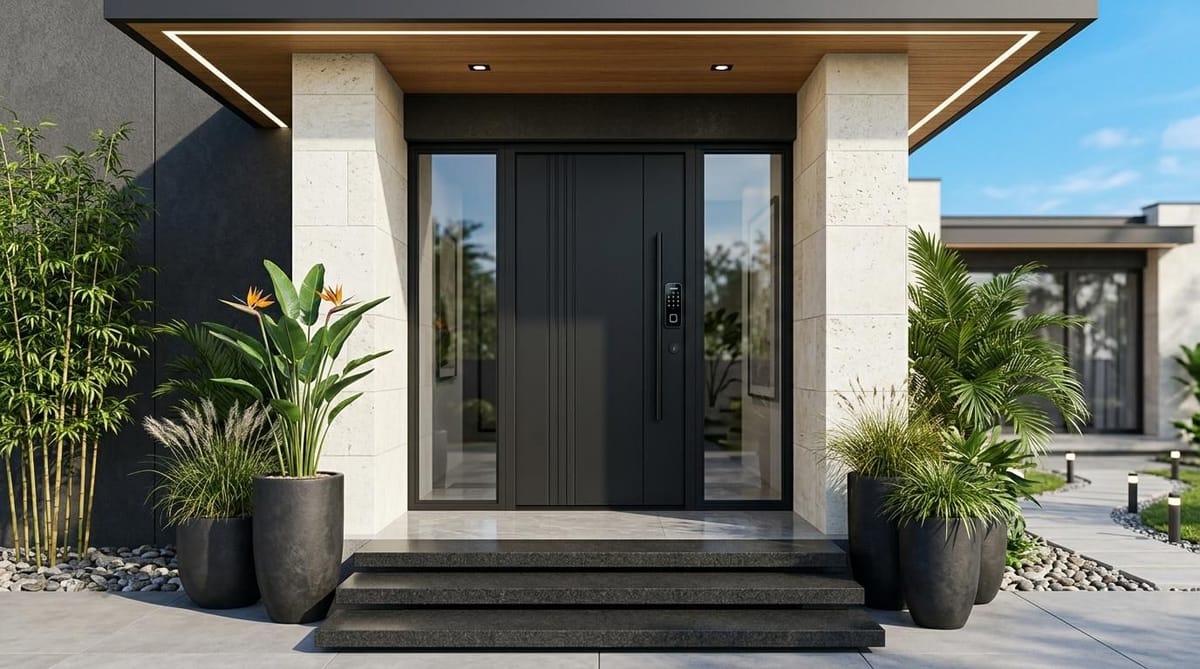
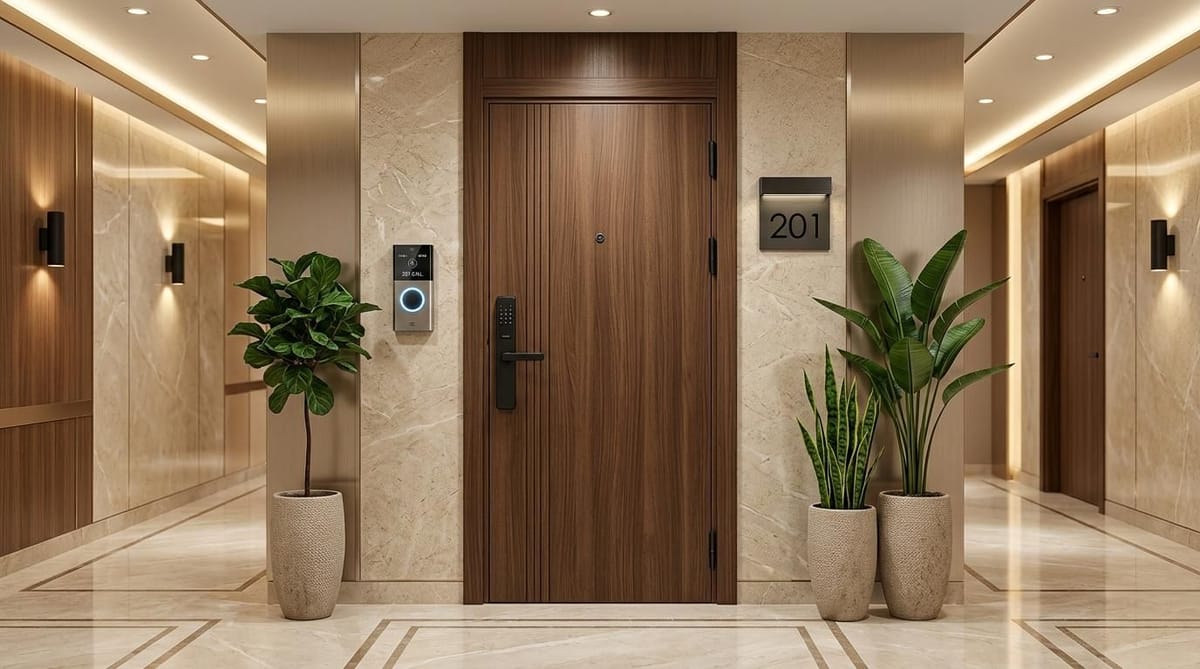
4. Smart Digital Lock Door with Keyless Entry
The shift toward keyless entry is fueled by the vulnerability of traditional mechanical locks to "bumping" and picking. Digital doors utilize 128-bit encryption and biometric sensors.
- Security Feature: Most modern digital locks include a "scramble code" feature, where you enter random numbers before your actual PIN to prevent "fingerprint smudging" analysis.
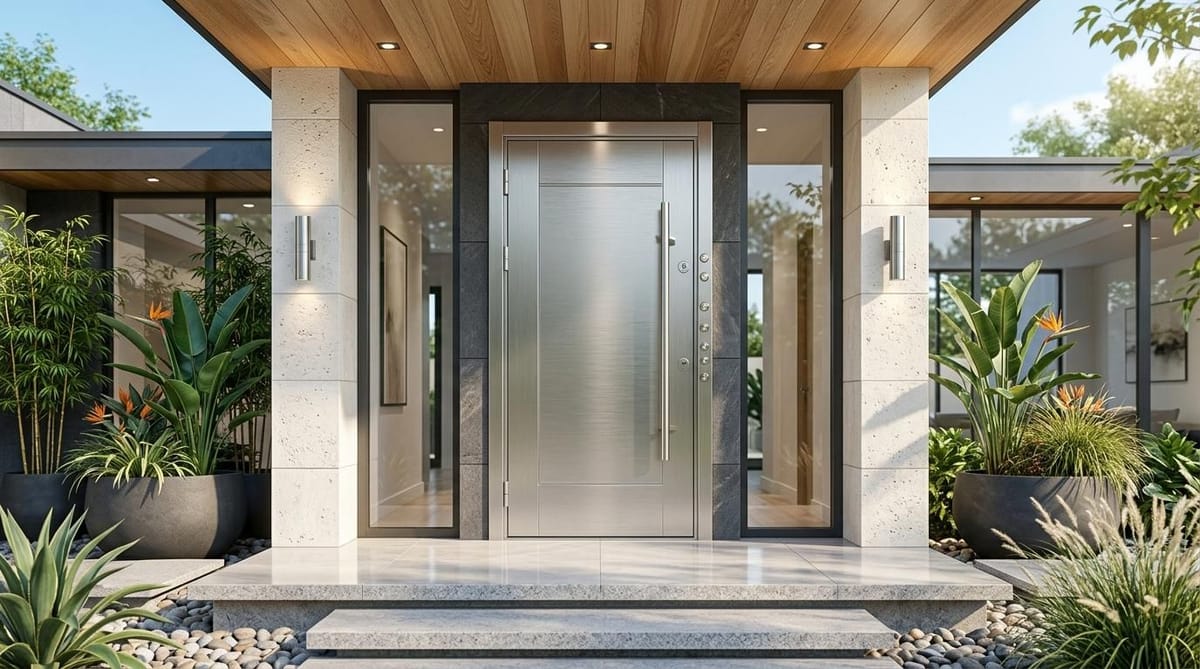
5. Stainless Steel Safety Door with Multi-Point Locking
Stainless steel (specifically Grade 304) is the gold standard for coastal cities like Mumbai or Chennai. Unlike iron, it does not rust.
- The Multi-Point Advantage: While a standard door has one deadbolt, these systems have 5 to 7 locking points that engage with the top, bottom, and sides of the frame simultaneously.
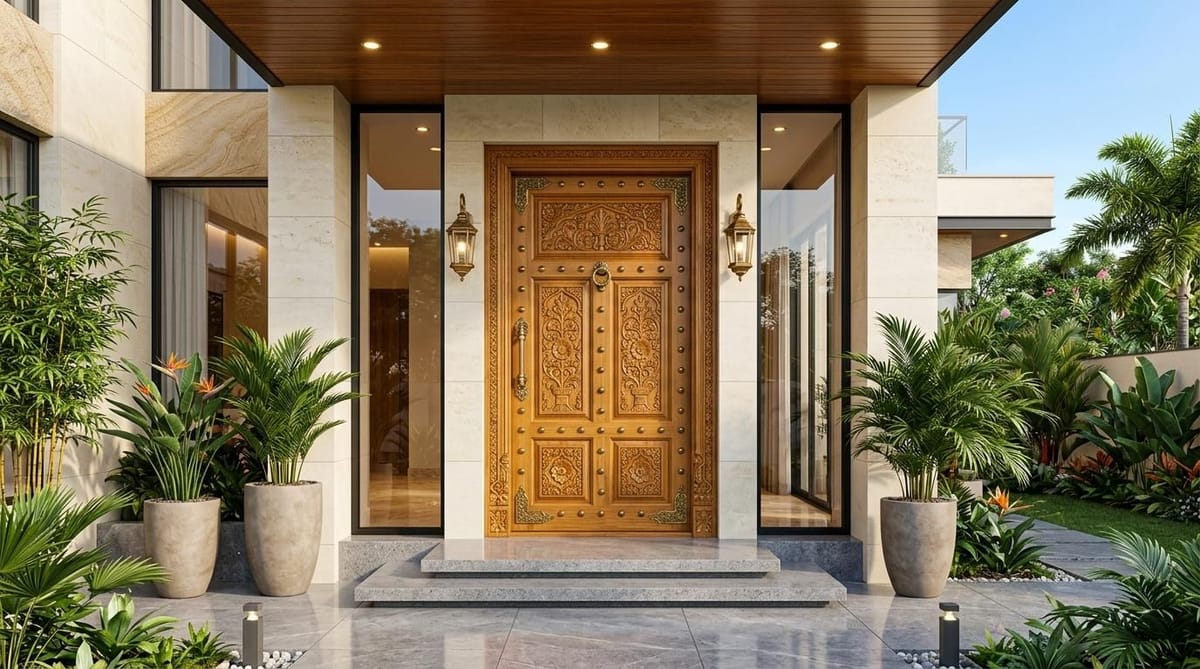
6. Traditional Carved Wooden Safety Door with Brass Studs
This design leverages the weight of hardwoods like Sheesham or Sal. The addition of brass studs isn’t just ornamental; these studs act as reinforcement for the wood grain, making it harder to split the door with an axe or sledgehammer.
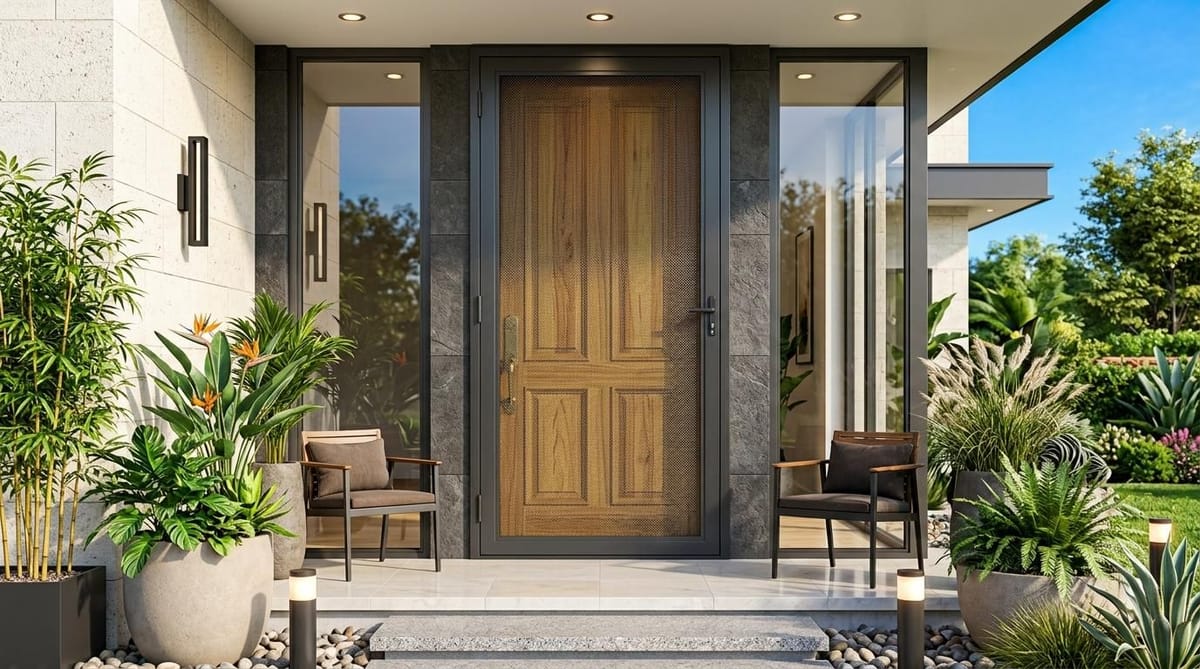
7. Steel Mesh Security Screen Door
Utilizing high-tensile stainless steel mesh (often called "Invisiguard"), these doors provide a clear view of the outside while being virtually uncuttable.
- Durability: The mesh is coated with moisture-resistant powder, making it ideal for the humid Indian monsoon season.
8. Laminated Flush Door for Apartment Entrances
In high-rise societies, fire safety is as important as burglary protection. High-pressure laminates (HPL) provide a fire-retardant surface that is also resistant to scratches and impacts.
- Compliance: These doors often meet the 30-minute or 60-minute fire-rating standards required by many modern housing societies.
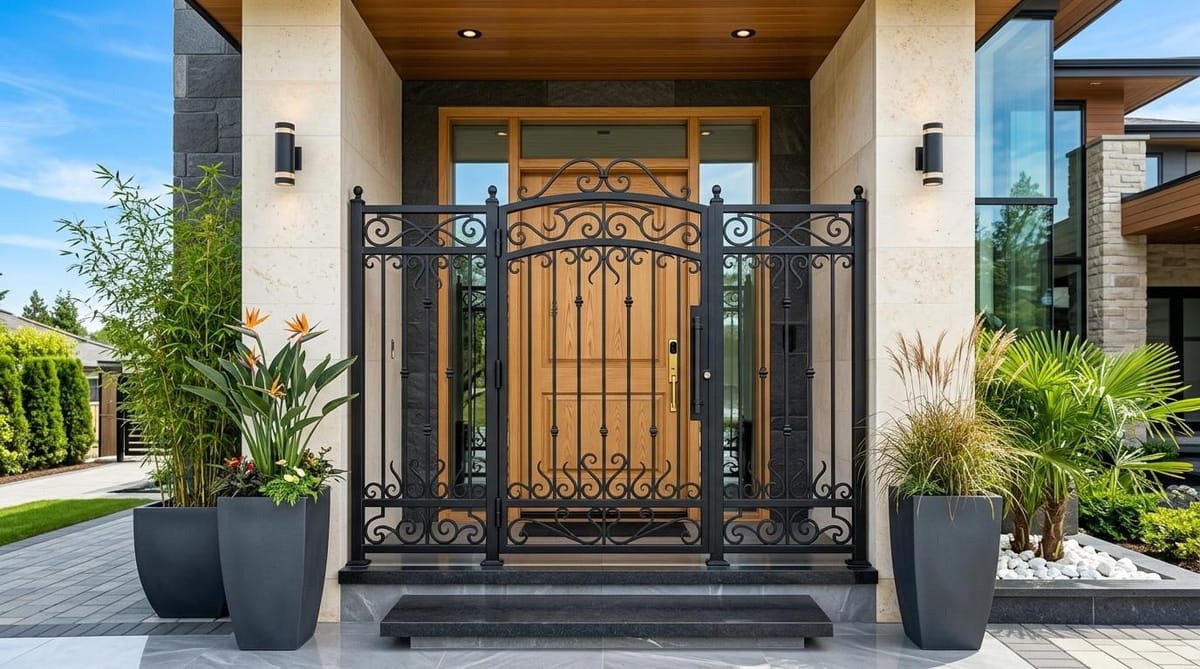
9. Wrought Iron Safety Gate with Geometric Patterns
Wrought iron is more malleable than cast iron, allowing for complex geometric designs that complement modern architecture. When paired with a heavy-duty mortise lock, it forms an impenetrable outer shield.
10. Fibre-Reinforced Polymer (FRP) Safety Door
FRP is a composite material used in aerospace and automotive industries. It is 100% waterproof and termite-proof.
- Engineering Fact: FRP doors have a higher strength-to-weight ratio than steel, meaning they offer massive protection without putting excessive strain on the wall hinges.
4. Official Responses and Industry Standards
Architects and security consultants emphasize that a door is only as strong as its frame and installation.
The "Weakest Link" Theory:
Security experts from the Bureau of Indian Standards (BIS) often point out that most break-ins occur not through the door panel, but through the door frame or the hinges. "A safety door must be anchored into the RCC (Reinforced Cement Concrete) of the building, not just the brickwork," notes Ar. Sandeep Mehra, a consultant for high-end residential projects.
Fire Safety Regulations:
Local municipal corporations (such as the BMC or DDA) have updated guidelines suggesting that security doors must not impede emergency exits. The "collapsible gate" is increasingly discouraged in favor of swing-out mesh doors that can be opened quickly from the inside without a key during a fire.
Hardware Standards:
Industry leaders suggest looking for "Grade 1" certified hardware. In India, brands like Godrej, Yale, and Dorset have moved toward standardized testing for "cycle counts"—ensuring a lock can withstand 200,000+ operations without failure.
5. Implications: The Socio-Economic Impact of Door Choice
The selection of a safety main door has far-reaching implications beyond simple protection.
Impact on Real Estate Valuation
A high-quality safety door is a "high-yield" investment. Real estate data suggests that homes with upgraded security features and smart entrances have a 5-7% higher resale value and tend to sell faster in competitive markets.
Psychological Well-being and "The Peace of Mind Factor"
There is a documented psychological benefit to "fortress" door designs. In a survey of urban Indian homeowners, 82% reported feeling significantly lower levels of anxiety when their primary entrance was equipped with a multi-point locking system or a digital camera-integrated door.
The Insurance Perspective
While the home insurance market in India is still maturing, several providers are beginning to offer lower premiums for homes that utilize "standardized security measures." A certified stainless steel safety door or a monitored smart lock system can potentially reduce annual insurance costs.
Maintenance and Sustainability
The shift toward materials like FRP and Stainless Steel reduces the environmental impact of frequent replacements. Unlike traditional wood, which requires regular polishing and chemical treatments against termites, these modern materials offer a 20-30 year lifespan with minimal upkeep.
Conclusion: Balancing the Barrier and the Welcome
The safety main door of the 21st century is a complex piece of equipment. It must be a barrier to the intruder, a shield against the elements, a gateway for technology, and a warm welcome to the guest. For the Indian homeowner, the choice involves balancing the traditional love for heavy timber with the modern necessity of steel and silicon.
As we look toward the future, the integration of Artificial Intelligence (AI) into these designs—where doors can recognize family members and alert owners of suspicious "loitering" via smartphone—will become the next standard. For now, investing in a robust, multi-layered entrance remains the single most effective way to secure the sanctity of the home.
Disclaimer: This report is based on current industry trends and material specifications. Homeowners are advised to consult with structural engineers and authorized security vendors to ensure that door installations comply with local building codes and fire safety regulations.
