

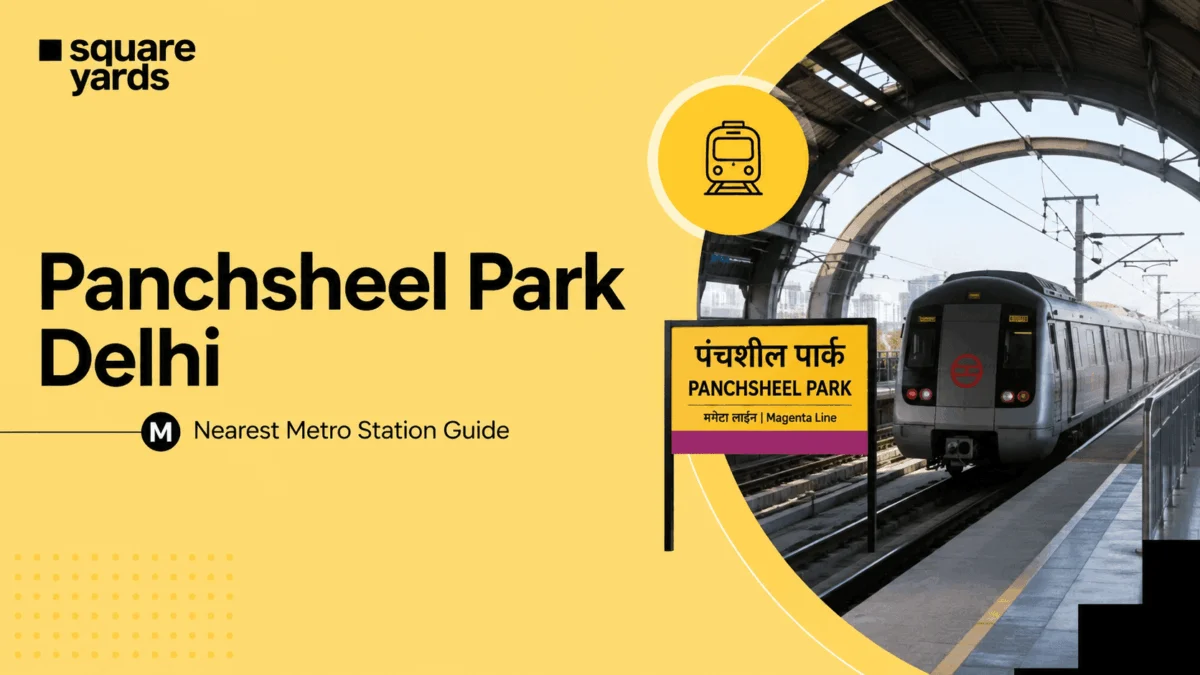
Main Facts: A Rare Convergence of Luxury and Transit-Oriented Development
In the high-stakes landscape of South Delhi real estate, connectivity is often the "Achilles’ heel" of even the most affluent neighborhoods. While localities like Greater Kailash, Panchsheel Enclave, and Neeti Bagh offer prestige and luxury, they often necessitate a short commute via auto-rickshaw or private vehicle to reach the nearest Delhi Metro node. Panchsheel Park, however, has effectively bypassed this logistical hurdle.
Panchsheel Park stands as a premier residential colony where the infrastructure has been surgically integrated into the neighborhood’s fabric. Since May 2018, the Panchsheel Park Metro Station on the Magenta Line has served as a cornerstone of the area’s modern identity. Unlike other stations that merely border a locality, this station sits within the boundary of Panchsheel Park, offering "walk-in" access to residents of S-Block, N-Block, and Panchsheel Park East.
The Magenta Line (Line 8) serves as a critical "Knowledge Corridor," connecting the educational hubs of Janakpuri West to the IT and commercial hubs of Botanical Garden in Noida. For Panchsheel Park, this means direct, high-speed access to both the western and eastern extremities of the National Capital Region (NCR) without the need for a single interchange. Furthermore, its proximity to the Hauz Khas interchange (one stop away) provides a seamless bridge to the Yellow Line, linking the colony to the heart of the city in Connaught Place and the corporate skyscrapers of Gurugram.
Chronology: From Quiet Enclave to a Connected Powerhouse
To understand the impact of the metro, one must look at the historical evolution of Panchsheel Park.
- The Pre-Metro Era (1960s – 2010s): Established as a cooperative house building society, Panchsheel Park was designed for the capital’s elite—senior bureaucrats, successful entrepreneurs, and diplomatic staff. For decades, the neighborhood relied exclusively on its wide, tree-lined avenues and private transport. While prestigious, its reliance on the Outer Ring Road meant that residents were often at the mercy of Delhi’s notorious peak-hour traffic, particularly at the Chirag Delhi and IIT flyover bottlenecks.
- The Planning Phase (2012 – 2017): Under Phase III of the Delhi Metro expansion, the Magenta Line was conceptualized to provide a faster alternative to the Outer Ring Road. The decision to place a station specifically named "Panchsheel Park" was a strategic move by the Delhi Metro Rail Corporation (DMRC) to cater to the high-density residential and commercial traffic near Max Super Speciality Hospital and the surrounding affluent blocks.
- The Launch (May 29, 2018): The 24.82 km stretch between Kalkaji Mandir and Janakpuri West was officially inaugurated, making the Panchsheel Park Metro Station operational. This transformed the neighborhood overnight from a "car-dependent" enclave into a model of Transit-Oriented Development (TOD).
- Post-Pandemic Shift (2020 – Present): In the wake of the COVID-19 pandemic, the value of hyper-local connectivity surged. As offices reopened, the ability to commute to Noida or Gurgaon via a sanitized, air-conditioned metro system—avoiding the stress of road traffic—became a significant selling point for property listings in the area.
Supporting Data: Infrastructure, Logistics, and Real Estate Metrics
The efficiency of Panchsheel Park’s connectivity is best illustrated through a breakdown of its transit nodes and market performance.
1. Key Metro Station Connectivity Matrix
| Metro Station | Line | Proximity to Panchsheel Park | Travel Time (from Colony) | Primary Utility |
|---|---|---|---|---|
| Panchsheel Park | Magenta | Within Locality | 0-5 min (Walk) | Local access, Max Hospital, direct Noida/West Delhi |
| Hauz Khas | Magenta/Yellow | 1.4 km | 3 min (Metro) | Interchange for CP, Gurugram, AIIMS, and North Delhi |
| Chirag Delhi | Magenta | 1.1 km | 2 min (Metro) | Access to Panchsheel Enclave and GK-I |
| Malviya Nagar | Yellow | 2.1 km | 10-12 min (Auto) | Alternative for Saket, Select Citywalk, and MG Road |
2. Multi-Modal Integration
The Panchsheel Park Metro Station is not an isolated node. It is supported by a robust bus network. Key routes passing through the station include:
- Route 448B: Connecting to various parts of South and West Delhi.
- Route 511 & 511A: Providing links to the Badarpur and Dhaula Kuan corridors.
- Route 764: A vital link to the IGI Airport area and Dwarka.
3. Real Estate Valuation Comparison
The arrival of the metro has solidified property values in Panchsheel Park, keeping them resilient even during market fluctuations.
| Locality | Approx. Price per Sq. Ft. (INR) | Metro Proximity Factor |
|---|---|---|
| Panchsheel Park | 25,000 – 42,000+ | High (In-colony station) |
| Panchsheel Enclave | 22,000 – 35,000 | Medium (1 km away) |
| Greater Kailash I | 24,000 – 38,000 | Medium (1.5 km away) |
| Malviya Nagar | 18,000 – 28,000 | High (Direct access) |
Data Note: Prices for Panchsheel Park reflect premium builder floors and independent bungalows. Higher ranges are often seen for park-facing or corner plots.
Official Responses and Expert Perspectives
Urban planners and real estate consultants have frequently cited Panchsheel Park as a success story in integrating public transit into "Old Delhi" luxury.
The DMRC Perspective:
Official statements from the Delhi Metro Rail Corporation during the Magenta Line’s rollout emphasized the "technical marvel" of the stretch. Engineers noted that the Panchsheel Park station had to be constructed with minimal disruption to the surrounding residential silence, utilizing advanced tunneling and vibration-reduction technologies to ensure that the underground transit did not disturb the foundations of the neighborhood’s premium bungalows.
Real Estate Market Analysis:
According to senior consultants at leading firms like Square Yards and JLL, the "Metro Premium" is a real phenomenon in South Delhi. "While a resident of Panchsheel Park might own four luxury cars, the presence of a metro station within walking distance adds a layer of ‘future-proofing’ to the property value," says an industry analyst. "It makes the area highly attractive for high-net-worth tenants, including senior executives and expatriates, who value the option of a 20-minute train ride to Noida’s IT SEZs over a 90-minute drive."
Medical Infrastructure Synergy:
Administrators at Max Super Speciality Hospital, Saket/Panchsheel, have noted that the station has significantly improved access for both staff and outstation patients. The station’s Gate 1 serves as a virtual entry point for the medical hub, facilitating a more organized flow of people in an otherwise congested hospital zone.
Implications: The Future of Living in Panchsheel Park
The long-term implications of this connectivity are profound, affecting everything from social demographics to environmental quality.
1. Demographic Evolution
While Panchsheel Park remains an "old-money" bastion, the ease of commuting is attracting a younger demographic of "New-Age Entrepreneurs" and C-suite professionals. These individuals seek the space and prestige of South Delhi but are unwilling to compromise on global standards of mobility. This shift is leading to a modernization of the housing stock, with older bungalows being replaced by ultra-luxury, smart-home-enabled builder floors.
2. Environmental Impact and De-congestion
The Magenta Line has successfully diverted a portion of the vehicular traffic from the Outer Ring Road. For Panchsheel Park, this translates to slightly lower noise pollution and better air quality compared to neighboring colonies that sit directly on major traffic intersections without metro relief. The "last-mile connectivity" being walkable reduces the reliance on idling vehicles for short trips.
3. The "Noida-Gurgaon" Bridge
Panchsheel Park has become the "Goldilocks Zone" for families where one spouse works in Gurugram and the other in Noida. Positioned almost perfectly in the middle, and connected to both via the Yellow and Magenta lines, it offers a logistical compromise that few other luxury colonies can match.
4. Commercial Resilience
The presence of the metro has also bolstered the local commercial ecosystem. Nearby markets and office spaces in Sadhna Enclave and the Panchsheel Shopping Centre benefit from the ease with which employees and clients can reach the area. This ensures that the locality remains a vibrant, living entity rather than a stagnant residential dormitory.
Conclusion
Panchsheel Park’s metro story is a testament to how infrastructure can enhance, rather than detract from, the exclusivity of a premium neighborhood. By placing the station within the colony’s embrace, the Magenta Line has provided a rare luxury in Delhi: the luxury of time.
For property buyers, the calculation is simple. You are not just buying a piece of South Delhi’s heritage; you are investing in a lifestyle that is uniquely insulated from the city’s growing congestion. While the neighborhood’s identity will always be rooted in its wide roads and lush greenery, its future is undeniably linked to the silent, efficient pulse of the Magenta Line running beneath its feet.
Frequently Asked Questions
1. Which entry/exit gate of Panchsheel Park Metro is best for Max Hospital?
Gate 1 is the most convenient exit for Max Super Speciality Hospital and the S-Block residential area.
2. How long does it take to reach the IGI Airport from Panchsheel Park via Metro?
While there is no direct line, travelers can take the Magenta Line to Hauz Khas, switch to the Yellow Line to New Delhi Station, and then take the Airport Express. This takes approximately 60-70 minutes. However, a direct cab remains the preferred option for those with heavy luggage, taking 40-50 minutes.
3. Is there parking available at the Panchsheel Park Metro Station?
Parking availability at this specific station is limited and often reported as inconsistent. Residents usually walk or take a short auto-ride, while visitors are advised to use public transport or app-based cabs.
4. Does the Magenta Line connect to the Violet Line?
Yes, by traveling two stops toward Botanical Garden, you can interchange at Kalkaji Mandir for the Violet Line, which connects to Nehru Place, Central Delhi, and Faridabad.
