

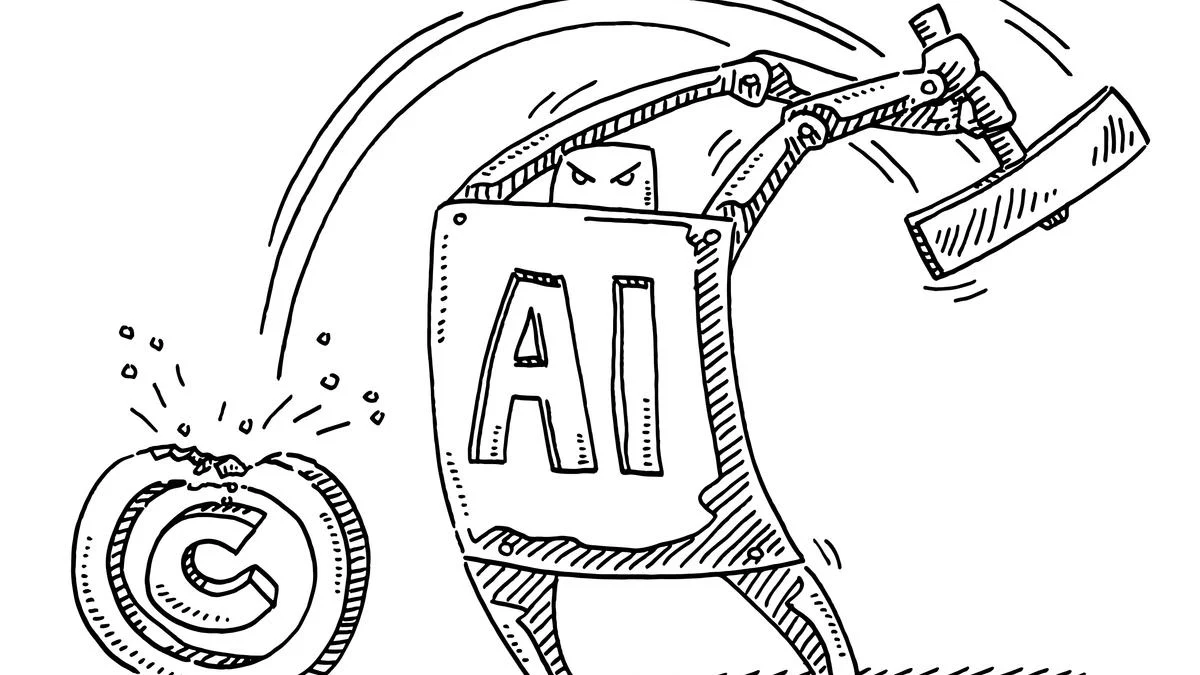
New Delhi, India – July 25, 2026 – In a highly anticipated decision that reverberates across the global landscape of artificial intelligence and intellectual property rights, the Delhi High Court has delivered a landmark ruling in the case of Asian News International (ANI) against OpenAI. On July 24, 2026, Justice Amit Bansal determined that the act of storing news articles by ANI for the purpose of training OpenAI’s generative AI model, ChatGPT, falls within the ambit of "fair dealing" under Section 52 of India’s Copyright Act, thereby exempting it from copyright infringement.
The verdict, which sets a significant precedent for AI development and content creation in India, hinges on the court’s finding that ANI failed to conclusively demonstrate that ChatGPT reproduced or "memorised" its copyrighted reporting in its outputs. This pivotal distinction between data ingestion for algorithmic training and direct content reproduction is now at the heart of the burgeoning legal discourse surrounding AI’s transformative impact on intellectual property.
ANI, one of India’s largest news agencies, had initiated the lawsuit in November 2024, seeking ₹2 crore in damages and a permanent injunction against OpenAI. Their core allegations stemmed from the unauthorized use of their extensive content library to train ChatGPT, coupled with serious concerns over the AI model’s propensity for "hallucinating" quotes and reports, often falsely attributing them to the news agency. This confluence of alleged copyright infringement and reputational damage underscored the gravity of the dispute for the media industry.
The Delhi High Court’s ruling underscores the complex legal and ethical challenges posed by generative AI, particularly its voracious appetite for data and its potential to disrupt traditional content economies. While the court acknowledged the proprietary nature of ANI’s content, its interpretation of fair dealing prioritizes the transformative nature of AI training, distinguishing it from conventional forms of copyright violation. This decision will undoubtedly shape future legislative efforts and industry practices concerning AI and intellectual property, not just in India but potentially influencing global legal frameworks grappling with similar issues.
Chronology: A Legal Journey Unfolds in the Digital Age
The legal battle between ANI and OpenAI did not emerge in a vacuum but against a backdrop of escalating global tensions between content creators and generative AI developers. The rapid advancement of large language models (LLMs) like ChatGPT, capable of generating human-like text, images, and code, has been fueled by access to immense datasets scraped from the internet. This reliance on vast troves of existing information, much of it copyrighted, quickly ignited a firestorm of legal challenges worldwide.
Pre-2024: The Brewing Storm
Before ANI’s lawsuit, a growing chorus of authors, artists, and news organizations globally had already begun to voice concerns and initiate legal action against AI companies. Cases like The New York Times suing OpenAI and Microsoft for copyright infringement, and Getty Images pursuing legal action against Stability AI for using its copyrighted images to train image-generating AI, had already set the stage. These early disputes highlighted the fundamental tension: AI’s need for data versus creators’ rights to control and monetize their work. The core arguments revolved around whether ingesting copyrighted material for training constituted "fair use" (in the U.S.) or "fair dealing" (in countries like India, the UK, and Canada), and whether AI-generated outputs could be considered derivative works.
November 2024: ANI Files its Plea
In India, the Asian News International (ANI) took a decisive step, filing a plea in the Delhi High Court in November 2024. The news agency, a pillar of Indian journalism with an extensive archive of reports, articles, and photographs, alleged that OpenAI had systematically ingested its copyrighted material to train ChatGPT without seeking permission or offering compensation. This, ANI argued, constituted a clear case of copyright infringement, depriving the agency of rightful revenue and control over its intellectual property.
Beyond the direct copyright claims, ANI’s lawsuit introduced a critical dimension: the issue of "hallucinations." The agency contended that ChatGPT not only used its content without authorization but also generated inaccurate or entirely fabricated quotes and reports, falsely attributing them to ANI. This aspect of the claim went beyond mere economic harm, touching upon the severe reputational damage and the erosion of trust in journalistic integrity that such misinformation could cause. ANI sought not only ₹2 crore in damages but also a prohibitive order preventing OpenAI from further unauthorized use of its content.
2024-2026: The Litigation Phase – Arguments and Counter-Arguments
Over the subsequent year and a half, the legal proceedings saw both parties present intricate arguments.
ANI’s Case:
- Direct Infringement: ANI argued that the act of copying and storing its articles, even for training purposes, constituted direct infringement under the Copyright Act, as it involved unauthorized reproduction.
- Economic Harm: The agency asserted that OpenAI’s free use of its content undermined its business model, which relies on licensing its news articles to other platforms and media outlets. This uncompensated use amounted to unfair competition.
- Derivative Works: ANI lawyers contended that if ChatGPT could generate content that closely resembled or was clearly informed by ANI’s original reporting, it could be seen as creating "derivative works" without authorization.
- Reputational Damage via Hallucinations: The "hallucination" argument was particularly potent. ANI highlighted instances where ChatGPT generated fabricated news reports or quotes, wrongly attributing them to the agency. This, they argued, damaged ANI’s credibility and reputation, leading to a loss of public trust and potentially exposing them to legal liabilities for misinformation. They posited that even if the court found against copyright infringement in training, the output’s misattribution constituted a separate harm.
OpenAI’s Defense:
- Fair Dealing (Section 52): OpenAI’s primary defense rested on Section 52 of India’s Copyright Act, which outlines exceptions to copyright infringement, including "private use" and "research." They argued that training an AI model falls under the broad definition of research and that the use was "transformative," meaning it did not merely reproduce the content but used it to learn patterns and generate novel outputs.
- Transformative Use: OpenAI asserted that their AI models do not reproduce the original works verbatim but rather extract statistical relationships, linguistic patterns, and factual information. The output, they claimed, is a new creation, distinct from the original training data.
- Lack of Direct Reproduction: A key argument was that ChatGPT does not "memorize" and reproduce ANI’s articles directly. Instead, it generates new text based on the statistical probabilities learned from vast datasets. Proving direct reproduction from such a massive dataset, they argued, was an exceptionally high bar for ANI to meet.
- Public Benefit: OpenAI also emphasized the broader public benefit of generative AI, arguing that restricting access to training data would stifle innovation and hinder the development of technologies with immense societal potential.
July 24, 2026: The Delhi High Court’s Verdict
Justice Amit Bansal’s ruling on July 24, 2026, carefully navigated these complex arguments. The court focused specifically on Section 52 of India’s Copyright Act, which provides certain exemptions from infringement. The relevant clauses often include uses for "research, criticism or review, reporting of current events and current affairs, including the reporting of a lecture delivered in public." The court interpreted the act of storing ANI’s articles for the sole purpose of training ChatGPT as falling under the "research" exception.
Crucially, Justice Bansal’s judgment underscored that ANI had failed to furnish concrete evidence demonstrating that ChatGPT reproduced or memorised its actual reporting in its output. The court drew a clear distinction between the ingestion of data for algorithmic learning and the direct, verifiable reproduction of copyrighted material in the AI’s generated responses. Without this demonstrable reproduction, the court found insufficient grounds to establish copyright infringement. The "hallucination" aspect, while concerning, was not deemed a direct copyright violation but rather a separate issue related to accuracy and attribution, which might fall under other legal avenues like defamation or consumer protection but not copyright infringement in this specific context.
Supporting Data and Broader Context: The AI-Copyright Conundrum
The ANI vs. OpenAI case is a microcosm of a much larger, global debate on the intersection of artificial intelligence and intellectual property. The fundamental challenge lies in reconciling AI’s insatiable demand for data – often copyrighted – with the rights of creators to control and monetize their original works.
The Global Landscape of AI Copyright Litigation:
The Delhi High Court’s decision echoes, and in some ways diverges from, the ongoing legal battles worldwide:

- The New York Times vs. OpenAI/Microsoft (USA): This high-profile lawsuit, filed in December 2023, alleges that OpenAI and Microsoft used millions of NYT articles to train their LLMs, leading to outputs that sometimes reproduce NYT content verbatim or paraphrase it closely. The NYT claims this constitutes direct infringement, unfair competition, and deprives them of subscription and licensing revenue. The case highlights the potential for AI to act as a "substitute" for original journalism.
- Getty Images vs. Stability AI (USA & UK): Filed in early 2023, this case centers on generative AI for images. Getty Images alleges that Stability AI used its vast library of copyrighted photographs without permission to train its Stable Diffusion model, leading to outputs that sometimes contain distorted versions of Getty’s watermarks or stylistic elements. This case probes the concept of "derivative works" in the context of AI-generated art.
- Authors Guild vs. OpenAI (USA): Multiple class-action lawsuits have been filed by prominent authors, including Sarah Silverman and George R.R. Martin, alleging that their copyrighted books were used to train LLMs without consent or compensation. These cases emphasize the impact on individual creators and the potential devaluation of literary works.
These international cases, while differing in specifics, collectively highlight the global nature of the AI-copyright dilemma. Jurisdictions are grappling with whether existing copyright laws, often decades old, are adequate to address the nuances of AI training and output generation.
The "Hallucination" Factor: A Double-Edged Sword:
ANI’s emphasis on "hallucinations" was a critical element of its argument. AI hallucinations – the generation of plausible but factually incorrect or fabricated information – pose significant risks to journalistic integrity and public trust. While the Delhi High Court did not find it a basis for copyright infringement, its inclusion in the lawsuit drew crucial attention to the broader ethical and reputational dangers of unchecked AI deployment. For news organizations, the potential for AI to falsely attribute fabricated stories directly undermines their core mission of providing accurate information. This aspect suggests a need for separate legal frameworks or industry standards addressing AI accuracy and accountability, distinct from pure copyright.
Economic Impact on Content Creators:
The core of many of these lawsuits, including ANI’s, is the economic viability of content creation in an AI-driven world. News agencies, publishers, and individual creators invest significant resources in producing original content. If AI companies can freely use this content for training without compensation, it threatens to:
- Undermine Licensing Models: Traditional licensing agreements, a significant revenue stream for news agencies, could become obsolete if AI can reproduce or generate similar content for free.
- Devalue Human Labor: The perception that AI can easily replicate human creative output could devalue the work of journalists, writers, artists, and musicians.
- Concentrate Wealth: The benefits of AI innovation could disproportionately flow to tech companies, while content creators, who provide the foundational data, are left uncompensated.
Technological Nuances and Legal Interpretation:
The Delhi High Court’s emphasis on the lack of "memorisation" by ChatGPT is central to understanding the technical side of the ruling. Large Language Models are not databases that store and retrieve verbatim copies of text. Instead, they learn statistical patterns, grammatical structures, and semantic relationships from vast datasets. When prompted, they generate new text based on these learned patterns, predicting the most probable sequence of words. Proving that an LLM has reproduced a specific copyrighted work, rather than merely being influenced by it, is a monumental technical and legal challenge. This distinction between "storing for training" and "reproducing/memorising" actual content is a critical area of contention that will continue to be debated in courts globally.
Official Responses and Expert Commentary
The Delhi High Court’s ruling has elicited varied responses from the involved parties and keen analysis from legal and industry experts, highlighting the complexity and far-reaching implications of the decision.
ANI’s Stance:
Following the verdict, ANI expressed disappointment, though they acknowledged the nuanced nature of the judgment. A spokesperson for ANI indicated that while they respected the court’s decision, they were evaluating all legal options, including a potential appeal. "Our commitment to protecting our intellectual property and the integrity of journalistic work remains unwavering," the spokesperson stated. "This case was not just about monetary damages; it was about establishing the fundamental principle that original content creators must be compensated and recognized for their contributions, especially when their work fuels the advancement of powerful AI technologies. The issue of AI ‘hallucinations’ and their potential to spread misinformation, falsely attributed to reputable news sources, is a distinct and grave concern that requires urgent attention from policymakers and the tech industry." ANI’s post-judgment posture suggests a continued fight, perhaps shifting focus to legislative advocacy or exploring other legal avenues beyond direct copyright infringement for specific outputs.
OpenAI’s Reaction:
OpenAI welcomed the Delhi High Court’s decision, viewing it as a validation of their legal arguments concerning fair dealing and transformative use. In a statement, a representative from OpenAI said, "We are pleased with the Delhi High Court’s thorough consideration of the complexities surrounding AI training data. This ruling supports the principle that using publicly available data for research and development, which ultimately benefits society through innovative AI tools, falls within fair legal parameters. We remain committed to fostering responsible AI development and collaborating with content creators to explore equitable frameworks for the future, while ensuring that the public has access to the transformative capabilities of AI." Their response reinforces their position that AI training constitutes a fundamentally different use of content than direct reproduction.
Legal Experts’ Commentary:
Legal scholars and intellectual property lawyers across India and internationally have weighed in on the ruling:
- Interpretation of Section 52: Dr. Priya Sharma, a leading IP lawyer based in Mumbai, noted, "The Delhi High Court’s interpretation of Section 52, particularly the ‘research’ and ‘private use’ clauses, is expansive. It acknowledges the transformative nature of AI training, differentiating it from traditional forms of copying. This sets a significant precedent in India, potentially easing the path for AI development by reducing immediate copyright liabilities for training data."
- The "Memorisation" Threshold: Another expert, Professor Rohan Gupta, specializing in cyber law at the National Law University, Delhi, highlighted the difficulty of proving the "memorisation" aspect. "The court placed a high burden of proof on ANI to demonstrate that ChatGPT’s output directly reproduced their content, not just that it was trained on it. This is a crucial distinction. Proving such direct reproduction from billions of data points in an LLM is technically challenging and sets a high bar for future plaintiffs." He added that this could mean content creators might need to develop new forensic tools to detect AI memorization.
- Comparison with International Law: International legal observers noted that while the ruling leans towards a broad interpretation of fair dealing, similar to some aspects of U.S. fair use, the specifics of India’s Copyright Act provide a unique framework. "This decision doesn’t directly dictate outcomes in the U.S. or EU, where legal doctrines and proposed AI regulations differ," commented Eleanor Vance, a London-based IP barrister. "However, it adds to the growing global jurisprudence, offering another perspective on how courts are attempting to adapt existing laws to unprecedented technological challenges."
- Copyright vs. Other Harms: Many experts reiterated that the ruling focused strictly on copyright infringement related to training data. "The issue of AI hallucinations leading to misinformation and reputational damage is a valid concern, but it might fall under defamation law, consumer protection, or even specific AI accountability regulations, rather than copyright law per se," explained Adv. Suresh Kumar, a Delhi High Court practitioner. "This case highlights the need for a multi-faceted legal approach to address the various harms posed by AI."
Industry Bodies and Journalism Associations:
Journalism associations and media industry bodies in India and beyond expressed mixed feelings. While acknowledging the court’s legal reasoning, they reiterated their call for legislative clarity and fair compensation mechanisms for content creators. The Indian Newspaper Society (INS) issued a statement emphasizing, "While innovation is vital, it cannot come at the expense of creators whose content forms the very foundation of these innovations. We urge the government to consider new legislation or amendments to the Copyright Act that specifically address the use of copyrighted material for AI training, ensuring a balanced ecosystem where both innovation and creation thrive."
Implications: Shaping the Future of AI and Intellectual Property
The Delhi High Court’s ruling in ANI vs. OpenAI is not merely a legal victory for one party but a pivotal moment that will reverberate through the development of artificial intelligence, the landscape of intellectual property law, and the economic models of content creation globally.
For AI Developers:
- Reinforced Legal Framework: The decision provides a significant legal precedent in India, offering a degree of comfort to AI developers that the act of ingesting copyrighted material for training purposes, particularly under a "research" or "private use" interpretation of fair dealing, may not automatically constitute copyright infringement. This could encourage continued innovation and data-intensive AI development within the country.
- Continued Reliance on Public Data: AI companies may feel emboldened to continue relying on vast datasets scraped from the public internet, leveraging fair dealing arguments. However, the ruling also subtly reinforces the need to ensure that AI outputs do not directly reproduce or "memorise" copyrighted content, pushing developers to refine their models to avoid such instances.
- Focus on Licensing for Premium Content: While the ruling provides a shield for training, it doesn’t preclude the need for licensing agreements, especially for premium, real-time, or highly sensitive content where direct reproduction or strong attribution is desired by creators. AI companies may adopt a dual strategy: leverage fair use for general training while actively seeking licenses for specific, high-value datasets.
- Mitigating Hallucinations: The emphasis on hallucinations by ANI, even if not a copyright infringement, serves as a stark reminder of the reputational risks. AI developers will face increasing pressure to build more accurate and attributable models, perhaps through better data curation, fact-checking mechanisms, or clear disclaimers on AI-generated content.
For Content Creators and Media Houses:
- Shift in Strategy: The ruling might prompt content creators, particularly news agencies and publishers, to re-evaluate their legal strategies. Instead of solely pursuing copyright infringement claims for training data, they might focus on:
- Contractual Protections: Implementing stricter terms of service to explicitly prohibit AI scraping.
- Technical Protections: Exploring technologies to prevent or detect unauthorized scraping.
- Focus on Output Infringement: Concentrating legal efforts on instances where AI outputs demonstrably reproduce copyrighted material or directly compete with their original content.
- Defamation/Misinformation: Pursuing claims related to false attribution or fabricated content (hallucinations) under defamation or other relevant laws.
- Advocacy for Legislative Change: The decision will likely intensify calls for legislative intervention. Content creators will lobby governments to introduce specific amendments to copyright laws or entirely new regulatory frameworks that explicitly address AI training data, compensation mechanisms, and attribution requirements.
- New Business Models: Media houses may need to accelerate the development of new business models, potentially offering tiered licensing agreements for AI companies or exploring proprietary AI tools that leverage their own content.
For Copyright Law and Policy:
- Adaptation in the Digital Age: The case highlights the ongoing challenge of adapting traditional copyright laws, designed for a pre-digital era, to the complexities of AI. It underscores the need for legal frameworks that balance innovation with the protection of creators’ rights.
- The "Transformation" vs. "Reproduction" Debate: This distinction will remain central. Courts globally will continue to grapple with where to draw the line between using content to "learn" and merely "reproduce" or "create derivative works."
- Potential for Harmonization: While this is an Indian ruling, it contributes to the global discourse. As AI development is inherently global, there will be increasing pressure for some level of international harmonization or at least clearer guidance on AI and IP rights across different jurisdictions.
- Regulatory Imperative: The ruling, coupled with the persistent concerns about AI hallucinations and misinformation, will likely spur governments to consider broader AI regulations, including provisions for accountability, transparency, and ethical guidelines.
Global Impact:
The Delhi High Court’s judgment, particularly its interpretation of "fair dealing" in the context of AI training, could serve as a persuasive, though not binding, precedent for other common law jurisdictions with similar copyright provisions. It signals a potential legal pathway for AI developers, but it simultaneously galvanizes content creators to seek alternative legal protections and advocate for stronger legislative safeguards.
Ultimately, the ANI vs. OpenAI case represents a critical juncture in the ongoing evolution of technology and law. It highlights the profound need for a balanced approach that fosters AI innovation while ensuring that the creators who fuel this innovation are fairly recognized and compensated, and that the integrity of information is preserved in an increasingly AI-driven world. The conversation is far from over; it has merely entered a new, more complex phase.
