

NEW DELHI – In a move that signals a seismic shift in its Indian market strategy, Honda Motorcycle & Scooter India (HMSI) has officially pulled the wraps off a massive portfolio expansion, showcasing 10 new and updated products. The unveiling, which took place at a high-profile event, marks a departure from Honda’s traditional focus on mass-market commuter segments, steering the brand firmly into the premium roadster, adventure, cruiser, and electric mobility spaces.
Of the 10 models showcased, seven are entirely new additions to the Indian market, while three models from the popular CB350 lineup have received aesthetic refreshes. This strategic "Made in India, Made for the World" initiative underscores India’s growing importance as a global manufacturing hub for Honda, with several of these models slated for export to international markets.
Main Facts: A Diverse Portfolio for a Changing Market
The centerpiece of Honda’s announcement is the sheer diversity of the machines on display. By covering multiple segments—including flex-fuel technology, dual-sport motorcycles, and advanced automatic clutch systems—Honda is positioning itself to challenge both domestic incumbents and global rivals in the 160cc to 500cc categories.
1. The ADV160: India’s First E85 Flex-Fuel Scooter
The ADV160 stands out as a pioneer in the Indian landscape. Designed as a "city adventure" scooter, it blends the rugged aesthetics of an adventure bike with the convenience of a maxi-scooter. However, its most significant feature is the FlexTech engine. The 156.9cc water-cooled unit is compatible with E85 fuel (85% ethanol blend), making it the first scooter in India to support such high levels of ethanol.
2. The CB500: A New Kind of Heritage Roadster
Departing from the parallel-twin configuration found in international markets, the India-spec Honda CB500 features a newly developed 501cc single-cylinder, air-cooled engine equipped with an oil cooler. Styled as a "Heritage Roadster" with design cues borrowed from the iconic CB750, this model is aimed squarely at the retro-modern segment currently dominated by Royal Enfield.
3. The Rebel Series: Introducing E-Clutch Technology
The Rebel 300 and Rebel 500 bring the bobber-style cruiser aesthetic to the masses. While the 300 uses a 286cc water-cooled single, the 500 utilizes a 471cc parallel-twin. Both motorcycles will offer Honda’s innovative E-Clutch technology as an option. This system allows for manual gear shifts without the need for a clutch lever, automating the engagement and disengagement during starts, stops, and shifts.

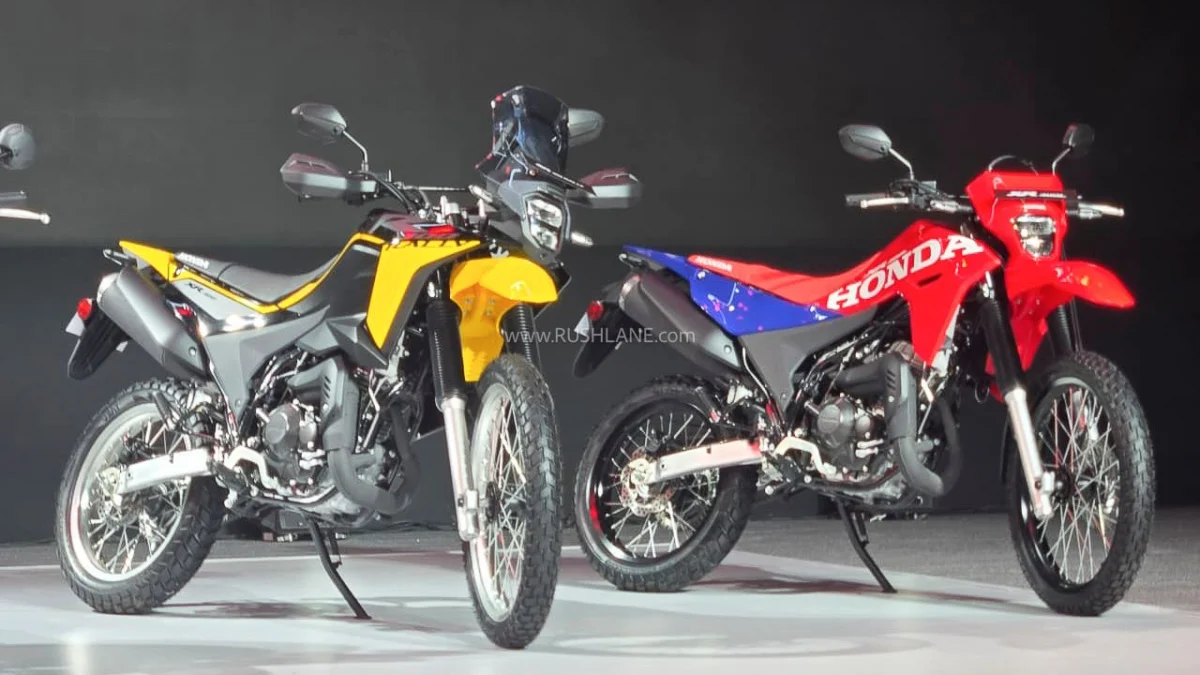
4. The XR300 Series: Off-Road and Touring Capability
Honda is finally addressing the growing demand for lightweight adventure bikes with the XR300L and the XR300 Rally. Both are powered by a 293.5cc air-cooled, oil-cooled engine. The XR300L is a lean dual-sport machine built for technical trails, while the XR300 Rally features a larger fairing and wind protection for long-distance touring.
5. The QC3: The Next Step in Honda’s EV Journey
The QC3 is Honda’s latest electric scooter, designed for family use. It boasts a 3.0 kWh battery pack and an IDC-certified range of up to 151 km. With a fast-charging capability that reaches 80% in under three hours, the QC3 represents Honda’s serious intent to capture a slice of the rapidly growing Indian EV market.
Chronology: From Commuter King to Premium Contender
To understand the weight of this announcement, one must look at the timeline of Honda’s journey in India. For decades, HMSI was synonymous with the Activa and the Shine—reliable, high-volume machines that mobilized the middle class.
- 2020–2022: Honda launched the BigWing network, a dedicated dealership vertical for premium motorcycles. The introduction of the CB350 H’ness was the first real shot across the bow of the retro-classic segment.
- 2023–2024: Honda began testing the waters with more specialized imports like the Transalp 750 and the Africa Twin, while simultaneously expanding the 350cc platform with the RS and CB350 variants.
- July 2026: The current unveiling represents the culmination of years of R&D and supply chain localization. By announcing seven all-new models at once, Honda has transitioned from a defensive posture to an aggressive expansionist strategy.
Supporting Data: Specifications and Technical Highlights
The upcoming lineup is characterized by a high level of technological integration. Below is a breakdown of the key specifications for the flagship models revealed:
| Model | Engine Displacement | Cooling Type | Key Features |
|---|---|---|---|
| ADV160 | 156.9cc | Liquid-Cooled | E85 Flex-Fuel, HSTC, 27L Storage |
| CB500 | 501cc | Air/Oil-Cooled | Single-cylinder, Heritage Styling, LED |
| Rebel 300 | 286cc | Liquid-Cooled | E-Clutch Option, LED Projector |
| Rebel 500 | 471cc | Liquid-Cooled | Parallel-Twin, E-Clutch, HSTC |
| XR300L | 293.5cc | Air/Oil-Cooled | Pro-Link Suspension, Switchable ABS |
| XR300 Rally | 293.5cc | Air/Oil-Cooled | Rally Styling, RoadSync Navigation |
| QC3 (EV) | 3.0 kWh Battery | N/A | 145-151 km Range, 0-80% in 2h 40m |
Beyond the engines, Honda is standardizing its Honda Selectable Torque Control (HSTC) and Honda RoadSync (Bluetooth connectivity with turn-by-turn navigation) across almost the entire premium range. This suggests a move to provide high-value tech as standard equipment to differentiate from more basic competitors.
Official Responses: "Made in India, Made for the World"
While specific prices and launch dates remain under wraps, the messaging from Honda Motorcycle & Scooter India has been clear. Senior executives emphasized that these products are not mere imports but are deeply localized to ensure competitive pricing and long-term sustainability.

"India is no longer just a market for our global products; it is the heart of our manufacturing and engineering future," a spokesperson indicated during the unveiling. "These 10 products represent our commitment to providing diverse mobility solutions—from eco-friendly flex-fuel scooters to high-torque roadsters—all built with the precision and quality Honda is known for, right here in India."
The company also confirmed that the rollout will be "phased." This suggests that the ADV160 and the updated CB350s might arrive in showrooms by the next festive season, while more complex models like the Rebel 500 with E-Clutch and the CB500 roadster might follow in the subsequent quarters.
Implications: A Shift in the Competitive Landscape
The arrival of these 10 products carries profound implications for the Indian two-wheeler industry.
1. The Threat to the "Retro" Hegemony
The Honda CB500 is perhaps the most strategic entry. By opting for a 501cc single-cylinder engine rather than a twin, Honda is focusing on low-end torque and cost-efficiency. This puts it in direct competition with Royal Enfield’s 350cc and 450cc platforms. If Honda can price the CB500 aggressively, it may attract buyers looking for more "displacement prestige" without the price jump of a multi-cylinder bike.
2. Democratizing Automatic Technology
The E-Clutch system in the Rebel 300 and 500 could be a game-changer for urban riders. As Indian cities become more congested, the fatigue of manual gear shifting becomes a significant pain point. By offering an "automated manual" experience that still allows for foot-shifting, Honda is carving out a niche between traditional manuals and CVTs.
3. Setting the Pace for Sustainability
The ADV160’s E85 compatibility aligns perfectly with the Indian government’s roadmap for ethanol blending. By being the first to market with a high-blend flex-fuel scooter, Honda gains "first-mover" status in a segment that will likely receive policy incentives and tax benefits in the coming years.

4. Global Export Hub
The "Made in India" tag for the Rebel and XR series suggests that Honda plans to use its Indian facilities to supply markets in Southeast Asia, Latin America, and perhaps even Europe. This scale of production will likely result in better component quality and lower service costs for Indian consumers.
5. Adventure Segment Maturation
With the XR300L and XR300 Rally, Honda is filling a massive gap in its lineup. For years, fans have asked for a "mini-Africa Twin." While the XR series is more dirt-focused than the Africa Twin, it provides a legitimate alternative to the Hero Xpulse 200 and the Royal Enfield Himalayan 450, offering Japanese reliability in a segment where durability is the primary currency.
Conclusion
Honda’s 10-product showcase is a bold declaration of intent. It signifies the end of the era where Honda was content to play it safe with commuters. By embracing flex-fuels, advanced electronics, and a "heritage-first" design language, HMSI is preparing for a future where the Indian motorcyclist is more demanding, more diverse, and more global in their tastes. As these models hit the roads in the coming months, the battle for the premium heart of the Indian market is set to enter its most intense phase yet.
