

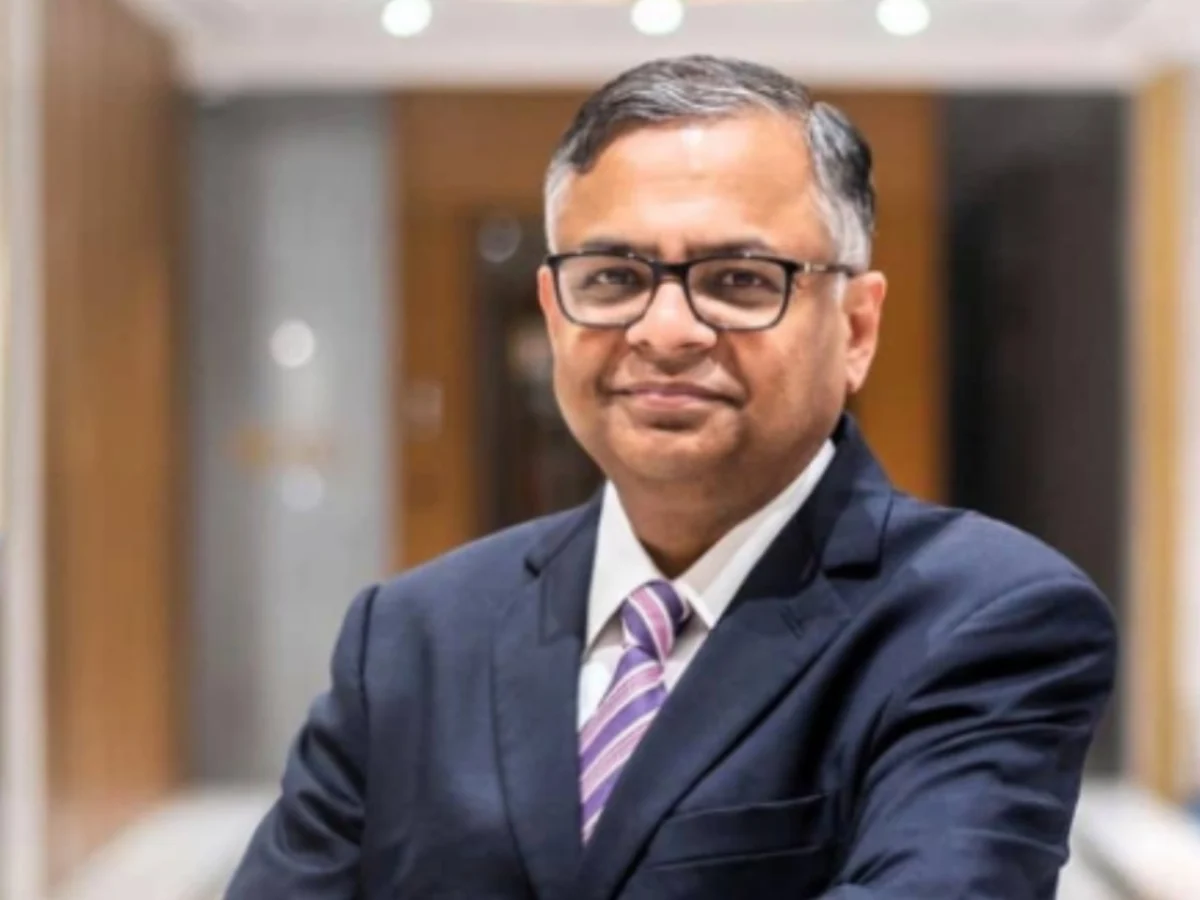
MUMBAI, India – N. Chandrasekaran, the highly-regarded chairman of Tata Sons, the holding company of India’s sprawling Tata Group, has tendered his resignation, marking the end of a transformative, nearly nine-year tenure. While his resignation is effective immediately, Chandrasekaran will continue to serve in his role until his current term formally concludes in February 2027, as reported by The Economic Times. This decision sends shockwaves through India’s corporate landscape, coming at a critical juncture for the conglomerate, which is navigating a complex leadership transition and reported internal disagreements among its powerful trustees, particularly following the passing of patriarch Ratan Tata in 2024.
The announcement casts a long shadow over the upcoming August 18 Annual General Meeting (AGM), where shareholders were slated to vote on his reappointment. Chandrasekaran’s departure signals a period of heightened uncertainty and intensifies the focus on the future strategic direction and governance of the over $180 billion empire.
Main Facts: A Sudden End to a Storied Chapter
Natarajan Chandrasekaran, aged 63, has informed the board of Tata Sons that he will not seek reappointment as chairman when his current term expires on February 20, 2027. The catalyst for this pivotal decision appears to be the board’s inability to reach a unanimous consensus on extending his tenure, despite strong recommendations from the influential Sir Dorabji Tata Trust and Sir Ratan Tata Trust for a five-year extension. These recommendations, though significant, failed to garner the requisite support during a crucial Tata Sons board meeting in February 2026.
Sources close to the development indicate that Chandrasekaran conveyed to associates his contemplation of stepping down ahead of the impending AGM. He has reportedly cited the protracted six-month period without a clear resolution on his future, coupled with the imperative for definitive leadership clarity, as primary motivators for his decision. Emphasizing his forty years of dedicated service to the Tata Group, Chandrasekaran described his nearly decade-long stewardship of Tata Sons as a profound honour and responsibility. His exit immediately triggered a noticeable downturn in the stock prices of several key Tata Group companies, reflecting investor anxiety over the leadership vacuum.
)
Chronology: A Journey from Trainee to Titan’s Helm
Chandrasekaran’s journey within the Tata conglomerate is a testament to meritocracy and sustained leadership.
- 1987: Chandrasekaran, a young computer applications graduate, joins Tata Consultancy Services (TCS), the group’s flagship IT services arm, as a software programmer. This marked the beginning of a remarkable ascent within one of India’s most respected business houses.
- 2009: After more than two decades of dedicated service and rising through the ranks, he is appointed Chief Executive Officer and Managing Director of TCS. Under his leadership, TCS witnessed unprecedented growth, solidifying its position as India’s largest IT services exporter and a global powerhouse. His tenure at TCS was marked by aggressive expansion into new markets, a focus on digital transformation, and consistent financial outperformance.
- October 2016: Chandrasekaran’s exceptional performance at TCS does not go unnoticed. He is appointed to the Board of Tata Sons, signaling his increasing importance within the broader group structure. This appointment came amidst a period of internal strife, following the unceremonious removal of Cyrus Mistry as chairman.
- January 2017: In a landmark decision, N. Chandrasekaran is named Chairman of Tata Sons, becoming the first non-Parsi chairman in over 50 years. He was tasked with stabilizing the group after a turbulent period and charting a course for future growth across its vast and diverse portfolio. His appointment was widely seen as a pragmatic choice, reflecting his proven track record and deep understanding of the group’s operations.
- 2017 – Present (February 2027): His tenure as chairman is characterized by significant strategic shifts, including aggressive moves into new-age sectors, consolidation, and a renewed focus on digital transformation and sustainability. He chairs the Boards of numerous prominent Tata operating companies, including Tata Steel, Tata Motors, Tata Power, Air India, Tata Consumer Products, Indian Hotel Company, and Tata Consultancy Services, demonstrating his deep engagement across the group’s diverse verticals.
- February 2026: A pivotal Tata Sons board meeting fails to achieve unanimous support for extending Chandrasekaran’s tenure, despite recommendations from key Tata Trusts. This internal divergence sets the stage for his eventual decision.
- August 2026: Chandrasekaran formally tenders his resignation, with the understanding that he will complete his current term until February 2027, ensuring a structured transition period. The announcement precedes the crucial August 18 AGM.
Supporting Data: Performance, Divisions, and Market Reaction
Chandrasekaran’s resignation is not merely a leadership change but a symptom of deeper currents within the Tata Group, particularly amplified by recent events.

The Shadow of Ratan Tata and Trustee Disagreements
The reported "disagreements among trustees" and the "leadership transition" following Ratan Tata’s death in 2024 are central to understanding the current situation. Ratan Tata, though retired from active management, remained a formidable figure and a guiding light for the Tata Trusts, which hold over 66% of Tata Sons. His passing undoubtedly created a vacuum, potentially leading to a more diffuse and perhaps contentious decision-making environment among the various trustees. The philanthropic nature of the Trusts, juxtaposed with their immense commercial power, often leads to complex governance challenges.
Sources suggest that the disagreements largely revolved around two critical areas:
)
- Performance of Newer Businesses: Chandrasekaran aggressively steered the group into nascent but strategically vital sectors such as semiconductors, electronics manufacturing, consumer internet platforms, mobile technology, and battery giga-factories. While these ventures represent future growth engines, they typically require significant capital investment and have longer gestation periods before yielding substantial returns. Some trustees, reportedly, harboured concerns about the pace of profitability, the sheer quantum of capital deployed, and the inherent risks associated with these nascent ventures. This divergence in risk appetite and return expectations likely fuelled internal debate.
- Capital Requirements and Allocation: The expansion into capital-intensive new businesses naturally demands substantial funding. Discussions around capital allocation across the vast group – balancing established cash cows with speculative future bets – could have become a point of contention. The financial health and future trajectory of each group company, especially those requiring heavy investment, would have been under intense scrutiny.
These reported internal divisions within the Trusts and the Tata Sons board ultimately prevented the unanimous support necessary for Chandrasekaran’s reappointment, a critical factor given the group’s unique ownership structure and governance philosophy that values consensus.
Chandrasekaran’s Transformative Tenure
Despite the internal differences that led to his exit, Chandrasekaran’s tenure as chairman was marked by significant achievements and a clear strategic vision. Under his leadership, the Tata Group:
)
- Strategic Diversification: Successfully pivoted into future-ready sectors like electric vehicles (EVs) and battery manufacturing, semiconductor fabrication, and digital consumer platforms, aiming to future-proof the conglomerate. This included establishing Tata Electronics, a foray into contract manufacturing, and significant investments in Tata Passenger Electric Mobility.
- Aviation Expansion: Orchestrated the landmark acquisition of Air India, bringing the airline back into the Tata fold after decades. This move, along with the consolidation of other group airlines (Vistara, AirAsia India), aimed to create a formidable global airline presence under the Tata brand.
- Digital Push: Accelerated the group’s digital transformation agenda, culminating in the launch of the ‘Tata Neu’ super app, an ambitious attempt to integrate the group’s diverse consumer offerings onto a single digital platform.
- Financial Growth: The group’s turnover surged, exceeding US$180 billion, with a market capitalization reaching US$328 billion as of March 31, 2025. This financial performance underscored the significant value creation under his stewardship.
- Global Recognition: Chandrasekaran himself garnered significant international recognition, receiving India’s third-highest civilian award, the Padma Bhushan, in 2022. This was followed by France’s prestigious Légion d’Honneur in 2023 and an Honorary Knighthood of the Order of the British Empire in 2025, reflecting his global stature as a business leader.
Market Reaction: A Jittery Response
The news of Chandrasekaran’s impending exit triggered an immediate and palpable negative reaction across Tata Group stocks on the bourses. On the day of the announcement, the collective market capitalization of Tata Group companies fell by approximately 4%, erasing billions in investor wealth.
- Tata Consultancy Services (TCS): As India’s largest IT services exporter and the crown jewel of the Tata Group, TCS shares were among the worst hit, dropping 4.1%. Chandrasekaran’s deep connection to TCS, having led it for years before becoming Tata Sons chairman, made this decline particularly significant.
- Tata Motors PV: The parent company of Jaguar Land Rover and a major player in India’s burgeoning EV market, Tata Motors PV saw its shares decline by 2.8%. Investors likely worried about the continuity of strategic direction, especially in the capital-intensive and highly competitive EV segment.
- Other Group Companies: Tata Consumer Products fell over 1%, while Titan Company, a leading player in watches and jewellery, declined 1.1%. Tata Investment Corporation dropped 1.11%, and Tata Steel traded marginally lower. Interestingly, Trent, the retail arm, was an outlier, gaining around 0.5%, perhaps shielded by its strong domestic consumption story or perceived insulation from broader group-level strategic shifts.
The market’s reaction underscores the critical role of stable and visionary leadership at the helm of a conglomerate as vast and influential as the Tata Group. Chandrasekaran’s perceived strategic acumen and ability to navigate complex global markets were clearly valued by investors.
)
Official Responses: A Quest for Clarity and Smooth Transition
While no detailed official statement from Tata Sons has been released beyond confirming the resignation, the reported statements from Chandrasekaran himself offer insight into the rationale and desired outcome.
Chandrasekaran’s reported discussions with close associates and his communication with the board highlight a desire for clarity and an orderly transition. By stating his intention not to seek reappointment and asking the board to initiate the succession process "soon," he aims to prevent a protracted period of uncertainty that could destabilize the group. His emphasis on having completed "40 years with the Tata Group" and describing his leadership of Tata Sons as a "great honour and responsibility" can be interpreted as a dignified exit, acknowledging his long service while also subtly conveying the reasons for his decision. It reflects a leader who has given his all and now seeks a clear path forward for the institution.
)
From Tata Sons’ perspective, while the lack of unanimous board support indicates internal dissent, the decision to allow Chandrasekaran to serve until February 2027 suggests an attempt to manage the transition smoothly. This extended handover period provides crucial time for the board, guided by the Tata Trusts, to identify and prepare a suitable successor, minimizing disruption to ongoing strategic initiatives and investor confidence. The challenge for Tata Sons will be to communicate a unified message about its future direction and leadership, reassuring stakeholders that the group’s foundational values and long-term vision remain intact.
Implications: The Road Ahead for Tata Group
Chandrasekaran’s departure initiates a crucial period of introspection and strategic recalibration for the Tata Group. The implications are far-reaching, touching upon succession, strategic direction, governance, and market perception.
)
The Search for a Successor
The immediate and most pressing implication is the need for a new chairman for Tata Sons. This will be a monumental task, given the sheer scale, diversity, and strategic importance of the group. The search will likely involve:
- Internal vs. External Candidates: While Chandrasekaran was an internal candidate (from TCS), the board might explore both internal talent and external industry stalwarts. The candidate must possess not only exceptional business acumen but also a deep understanding of the Tata ethos, its philanthropic roots, and its complex governance structure involving the Trusts.
- Criteria for Selection: The next chairman will need to balance the interests of various stakeholders – the Trusts, operating companies, shareholders, and employees. Key attributes will include strategic vision for new-age businesses, financial discipline, strong communication skills, and the ability to command respect across a diverse leadership team and investor base. Given the reported disagreements, the ability to build consensus and unite disparate factions will be paramount.
- The Role of Tata Trusts: The Trusts, as majority shareholders, will play a decisive role in the selection process. Their influence, particularly in the post-Ratan Tata era, will be intensely scrutinized. The new chairman will effectively be chosen to represent and uphold the Trusts’ vision for the conglomerate.
Strategic Direction and Capital Allocation
Chandrasekaran’s successor will inherit a group actively engaged in ambitious projects across new technologies. The new leadership will face the critical decision of whether to continue, modify, or even divest some of these capital-intensive ventures.
)
- Continuity or Shift? Will the new chairman maintain the aggressive push into semiconductors, EVs, and the digital super app, or will there be a more conservative approach focusing on core strengths? The outcome of the reported trustee disagreements will likely shape this.
- Financial Discipline: The new leader will need to ensure a careful balance between growth ambitions and financial prudence, especially in a volatile global economic environment. Decisions around capital allocation will be key to managing investor expectations and maintaining the group’s robust financial health.
- Integration Challenges: Projects like the Air India integration and the Tata Neu super app are complex and require sustained leadership. The new chairman will need to ensure these critical initiatives remain on track and deliver their promised value.
Governance and Internal Harmony
The circumstances of Chandrasekaran’s exit highlight potential fissures within the Tata Sons board and the wider trustee network. The succession process will be a litmus test for the group’s governance mechanisms.
- Consensus Building: The new chairman will need to foster greater consensus and alignment among the various stakeholders, particularly the influential Trusts. The inability to achieve unanimous support for Chandrasekaran’s reappointment underscores the need for a more unified vision at the top.
- Transparency: Greater transparency regarding the decision-making process and the strategic rationale behind major group initiatives could help alleviate investor concerns and strengthen internal cohesion.
- Legacy of Ratan Tata: The passing of Ratan Tata means the group is operating without its long-standing moral compass and consensus-builder. The new leadership will need to define how it will uphold the Tata values and legacy while navigating contemporary business challenges.
Market Perception and Investor Confidence
The initial market reaction clearly indicates investor anxiety. A prolonged and contentious succession battle or a significant shift in strategic direction could further erode confidence. Conversely, a swift, transparent, and well-received appointment could quickly stabilize the market.
)
- Stability is Key: Investors crave stability and clarity, especially from a conglomerate of Tata’s size and influence. The ability of Tata Sons to manage this transition gracefully will be crucial for maintaining its premium valuation.
- Future Growth Narrative: The new chairman’s ability to articulate a compelling future growth narrative that resonates with both traditional and new-age investors will be vital.
N. Chandrasekaran’s departure marks the close of a significant chapter for the Tata Group. While his leadership propelled the conglomerate into new frontiers, his exit underscores the enduring complexities of governance and succession within one of India’s most revered business institutions. The coming months will be pivotal as the Tata Group embarks on a crucial search for a leader who can not only steer its vast empire but also unite its diverse stakeholders towards a shared vision for the future.
