

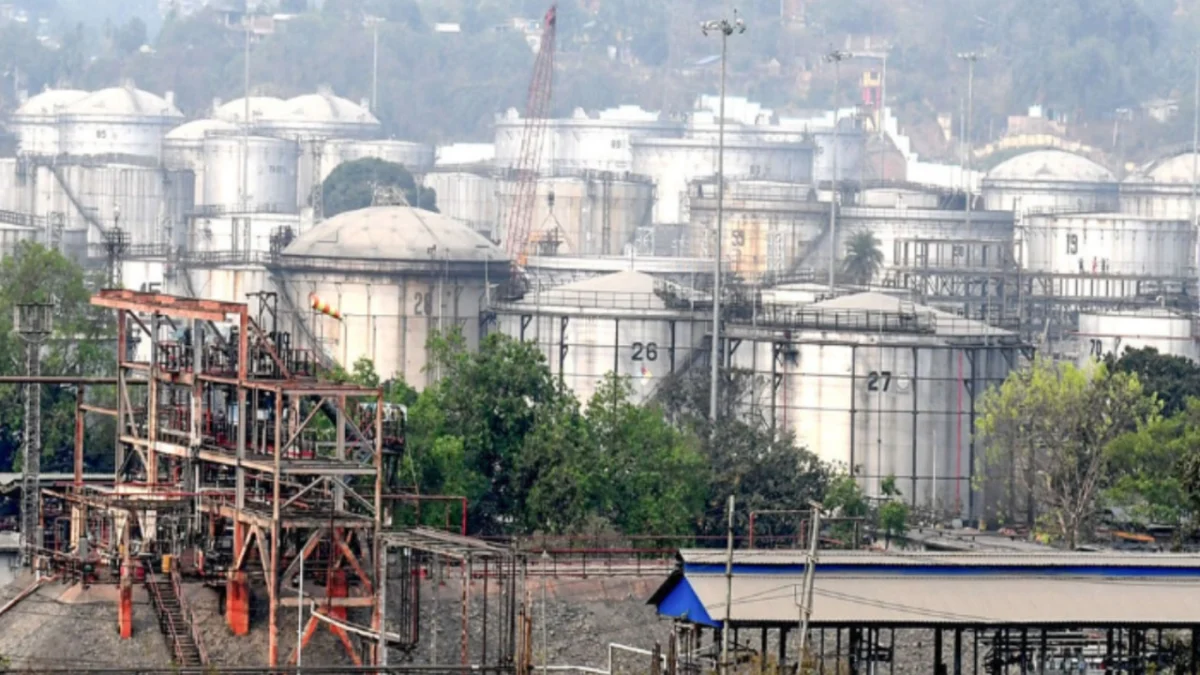
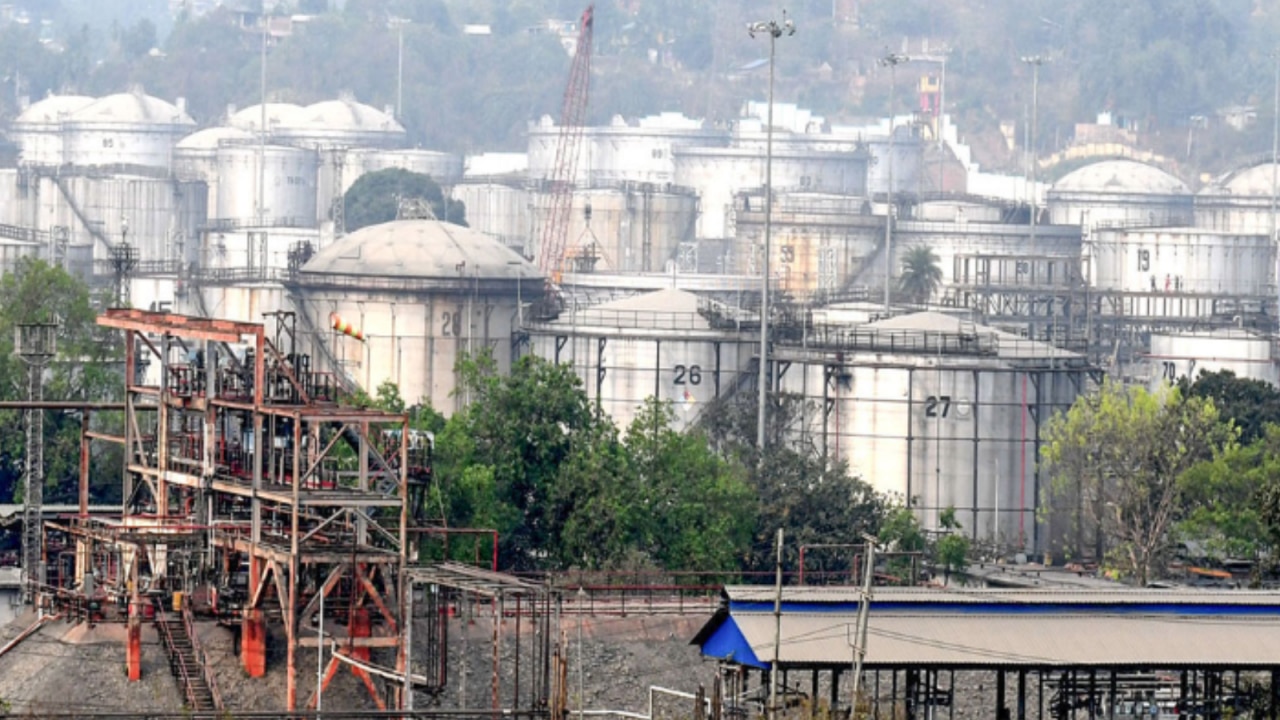
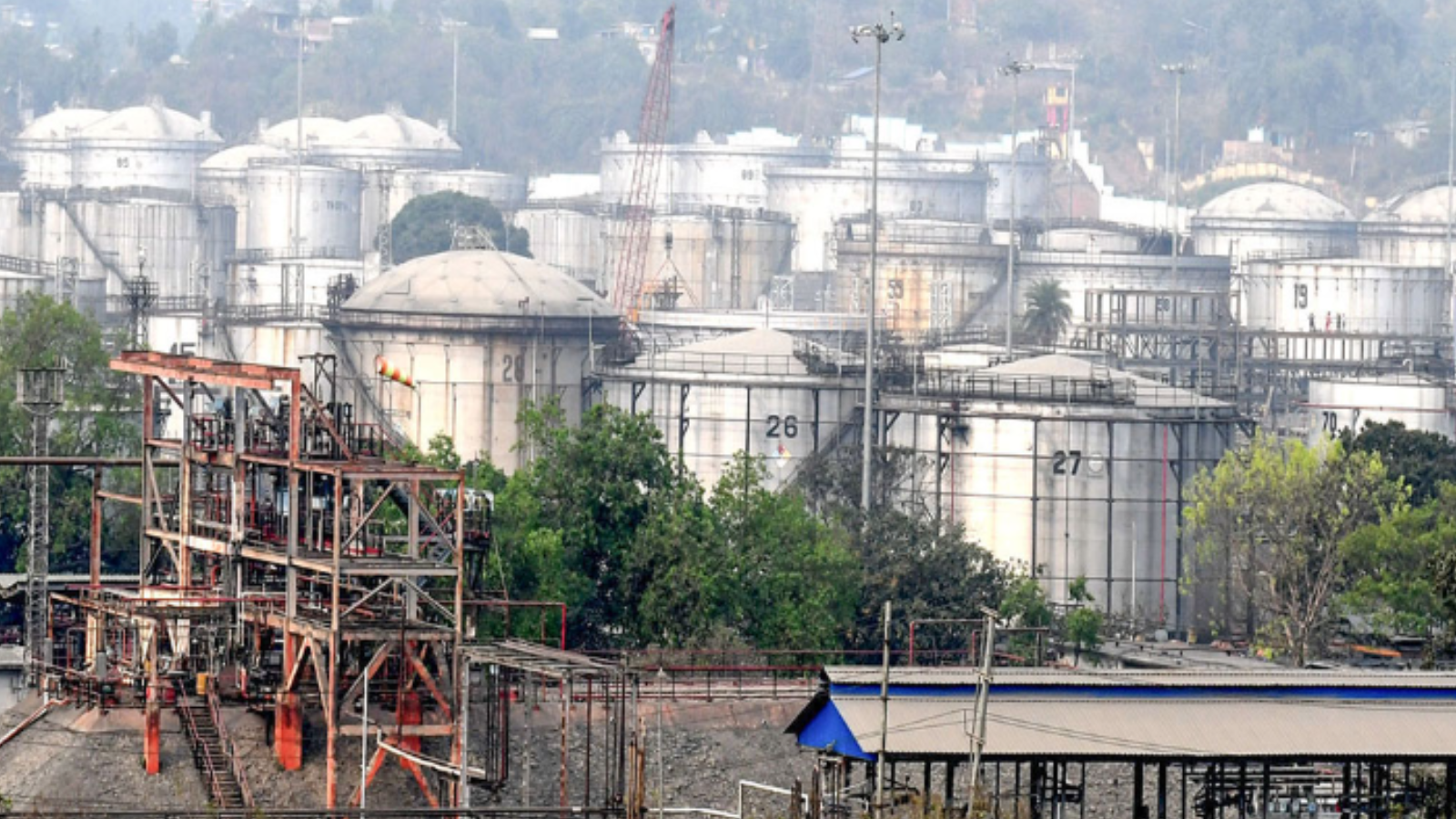
New Delhi, India – India’s state-run Oil Marketing Companies (OMCs) are currently grappling with a formidable financial challenge, estimated to be losing an astounding ₹530 crore every single day. This staggering figure, projected by the leading credit rating agency ICRA, highlights the severe squeeze on profitability as global crude oil prices continue their relentless ascent while domestic retail prices for petrol, diesel, and LPG remain conspicuously unchanged. The precarious balance between international market dynamics and domestic price stability is pushing these critical public sector undertakings into a deepening financial quagmire, raising concerns about their operational sustainability and the broader economic implications.
The scenario underscores a critical dilemma for policymakers: how to absorb the shock of volatile international energy markets without passing the full burden onto the Indian consumer, particularly in a period marked by inflationary pressures. This delicate tightrope walk leaves OMCs, including giants like Indian Oil Corporation (IOC), Bharat Petroleum Corporation Limited (BPCL), and Hindustan Petroleum Corporation Limited (HPCL), to bear the brunt of the disparity.
The Anatomy of Daily Losses: Negative Margins and Under-recoveries
At the heart of the OMCs’ predicament are two primary financial drains: negative marketing margins on auto fuels and significant under-recoveries on Liquefied Petroleum Gas (LPG) cylinders.
ICRA’s analysis reveals that OMCs are currently facing negative marketing margins of approximately ₹8 per litre on petrol and ₹9 per litre on diesel. This means that for every litre of petrol or diesel sold, the companies are effectively losing money on the marketing and distribution component, after accounting for procurement costs. Adding to this burden is an estimated under-recovery of around ₹300 on every domestic LPG cylinder, a product deemed essential for household consumption and often subject to government subsidies or price caps.
)
Prashant Vasisht, Senior Vice-President and Co-Group Head (Corporate Sector Ratings) at ICRA, articulated the root cause of this financial distress. "The escalation of the West Asian conflict and disruptions to key oil supply routes have led to a spike in crude prices in recent weeks, resulting in sizable marketing losses and LPG under-recoveries for oil marketing companies (OMCs)," Vasisht stated, emphasizing the direct correlation between geopolitical instability and the OMCs’ balance sheets.
He further elaborated on the complex interplay of factors that will determine the OMCs’ financial health moving forward: "The impact on OMCs’ earnings in 2026-27 will depend on crude prices, product cracks, retail price revisions and government support for LPG under-recoveries." This statement encapsulates the inherent uncertainty and the multifaceted nature of the challenges facing these companies.

A Chronology of Rising Tensions and Costs
The current crisis for Indian OMCs is not an isolated event but the culmination of a series of geopolitical developments and market reactions over recent months.
Escalating Geopolitical Risks: The immediate catalyst for the sharp rise in global crude prices has been the intensified conflict in West Asia. The region, a critical artery for global oil supplies, has witnessed a dangerous escalation, directly impacting supply routes and investor sentiment. Key flashpoints include:
)
- Renewed US-Iran Conflict: Tensions between the United States and Iran have intermittently flared, raising fears of supply disruptions from the Strait of Hormuz, a vital chokepoint for a significant portion of the world’s oil trade.
- Saudi Arabia’s East-West Pipeline Shutdown: Reports of disruptions or shutdowns to critical infrastructure, such as Saudi Arabia’s East-West pipeline, immediately constrict supply, driving prices upwards.
- Houthi Activity in the Red Sea: Increased aggression by Houthi rebels in the Red Sea, targeting commercial shipping, has forced many vessels to reroute, significantly increasing transit times and shipping costs. This translates into higher landed costs for crude oil.
- Damage to Russian Refineries: Beyond West Asia, damage to key Russian refineries, often attributed to ongoing conflicts, has further tightened global fuel supplies, particularly for refined products like diesel and jet fuel, contributing to higher "product cracks" (the difference between crude oil price and refined product price).
Surge in Crude Benchmarks: These geopolitical tremors have translated directly into a sharp upward trajectory for international crude oil benchmarks. India’s crude oil basket, a weighted average of Oman, Dubai, and Brent crude, surged to an alarming $117.4 a barrel on September 21. This stands in stark contrast to an average of around $66 a barrel in the fiscal year 2025-26, illustrating the dramatic escalation in procurement costs for Indian refiners. While Brent crude had eased slightly to around $99 a barrel on September 23, the overall trend remained one of heightened volatility and elevated prices compared to previous periods of relative stability.
Frozen Domestic Retail Prices: Concurrently, despite the significant increase in their input costs, OMCs have maintained a freeze on domestic retail prices of petrol, diesel, and LPG. This policy, often influenced by socio-economic considerations and the desire to curb inflation, transfers the burden of rising international prices from the consumer to the OMCs. While beneficial for consumers in the short term, it erodes the OMCs’ marketing margins, leading directly to the daily losses observed.
)
Government Intervention – The Role of SAED: In response to earlier periods of high refining margins (when global crude was cheaper but refined product prices were high, leading to windfall gains for refiners exporting fuel), the government introduced the Special Additional Excise Duty (SAED). This duty, levied on exports of diesel, aviation turbine fuel (ATF), and later petrol, aims to tax these windfall gains. For domestic supplies, SAED is adjusted in the refinery transfer price, theoretically reducing the effective fuel cost for OMCs’ marketing divisions. The duty currently stands at ₹20 per litre on diesel and ₹15 per litre on ATF, as noted by ICRA. While intended to balance the books, the efficacy of SAED in fully offsetting the current marketing losses, particularly when refining margins themselves are high but procurement costs for crude are soaring, remains a complex calculation.
Supporting Data: A Deep Dive into the Numbers
The financial strain on OMCs is not merely theoretical; it is underpinned by concrete figures and expert projections.
)
Magnitude of Losses:
- Daily Loss: ₹530 crore – The headline figure that encapsulates the immense financial pressure.
- Negative Marketing Margins:
- Petrol: Approximately ₹8 per litre.
- Diesel: Approximately ₹9 per litre.
- These figures represent the direct loss incurred on the sale of each litre, excluding the cost of crude.
- LPG Under-recoveries:
- September Estimate: Around ₹300 per domestic LPG cylinder.
- Q1 Estimate: As high as ₹500 per cylinder, indicating the volatility and increasing pressure. These losses are particularly sensitive to international LPG prices, which have also seen a spike due to West Asian supply disruptions.
LPG Buffer Deficit: The cumulative impact of these under-recoveries on LPG has significantly strained the OMCs’ financial reserves. ICRA reported that the negative LPG buffer, which represents the accumulated losses on LPG sales not passed on to consumers or compensated by the government, sharply increased to ₹61,940 crore as of June 30. This substantial deficit highlights the scale of the unrecovered costs and the potential need for future government intervention or price adjustments.
)
Crude Price Volatility: The dramatic increase in crude oil prices is a primary driver.
- India’s Crude Basket: Rose to $117.4 a barrel on September 21.
- Previous Average: Around $66 a barrel in 2025-26.
- Brent Crude: Eased to around $99 a barrel on September 23, but still at elevated levels.
Refining Margins and Export Levies: Interestingly, while OMCs face marketing losses, global supply disruptions have kept refining margins high. Singapore refining margins, a key benchmark, have consistently stayed above $10 a barrel since the West Asia crisis began. This is supported by fuel supply disruptions, lower inventories, and refinery outages globally. The high refining margins can offer some cushion to OMCs on the refining segment of their business, especially for exported fuels, but the SAED then claws back a portion of these gains for the government.
)
Future Projections (JM Financial): Brokerage firm JM Financial offers a glimpse into the potential future for OMCs, though it remains contingent on various factors.
- Q2FY27 Petrol and Diesel Margins: JM Financial expects a sharp improvement to ₹11.4 per litre. This optimistic projection likely assumes a more stable crude price environment or potential retail price revisions.
- Continued LPG Losses: Despite potential improvements in auto fuel margins, JM Financial anticipates continued LPG losses of around ₹11,000 crore, which could significantly reduce the overall benefit.
- Effective Margins: After factoring in LPG losses, the combined refining and marketing margin on petrol and diesel, which might rise to ₹11.4 per litre, is expected to be lower at ₹8.5 per litre effectively. This underscores the persistent drag of LPG under-recoveries on overall profitability.
- Profitability Sensitivity: The brokerage’s outlook emphasizes that profitability will remain highly sensitive to crude oil prices, underscoring the inherent volatility of the sector.
Official Responses and Policy Dilemmas
While the original article provides direct quotes primarily from ICRA, the actions and stated positions of the government and OMCs offer implicit official responses and highlight the policy dilemmas at play.
)
ICRA’s Expert Opinion: Prashant Vasisht’s statements serve as a crucial expert perspective, directly linking geopolitical events to OMCs’ financial health. His emphasis on the need for "retail price revisions and government support for LPG under-recoveries" clearly outlines the potential solutions from an analytical standpoint. ICRA’s detailed assessment of the negative LPG buffer and the potential for losses to rise further without intervention underscores the urgency of the situation. The rating agency’s role is to provide an objective assessment of financial health, and their current analysis paints a challenging picture for OMCs.
Government’s Implicit Stance: The continued freeze on domestic fuel prices, despite soaring crude costs, represents a de facto policy decision by the government. This stance is often driven by a desire to:
)
- Control Inflation: Fuel prices have a significant cascading effect on the broader economy, impacting transportation costs for goods and services. Stabilizing fuel prices can help mitigate inflationary pressures.
- Protect Consumers: Rising fuel costs directly impact the common citizen’s disposable income. Keeping prices stable, especially for essential commodities like LPG, is a measure to protect vulnerable households.
- Socio-Political Stability: Fuel price hikes are often politically sensitive in India and can lead to public discontent. Maintaining price stability can contribute to socio-political equilibrium.
However, this policy comes at a cost, transferred directly to the OMCs. The introduction and adjustment of SAED can be seen as another form of government intervention, aiming to manage the financial landscape of the oil sector by taxing windfall gains and, in theory, providing some adjustment for domestic supplies. However, it does not directly compensate OMCs for marketing losses.
OMCs’ Operational Strategy: Faced with these pressures, OMCs must manage their operations judiciously. This includes:
)
- Optimizing Refining Operations: Maximizing efficiency and product yields to leverage any positive refining margins.
- Managing Inventory: Strategic procurement and inventory management to mitigate the impact of price volatility.
- Seeking Government Support: Historically, OMCs have received government compensation for under-recoveries, particularly on LPG and kerosene. The current situation suggests a renewed need for such support to prevent severe balance sheet deterioration.
Implications: Far-Reaching Consequences
The financial stress on state-run OMCs carries significant implications, extending beyond their immediate balance sheets to the broader economy, investment landscape, and consumer welfare.
1. Impact on OMCs’ Profitability and Cash Flow:
)
- Erosion of Earnings: Persistent daily losses will severely erode the OMCs’ profitability, directly impacting their net income and potentially leading to quarterly or annual losses.
- Cash Flow Strain: Negative marketing margins and under-recoveries drain cash flow, making it difficult for OMCs to meet operational expenses, debt obligations, and fund future investments.
- Increased Borrowing: To bridge the gap, OMCs may need to increase their short-term borrowing, leading to higher interest expenses and increased financial leverage. This can impact their credit ratings and access to capital markets.
- Reduced Investment Capacity: Sustained financial strain can force OMCs to defer or scale back crucial capital expenditure plans, including investments in refinery upgrades, expansion projects, exploration, and the transition to cleaner energy sources (e.g., green hydrogen, biofuels, EV charging infrastructure). This could hinder India’s energy security and environmental goals.
2. Pressure on Government Finances:
- Potential for Subsidies: If OMCs’ losses become unsustainable, the government may be compelled to step in with direct subsidies or compensation packages for under-recoveries, particularly for LPG. This would add pressure to the national exchequer, potentially impacting fiscal deficit targets and other public spending priorities.
- SAED Effectiveness: While SAED generates revenue, its ability to fully offset the OMCs’ losses and the overall fiscal burden needs continuous evaluation, especially as market dynamics shift.
3. Consumer Impact and Inflationary Pressures:
)
- Temporary Relief (at OMCs’ Cost): For now, consumers benefit from stable fuel prices. However, this stability is artificial and comes at the expense of OMCs.
- Future Price Hikes: If crude prices remain high and OMCs’ losses continue, the government may eventually be forced to allow retail price revisions. This could lead to a sudden and significant increase in fuel prices, triggering inflationary pressures across the economy.
- Impact on Household Budgets: Any future price hike would directly impact household budgets, increasing transportation costs, and the cost of essential goods and services.
4. Energy Security and Transition Challenges:
- Strategic Importance of OMCs: State-run OMCs are pivotal to India’s energy security, managing the import, refining, distribution, and sale of petroleum products across the vast nation. Their financial health is critical for this national function.
- Transition Funding: India has ambitious goals for energy transition and reducing its reliance on fossil fuels. Financially strained OMCs may struggle to allocate the necessary capital for investments in renewable energy, electric vehicle infrastructure, and other sustainable initiatives, potentially slowing down the nation’s green transition.
5. Investor Confidence:
)
- Shareholder Value: Persistent losses and uncertainty can negatively impact the share prices of listed OMCs, eroding shareholder value and potentially making it harder to raise capital from public markets.
- Credit Ratings: Sustained losses could lead to downgrades in credit ratings, increasing borrowing costs and making financial management more challenging.
In conclusion, the estimated ₹530 crore daily loss faced by India’s state-run OMCs is a stark indicator of the profound challenges at the intersection of global energy markets, geopolitical instability, and domestic economic policy. While the current freeze on retail fuel prices offers a temporary reprieve to consumers and aids in inflation control, it places an immense financial burden on these vital public sector entities. The long-term sustainability of this approach hinges on the trajectory of international crude prices, the government’s willingness to provide financial support, and the eventual necessity of aligning domestic retail prices with global realities. Without a strategic and timely intervention, the financial health of India’s OMCs could deteriorate further, with far-reaching consequences for the nation’s economy and its energy future.
