

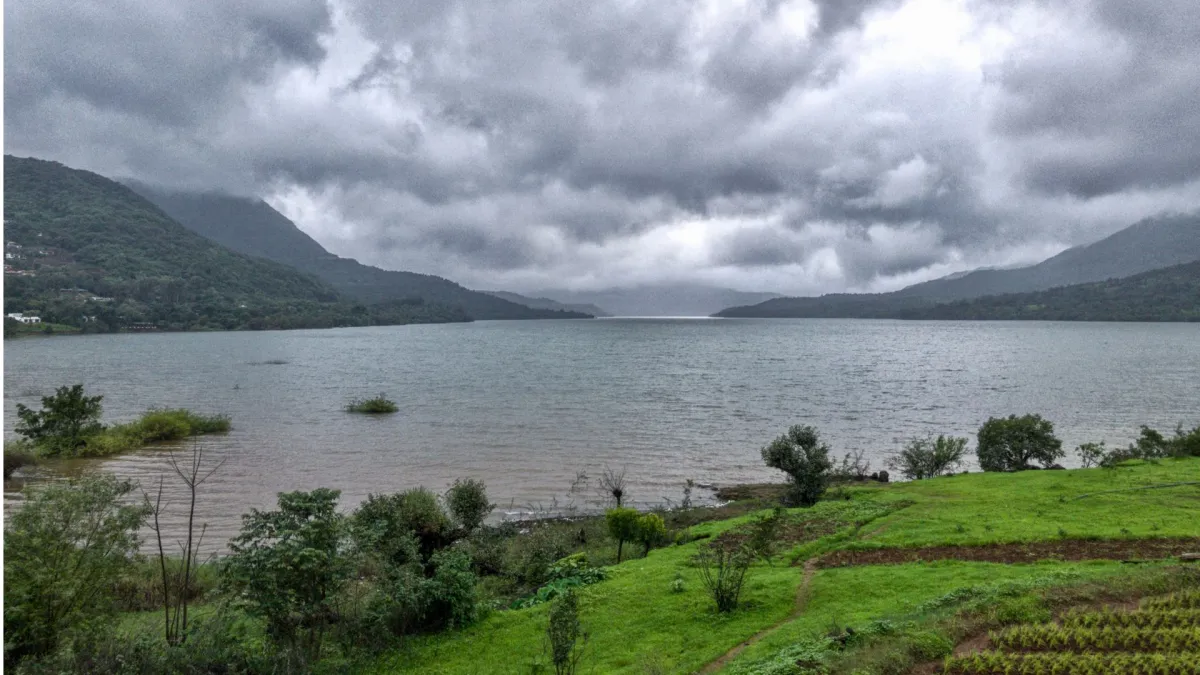
MUMBAI — For the coastal districts of Western India, the arrival of the southwest monsoon is often framed through the lens of agricultural necessity or relief from the sweltering heat. However, a landmark study conducted in the Palghar district of Maharashtra has revealed a far more profound ecological service provided by these rains: a seasonal "reset button" for the region’s increasingly precarious groundwater quality.
Researchers from the Bhabha Atomic Research Centre (BARC) and the Homi Bhabha National Institute (HBNI) have documented a dramatic transformation in the chemical and isotopic composition of Palghar’s aquifers. Their findings, recently published, highlight a dual reality—while the monsoon remains a potent natural purifier capable of reversing extreme salinity, it is simultaneously unmasking the persistent and dangerous encroachment of industrial pollutants into the subterranean water table.
Main Facts: A Seasonal Shift in Water Viability
The study focused on a 350-square-kilometre area in Palghar, a region characterized by its rapid transition from rural agricultural land to an industrial and urban corridor. The data paints a stark picture of the pre-monsoon environment. During the dry summer months, nearly 80% of the groundwater samples analyzed were classified as "poor" or "unsuitable" for human consumption.
The primary culprits behind this degradation are twofold: intense evaporation, which concentrates existing minerals, and seawater intrusion from the nearby Arabian Sea. As the water table drops due to extraction and lack of recharge, the vacuum is filled by saline oceanic water, making the wells dangerously high in sodium and chloride.
However, the post-monsoon data offers a glimpse of environmental resilience. The influx of freshwater from the rains drastically dilutes these contaminants. Following the monsoon, at least 50% of the previously "unsuitable" water sources shifted into the "good" category. This shift is not merely a change in volume but a fundamental chemical reorganization of the aquifer, pushing back the saline front and refreshing the mineral balance.

Chronology of the Aquifer: From Aridity to Recharge
The research team tracked the life cycle of Palghar’s groundwater through two distinct phases: the pre-monsoon (dry) season and the post-monsoon (recharge) season.
The Desiccation Phase (Pre-Monsoon)
In the months leading up to June, the aquifers of Palghar undergo severe stress. The study utilized the Entropy Water Quality Index (EWQI), a sophisticated statistical tool that removes human subjectivity from water quality assessment. During this phase, the EWQI revealed high concentrations of minerals. The "isotopic fingerprint"—the ratio of stable isotopes of hydrogen and oxygen—showed heavy enrichment. This is a scientific marker of evaporation; as the lighter isotopes evaporate into the atmosphere, the remaining water becomes "heavier" and more concentrated with salts.
The Rejuvenation Phase (Post-Monsoon)
With the onset of the heavy rains, the isotopic signature of the groundwater underwent a radical change. The data showed a shift toward a "meteoric" signature, meaning the water in the wells was now dominated by recent rainfall rather than stagnant, mineral-heavy reserves. This freshwater "pulse" acts as a hydraulic barrier, increasing the pressure within the aquifer to push the intruding seawater back toward the coast.
Supporting Data: Isotopic Tracking and the Industrial "Red Flag"
The most significant contribution of the BARC study lies in its use of tritium (hydrogen-3) to "age" the water and identify contamination sources. Tritium is a radioactive isotope of hydrogen that exists in the atmosphere in trace amounts but is also a byproduct of specific industrial processes.
Tritium as a Diagnostic Tool
By measuring tritium levels, researchers could determine how "modern" the groundwater is. High tritium levels generally indicate that the aquifer is being actively recharged by recent rain. In Palghar, while the high tritium confirmed that the system is dynamic and capable of recovery, it also revealed a localized crisis.

In areas adjacent to industrial canals, the researchers found tritium levels that exceeded natural background radiation. These spikes were traced back to the region’s burgeoning industrial sectors, specifically dye manufacturing and watch-making industries, which utilize tritiated compounds. This finding suggests that the "shallow" aquifer system—the one most commonly tapped by local farmers and residents—is highly vulnerable to the downward leaching of industrial effluent.
The Entropy Water Quality Index (EWQI)
Unlike traditional indices that might give equal weight to all pollutants, the EWQI uses the inherent variability of the data to identify which pollutants are most critical in a specific area. In Palghar, the index identified salinity (measured through electrical conductivity) and industrial chemical tracers as the primary drivers of water degradation, providing local authorities with a prioritized list of contaminants to address.
Urban Sprawl and the Mapping Challenge
The findings in Palghar coincide with broader research into India’s urban transformation. Recent data from the GlobalBuildingAtlas, a tool designed to map the footprints of global urban sprawl, confirms that regions like Palghar are expanding at an unprecedented rate. However, researchers testing the Atlas noted a significant limitation: while the tool is excellent at mapping the horizontal spread of cities, it consistently underestimates the height of buildings and the density of vertical infrastructure due to satellite imagery constraints.
This "mapping gap" has direct implications for groundwater management. As urban areas grow more densely than current maps suggest, the pressure on local water tables is often underestimated by planners. High-density vertical developments require deeper borewells and generate more concentrated waste, further straining the aquifers that the BARC study proves are already under threat from industrial leakage.
Official Responses and Scientific Recommendations
While local government officials in the Palghar district have long recognized the seasonal fluctuations in water availability, the BARC study provides the first rigorous chemical roadmap for intervention.

Scientists involved in the project emphasize that the monsoon "reset" is a gift of nature that must be managed, not squandered. "The fact that the water quality improves so significantly after the rain tells us that the system is not yet permanently broken," the researchers noted. "However, the presence of industrial tritium is a warning. We are seeing the early signs of long-term chemical infiltration that the monsoon may not be able to wash away in the future."
The research team has called for:
- Stricter Industrial Regulation: Monitoring the lining of industrial canals to prevent the leaching of tritiated compounds and dyes into the shallow water table.
- Expanded Sampling: The current study relied on 92 samples over 350 square kilometers. Scientists suggest a denser network of sensors is needed to catch "micro-pockets" of contamination.
- Advanced Interpolation: Using more complex mathematical models to predict water quality in areas between existing wells.
Implications: The Future of Coastal Water Security
The study’s implications reach far beyond the borders of Maharashtra. As climate change drives sea-level rise, coastal aquifers globally are at risk of permanent salinization. The Palghar research serves as a "canary in the coal mine" for coastal India.
The Role of Rainwater Harvesting
The study underscores that rainwater harvesting is no longer an optional "green" initiative but a core requirement for survival. By capturing and artificially injecting rainwater into the ground, communities can extend the "post-monsoon" period of high water quality, keeping the saline front at bay for longer periods during the summer.
Climate Change Vulnerability
The reliance on the monsoon as a "reset button" is a risky strategy in an era of erratic weather patterns. If the monsoon fails or becomes too concentrated in short, violent bursts, the "recharge" might not have enough time to penetrate the soil and reach the aquifers. This would leave the region stuck in a permanent "pre-monsoon" state of high salinity and concentrated pollution.

Conclusion
The BARC and HBNI study provides a masterclass in the use of nuclear and isotopic techniques for environmental conservation. It reveals a Palghar caught in a tug-of-war between the purifying power of the heavens and the polluting footprint of industrial progress. As India continues its rapid urban and industrial expansion—a trend documented by the GlobalBuildingAtlas—the health of its "hidden" water reserves will depend entirely on how well the country can protect the natural recharge cycles of the monsoon.
For the residents of Palghar, the message is clear: the rains do more than just green the fields; they are the thin line between a drinkable future and a saline, chemical-laden wasteland. Protecting that process is now a matter of national priority.
