

NEW DELHI, August 7, 2026 – In a significant escalation of digital censorship, social media giant Instagram, owned by Meta Platforms Inc., has been systematically blocking and de-amplifying content deemed "anti-establishment" across India. This widespread crackdown follows a series of intense, high-stakes meetings between Meta’s leadership and the Union government, with authorities reportedly zeroing in on the platform’s recommendation algorithms as a key amplifier of dissenting voices. The move has triggered alarm among political parties, activists, and digital rights advocates, who decry it as a direct assault on free speech and democratic principles.
The sweeping censorship campaign has seen posts and reels vanish from the accounts of prominent political figures, opposition parties, and independent news outlets. Among those directly impacted are the Indian Youth Congress, Aam Aadmi Party (AAP) convener and Delhi Chief Minister Arvind Kejriwal, Cockroach Janta Party (CJP) spokesperson Saurav Das, and the respected news portal Scroll.in. The deletions are explicitly referencing the Information Technology (Intermediary Guidelines and Digital Media Ethics Code) Rules, 2021, signaling a formalized mechanism for government-mandated content removal that critics argue lacks crucial safeguards.
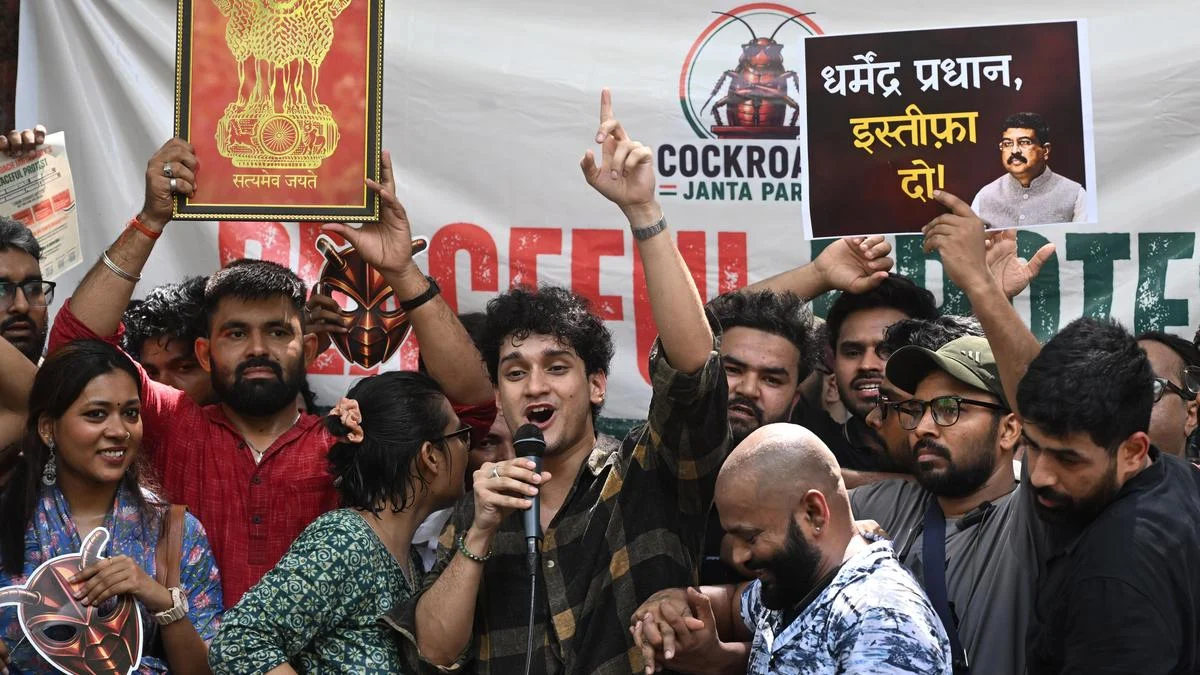
This unprecedented level of digital suppression comes on the heels of last month’s nationwide youth protests, which culminated in the unexpected resignation of Education Minister Dharmendra Pradhan from the Cabinet. The government has openly expressed concerns about social media’s role in mobilizing these demonstrations, setting the stage for the current pressure on tech platforms. While Meta has remained conspicuously silent on the matter, the observable pattern of content removal and reduced visibility for protest-related material suggests a capitulation to official demands, raising profound questions about the future of online expression in the world’s largest democracy.
A Chronology of Intensifying Pressure and Digital Silencing
The current wave of censorship on Instagram is not an isolated incident but rather the culmination of escalating tensions and government pressure on social media platforms in India. The timeline of events reveals a concerted effort by authorities to control the digital narrative, particularly in the wake of significant political unrest.
The origins of the current crackdown can be traced back to the burgeoning youth protests that swept across India last month. These demonstrations, fueled by widespread dissatisfaction over various governmental policies and socio-economic issues, garnered significant traction online. Social media platforms, especially Instagram with its vast young user base, became crucial hubs for organizing, sharing information, and amplifying the protesters’ demands. Videos, memes, and live streams from the protest sites went viral, quickly reaching millions and galvanizing further participation. The government, reportedly taken aback by the scale and speed of the mobilization, began to view these platforms as conduits for "anti-establishment" sentiment, rather than mere communication tools.
A critical turning point occurred with the resignation of Education Minister Dharmendra Pradhan. While the official reasons cited were often vague or attributed to "personal circumstances," informed political observers and activists widely perceived his departure as a direct consequence of the sustained youth agitation. This high-profile resignation underscored the tangible impact of the protests, elevating the government’s perceived need to rein in the digital spaces that facilitated them.
In the immediate aftermath of Pradhan’s resignation and the winding down of the major protest phase, the Union government initiated a series of "tense meetings" with the leadership of Meta. Sources close to these discussions, though unwilling to be named, indicated that the government exerted significant pressure on Meta regarding its recommendation algorithms. The core accusation was that Instagram’s algorithms were inadvertently, or perhaps even deliberately, amplifying content critical of the government and its policies, thereby contributing to the "instability" seen during the protests. The demand, implicitly or explicitly, was for Meta to adjust these algorithms to reduce the visibility of such content.
This latest surge in takedowns is not Meta’s first encounter with Indian government requests. As The Hindu had reported on April 25, Meta has a track record of readily complying with government requests made under Section 79(3)(b) of the IT Act, 2000. This section, which deals with an intermediary’s liability for third-party information, typically involves notices from police or government agencies. Unlike notices under Section 69A of the IT Act, 2000, which carry criminal liability for non-compliance and involve a more structured review process, Section 79(3)(b) notices do not inherently mandate content removal with the same legal weight. Yet, Meta’s "automatic compliance," as highlighted in the earlier report, had already set a concerning precedent, effectively granting the government "vast powers of quick censorship" without the robust safeguards associated with more stringent legal provisions.

The past few weeks have seen this automatic compliance accelerate dramatically. On August 6, for instance, several Facebook posts by AAP supremo Arvind Kejriwal were restricted, particularly those criticizing the government’s ethanol blending policy for fuel. Earlier, a viral clip featuring Students’ Federation of India activist Sakhi, which had garnered over one crore (ten million) views for mocking police announcements during the Jantar Mantar protests, was also unilaterally taken down. These specific instances, alongside the broader disappearance of content from political parties and news portals, paint a stark picture of a rapidly expanding digital dragnet. The consistent reference to the "IT Rules, 2021" in screenshots of blocked posts confirms the administrative rather than judicial nature of these takedowns, further fueling concerns about due process and accountability.
Supporting Data: The Scope and Mechanisms of Digital Suppression
The current censorship drive on Instagram is characterized by its broad scope, rapid execution, and reliance on administrative mechanisms that bypass traditional judicial oversight. Understanding the "how" and "what" of these takedowns reveals a concerning landscape for online expression in India.
The volume of disappearing content is staggering. While precise figures are difficult to obtain given Meta’s lack of transparency on specific takedown numbers, anecdotal evidence and user reports paint a clear picture. Numerous "reels"—Instagram’s short video clips—that previously enjoyed millions of views have been removed. Users across various platforms, particularly X (formerly Twitter), have reported a noticeable decline in the visibility of protest-related content that does manage to remain on Instagram. This suggests a two-pronged approach: outright removal of specific posts and videos, combined with algorithmic de-amplification to suppress the reach of other dissenting voices. Content that once trended or was easily discoverable now languishes in obscurity, effectively rendering it invisible to a wider audience.
The nature of the blocked content is diverse but shares a common thread: criticism of the government, its policies, or its handling of the recent youth protests. Examples include:
- Political Commentary: Posts from the Indian Youth Congress and AAP’s Arvind Kejriwal, ranging from direct criticism of ministerial actions to policy debates (like the ethanol blending policy), have been targeted.
- Activist Voices: Saurav Das of the Cockroach Janta Party, a political entity known for its critical stance, has seen his protest addresses removed. The deletion of SFI activist Sakhi’s viral video, which humorously but pointedly critiqued police actions during protests, highlights the targeting of grassroots activism and satirical dissent.
- Independent Journalism: The blocking of posts from Scroll.in, a reputable news portal, is particularly alarming, as it directly impinges on press freedom and the public’s right to information. This suggests that even factual reporting or commentary on sensitive political issues is not immune to the dragnet.
A crucial aspect of this censorship lies in the legal framework cited: the IT Rules, 2021, specifically Section 79(3)(b) of the IT Act, 2000. This section typically pertains to situations where an intermediary is informed of unlawful content and must act diligently to remove or disable access to it. However, the interpretation and application of this section by the government, and Meta’s compliance, have raised serious legal and ethical questions.
Pranesh Prakash, a co-founder of the Centre for Internet and Society and a prominent tech law and policy consultant, has been a vocal critic of Meta’s approach. He previously highlighted that platforms are legally "in the dock" only if and when a specific piece of content is taken to court—a rare occurrence. "Yet, instead of fighting for their users, Meta is unthinkingly removing content it is legally not even required to remove," Mr. Prakash stated, underscoring the voluntary nature of Meta’s over-compliance. This contrasts sharply with the approach of platforms like X (formerly Twitter), which, while also facing government pressure, often resist or challenge such Section 79(3)(b) notices, arguing that they do not entail direct criminal liability for the platform itself. X’s stance, however imperfect, offers a glimpse into how platforms could push back against broad administrative takedown requests.
The primary conduit for many of these Section 79(3)(b) requests is the Home Ministry’s Sahyog portal. The Software Freedom Law Centre, India (SFLC), a leading digital advocacy group, has trenchantly criticized this system. In a statement on Thursday (August 6, 2026), SFLC asserted that "The Sahyog Portal puts in place a parallel system to take down content online, without any of the safeguards present under Section 69A." Section 69A of the IT Act, 2000, which allows the government to block public access to information, involves a more elaborate process with a committee, review mechanisms, and the potential for judicial oversight. The Sahyog portal, by contrast, operates with less transparency and accountability, creating an avenue for rapid and potentially arbitrary censorship.
Furthermore, the government’s focus on "recommendation algorithms" is a new and concerning frontier in digital control. Algorithms are the invisible arbiters of what users see online, shaping public discourse. Pressuring platforms to modify these algorithms to de-amplify certain types of content goes beyond removing individual "unlawful" posts; it seeks to control the very flow of information, influencing public opinion at a systemic level. This algorithmic interference can create echo chambers, suppress diverse viewpoints, and ultimately undermine the democratic process by limiting exposure to critical information and dissenting narratives.

Official Responses and the Silence of the Giants
The unfolding scenario of digital censorship in India is characterized by a stark contrast between the vocal concerns of civil society and the strategic silence of the key players involved: the government and Meta. This silence, particularly from the platform, is perceived by many as a tacit admission of compliance under pressure.
The Government’s Unspoken Stance: While the Union government has not issued a direct, comprehensive statement on the recent surge in Instagram takedowns, its actions speak volumes. The "tense meetings" with Meta leadership, the reported emphasis on recommendation algorithms, and the systematic use of the IT Rules, 2021, via the Sahyog portal, clearly indicate a proactive stance. The government’s implicit justification, commonly inferred from similar past actions and public statements, revolves around maintaining "public order," preventing "incitement," combating "misinformation," and safeguarding "national security." Following the youth protests and the subsequent ministerial resignation, the narrative appears to be centered on preventing social media from being "misused" to destabilize the political environment or incite further unrest. By targeting algorithms, the government aims to control the spread of content at its source, rather than merely reacting to individual posts. This strategic approach suggests a desire to reshape the digital information ecosystem to align with state interests, under the guise of stability and order.
Meta’s Conspicuous Silence: In response to direct inquiries about this "new wave of censorship," Meta "did not respond." This silence, while perhaps legally expedient, is deeply troubling for digital rights advocates and users. It leaves unanswered crucial questions about Meta’s commitment to free expression, its internal review processes for government requests, and its adherence to its own global content moderation policies. Critics argue that Meta’s silence, coupled with its "automatic compliance" with Section 79(3)(b) notices, positions it as a willing enabler of government censorship.
Why would a global tech giant like Meta seemingly capitulate to such demands? Several factors are likely at play:
- Market Access and Regulatory Fear: India represents one of Meta’s largest and fastest-growing user bases. The prospect of losing market access, facing outright bans, or being subjected to even harsher, more restrictive regulations (such as those that could compel platforms to actively monitor and filter content) could be a powerful motivator for compliance.
- Legal Liability: While Section 79(3)(b) notices don’t carry criminal liability for the platform in the same way Section 69A does, a consistent refusal to comply could lead to legal battles, reputational damage within India, and administrative penalties.
- Ambiguity of Rules: The IT Rules, 2021, and the interpretation of Section 79(3)(b) offer significant leeway. Meta might be choosing a path of least resistance by complying with broad requests, rather than engaging in protracted legal challenges that could be costly and uncertain.
- "Harm Reduction" Narrative: Platforms often justify content removal on the grounds of preventing "harm," "hate speech," or "incitement to violence." The government’s framing of "anti-establishment" content as potentially disruptive or inciting could align, however loosely, with a platform’s own terms of service, making compliance easier to rationalize internally. However, as The Hindu previously reported, Meta has been criticized for regulating hate speech less in India than globally, suggesting a selective application of its principles when faced with government pressure.
The Outcry from Critics: In stark contrast to the official silence, voices from civil society, opposition parties, and legal experts have been loud and clear in their condemnation.
Saurav Das, spokesperson for the Cockroach Janta Party (CJP), minced no words: "What is this blanket ban on protest-related and Modi-related content? It is unconstitutional and illegal. It is absolutely ridiculous. We appeal to Meta to not succumb to such high-handed pressure from the government. Algo[rithm]s must moderate grossly illegal content, not police free expression. The entire point of free internet is this. Any social media platform doing this under pressure is going against free speech principles and public interest." Das’s statement underscores the core argument: the distinction between "illegal content" (like incitement to violence) and "free expression" (like political dissent or protest coordination) is being blurred, leading to censorship of legitimate speech.
Pranesh Prakash’s earlier assessment remains highly relevant. His criticism of Meta’s automatic compliance highlighted a fundamental imbalance: platforms are not legally mandated to remove content under Section 79(3)(b) in the same way they are under Section 69A, yet they do so without challenge. This indicates a failure on Meta’s part to "fight for their users" and uphold the principles of free speech.
The Software Freedom Law Centre, India (SFLC), provided a critical legal perspective, warning that the Home Ministry’s Sahyog portal creates a "parallel system" for content takedowns. This system, according to SFLC, operates "without any of the safeguards present under Section 69A." The absence of these safeguards—which typically include a review committee, reasoned orders, and a mechanism for appeal—renders the process opaque, arbitrary, and vulnerable to abuse. SFLC further emphasized that platforms, given their immense influence on public discourse, have a "heightened responsibility" to ensure their moderation processes are "transparent, consistently applied, and accompanied by adequate procedural safeguards, including notice, reasons for enforcement actions, and effective mechanisms for review." These demands for transparency and due process are crucial in a democratic society where platforms act as de facto public squares.

Implications: A Chilling Effect on Democracy and Digital Rights
The intensified digital censorship on Instagram carries profound implications for India’s democratic fabric, the future of online expression, and the role of global tech companies in authoritarian-leaning environments. The current actions threaten to create a lasting chilling effect on public discourse and civic engagement.
The most immediate and concerning implication is the erosion of free speech and dissent. When platforms silence opposition voices, block critical news, and de-amplify protest content, they undermine the fundamental right to express disagreement and hold power accountable. This creates an environment where citizens, activists, and even opposition political parties may resort to self-censorship, fearing repercussions or simply believing their voices will not be heard. Such a chilling effect stifles public debate, limits the diversity of opinions available to citizens, and ultimately weakens the democratic process, which thrives on open exchange and constructive criticism.
The reliance on the IT Rules, 2021, and the Sahyog portal to enforce these takedowns establishes a concerning precedent. By creating a "parallel system" devoid of robust safeguards like judicial review or independent oversight, the government gains immense power to control online narratives without adequate checks and balances. This administrative mechanism for censorship is far more susceptible to political influence and less transparent than legal processes. It transforms platforms into de facto extensions of state control, rather than neutral intermediaries, effectively privatizing censorship. The future application of these rules could lead to even broader content restrictions, extending beyond political dissent to cultural, social, or religious expression deemed inconvenient by the authorities.
Furthermore, the targeting of recommendation algorithms represents a sophisticated form of control. It moves beyond merely removing "objectionable" content to actively shaping what users see and don’t see. If algorithms are manipulated to prioritize pro-government narratives or suppress dissenting ones, the digital public sphere becomes skewed. This can lead to an uninformed populace, unable to access a balanced spectrum of information, which is essential for making informed decisions in a democracy. This algorithmic intervention blurs the lines between content moderation and propaganda, posing a significant threat to media pluralism and information integrity.
The episode also highlights the precarious position of global tech companies operating in large, politically sensitive markets like India. Meta’s compliance, driven by market imperatives and fear of regulatory backlash, underscores a tension between corporate interests and universal human rights principles. When platforms prioritize market access over protecting user rights, they risk becoming complicit in state-sponsored censorship. This raises critical questions about corporate social responsibility and the ethical obligations of tech giants to uphold free speech, even when faced with government pressure. It could also set a dangerous precedent for other countries seeking to exert similar control over online discourse.
For the political landscape in India, the implications are significant. Opposition parties, already struggling against the might of the ruling establishment, find their primary channels for reaching younger, digitally-savvy voters severely curtailed. This imbalance further disadvantages dissenting voices and can impact voter awareness and participation in future elections. The ability to mobilize citizens for protests, a cornerstone of democratic expression, is also severely hampered, potentially pushing dissent offline or into less visible, less organized forms.
In the long term, this digital crackdown risks isolating India’s digital ecosystem from global norms of free expression and internet freedom. As other nations increasingly grapple with balancing online safety with fundamental rights, India’s trajectory appears to be leaning towards greater state control. This could impact foreign investment in India’s tech sector, as companies become wary of the regulatory environment and the demands placed upon them. More importantly, it signals a move away from an open, inclusive internet towards a more controlled, fragmented digital landscape where information flow is tightly managed.
The events unfolding on Instagram are a stark reminder of the ongoing struggle between state control and digital freedoms. As the "Cockroach Janta Party’s" Saurav Das eloquently put it, the very "point of free internet" is at stake. The silence from Meta and the proactive measures by the government create a concerning blueprint for how digital platforms can be leveraged to manage political discourse, with far-reaching consequences for India’s democratic future.
