

The Indian automotive landscape is currently weathering a period of profound transformation, perhaps the most significant since the liberalization of the economy in the early 1990s. As the world’s third-largest automobile market, India finds itself at a crossroads, balancing the urgent need for decarbonization with the pragmatic realities of a developing economy. While the narrative of "Green Mobility" has been largely dominated by Battery Electric Vehicles (BEVs), a new protagonist is emerging from the workshops of India’s largest carmaker.
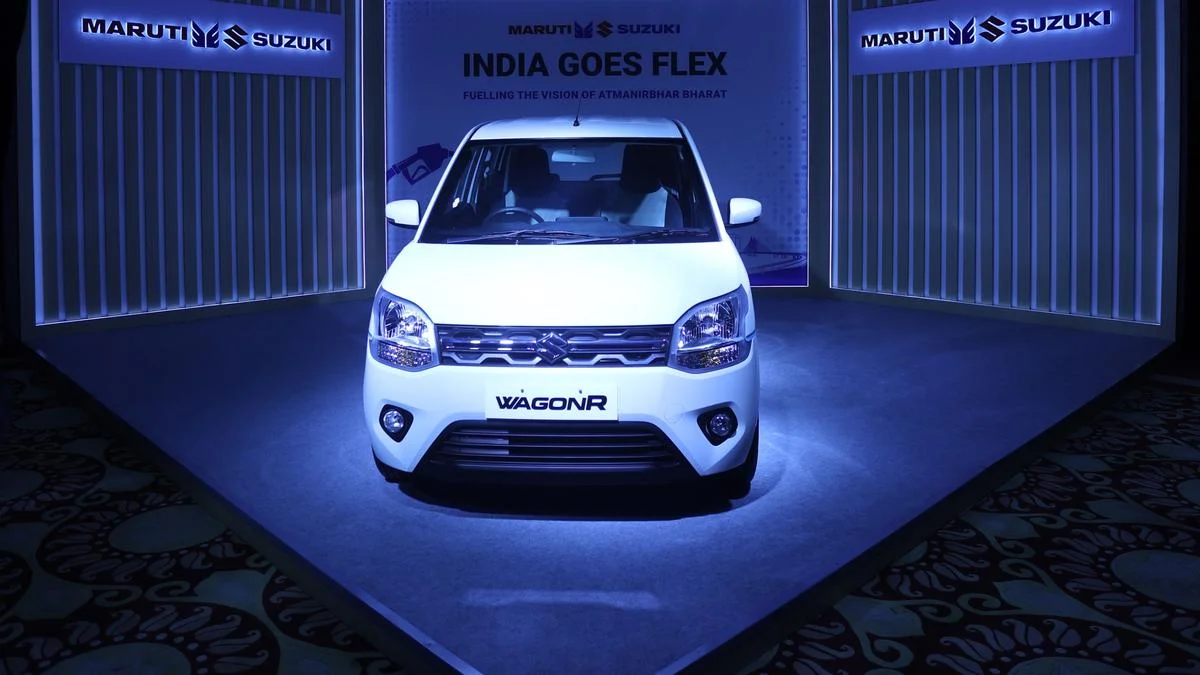
The unveiling of the Maruti Suzuki Wagon R Flex Fuel prototype marks a pivotal moment in this transition. It represents more than just a technical modification of a popular hatchback; it is a strategic statement of intent. By leveraging ethanol—a renewable fuel derived from agricultural waste—Maruti Suzuki is championing a "multimodal" approach to emissions reduction. This strategy acknowledges that while electricity is a vital part of the future, the internal combustion engine (ICE), fueled by sustainable alternatives, remains an indispensable tool for achieving national energy security and environmental targets.
Main Facts: The Engineering Behind the Wagon R Flex Fuel
At first glance, the Maruti Suzuki Wagon R Flex Fuel retains the iconic "tall-boy" silhouette that has made it a household name in India for over two decades. However, beneath the hood lies a sophisticated suite of engineering upgrades designed to handle the unique chemical properties of ethanol.
Technical Specifications and Compatibility
The standout feature of this vehicle is its ability to operate on any ethanol-petrol blend ranging from E20 (20% ethanol) to E100 (100% ethanol). This is achieved through a specialized engine control unit (ECU) equipped with advanced sensors that detect the ethanol concentration in the fuel line in real-time. The ECU then adjusts the ignition timing and fuel injection parameters to optimize performance and efficiency regardless of the blend.
Material Reinforcement
Ethanol is inherently more corrosive than pure gasoline and has a high affinity for water. To prevent degradation, Maruti Suzuki engineers have redesigned several critical components:
- Fuel System: The fuel pump, injectors, and fuel lines have been upgraded with ethanol-compatible materials and coatings.
- Engine Durability: Valve seats and piston rings have been reinforced to withstand the different combustion temperatures and chemical characteristics of high-ethanol blends.
- Cold Start Technology: Because ethanol has a higher flash point than petrol, starting an E100 engine in cold weather can be challenging. The Wagon R Flex Fuel incorporates a heated fuel system or auxiliary start mechanisms to ensure reliability in all Indian climates.
Market Positioning
Maruti Suzuki has indicated an expected price bracket of INR 7.50 – 8.00 lakh for the production version of the Flex-Fuel Wagon R. By choosing one of its highest-volume models for this technology, the company is signaling that flex-fuel is not a niche luxury but a mainstream solution for the "Aam Aadmi" (the common man).

Chronology: India’s Ethanol Evolution
The journey toward a flex-fuel-ready India has been a decades-long endeavor, evolving from experimental pilots to a core pillar of national policy.
- 2003: The Government of India launched the Ethanol Blended Petrol (EBP) program on a pilot basis, initially targeting a 5% blend in select states.
- 2018: The National Policy on Biofuels was notified, aiming to allow the production of ethanol from a wider range of feedstocks, including B-heavy molasses, sugarcane juice, and damaged food grains.
- 2021-2022: Prime Minister Narendra Modi advanced the target for 20% ethanol blending (E20) from 2030 to 2025. This accelerated timeline forced the automotive industry to fast-track engine compatibility research.
- Late 2022: Maruti Suzuki showcased its first flex-fuel prototype at the SIAM (Society of Indian Automobile Manufacturers) Ethanol Exhibition, demonstrating the capability to run on E85 and beyond.
- 2023-2024: The rollout of E20 fuel began across major metro cities in India. Simultaneously, Maruti Suzuki refined the Wagon R Flex Fuel prototype, focusing on long-term durability testing and calibration for Indian road conditions.
- The Present: The showcase of the E100-capable Wagon R signals that the hardware is ready; the focus has now shifted to the infrastructure and policy ecosystem required for a commercial launch.
Supporting Data: The Socio-Economic and Environmental Case
The push for flex-fuel technology is driven by a combination of macro-economic necessity and environmental urgency.
Reducing the Import Bill
India currently imports approximately 85% of its crude oil requirements. In the 2022-23 fiscal year alone, the country’s oil import bill exceeded $150 billion. According to government estimates, achieving the E20 blending target can save the exchequer nearly INR 30,000 crore ($3.6 billion) annually in foreign exchange. Moving toward E85 and E100 would exponentially increase these savings.
The Agricultural Synergy
Unlike oil, which is a finite resource often subject to geopolitical volatility, ethanol is homegrown. India is the world’s second-largest producer of sugar. By diverting surplus sugarcane and damaged food grains (like broken rice and maize) toward ethanol production, the government can ensure:
- Stable Income for Farmers: A consistent demand for "energy crops" provides a safety net against fluctuating food market prices.
- Rural Industrialization: The establishment of biorefineries in rural belts creates local employment and infrastructure development.
Carbon Footprint and Emissions
While flex-fuel vehicles are not "zero-emission" like EVs, they offer a significant reduction in Well-to-Wheel (WTW) carbon emissions. Ethanol is a renewable biofuel; the CO2 emitted during combustion is largely offset by the CO2 absorbed by the plants during their growth. Studies suggest that E100 vehicles can reduce Greenhouse Gas (GHG) emissions by 30% to 50% compared to traditional petrol vehicles, depending on the feedstock used.
Official Responses: Industry and Government Alignment
The transition to flex-fuel technology is a collaborative effort involving the Ministry of Road Transport and Highways (MoRTH), the Ministry of Petroleum and Natural Gas (MoPNG), and the automotive industry.

The Government’s Stance:
Nitin Gadkari, the Union Minister for Road Transport and Highways, has been a vocal proponent of flex-fuel technology. He has frequently urged manufacturers to "de-petrolize" India, arguing that the country should leverage its agricultural surplus to power its mobility. The government has supported this through the Production Linked Incentive (PLI) scheme, which provides financial incentives for the manufacturing of advanced automotive technology, including flex-fuel engines.
Maruti Suzuki’s Strategic Vision:
Hisashi Takeuchi, Managing Director & CEO of Maruti Suzuki India, has emphasized that there is no "silver bullet" for India’s decarbonization. In various industry forums, the company has maintained that a "one-size-fits-all" approach (such as an exclusive focus on EVs) might not be feasible for a country with India’s geographic and economic diversity. By introducing the Wagon R Flex Fuel, Maruti is advocating for a "technological basket" that includes CNG, Hybrids, EVs, and Biofuels.
Industry Experts (SIAM):
The Society of Indian Automobile Manufacturers (SIAM) has noted that while the technology is ready, the success of flex-fuel depends on "fuel price parity." For consumers to switch, ethanol must be priced competitively against petrol to offset its slightly lower energy density (which results in a marginal drop in fuel efficiency).
Implications: Challenges and the Road Ahead
Despite the technical prowess of the Wagon R Flex Fuel, several hurdles remain before ethanol becomes a staple at Indian fuel stations.
1. The Energy Density Trade-off
Ethanol contains about 33% less energy per gallon than gasoline. This means a vehicle running on E100 will typically deliver lower mileage (kilometers per liter) than one running on pure petrol. To win over the value-conscious Indian consumer, the price of ethanol at the pump must be significantly lower than petrol to ensure the "cost per kilometer" remains attractive.
2. Infrastructure and Logistics
While ethanol can utilize much of the existing fuel distribution network, the storage and handling of E85 and E100 require specialized tanks and dispensers at petrol pumps to prevent water contamination and corrosion. The nationwide rollout of this infrastructure is a massive logistical undertaking that requires heavy investment from Oil Marketing Companies (OMCs).

3. Consumer Confidence and Education
There is a lingering "trust gap" among vehicle owners regarding ethanol. Concerns about engine longevity, the impact of moisture on the fuel system, and the compatibility of older vehicles with new blends are prevalent. A massive public awareness campaign, backed by extended warranties from manufacturers, will be essential to bridge this gap.
4. The Food vs. Fuel Debate
As India moves toward higher blending targets, the government must balance the diversion of crops for fuel with the country’s food security needs. Ensuring that ethanol is primarily produced from "second-generation" (2G) biomass—such as agricultural residue and stalks—rather than primary food sources will be crucial for long-term sustainability.
Conclusion: A Multi-Pronged Future
The Maruti Suzuki Wagon R Flex Fuel is more than a car; it is a proof of concept for a self-reliant India. It proves that the internal combustion engine can be part of the solution rather than just the problem. By bringing this technology to a mass-market hatchback, Maruti Suzuki is democratizing green technology, moving it out of the realm of high-end experimental cars and into the driveways of average citizens.
The path forward will not be defined by a single winner in the race between EVs, Hydrogen, and Biofuels. Instead, India’s mobility future will likely be a mosaic of technologies, each serving a specific segment of the population. In this future, the Flex-Fuel Wagon R stands as a vital bridge—connecting India’s rich agricultural heritage with its high-tech automotive future. The engineering is ready; the ball is now in the court of policymakers and infrastructure providers to ensure that the ecosystem evolves at the same breakneck speed.
Maruti Suzuki Wagon R Flex Fuel expected price: (INR 7.50 – 8.00 lakh)
Motorscribes, in association with The Hindu, brings you the latest in cars and bikes. Follow them on Instagram @motorscribes
