

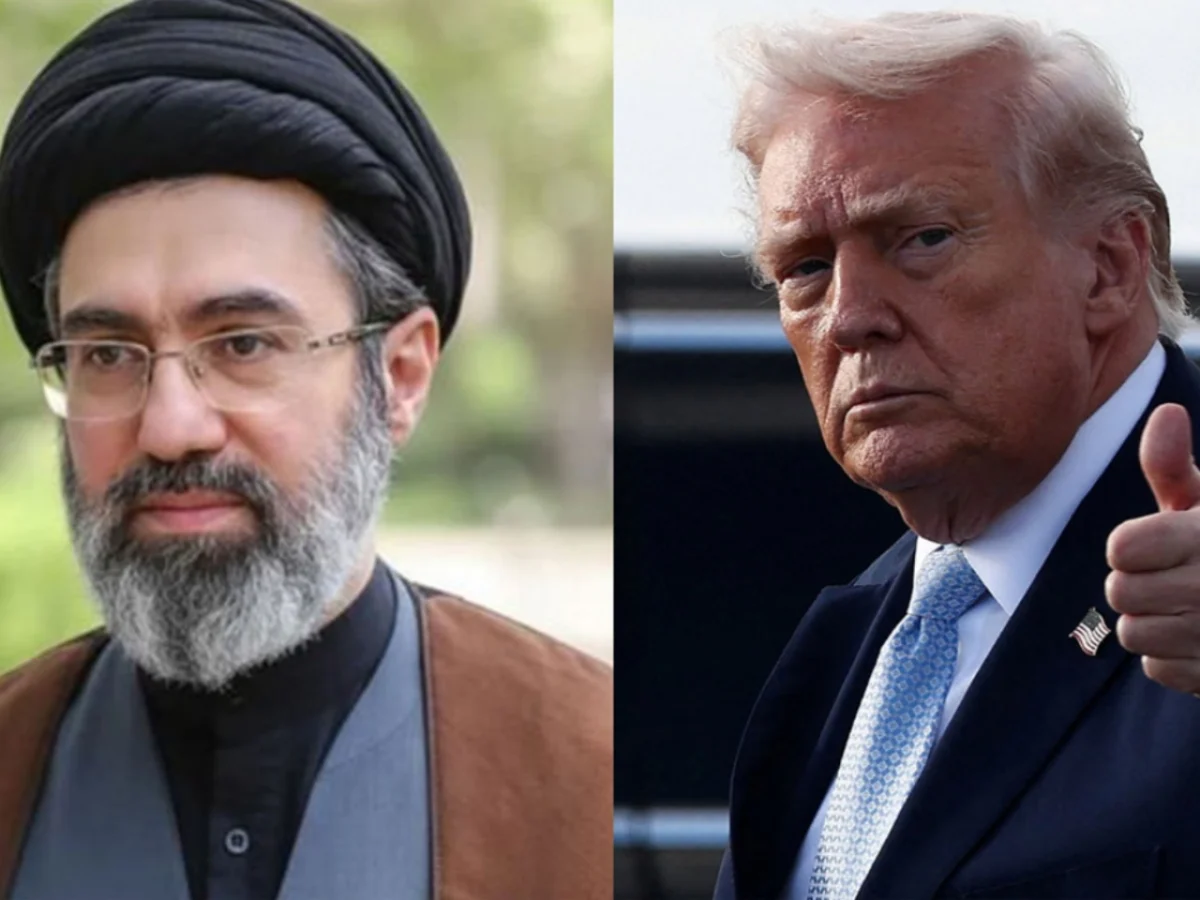
MOBILE, Middle East – In a dramatic escalation of regional tensions, Iran launched multiple ballistic missiles towards United States military forces stationed in the Middle East. The unprovoked assault, which occurred on [Insert Date based on "today" in original article, e.g., July 29, 2026, or a generic recent date if the original date is too far in the future], was met with swift and effective countermeasures, as all incoming projectiles were successfully intercepted by advanced US air defense systems. US forces across the region have confirmed their operational status as "vigilant and at a high state of readiness," underscoring the precarious security environment following the attack.
The incident marks a critical juncture in the long-standing animosity between Washington and Tehran, raising immediate concerns about the potential for wider conflict. This aggressive act comes amidst a delicate period of attempted de-escalation, a notion now severely undermined by Iran’s overt military action.
A Heightened State of Alert
The initial reports of the missile strike sent ripples of apprehension throughout the international community. The successful interception, while preventing casualties and significant damage, highlights both the sophistication of US defensive capabilities and the audacious nature of Iran’s strike. For US personnel and assets in the region, the event serves as a stark reminder of the persistent threats emanating from Tehran, necessitating an unwavering posture of vigilance.
The image accompanying the initial reports, depicting a missile launch or interception, serves as a visual testament to the ongoing military readiness in a region perpetually on edge. The rhetoric from both sides, particularly Iran’s subsequent rejection of negotiations and its stern warning regarding the Strait of Hormuz, indicates a deepening chasm in diplomatic relations rather than a path towards resolution.
The Anatomy of the Attack
According to official statements from the US Central Command (CENTCOM), the incident unfolded with precision and alarm. "At 5:45 p.m. ET today," CENTCOM reported via a post on X (formerly Twitter), "Islamic Revolutionary Guard Corps forces launched multiple ballistic missiles from Iran in an attempted surprise attack on U.S. forces based in the Middle East. All Iranian missiles were successfully intercepted."
While CENTCOM’s statement broadly referred to "U.S. forces based in the Middle East," an investigative report by Axios quickly narrowed the focus, indicating that Iran had specifically targeted a US military base located in Jordan. This targeting choice carries significant geopolitical weight, as Jordan is a crucial US ally in the region, often viewed as a bulwark against instability. The attack on Jordanian soil, therefore, not only represents a direct challenge to US interests but also an infringement on the sovereignty of a key regional partner.
)
The missiles, identified as ballistic, possess the capability to carry various warheads over long distances, making their successful interception by US air defense systems a critical demonstration of defensive prowess. While specific details on the types of ballistic missiles used were not immediately disclosed, Iran possesses a diverse arsenal, ranging from short-range tactical missiles to medium-range variants capable of reaching targets across the Middle East. The interception likely involved advanced systems such as the Patriot missile defense system, or potentially other layered defenses, which are designed to detect, track, and engage incoming ballistic threats. The complete neutralization of the barrage underscores the robust defensive architecture deployed by the US in the region, a critical deterrent against potentially devastating strikes.
Chronology of Escalation: A Faltering Diplomacy
This latest aggression from Tehran is particularly noteworthy as it marks Iran’s first direct attack on a US base since President Donald Trump had reportedly paused military strikes on Iran just last week, signalling a tentative willingness to pursue diplomatic avenues. This brief pause, aimed at creating an environment conducive to talks, appears to have been unilaterally shattered by Iran’s missile launch.
The preceding period of de-escalation, however fragile, had been predicated on an understanding, albeit unstated, that direct military confrontation would be avoided while back-channel communications explored potential diplomatic breakthroughs. Trump’s earlier assertion that the US had halted strikes because Tehran "asked us very nicely, ‘Please stop, let’s meet,’" had suggested a glimmer of hope for dialogue, even if framed with characteristic bravado. Iran’s subsequent actions, however, cast a pall over such claims, suggesting a more complex and perhaps contradictory internal decision-making process within the Iranian leadership.

The timing of the attack could be interpreted in several ways: a rejection of the perceived US overture, a display of strength to domestic and regional audiences, or a calculated move to gain leverage ahead of any potential future negotiations. Regardless of the precise motivation, the immediate consequence is a dramatic heightening of tensions and a significant setback for any prospects of diplomatic engagement.
International Outcry and Solidarity
The attack drew immediate and strong condemnation from several regional allies, particularly those directly impacted or closely observing the escalating situation. Kuwait and Qatar, two Gulf nations with strategic ties to both the US and the broader regional security architecture, wasted no time in denouncing Iran’s actions. Both countries explicitly described the attack as a blatant violation of Jordan’s sovereignty, underscoring the regional destabilization inherent in such aggressive acts.
Kuwait’s Ministry of Foreign Affairs (MoFA) issued an official statement on X, affirming "the State of Kuwait’s full solidarity with the sister Hashemite Kingdom of Jordan, its standing by its side, and its support for all measures it takes to protect its security, sovereignty, and the safety of its people." This statement highlights the deep-seated alliances within the Gulf Cooperation Council (GCC) and the collective concern over regional security.
)
Similarly, Qatar’s Ministry of Foreign Affairs expressed its "condemnation and strongest denunciation of the repeated attacks that targeted the sister Hashemite Kingdom of Jordan using drones, in flagrant violation of its sovereignty and the integrity of its territories, and a direct threat to its security and stability." The mention of "repeated attacks" and "drones" in Qatar’s statement, while the initial US report specified ballistic missiles, suggests a broader pattern of Iranian or Iran-backed aggression against Jordan that has likely gone unreported or was previously attributed to other actors. This detail adds another layer of complexity to the regional security narrative, pointing to a more sustained campaign of harassment or intimidation.
Beyond immediate allies, the international community largely voiced concerns, with calls for restraint echoing from various capitals. The United Nations Secretary-General’s office urged all parties to de-escalate, emphasizing the need for diplomatic solutions to prevent a wider conflagration in an already volatile region. European powers, while not directly targeted, expressed apprehension about the implications for global trade and energy security, especially given Iran’s subsequent threats concerning the Strait of Hormuz.
A Diplomatic Deadlock: Iran Rules Out Negotiations
In a stark counterpoint to any lingering hopes for dialogue, Iranian Deputy Foreign Minister Kazem Gharibabadi categorically ruled out negotiations with the United States following the missile attack. His pronouncements, delivered with an air of defiance, effectively slammed the door shut on immediate diplomatic overtures, signaling Tehran’s unwillingness to engage on terms dictated by Washington.
)
Speaking in an interview with State TV, carried by Al Jazeera, Gharibabadi asserted, "We should not get America used to fighting whenever it wants and sitting at the negotiating table whenever it wants." This statement encapsulates Iran’s long-standing grievance regarding what it perceives as US diplomatic coercion – a pattern of imposing sanctions and engaging in military pressure only to then demand negotiations from a position of strength. Gharibabadi’s remarks suggested that Iran views any US request for talks as a sign of weakness, claiming it was Washington "who sent messages pleading for an end to the conflict."
This stance directly challenges President Trump’s earlier narrative of Iran "asking nicely" for a ceasefire, portraying Tehran as the party dictating terms, not supplicating. The Iranian leadership appears determined to project an image of unwavering resolve, refusing to be seen as capitulating under pressure. This hardline position underscores the profound distrust that characterizes US-Iran relations, where each side interprets the other’s actions through a prism of historical grievances and perceived hostile intentions.
The rejection of negotiations also reflects a deeper strategic calculation by Iran. By refusing to engage, Tehran might be attempting to signal its belief that the US is desperate for a resolution, perhaps due to domestic political pressures or a desire to avoid further entanglement in the Middle East. This strategy, however, carries inherent risks, as it could further isolate Iran and provoke a more robust response from the US and its allies.
)
The Strait of Hormuz: A Volatile Lifeline
Adding another layer of severe concern to the already fraught situation, Deputy Foreign Minister Gharibabadi issued a chilling warning regarding the Strait of Hormuz. He explicitly stated that any European naval vessels approaching the strategic waterway could become "legitimate targets," a declaration that could have catastrophic implications for global trade and international maritime law.
The Strait of Hormuz is one of the world’s most critical chokepoints, through which roughly one-fifth of the world’s total oil consumption passes daily. It is a narrow channel, just 21 nautical miles wide at its narrowest point, connecting the Persian Gulf to the Arabian Sea and the broader Indian Ocean. Any disruption to shipping in this strait would send shockwaves through global energy markets, potentially triggering an economic crisis.
Gharibabadi’s threat to European vessels is a direct challenge to the principle of freedom of navigation, a cornerstone of international law. European nations, like others, have legitimate commercial and security interests in ensuring the unimpeded passage of vessels through the strait. The presence of European naval vessels in the area is often for escort missions, anti-piracy operations, or to ensure maritime security, not necessarily as a direct threat to Iran. By declaring them "legitimate targets," Iran is essentially threatening an act of war against any nation that seeks to protect its interests in international waters, dramatically escalating the stakes.
)
Reaffirming Iran’s control over the strategic waterway, Gharibabadi declared that Tehran would not restore the strait to its "pre-war status," viewing its control as a key defensive capability. This suggests that Iran intends to maintain a heightened level of oversight and potentially restriction over maritime traffic, using its geographic position as a strategic lever in any future confrontation or negotiation. This position is likely to be met with strong opposition from international maritime powers, who view the strait as an international passage.
US Maritime Presence and Strategic Objectives
In response to Iran’s aggressive posture and in line with its long-standing commitment to regional security, US Central Command (CENTCOM) reiterated its ongoing efforts to secure regional maritime routes. This commitment is underscored by the significant deployment of US naval assets in the Middle East, with over 20 US Navy warships reportedly operating in the region.
The presence of such a formidable naval force serves multiple purposes: deterrence against Iranian aggression, protection of international shipping, and the enforcement of maritime operations aimed at interdicting illicit trade and ensuring the free flow of commerce. CENTCOM’s statement further revealed that "multiple commercial vessels [have been] redirected, disabled or boarded to enforce its maritime operations." This suggests an active and assertive posture by the US Navy, likely in response to specific intelligence regarding suspicious activity, smuggling, or other threats to maritime security in the region, including potential Iranian or proxy-related activities.
)
The implications of these maritime operations are far-reaching. While intended to maintain stability, they also create potential flashpoints for direct confrontation. Any miscalculation or aggressive action in the crowded waters of the Persian Gulf and the Strait of Hormuz could quickly escalate into a larger naval engagement, drawing in more regional and international actors. The US strategy is to project strength and maintain freedom of navigation, but Iran views the same waters as its sphere of influence, setting the stage for continuous friction.
Expert Perspectives: Analyzing the Brinkmanship
Security analysts and geopolitical experts are closely scrutinizing the latest developments, attempting to decipher Iran’s motives and predict the potential trajectory of this dangerous standoff. Many agree that Iran’s missile attack, despite the successful interception, is a clear message: Tehran is willing to escalate militarily if its perceived red lines are crossed or if it feels cornered by US sanctions and diplomatic pressure.
"This is classic brinkmanship from Iran," stated Dr. Sarah Jenkins, a Middle East security analyst at the Royal Institute for International Affairs. "By launching missiles and then rejecting talks, they are trying to demonstrate resolve and force the US to offer more concessions, rather than less. They want to negotiate from a position of perceived strength, even if that strength is demonstrated through provocative acts."
)
However, others caution that such a strategy is inherently risky. "While Iran might feel it’s gaining leverage, it’s also isolating itself further and potentially inviting a more severe response," noted Ambassador David Chen, a former US diplomat with extensive experience in the region. "The successful interception means no US casualties, which might limit the immediate US retaliatory options, but it doesn’t mean Washington will simply ignore this. The targeting of a base in Jordan is particularly concerning for regional stability."
The warning about the Strait of Hormuz is seen as particularly alarming. "That threat is not just against European vessels; it’s a threat to the global economy," explained maritime security expert Captain Elena Petrova (Ret.). "Any attempt to impede free passage through Hormuz would be an act of war, triggering a robust international response, not just from the US but from any nation whose commercial interests are threatened."
There is a consensus that the current diplomatic impasse is profoundly dangerous. "Both sides appear to be trapped in a cycle of escalation and rejection," Dr. Jenkins added. "Breaking that cycle requires a significant shift in strategy from one or both parties, or a third-party intervention, which currently seems unlikely given the deep mistrust."
)
Potential Paths Forward and Escalation Risks
The immediate future of US-Iran relations appears bleak, fraught with significant risks of further escalation. Without a clear channel for diplomatic engagement, military posturing and proxy conflicts are likely to intensify.
Potential Escalation Scenarios:
- Direct Retaliation: While the successful interception of missiles might temper the immediate need for a military response to prevent casualties, the violation of sovereignty and the direct attack on US forces could still warrant a punitive strike against Iranian military assets or IRGC targets.
- Cyber Warfare: A less overt but equally damaging form of retaliation could involve cyberattacks targeting Iranian infrastructure, designed to disrupt operations without direct kinetic engagement.
- Economic Pressure: The US could intensify its "maximum pressure" campaign with new, more stringent sanctions, further crippling Iran’s economy.
- Proxy Conflicts: Iran could instigate or support proxy attacks against US interests or allies elsewhere in the region, particularly through groups in Iraq, Syria, Lebanon, or Yemen.
- Maritime Incidents: The Strait of Hormuz remains a critical flashpoint. Any further aggressive moves by Iran, such as harassment of commercial shipping or attempts to impede naval vessels, could lead to direct clashes at sea.
Diplomatic Avenues (currently blocked):
)
- Third-Party Mediation: Countries like Oman, Switzerland, or even some European nations might attempt to mediate, but Iran’s current stance makes such efforts challenging.
- Back-Channel Communications: Despite public rhetoric, discreet back-channel communications might continue, though their effectiveness is severely diminished by the recent military actions.
- Conditional Dialogue: For talks to resume, one side would likely need to offer significant concessions or a clear framework that addresses the core grievances of the other.
The absence of an off-ramp in the current crisis poses an existential threat to regional stability. The Middle East, already grappling with multiple civil conflicts, humanitarian crises, and the persistent threat of terrorism, can ill afford a full-blown military confrontation between two major powers. The ripple effects would be felt globally, impacting energy markets, international trade, and the delicate balance of power.
Historical Context: A Legacy of Tensions
The current standoff is not an isolated incident but rather the latest chapter in a long and tumultuous history between the United States and Iran, dating back to the 1979 Islamic Revolution. Decades of mistrust, regime change efforts, sanctions, proxy wars, and the contentious Iranian nuclear program have forged a deeply adversarial relationship.
The 2015 Joint Comprehensive Plan of Action (JCPOA), or the Iran nuclear deal, briefly offered a period of cautious optimism, demonstrating that diplomacy could yield results. However, the US withdrawal from the deal in 2018 under the Trump administration, followed by the re-imposition of crippling sanctions, reignited tensions and set the stage for the current cycle of escalation. Iran’s subsequent gradual breaches of the deal’s restrictions, coupled with its regional assertive actions, have further exacerbated the situation.
)
The current missile attack and Iran’s defiant diplomatic posture must be viewed through this lens of historical grievances and strategic calculations. Both Washington and Tehran are operating within a complex web of domestic political pressures, regional power dynamics, and a profound lack of trust, making any path to de-escalation exceptionally challenging and precarious.
(With inputs from ANI and various international news agencies)
