

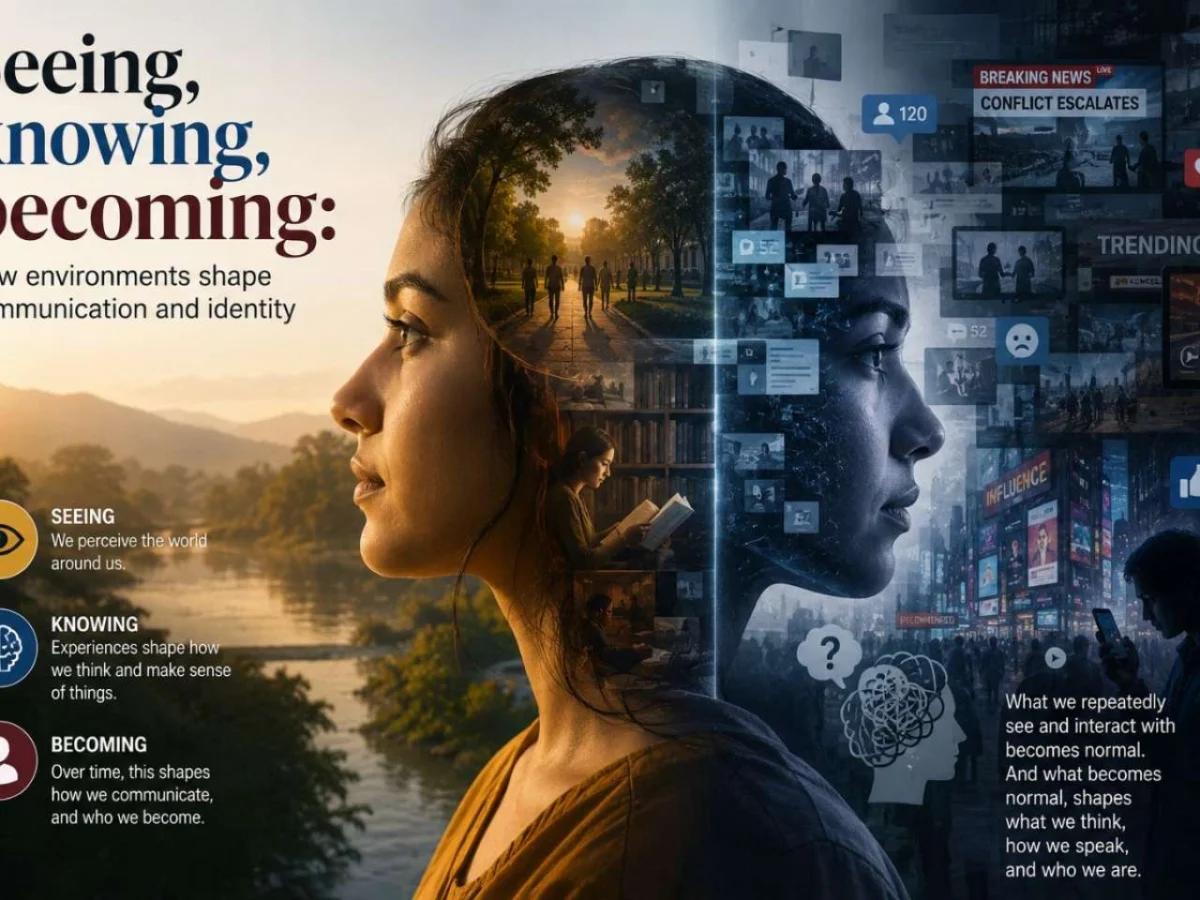
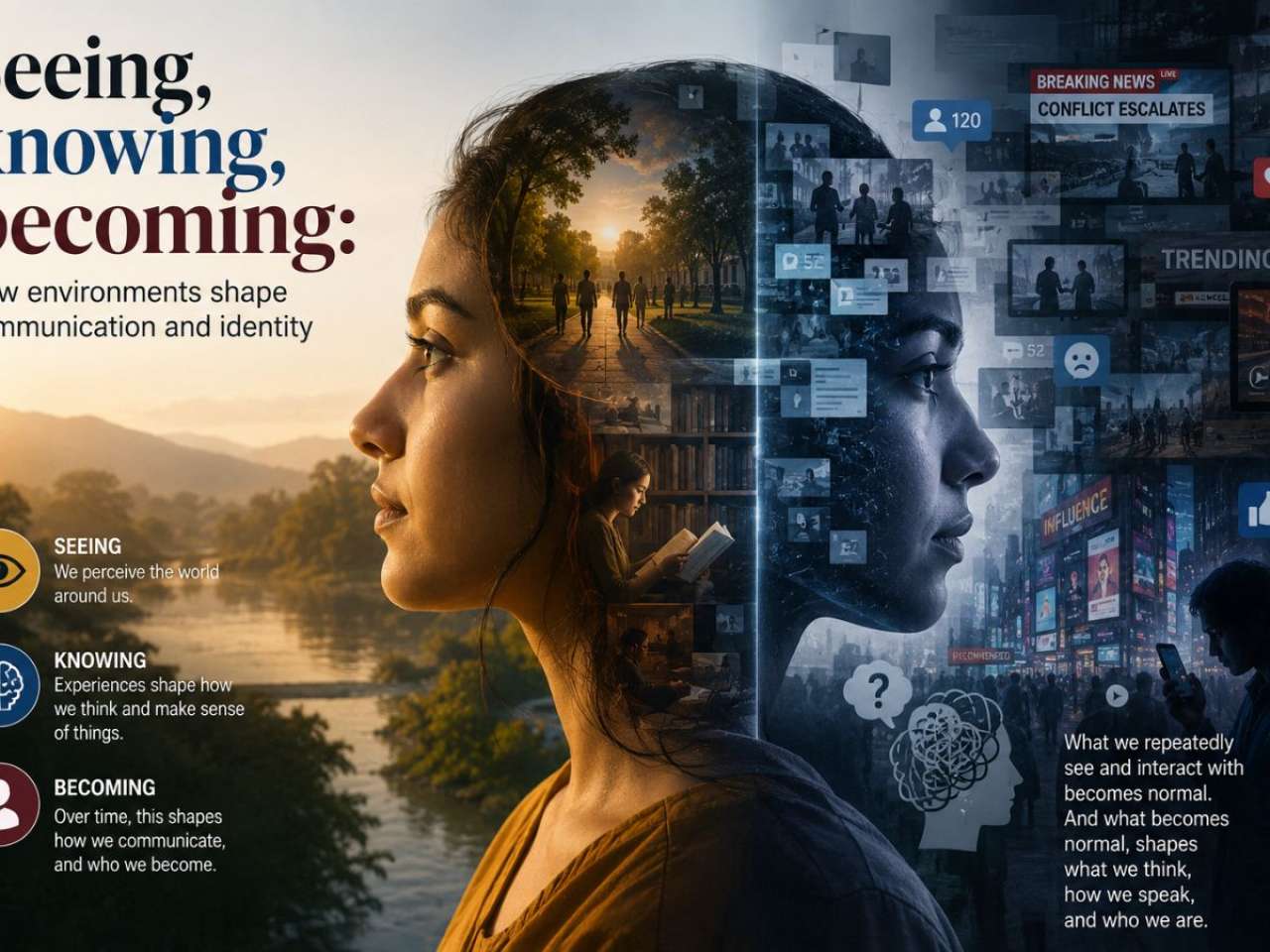
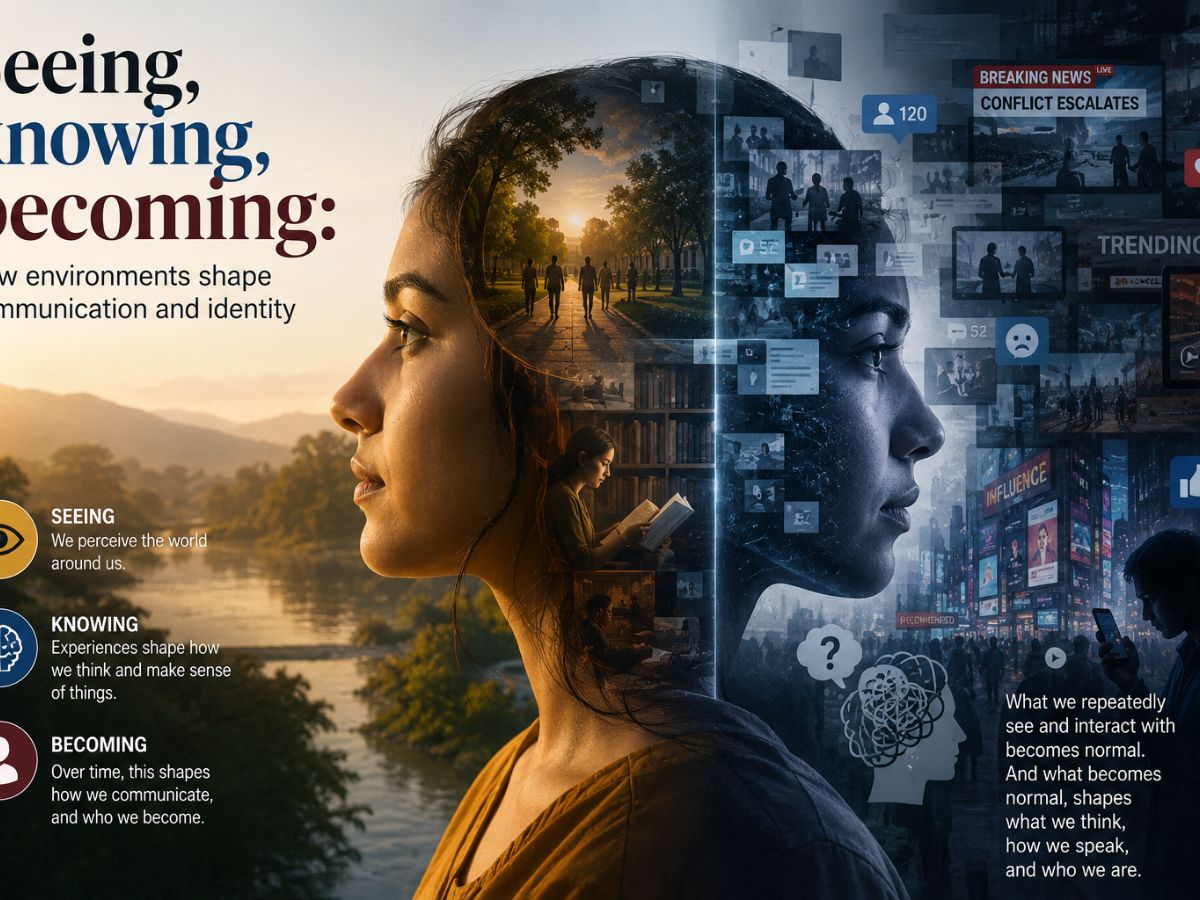
In an era of relentless digital saturation, the very essence of who we are and how we express ourselves is being profoundly, and often imperceptibly, reshaped by the environments we inhabit. Far from being static internal constructs, our communication styles and personal identities are fluid entities, deeply molded by the constant influx of sensory experiences – what we repeatedly see, hear, and engage with. This ancient philosophical insight, rooted in the very foundations of human understanding, carries an urgent contemporary relevance as the media landscape increasingly dictates the contours of our perception and reasoning.
The notion that our external world acts as a potent sculptor of our internal selves is not a modern revelation. It is a concept that has resonated through centuries of philosophical inquiry, from the logical frameworks of ancient India to the existential reflections of the modern era. However, the sheer intensity and pervasiveness of today’s media-saturated world have amplified this influence to an unprecedented degree, demanding a deeper examination of how this environmental shaping of communication and identity operates.
)
The Primacy of Perception: Ancient Wisdom in a Digital Age
The fundamental principle that our understanding of the world, and consequently our expression of it, begins with our sensory engagement is a cornerstone of classical Indian philosophy. The Nyaya Sutra, a seminal text on logic and epistemology, posits pratyaksha, or perception, as the primary gateway to valid knowledge. This foundational text asserts that knowledge originates from the direct contact between our senses and the external environment. What we perceive through sight, sound, touch, taste, and smell forms the raw material upon which we build our understanding, construct our judgments, and develop our reasoning abilities.

The sequence is elegantly simple yet profoundly impactful: stimulus precedes cognition, and cognition, in turn, informs articulation. This means that the information we absorb through our senses does not merely inform what we know; it actively structures how we think, how we speak, and ultimately, who we become. This is not an abstract philosophical exercise; it is a daily reality that dictates the very fabric of our social interactions and personal narratives.
)
Further elaborating on this intricate relationship, the Yoga Sutra introduces the concept of vrittis, the fluctuations or modifications of the mind. These mental states, according to Patanjali’s seminal work, arise from impressions formed through sensory engagement and lived experiences. Over time, repeated exposure to specific stimuli leaves deeper imprints, known as samskaras. These ingrained patterns, cultivated through consistent encounters, shape our inherent tendencies, preferences, and ingrained response mechanisms. Identity, in this light, is not a pre-ordained, immutable entity. Instead, it is a cumulative construct, built piece by piece through the relentless accumulation of these sensory and experiential imprints.
)
The Amplified Influence of Modern Environments
The core tenet that external environments shape internal states holds a direct and potent relevance in the contemporary world. We are no longer passive recipients of limited, localized stimuli. Instead, individuals are immersed in environments that are extraordinarily dense with information and sensory input. Digital platforms, the ceaseless scroll of social media feeds, algorithmically curated content designed to capture and retain our attention, and the constant torrent of news and information have created an unprecedented ecosystem of influence.
)
These environments are far from neutral. They are meticulously designed to prioritize certain forms of expression, amplify particular linguistic styles, and normalize specific frameworks for understanding the world. The subtle, yet persistent, repetition of these patterns within our daily digital lives has a profound effect on both how we communicate and how we conceptualize ourselves.
)
Consider the observable trend of increasing linguistic standardization across various online platforms. Words, phrases, and colloquialisms now circulate with remarkable speed, quickly acquiring shared meaning and acting as potent signals of belonging and in-group affiliation. What might begin as a descriptive term or a casual expression can rapidly evolve into a marker of identity. Terms that once denoted a preference or a specific activity now frequently function as powerful tools for self-definition, shaping how individuals perceive themselves and wish to be perceived by others.
)
This linguistic convergence is not a mere coincidence; it is a direct reflection of the pervasive influence of repeated exposure to particular linguistic patterns. Over time, these patterns begin to feel not only natural and expected but, in many cases, essential for effective participation and social integration within these digital spaces. The constant immersion in a specific linguistic milieu can, without conscious effort, lead individuals to adopt its norms and vocabulary as their own.
)
The Contraction of Thought and the Formation of Opinion
The impact of these curated environments extends beyond linguistic habits and deeply influences the formation of opinions and personal stances. When individuals are consistently exposed to a narrow spectrum of perspectives, it can foster the illusion of widespread consensus, even when a broader diversity of thought exists. Similarly, sustained engagement with specific narratives, whether political, social, or cultural, can powerfully shape what individuals deem credible, legitimate, or even factual.
)
The Nyaya Sutra’s emphasis on perception as the genesis of knowledge offers a stark warning: when the scope of what is perceived narrows, the capacity for reasoned thought and critical analysis is also likely to contract. The principle of "thought follows exposure" becomes a tangible reality, as our cognitive landscape becomes increasingly defined by the boundaries of our immediate informational environment.
)
The Yoga Sutra’s insight into the deepening impact of repetition adds another crucial layer to this analysis. A single exposure might offer information, but sustained, repeated exposure has the power to truly form our understanding and shape our predispositions. Over time, these patterns of interaction leave behind cognitive and emotional residues that subtly, yet powerfully, influence our behavior and decision-making. Preferences, which might initially feel intrinsic and self-generated, can in fact be the cumulative result of prolonged exposure to particular stimuli and influences. Similarly, identity can appear remarkably stable and self-defined, even as it is in a continuous state of subtle, environmentally driven evolution.
)
Implications for Education and Communication Institutions
This dynamic interplay between environment, thought, and expression carries profound implications for institutions tasked with shaping knowledge and fostering communication. If our cognitive frameworks and communicative styles are demonstrably molded by our surroundings, then the deliberate design and cultivation of these environments become paramount. What is consistently made visible, what is actively emphasized, and what is repeatedly reinforced will inevitably influence not only what individuals know but also how they process that knowledge and how they articulate their understanding.
)
Higher education institutions, for instance, often prioritize the delivery of academic content and the development of specific skills. While these are undoubtedly crucial, there is a discernible tendency to overlook the communicative environment within which learning transpires. However, if exposure is indeed a primary driver of cognition, then the quality of discourse, the genuine diversity of perspectives presented, and the nature of intellectual engagement within academic settings become central to the educational process itself. A sterile, homogenous communicative environment, no matter how rich in content, may inadvertently limit the intellectual growth and critical thinking capacities of its students.
)
The same principles apply with equal force to the media and public communication spheres. The increasing trend towards compressing complex information into short, easily digestible formats, while potentially enhancing accessibility, carries the inherent risk of diminishing nuance and oversimplifying intricate issues. When exposure is predominantly limited to simplified representations, the capacity for developing nuanced thought and engaging in sophisticated reasoning can be significantly curtailed. Communication may become highly efficient and widely disseminated, but it risks becoming less substantive and less intellectually robust.
)
Navigating the Currents of Influence
The challenge before us, therefore, is not to attempt the impossible task of eliminating external influence altogether. Instead, it is to cultivate a profound and sustained awareness of its pervasive nature. We must recognize that what we repeatedly encounter will, by its very nature, shape what we come to think, and what we think will, in turn, shape what we ultimately say and express.
)
In an age where our environments are increasingly mediated, curated, and algorithmically influenced, this heightened awareness is not merely beneficial; it is essential for maintaining intellectual autonomy and fostering authentic self-expression. Communication and identity do not emerge from a vacuum. They are dynamically formed at the intricate intersection of sensory exposure, personal interpretation, and the relentless force of repetition.
)
The fundamental question is not whether we are influenced by the environments that surround us. The critical question, the one that demands our urgent attention and deliberate action, is whether we are sufficiently attentive to the mechanisms of that influence. Are we actively engaged in understanding how that influence operates? And crucially, are we willing and able to be deliberate in shaping the very environments that, in turn, shape us? The ongoing construction of our identities and the evolution of our communication are inextricably linked to the environments we inhabit, and our ability to consciously navigate and influence these spaces will define our future selves and our collective discourse.
