

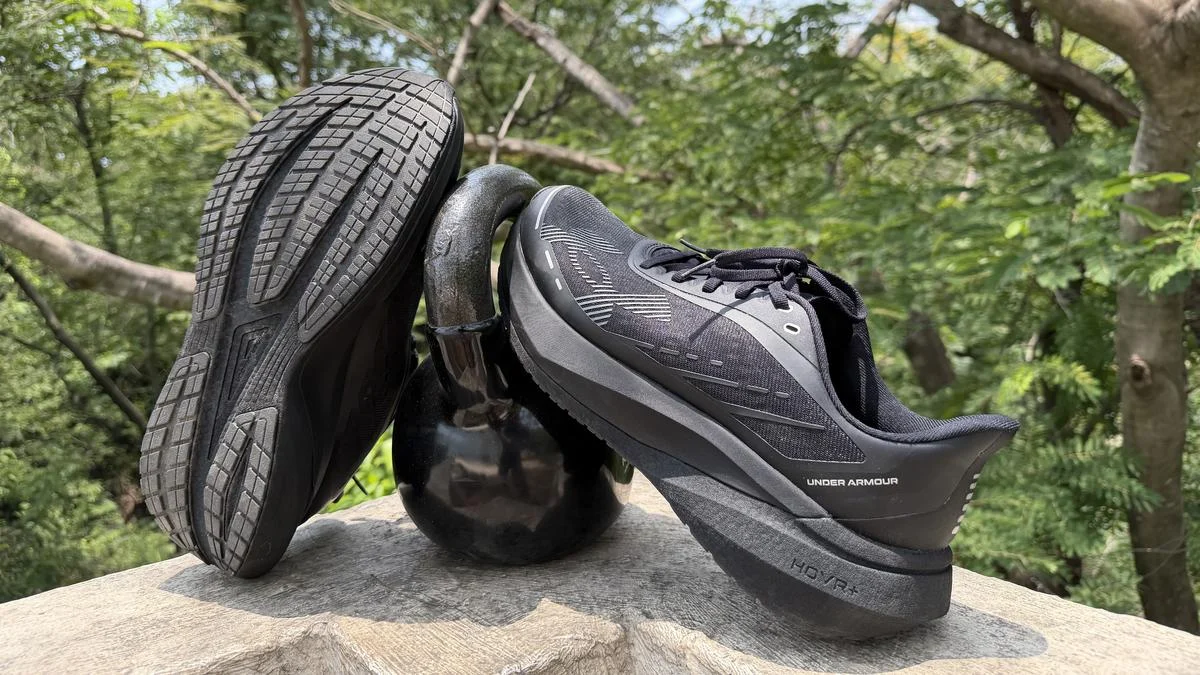
Under Armour, a brand consistently striving to carve out a significant niche in the competitive running shoe market, has unveiled its latest contender for the high-mileage, long-run segment: the Velociti Distance. This shoe represents a confident stride forward, boasting an array of impressive technical features designed to cater to the demands of serious runners. However, its defining characteristic lies in a polarizing stability system, a design choice that promises to elicit strong reactions and may ultimately dictate its success or failure with individual athletes.
The Velociti Distance aims to challenge the established order, where brands with longer running pedigrees often dominate the conversation. While Under Armour has demonstrated technical prowess and produced commendable designs in the past, it has yet to consistently capture the imagination of the most dedicated runners. This new offering attempts to bridge that gap by delivering a shoe that excels in several key areas, while simultaneously making a statement with its unique approach to gait control. The resulting experience is one of inherent tension, a constant negotiation between the shoe’s intended function and the runner’s natural biomechanics.
First Impressions: A Shoe Built for the Long Haul
Upon first handling the Under Armour Velociti Distance, its substantial nature is immediately apparent. Weighing in at 298 grams, it registers as a heavier shoe by contemporary running standards. This is not a shoe that attempts to masquerade as a featherweight competitor; instead, it openly embraces its role as a distance-devouring machine. The substantial stack height, featuring a generous 38mm of Hovr+ foam beneath the foot, underscores this commitment. This is a shoe engineered from the ground up to absorb the relentless pounding of countless miles.
The upper of the Velociti Distance is a testament to thoughtful design and execution. A breathable woven mesh construction permeates the forefoot, ensuring ample ventilation. This is a critical feature for runners tackling longer distances, especially in warmer conditions, where heat buildup can quickly become a source of discomfort. The gusseted tongue is engineered to remain securely in place, preventing any unwelcome slippage during stride. The heel section provides a well-padded and structured embrace, offering a confident and secure lockdown without feeling overly restrictive. This careful attention to the upper’s construction contributes significantly to the shoe’s overall sense of stability and comfort over extended periods.
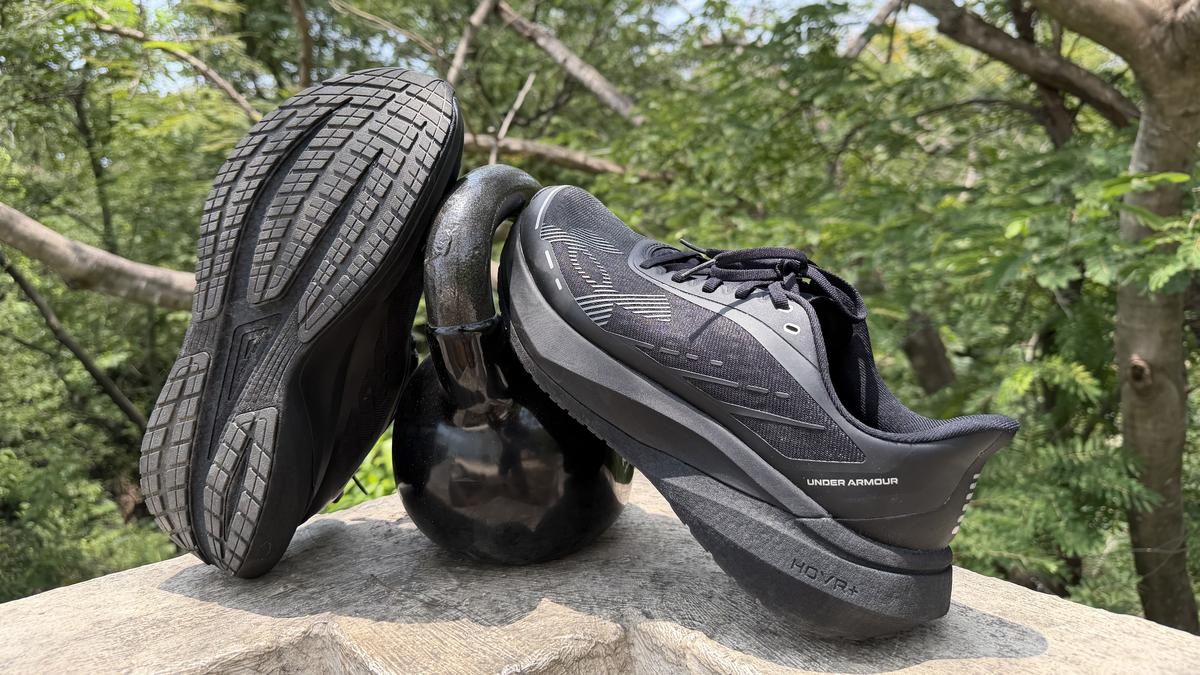
In contrast to the more relaxed and accommodating fit often found in competitors like the New Balance Fresh Foam X 880, the Velociti Distance prioritizes a secure hold. This embrace is precisely what many runners seek on their lengthy excursions, providing a reassuring sense of being held and supported with every step. The only minor discordant note in this otherwise refined package is the quality of the laces. They feel noticeably less premium than the other components of the shoe, a small detail that slightly detracts from the otherwise high-quality feel of the Velociti Distance.
On the Run: A Harmonious Blend of Cushioning and Responsiveness
Stepping out onto the road, the Hovr+ foam immediately lives up to its promise. This supercritical TPU material, also found in Under Armour’s performance racing shoes, delivers a ride that is both soft and remarkably firm. It excels at absorbing impact, dissipating the shock of each stride with impressive efficacy. Crucially, it also returns enough energy to maintain a lively turnover, preventing the sensation of sluggishness that can plague some max-cushioned shoes. This balance between plushness and propulsion is a key differentiator for the Velociti Distance.
What elevates the Velociti Distance beyond the realm of a typical high-cushion trainer is its versatility across different running intensities. While explicitly marketed as a long-run specialist, it demonstrates a surprising agility during tempo efforts and steady-state runs. This adaptability means that runners may not need to relegate the Velociti Distance solely to their weekend long runs. Instead, it can serve as a capable workhorse throughout the weekly training cycle, offering consistent performance across a variety of workouts. This broad utility enhances its value proposition for runners seeking a single shoe that can handle a diverse training regimen.
The outsole of the Velociti Distance is a significant strength, showcasing Under Armour’s commitment to durability and confidence on varied terrain. The generous application of rubber coverage across the sole unit provides a robust foundation. While this does contribute to the shoe’s overall weight, it imbues the Velociti Distance with the confidence to tackle both gravel paths and paved roads with equal assurance. This extensive rubber coverage strongly suggests that the outsole will exhibit exceptional resistance to wear, enduring significant mileage before showing signs of fatigue. For runners who have experienced the frustration of outsoles that degrade long before the midsole, this durability is a compelling selling point and a testament to the shoe’s long-term viability.

The Stability Conundrum: Where Opinions Diverge
The defining feature of the Velociti Distance, and the element most likely to polarize opinion, is its integrated stability system. Under Armour has strategically placed firm TPU inserts along both the lateral and medial sides of the midsole. The intended purpose of these "stability rails" is to guide the runner’s foot through its natural gait cycle and to mitigate excessive motion within the inherently soft Hovr+ foam. In theory, this represents a sensible and technologically sound approach to enhancing stability.
However, in practice, the implementation of these rails results in a more assertive corrective force than the term "guide" might initially suggest. For runners whose foot mechanics naturally align with the biomechanical path prescribed by these inserts, the experience is likely to be one of enhanced support and controlled movement. The shoe will feel like a trusted ally, helping to maintain an efficient and stable stride.
Conversely, for those whose natural gait deviates from the shoe’s engineered path, the inserts can impose an unnatural supination. This can lead to a jarring and uncomfortable sensation, transforming what should be an effortless run into a source of discomfort. The correction offered by the Velociti Distance is not subtle; it possesses a distinct vision for how a foot should move, and when this vision clashes with an individual’s natural biomechanics, the consequences can be significant. Runs that are intended to be a release and a form of active recovery can become a battle against the shoe’s rigid directives, undermining the very purpose of a long-distance trainer.
This dichotomy in the stability system means that the Velociti Distance is a shoe that either resonates deeply with a runner or creates an immediate and irreconcilable disconnect. There is very little middle ground to be found. It competes directly with daily trainers from brands with a longer history in the running shoe industry, many of which offer a more natural and unobtrusive ride, free from the polarizing influence of such a pronounced stability system.

Who Should Lace Up the Velociti Distance?
The Under Armour Velociti Distance is a compelling option for runners who prioritize a blend of soft yet firm cushioning, coupled with the capability to push beyond an easy pace without needing to switch to a different shoe. If your natural gait is biomechanically neutral, or if you experience mild pronation and find that the specific guidance of the stability rails aligns with your foot’s natural movement, then this shoe can be a genuinely rewarding and capable training partner. Its ability to handle diverse paces and distances makes it a versatile addition to a runner’s arsenal.
However, runners who have consistently found comfort in neutral shoes and have always moved through a natural range of foot motion should approach the stability system of the Velociti Distance with a degree of caution. The shoe’s strong opinions about how your foot should move are a significant factor. It is imperative to consider whether these engineered directives align with your own inherent biomechanics.
Ultimately, Under Armour has engineered a technically impressive shoe with the Velociti Distance. Its success hinges not just on its innovative features but on the critical question of whether its assertive approach to stability is technically the right fit for each individual runner. The shoe demands a personal dialogue between its design and the runner’s own physical realities, making the choice to purchase a highly individualized decision.
