

Bengaluru, India – In a city increasingly defined by its technological prowess, Gallery Sumukha stands as a testament to a different kind of growth – the organic, passionate, and sometimes serendipitous flourishing of art. This month, the gallery marks its 30th anniversary, a milestone achieved not through aggressive commercial ventures, but through a deep-seated commitment to artists and the cultivation of Bengaluru’s unique art scene.
Nestled within a mixed-use building that also houses a neuro clinic, Gallery Sumukha’s cavernous front room often serves as an unexpected introduction to art for its patients. Founder Premilla Baid, a 73-year-old gallerist driven by pure passion, views these accidental encounters as the most organic way for art to connect with people. The gallery’s unassuming location in Wilson Garden, a neighborhood not typically associated with high-end art spaces, further defines its character. It mirrors Bengaluru’s art ecosystem itself – unpretentious, understated, and possessing a resilient, scrappy charm that distinguishes it from the more polished art capitals of Delhi and Mumbai.

The Genesis of a Vision: A Passion Project Takes Root
Gallery Sumukha’s journey began in 1996, not in a dedicated commercial space, but from Baid’s own home. After a stint in Ireland, she returned to India deeply inspired by the impactful work of art doyenne Sara Abraham and her Kala Yatra initiative. Baid, a self-taught art enthusiast, held her first exhibition for a charitable cause at the Oberoi Hotel. "In those days [1996], we sold paintings worth about ₹5 lakh. That was a lot of money. Then it got into me," she recalls. "I don’t know a word of art in the technical sense; I started the gallery out of pure passion alongside my medical practice."
Baid is quick to distinguish her role as a gallerist rather than a curator, emphasizing that her approach is rooted in intuition and decades of accumulated understanding, rather than formal academic training. From its inception, Sumukha has been a self-sustained entity, reinvesting all its earnings back into the gallery. This philosophy has prioritized sustainability over rapid commercial expansion, a choice that has undoubtedly shaped its trajectory. The gallery’s brief foray into Chennai between 2006 and 2012 further illustrates this pragmatic approach, operating from her parents’ home.

A Legacy of Space and Support: From Humble Beginnings to South India’s Largest Private Gallery
Gallery Sumukha’s evolution has been marked by strategic relocations, each step expanding its capacity and ambition. From its initial home-based operations, it moved to the Alliance Francaise building before finding its permanent home in 1999. Today, occupying a sprawling 5,000 sq. ft., Sumukha stands as the largest private gallery space in South India. Architect Vikram Sardesai’s design was intentionally crafted to accommodate ambitious large-scale installations, sculptures, and multimedia showcases that often exceed the capabilities of smaller commercial galleries in the region.
Bengaluru’s Evolving Art Landscape: A Contrasting Ecosystem
The emergence of Gallery Sumukha cannot be viewed in isolation. Bengaluru’s art scene, while perhaps less globally recognized than its counterparts in Mumbai and Delhi, has been steadily growing, with Wilson Garden becoming a nascent hub for cultural institutions. Alongside Sumukha, spaces like 1 Shanthiroad, The Courtyard, and the Attakalari Centre for Movement Arts contribute to a vibrant, albeit sometimes unpolished, artistic ecosystem.

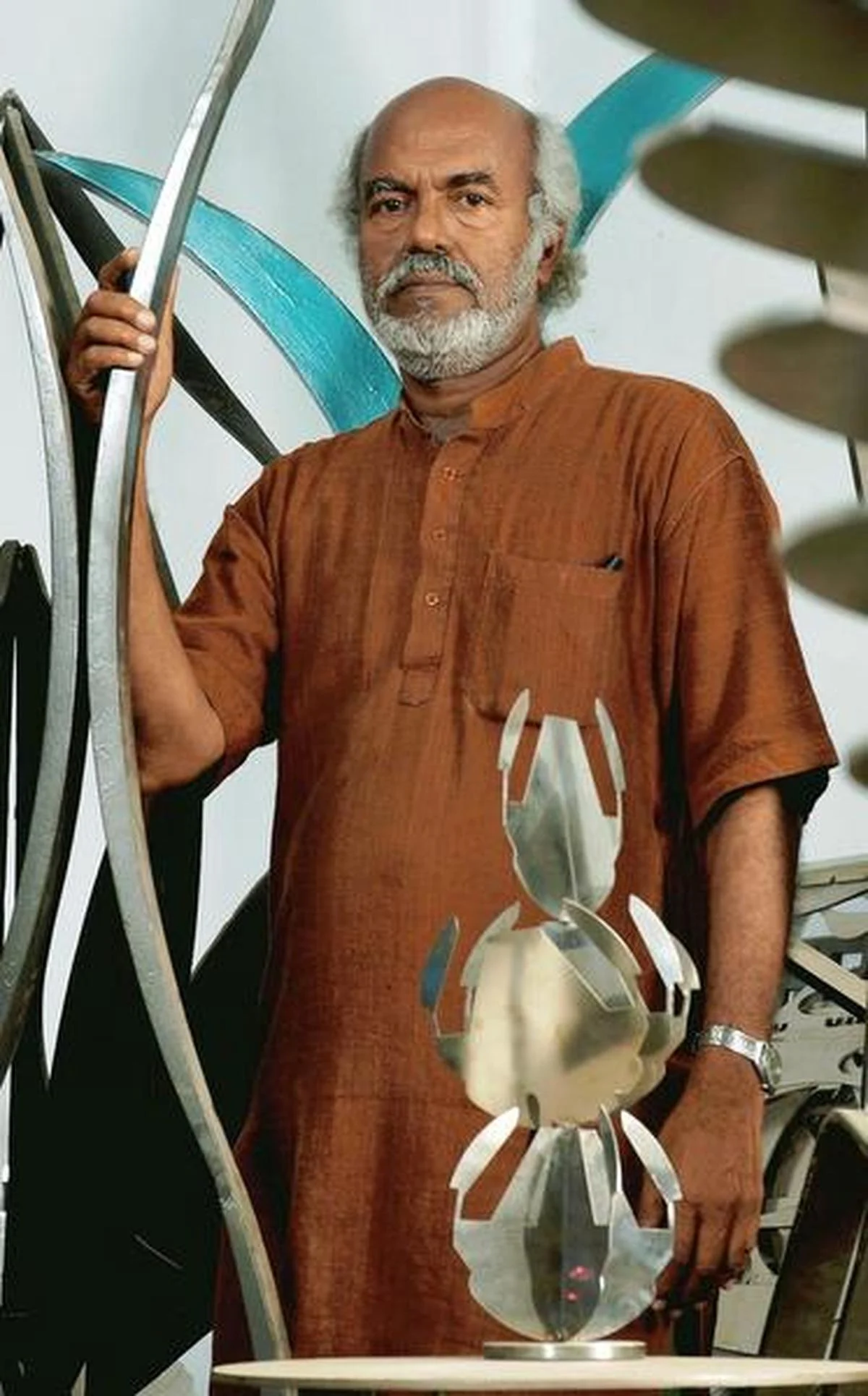
Artist-sculptor Balan Nambiar, an octogenarian who has witnessed Bengaluru’s art world evolve firsthand, points out that until the 1970s, the city played a peripheral role in India’s art narrative. "Karnataka Chitrakala Parishath held annual ‘all-India’ art exhibitions with works by regional artists… displayed at the banquet hall of Vidhana Soudha. In the 70s, Bengaluru had only two freelance artists: Rumale Chennabasavaiah and myself. Most others were employed in government institutions," he recounts.
In those early days, Kritika Gallery on St. Marks Road, managed by Kausalya Dayaram, was reportedly the city’s sole private art gallery. Nambiar, a long-time supporter of Gallery Sumukha, remembers Kala Yatra making a significant impact during its brief existence. He notes the transient nature of many galleries that have appeared and disappeared in Bengaluru over the years, highlighting the challenges of sustaining an art space.

Amidst government-owned institutions like the Venkatappa Art Gallery and other commercial ventures, Sumukha quickly carved out a reputation as one of the first "serious" art galleries in Bengaluru’s nascent art scene of the 1990s. The subsequent decades saw the gallery mature into a significant commercial contemporary art space, expanding its reach through participation in international art fairs.
Kiran Mazumdar-Shaw, chairperson of Biocon and a discerning art collector, attests to Sumukha’s pivotal role. "Gallery Sumukha elevated the level of art galleries in Bengaluru. Before it came along, most galleries would be a bit of everything, from professional to amateur stuff. Premilla paid attention to the market, she organised events around artists and brought in a certain level of professionalism in curation that was missing from the art space in the city."

Championing Artists: A Hub for Creativity and Experimentation
Gallery Sumukha’s mission extends far beyond mere exhibition and sales. Baid has consistently utilized the space as a platform for workshops in printmaking and sculpture, lectures, and experimental artistic endeavors. Artist Pushpamala N. underscores this aspect: "Sumukha has been encouraging new and experimental work and has been host to all our works in different media, installations and live performances. It has hosted talks and book releases. And recently, walkthroughs during those exhibitions attended by large groups of school students and art students. This major art space is on the bucket list of every visiting curator and artist."
Over its three-decade tenure, Gallery Sumukha has hosted an estimated 230 shows, collaborating with over 100 artists. Its impressive roster includes luminaries like Bengaluru-based veterans Yusuf Arakkal and S.G. Vasudev, Vadodara-based Gulammohammed Sheikh, and K. Laxma Goud, alongside prominent contemporary figures such as Atul Dodiya, Pushpamala N., G. Ravinder Reddy, and Paresh Maity. Local artist Ravikumar Kashi, celebrated for his exploration of paper as a medium, has been a consistent presence and beneficiary of Sumukha’s support since the 1990s.

A significant factor in the gallery’s enduring relevance has been its strategic partnerships with artists who have garnered both critical acclaim and commercial success on a global scale. The association with Paresh Maity, in particular, has been instrumental to Sumukha’s own growth. Baid, who has championed Maity at numerous international art exhibitions, affectionately refers to him as the gallery’s biggest “saviour.”
The Unconventional Path: Sustainability Over Aggressive Growth
Baid’s approach to running Gallery Sumukha is characterized by a deliberate eschewing of conventional business models. She acknowledges the financial challenges inherent in the art world, particularly the expense of participating in art fairs, where returns are not always guaranteed. "Whatever money we make goes back into the gallery. Participating in art fairs is expensive. We may make some money here, go to an international art fair, and return without having sold anything, so it’s difficult to turn a profit," she states. This pragmatic outlook has allowed the gallery to maintain its integrity and focus on its core mission.

Bengaluru’s Art Market Dynamics: A Developing Landscape
While Bengaluru has emerged as one of India’s primary art market hubs, its burgeoning IT economy has not translated into commensurate art sales, which remain a smaller proportion of the national market compared to Mumbai and Delhi. Abhishek Poddar, Founder-Trustee of the Museum of Art & Photography (MAP) and a key figure in the city’s cultural landscape, offers insights into this phenomenon. "It is changing, but historically, there are two aspects to this: One, Bengaluru is a much younger city and the wealth is more recent… conspicuous consumption is much more in Delhi and Mumbai compared to Bengaluru, and the proliferation of galleries is less in the South compared to the North. The other factor is the growth of [geography-agnostic] online art sales."
A Future Rooted in Passion and Artist Support
As Gallery Sumukha celebrates its 30th anniversary, it remains steadfast in its commitment to its foundational principles. The gallery is marking this significant milestone with a rare solo exhibition of sculptures by R. Ravinder Reddy, a testament to its ongoing dedication to showcasing significant artistic achievements.

"We don’t do e-commerce, we don’t think very far ahead in terms of technology, AI art, that sort of thing. I stick to what I know best – finding good artists, young artists. I want to do better shows – that’s it," Baid concludes, encapsulating the enduring ethos of Gallery Sumukha. In an art world increasingly influenced by technological trends and commercial pressures, Sumukha’s unwavering focus on nurturing artistic talent and fostering a genuine connection with art continues to resonate, solidifying its place as a vital institution in Bengaluru’s cultural tapestry.
