

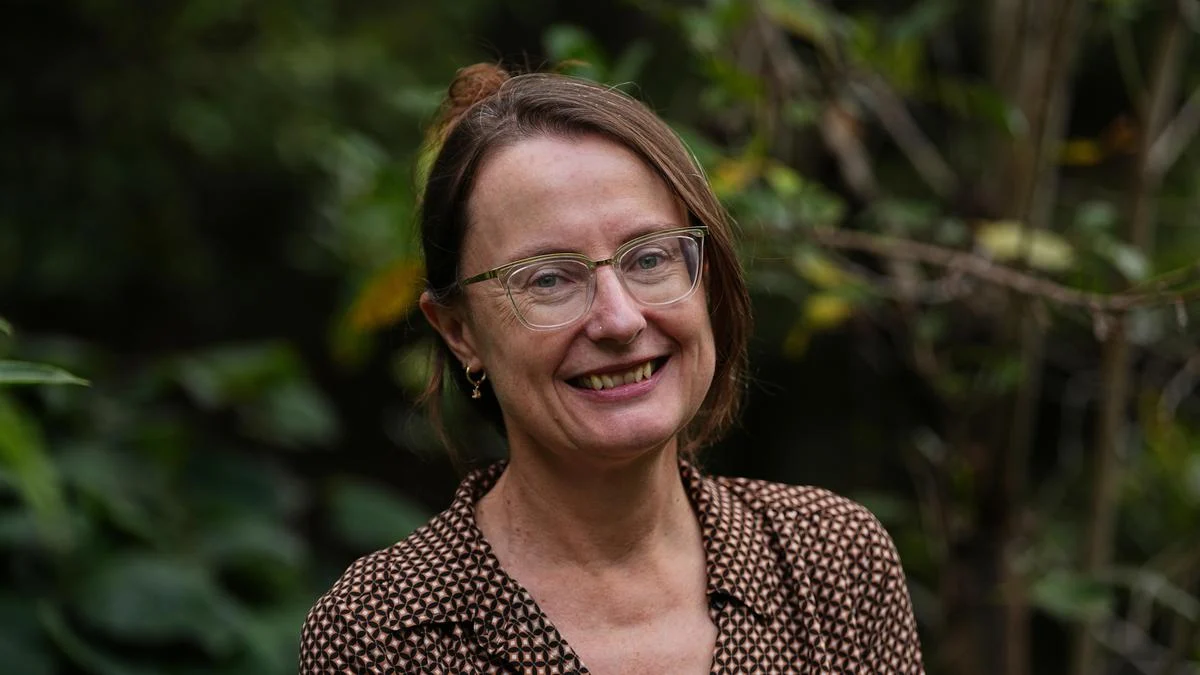
PHILADELPHIA — In the world of literary translation, certain names carry the weight of monuments. When Emily Wilson, a professor of classical studies at the University of Pennsylvania, published her translation of Homer’s The Odyssey in 2017, she didn’t just add a new volume to the shelf; she ignited a cultural phenomenon. Her work was celebrated as the first English-language translation of the epic by a woman, a feat that propelled the 3,000-year-old poem into the modern bestseller lists and established Wilson as a household name in the humanities.
However, in a move that has stunned the academic and publishing worlds, Wilson has announced that she is currently halfway through a complete retranslation of the work. This is not a second edition or a minor revision of her 2017 text, but a ground-up reimagining of the Homeric epic. The decision challenges the traditional lifecycle of a translation and raises profound questions about the nature of language, the evolution of scholarship, and the inescapable influence of the era in which a translator lives.
Main Facts: A Radical Departure from Success
The 2017 translation of The Odyssey was nothing short of a triumph. It has sold over one million copies—a staggering figure for a classical text—and has been adopted by countless universities and secondary schools. Wilson’s approach was noted for its use of iambic pentameter and a lean, muscular English that mirrored the original Greek’s "rapid" and "direct" nature, as famously defined by Matthew Arnold.
Yet, Wilson remains unsatisfied. Speaking from her home in Philadelphia, she clarified the scope of her new project. "It’s a complete retranslation. It’s not a revision of the old version," she told The Associated Press. The new edition is expected to be longer and more linguistically granular, reflecting what Wilson describes as a more sophisticated understanding of the social hierarchies and technical vocabulary present in the Homeric world.
A primary driver for this retranslation is Wilson’s evolving view on the terminology of servitude. In her 2017 version, she frequently used the word "slave." While accurate in a broad sense, Wilson now believes the term oversimplifies the ancient Greek reality. The original text employs various terms for different categories of enslaved people, reflecting a complex social structure that Wilson intends to capture with greater precision in the new version. By doing so, she aims to provide a more authentic representation of the "social worlds" that Odysseus navigates.
Chronology: From 2017 Bestseller to 2026 Controversy
The timeline of Wilson’s career over the last decade illustrates a rapid ascent from respected academic to a central figure in the "culture wars."
- 2017: Wilson releases her translation of The Odyssey. It receives near-universal acclaim for its accessibility but also draws fire from conservative critics who label her interpretive choices—such as referring to the "maidservants" killed by Telemachus as "slaves"—as "woke" or ideologically driven.
- 2023: Director Christopher Nolan cites Wilson’s translation as a primary inspiration for his cinematic work, specifically highlighting her opening line: "Tell me about a complicated man."
- Late 2023 – 2024: Wilson becomes a focal point of public debate after panning Nolan’s filmmaking in the London Review of Books, calling his work "grandiose and superficial." This sparks a flurry of responses from literary giants like Joyce Carol Oates.
- September 1, 2026: Wilson releases her new collection of essays, Crossing the Wine-Dark Sea. The book serves as a manifesto for her translation philosophy and includes critiques of other legendary translators like Robert Fagles and Daniel Mendelsohn.
- Present: Wilson confirms she is halfway through the new Odyssey retranslation, a project she describes as "very controversial" within the publishing industry.
Supporting Data: The Linguistic and Cultural Nuance
To understand why a retranslation is necessary, one must look at the data of the text itself. The Homeric Greek is famously formulaic, yet it contains layers of social signaling that are often lost in English.

Wilson’s focus on "enargeia"—a Greek term for vividness or emotional impact—is the cornerstone of her new methodology. She argues that her earlier work, while successful in its pacing, could be deepened by a more rigorous engagement with the poem’s internal contradictions.
Furthermore, Wilson’s upcoming essay collection, Crossing the Wine-Dark Sea, provides the scholarly data to support her shifts. In it, she details how previous popularizers of the classics, such as Edith Hamilton, inadvertently allowed their own mid-century American biases to color their translations. For example, Wilson points out that a famous quote by Aeschylus, used by Robert F. Kennedy following the assassination of Martin Luther King Jr., was actually based on a mistranslation by Hamilton. Wilson argues that every translator is a prisoner of their time, herself included, and that the only way to combat this is through constant re-evaluation and "intellectual greed"—a desire to see the ancient world through as many lenses as possible.
Official Responses: Praise, Skepticism, and Academic Concern
The announcement of a second translation within a decade has elicited a mixed bag of reactions from the literary community.
The Publishing Perspective:
Peter Simon, Wilson’s editor at Liveright Publishing, expressed unwavering support. "Since she has poured so much of her life and scholarship into The Odyssey… her new approach is bound to be thrilling," he said in a statement. However, Wilson herself acknowledges that the decision was "very controversial" behind the scenes, likely due to the marketing challenges of having two competing versions of the same text by the same author on the market simultaneously.
The Professional Translation Community:
Kate Deimling, who oversees the literary division of the American Translators Association, noted the rarity of the situation. "I can’t really come up with a previous example of this situation," Deimling stated. While she noted that translators often make minor edits in subsequent printings, a full retranslation by a living author of their own bestseller is virtually unprecedented in modern publishing.
The Educational Impact:
Teachers and professors, who have spent the last seven years integrating Wilson’s 2017 text into their curricula, face a logistical dilemma. Wilson admitted she is "very much aware" that having two editions will be a challenge for educators. "I hope they won’t curse my name," she added during her interview.
The Critical Backlash:
The broader cultural response has been more polarized. Joyce Carol Oates criticized Wilson for what she perceived as "haughty superiority" in her critiques of modern media. Similarly, Christopher Nolan, while not responding directly to Wilson’s critique of his film, defended the "language of movies" against what he termed "amateur criticism" during a podcast interview with Zhong Shu.

Implications: The Classics in a Modern World
Wilson’s decision to retranslate The Odyssey carries significant implications for how we consume and teach the classics.
1. The End of the "Definitive" Translation
Wilson’s project suggests that there is no such thing as a "definitive" translation. By starting over, she asserts that translation is a process, not a product. This moves the classics away from being static museum pieces and toward being "living" texts that must be renegotiated by every generation—or even every decade.
2. The Democratization of the Epic
Wilson continues to bridge the gap between high academia and popular culture. Her willingness to discuss the poetics of hip-hop (referencing the song "WAP") alongside ancient comic poetry demonstrates a commitment to making the classics relevant to modern sensibilities. She argues that by shifting our expectations of antiquity, we can better understand our own modernity.
3. A Critique of Exceptionalism
Her disdain for popular adaptations like Rick Riordan’s Percy Jackson series highlights a deeper ideological divide. Wilson critiques these works for framing the "hero’s journey" through the lens of "American exceptionalism." Her new translation aims to strip away these modern Western "heroic" tropes to reveal a more complex, and perhaps less comfortable, ancient reality.
4. Stoicism and Public Reception
Finally, Wilson’s renewed interest in Stoic philosophy reflects her experience with the volatility of fame. She acknowledges that she has "zero control" over how her work is received or "misunderstood." This philosophical groundedness appears to be what allows her to undertake such a massive project in the face of public scrutiny.
As Emily Wilson continues her journey through the second half of her retranslation, the literary world watches with bated breath. Whether this new Odyssey will eclipse her first remains to be seen, but one thing is certain: Wilson has ensured that the "complicated man" at the center of Homer’s epic remains as relevant—and as argued about—as ever.
