

For over eight decades, the identity of Ferrari has been forged in the crucible of internal combustion. The scream of a high-revving V12 and the visceral mechanical symphony of a gated shifter are more than just engineering hallmarks; they are the religious tenets of the Tifosi. However, the unveiling of the Ferrari Luce in Rome has signaled a seismic shift that transcends mere product development. As the brand’s first-ever fully electric vehicle (EV), the Luce represents either a visionary leap into the future or a perilous departure from the very soul of Maranello.
With 1,050 horsepower, a bespoke electric architecture, and a design language curated by the minds behind the iPhone, the Luce is not just a car—it is a manifesto. Yet, as the covers were pulled back, the world’s most famous automotive brand found itself at a crossroads, facing a polarized audience and a fluctuating stock market.
I. Main Facts: Redefining Performance in the Silent Era
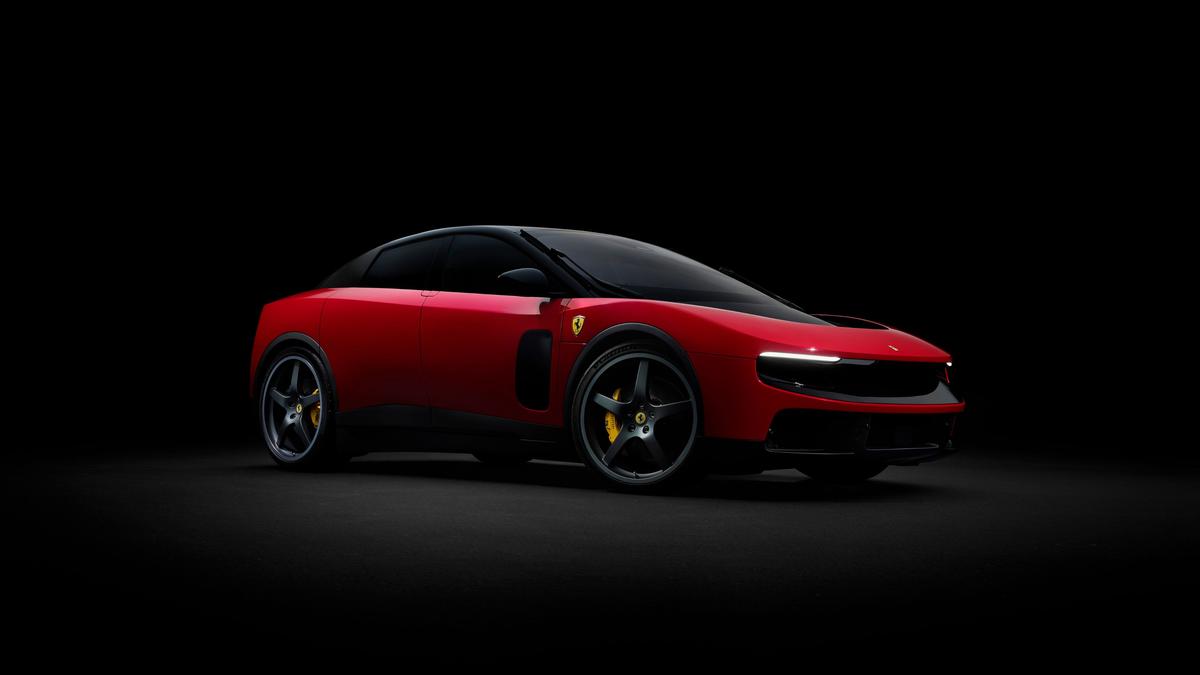
The Ferrari Luce is a five-seat, four-door Grand Tourer (GT) that discards the traditional combustion engine in favor of a sophisticated quad-motor electric powertrain. While Ferrari has experimented with electrification before—most notably with the hybrid LaFerrari and the SF90 Stradale—the Luce is the first to rely entirely on a battery-electric vehicle (BEV) platform.
Technical Specifications at a Glance:
- Powertrain: Four independent electric motors (one per wheel).
- Total Output: 1,050 Horsepower.
- Acceleration: 0-100 km/h in 2.5 seconds; 0-200 km/h in 6.8 seconds.
- Top Speed: In excess of 310 km/h.
- Battery Capacity: 122 kWh integrated into the chassis.
- Range: Over 530 kilometers (WLTP estimated).
- Charging: 350 kW DC fast-charging (adds 70 kWh in approximately 20 minutes).
- Weight: 2,260 kilograms.
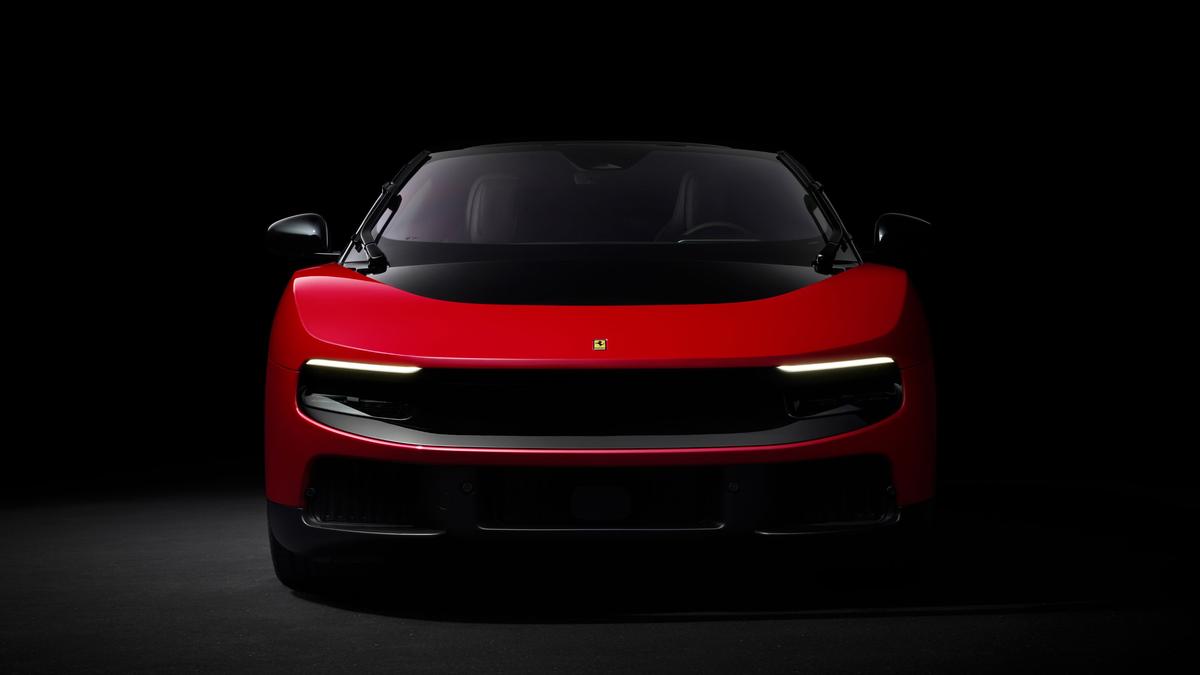
The Luce is built on a completely bespoke platform developed in-house at Maranello. Unlike other manufacturers that might adapt existing internal combustion engine (ICE) platforms for EVs, Ferrari has engineered the Luce from the ground up to exploit the packaging advantages of an electric drivetrain. This has allowed for a "cab-forward" design and an expansive glasshouse that would be impossible with a front-mounted V12.
II. Chronology: The Road to Rome
The journey to the Luce began years ago as part of Ferrari’s "multi-energy" strategy. While many luxury competitors pivoted early toward electrification, Ferrari remained steadfast in its commitment to the internal combustion engine, arguing that sound and vibration were essential to the brand experience.
- 2013: The launch of the LaFerrari introduced the world to the "HY-KERS" system, proving that electrification could enhance performance.
- 2019: The SF90 Stradale debuted as Ferrari’s first plug-in hybrid (PHEV), offering a silent "eDrive" mode.
- 2021: Ferrari officially announced its partnership with LoveFrom, the creative collective led by legendary former Apple designer Sir Jony Ive and industrial designer Marc Newson. This collaboration was tasked with reimagining Ferrari’s aesthetic for the digital age.
- 2023: Ferrari inaugurated its "e-building" in Maranello, a dedicated facility for the production of electric motors, battery packs, and power inverters.
- Present Day: The Luce is unveiled in Rome, marking the official start of Ferrari’s electric chapter.
The timeline suggests a calculated, cautious approach. Ferrari waited for battery density and charging infrastructure to reach a point where an EV could theoretically match the "emotional" performance of its petrol-powered siblings.
III. Supporting Data: Engineering the "Emotional" EV
One of the primary criticisms of electric vehicles is their clinical nature—the lack of mechanical "soul." Ferrari has attempted to combat this through a series of innovative engineering solutions designed to preserve driver engagement.
1. The Sound Philosophy
Ferrari has eschewed the use of "fake" synthesized engine noises. Instead, the Luce utilizes an "authentic" sound philosophy. Sensors located on the electric motors and axles capture genuine mechanical vibrations and frequencies. These are then amplified and transmitted into the cabin via a sophisticated acoustic system. The result is a soundscape that evolves naturally with speed, torque, and load, providing the driver with a physical connection to the powertrain.

2. Weight Management and Dynamics
At 2,260 kg, the Luce is significantly heavier than a traditional Ferrari GT. To mask this mass, Maranello has deployed its most advanced suite of chassis technology to date:
- Independent Torque Vectoring: With four motors, the car can precisely control the power sent to each individual wheel, allowing for "active" yaw control that mimics the agility of a much lighter vehicle.
- Active Suspension: A next-generation system that compensates for the low center of gravity provided by the floor-mounted battery pack.
- Four-Wheel Steering: Enhancing high-speed stability and low-speed maneuverability.
3. The Digital Sanctuary
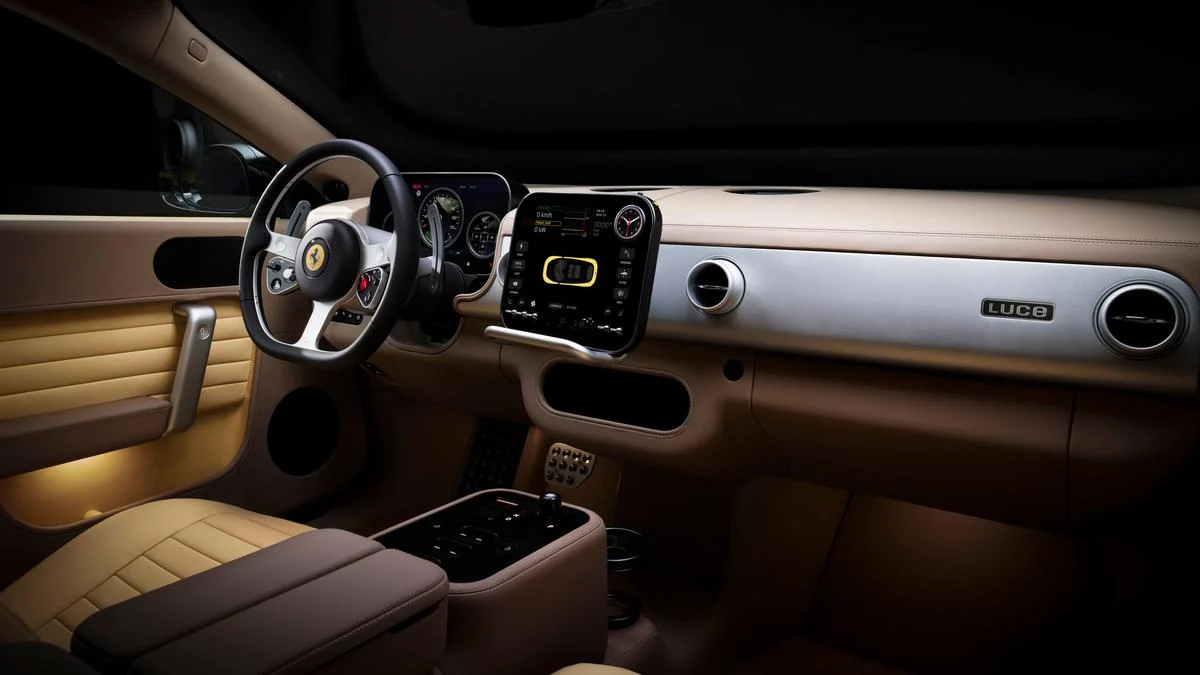
The interior represents a technological tour de force. Ferrari collaborated with Samsung for the OLED displays and utilized Corning Gorilla Glass for the interfaces. The cabin features a 21-speaker, 3000-watt audio system, and a unique E-Ink key that changes its aesthetic when docked. Despite the digital focus, Ferrari has retained physical aluminum switches for critical functions, a nod to the tactile heritage of the brand.
IV. Official Responses: The Brand’s Defense
The reception of the Luce has been anything but uniform. Following the reveal, Ferrari’s stock price reportedly dipped by nearly seven percent—a sign that the market remains skeptical of how the "Prancing Horse" identity will translate to a silent, battery-powered world.
Ferrari’s Executive Stance
Ferrari CEO Benedetto Vigna has been vocal about the Luce being an "expansion" rather than a replacement. "The Luce is not intended to take the place of our V12 or V8 models," the company stated during the launch. "It is a new interpretation of performance luxury, made possible by technologies that were previously unavailable to us. It is the beginning of a new chapter where electrification is a tool for innovation, not a compromise."
The LoveFrom Perspective
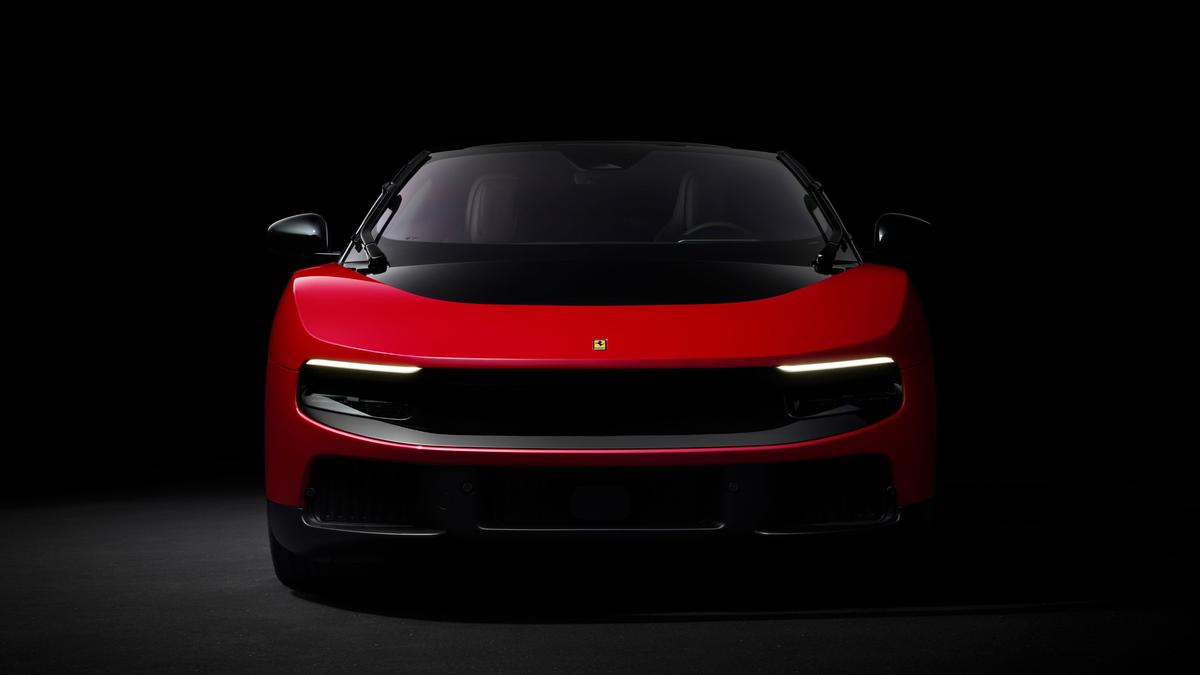
The involvement of Sir Jony Ive and Marc Newson has been a lightning rod for controversy. Traditionalists argue the car looks more like a high-end consumer electronic device than an Italian supercar. In response, the design team has emphasized the concept of "purity." They describe the Luce as a "shell-like" form, where aerodynamic elements are integrated into the bodywork rather than bolted onto it. The goal was to create a design that looks like it was "carved by the wind," focusing on elegance over aggression.
V. Implications: A Divided Legacy and a New Frontier
The Luce’s arrival carries profound implications for the future of the automotive industry and the luxury market at large.
1. Alienating the Core vs. Attracting the New
Ferrari is walking a dangerous tightrope. By moving toward a minimalist, tech-heavy design, they risk alienating the "purists" who value the raw, mechanical drama of the past. However, the Luce is clearly aimed at a new generation of "ultra-high-net-worth" individuals—tech entrepreneurs and younger buyers who prioritize sustainability, connectivity, and avant-garde design over the smell of gasoline.
2. The Financial Gamble
With an expected price tag of approximately €500,000 (exceeding ₹5 crore in India before taxes), the Luce is positioned at the top of the GT market. Ferrari is betting that the brand’s prestige is strong enough to command a massive premium in a segment where electric rivals (like the Porsche Taycan Turbo GT or Lucid Air Sapphire) offer similar performance for less. The 7% stock dip suggests that investors are waiting to see if the "Ferrari Magic" can truly justify this price point in the EV space.
3. The Future of the "Ferrari Sound"
The success or failure of the Luce’s vibration-based sound system will likely set the standard for how other performance brands (Lamborghini, McLaren, etc.) handle the transition to EVs. If Ferrari can convince drivers that an electric motor can be "emotional," it will secure the brand’s relevance for the next century. If the experience feels clinical, the Luce may be remembered as a noble, but flawed, experiment.
4. Impact on the Indian Market
In India, where luxury EVs are seeing a slow but steady uptick among the elite, the Luce represents a significant status symbol. At over ₹5 crore, it will be one of the most expensive electric vehicles ever sold in the country. Its success will depend heavily on the development of ultra-fast charging infrastructure at five-star hotels and private estates, as well as the appetite of Indian collectors for a Ferrari that doesn’t roar.
Conclusion: A New Light?
The word Luce translates to "Light" in Italian. It is a fitting name for a car intended to illuminate the path forward for Maranello. Whether that path leads to a bright new era of dominance or a dilution of one of history’s most storied brands remains to be seen.
The Ferrari Luce is undeniably a masterpiece of engineering and a bold statement of design. It proves that Ferrari is not afraid to disrupt itself before someone else does. As the automotive world watches closely, the Luce stands as a testament to the fact that even a company as steeped in tradition as Ferrari knows that to stay the same, it must change. The roar of the engine may be fading, but the ambition of the Prancing Horse remains as loud as ever.
This report was prepared in association with Motorscribes and The Hindu, providing deep-dive analysis into the evolving landscape of global automotive luxury.
