

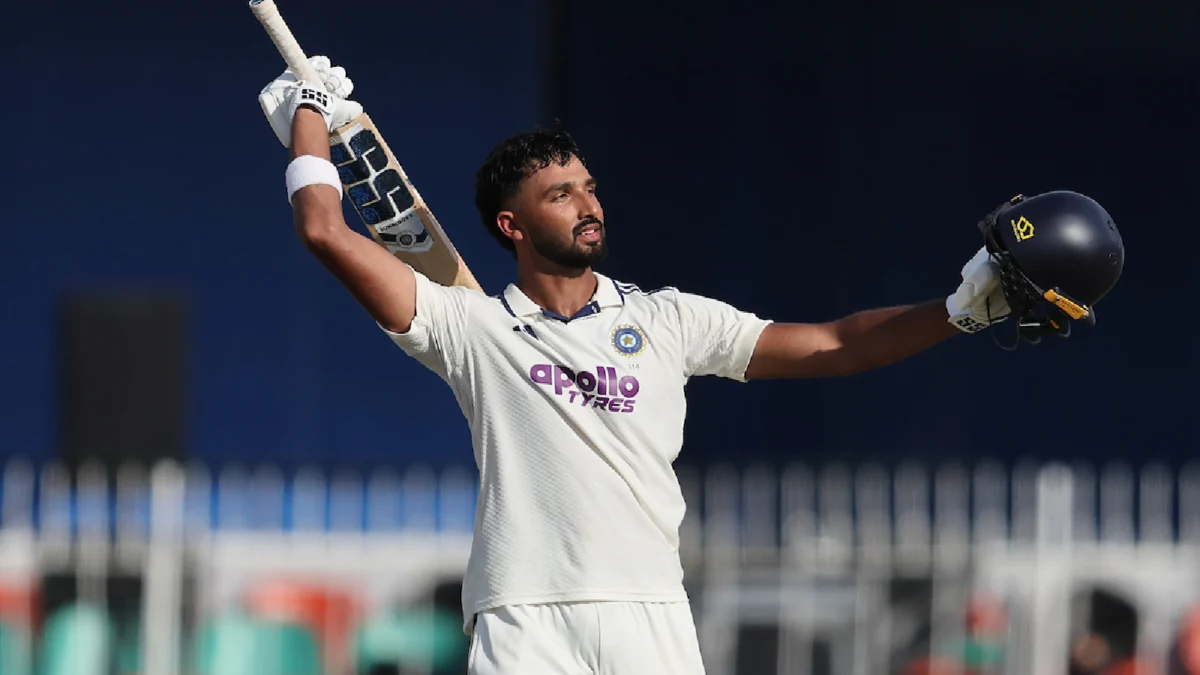
Colombo, Sri Lanka – September 2, 2026 – The latest ICC Men’s Test Rankings, released today, reflect a dynamic shift in the global pecking order, particularly for Indian cricketers following their recent two-Test series against Sri Lanka. While young sensation Devdutt Padikkal has made a significant leap, climbing five spots to reach a career-best 54th position, India’s skipper Shubman Gill and pace spearhead Jasprit Bumrah have experienced notable descents, underscoring the relentless demands of elite international cricket. The rankings, which distill months of performance into a numerical representation, offer a compelling narrative of individual brilliance, the pressures of captaincy, and the impact of injury on a player’s standing.
The updated rankings paint a mixed picture for the Indian contingent. Padikkal’s meteoric rise is a testament to his exceptional form on the island nation, where he emerged as India’s premier batsman. Conversely, Gill’s slide by two positions to ninth and Bumrah’s drop from second to third in the bowling charts highlight the precarious nature of maintaining top-tier status. This reshuffle not only affects individual pride but also carries implications for team dynamics, selection strategies, and the overall perception of India’s cricketing strength as they navigate a packed international schedule.
The Ascendant Star: Devdutt Padikkal’s Subcontinental Masterclass
Main Facts:
Devdutt Padikkal, the elegant left-handed batsman, has been the undeniable headline act for India in the recent Test series against Sri Lanka. His spectacular form, which saw him amass 328 runs across two Tests, including two magnificent centuries, propelled him five places up the ICC Test batting rankings to 54th. This surge marks a significant milestone in his burgeoning career, solidifying his position as a promising talent on the international stage.
Chronology of Brilliance:
Padikkal’s "Test comeback," as described by many pundits, was nothing short of extraordinary. Having faced stiff competition for a spot in India’s formidable Test lineup, the Sri Lanka tour presented a golden opportunity, and he seized it with both hands. His journey of resurgence began in the first Test at Galle, a venue renowned for its challenging spin conditions. Here, Padikkal demonstrated remarkable composure and skill, crafting a superb 167 in the first innings. This monumental knock was not just a personal triumph but a pivotal contribution that laid the foundation for India’s dominant 165-run victory. Facing a barrage of spin and a spirited Sri Lankan attack, Padikkal showcased an exquisite blend of aggression and circumspection, rotating the strike effectively and punishing loose deliveries. His innings was a masterclass in adapting to subcontinental pitches, characterized by precise footwork and elegant strokeplay.
Carrying that momentum into the second Test in Colombo, played at the iconic Sinhalese Sports Club Ground, Padikkal proved his Galle heroics were no fluke. On August 23, 2026, the opening day of the second Test, he continued his purple patch, notching up his second century of the series. His innings of 117 off 193 balls was another display of his growing confidence and maturity. He batted with an assurance that belied his relative inexperience at this level, frustrating the Sri Lankan bowlers and dictating the pace of the innings. Although he was eventually dismissed about eight overs before the close of play on day one, his century had once again put India in a commanding position. These back-to-back centuries underscored his ability to perform under pressure and convert starts into substantial scores, a hallmark of top-tier Test batsmen.
Supporting Data and Analysis:
Padikkal’s 328 runs at an astounding average across the two Tests were unmatched by any other batsman in the series. His strike rate, combined with his ability to bat for long periods, made him a constant threat to the opposition. The move from 59th to 54th, while seemingly modest in absolute terms, signifies a substantial leap in a highly competitive ranking system where every point is hard-earned. For a player looking to cement his place, such a gain provides crucial momentum and recognition. Analysts have praised his refined technique against both pace and spin, noting a significant improvement in his off-side game and his ability to counter reverse swing. His temperament, often highlighted as a key strength, was on full display as he navigated tricky spells and built partnerships.
Implications for India’s Batting Future:
Padikkal’s emergence offers a refreshing boost to India’s batting depth. With the team constantly looking to groom the next generation of Test cricketers, his consistent performance in challenging away conditions positions him as a strong contender for future assignments. His left-handed presence also adds a valuable dimension to the predominantly right-handed Indian top order, potentially creating different angles and challenges for opposition bowlers. This performance, coming at a time when some established names are experiencing a dip in form, makes his rise even more pertinent for the Indian selectors.
Captain’s Burden: Shubman Gill’s Ranking Slide
Main Facts:
While Padikkal celebrated his ascent, Indian captain Shubman Gill faced a challenging series in Sri Lanka, which saw his ICC Test ranking slip two positions to ninth. This drop, though not drastic, reflects a personal struggle with the bat amidst his leadership responsibilities.
Chronology of a Tough Tour:
The Sri Lanka tour marked a period of introspection for Gill. As captain, the weight of expectation to lead from the front, both with the bat and in strategy, was immense. However, his individual returns were modest. Across three innings in the two-Test series, Gill managed only one half-century. While details of specific dismissals are not extensively provided in the immediate report, it is understood that he struggled to convert starts and build the substantial innings expected of a top-order batsman and captain. His form contrasts sharply with his earlier career highs, where he had shown glimpses of exceptional talent and the ability to dominate attacks. The pressure of captaincy, coupled with a slight technical vulnerability that Sri Lankan bowlers seemed to exploit, contributed to a series where he couldn’t quite unleash his natural attacking game.
Supporting Data and Context:
Gill’s descent to ninth place means that wicketkeeper-batsman Rishabh Pant remains the highest-ranked Indian batter in Test cricket, holding steady at seventh position. Pant, known for his aggressive and unconventional style, continues to be a vital cog in India’s middle order. The comparison underscores the high bar set for Indian batsmen in the rankings. Yashasvi Jaiswal, another promising Indian opener, maintained his position outside the top 10, at 11th, indicating a solid but not yet spectacular run of form that would propel him into the elite bracket. For Gill, who has often been touted as a future superstar, this ranking dip serves as a stark reminder of the unforgiving nature of Test cricket and the constant need for consistent performance. The captaincy role, while a huge honour, can sometimes weigh heavily on a player’s individual form, demanding a delicate balance between leading the team and focusing on personal output.
Official Responses and Implications:
While no direct official quotes were provided in the immediate aftermath of the rankings update, sources close to the Indian team management suggest a pragmatic approach. "Shubman is a phenomenal talent and a natural leader," an unnamed team official was quoted as saying, "Every player, even the best, goes through phases. The captaincy is a new challenge for him, and he’s learning. His commitment is unquestionable, and we have full faith in his ability to bounce back strongly."
The implications of Gill’s dip are multi-faceted. On one hand, it raises questions about the burden of captaincy on a relatively young player’s batting. On the other, it could serve as a valuable learning experience, pushing him to refine his game and develop greater resilience. For the selectors, it means closely monitoring his form in upcoming series, ensuring that the captaincy does not unduly affect his primary role as a top-order batsman. India’s success in Test cricket relies heavily on its top four, and consistent runs from the captain are crucial.
Bumrah’s Injury Woes: A Slip in the Bowling Ranks
Main Facts:
India’s premier pace bowler, Jasprit Bumrah, has lost his second spot in the ICC Test bowling rankings, sliding to third. This demotion is a direct consequence of his absence from the Sri Lanka tour, a forced sabbatical due to an impact injury on his knee.
Chronology of Injury and Recovery:
Bumrah’s injury has been a significant concern for the Indian team management. Sidelined since mid-July with an impact injury on his knee, his absence from the crucial Sri Lanka Test series was keenly felt. Known for his unique action, searing pace, and pinpoint accuracy, Bumrah has been the spearhead of India’s Test attack for several years, capable of turning matches on his own. His injury not only deprived India of its most potent weapon but also provided an opportunity for other bowlers to gain ground in the rankings.
Supporting Data and Global Context:
The void left by Bumrah’s absence allowed Australia’s Mitchell Starc and New Zealand’s Matt Henry to consolidate their positions, with Starc now occupying the top spot and Henry at second. Starc, a left-arm fast bowler, has been a consistent performer for Australia, known for his ability to generate swing and bounce, particularly with the new ball. Matt Henry, from New Zealand, has quietly built a reputation as a reliable and effective Test bowler, leveraging his consistent line and length to great effect. Their recent performances, likely in ongoing or concluded series for their respective nations, contributed to their upward mobility, pushing Bumrah down.
Adding to the competitive landscape, England’s Ollie Robinson also made significant gains, moving up to fifth position after an impressive 8-wicket haul against Pakistan across two Tests, including a stellar performance in the Lord’s Test. This highlights the fierce competition at the top of Test bowling, where consistent performances are paramount. Bumrah’s drop, therefore, is less about a dip in form and more about the unforgiving nature of a ranking system that rewards active participation and performance.
Official Responses and Future Outlook:
The good news for Indian fans is that Bumrah has been selected in India’s squad for the upcoming three-match T20I series against Afghanistan in mid-September. However, his availability remains "subjected to fitness clearance," a crucial caveat for a player recovering from a knee injury. The medical team will closely monitor his progress, and a cautious approach is expected, given his importance across all formats.
"Jasprit is irreplaceable in many ways," a member of the selection committee, speaking off the record, commented. "His recovery is paramount. While we are excited to have him back in the T20I squad, his long-term Test fitness is our priority. We won’t rush him back if there’s any doubt."
The implications of Bumrah’s injury and subsequent ranking drop are significant. For India, it underscores the need for a robust pace bowling contingent that can perform in his absence. It also highlights the fragility of relying too heavily on a single superstar. His return to full fitness and form will be eagerly awaited, not just to regain his ranking but to restore India’s full strength in Test cricket. The T20I series will be a critical litmus test for his readiness for the rigours of international cricket, especially with more challenging Test assignments on the horizon.
Other Notable Movers: Pant, Jaiswal, and Dinusha’s Rise
Beyond the major Indian movements, the latest ICC Test rankings also highlighted other significant performances and steady presences.
Rishabh Pant’s Steadfastness:
Rishabh Pant, despite his unique and sometimes polarizing style, continues to be India’s highest-ranked Test batter at seventh. His ability to turn the tide of a match with his aggressive batting, often against the run of play, makes him an invaluable asset. His consistent presence in the top 10 reflects his impact and the value he brings to the Indian middle order, particularly in challenging situations. Pant’s unconventional approach often frustrates opposition bowlers, and his ability to score quickly can shift momentum dramatically.
Yashasvi Jaiswal’s Steady Trajectory:
Yashasvi Jaiswal, the dynamic left-handed opener, maintained his 11th position, just outside the coveted top 10. Jaiswal has shown immense promise in his nascent Test career, combining classical technique with a fearless approach. His consistency at the top of the order has been crucial for India, providing solid starts. To break into the top 10, he will need to convert more of his good starts into very big scores, replicating the sustained excellence of top-ranked batsmen. His journey is one to watch, as he has the talent and temperament to climb further.
Sonal Dinusha’s Rapid Ascent:
From the Sri Lankan camp, young all-rounder Sonal Dinusha was the standout performer in the rankings. His resilient centuries in the second Test against India in Colombo saw him make a staggering leap of 29 positions to reach 25th in the batters’ rankings. Dinusha’s performance was a beacon of hope for Sri Lankan cricket, demonstrating grit and skill against a formidable Indian attack. His ability to score big hundreds under pressure suggests a bright future for the island nation. Such a rapid rise in the rankings for a relatively new player is a clear indicator of his potential and a significant morale booster for Sri Lankan cricket, which is constantly striving to rebuild and find new match-winners. His centuries were not just personal milestones but crucial contributions that helped Sri Lanka mount a challenge against the top-ranked Indian side, earning him widespread acclaim from local media and fans.
Implications for India’s Test Future
The latest ICC Test rankings provide a timely snapshot of India’s cricketing landscape. Devdutt Padikkal’s ascent is a clear positive, offering a fresh option in the batting lineup and indicating a healthy talent pipeline. His performance suggests he is ready for more regular opportunities, particularly in conditions that suit his style.
However, the slips experienced by Shubman Gill and Jasprit Bumrah serve as cautionary tales. For Gill, it highlights the immense pressure and learning curve associated with captaincy, especially when combined with the need to perform consistently with the bat. The team management will need to carefully manage his workload and provide him with the support needed to navigate these dual responsibilities. His leadership will be under scrutiny, but his talent is undeniable, and a strong comeback is anticipated.
Bumrah’s situation underscores the perennial challenge of managing elite fast bowlers and their susceptibility to injuries. His health and availability are paramount to India’s Test ambitions, particularly in crucial overseas tours. The selection committee will be keen to ensure he is fully fit before unleashing him in the demanding format of Test cricket, prioritizing long-term fitness over short-term gains. The emergence of other fast bowlers will be critical to ensure India has sufficient depth in its pace battery to cover for any future absences.
Overall, the rankings reflect a dynamic and competitive environment in Test cricket. For India, it’s a period of both celebration for emerging talents and careful management for established stars. The challenges ahead will test the depth and resilience of the squad, but with a blend of experience and exciting new talent, India remains a formidable force in the longest format of the game. The upcoming series will be pivotal in determining the trajectory of these players and India’s standing in the world of Test cricket.
