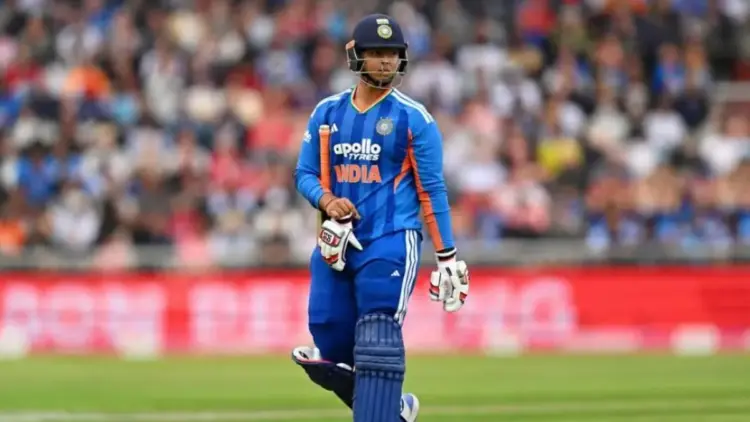
Christchurch, New Zealand – A comprehensive four-wicket victory for India against New Zealand in the second T20 International might have secured a commanding 2-0 lead in the five-match series, but it was a nuanced decision in the batting lineup that truly stole the post-match headlines. The spotlight fell squarely on 15-year-old prodigious talent Vaibhav Sooryavanshi, whose brief, albeit challenging, stint at the crucial No. 3 position, yielding just 4 runs off 8 balls, has ignited a fervent debate among cricket pundits and fans alike. Leading the charge with their incisive commentary were former Indian cricketers Ravichandran Ashwin and Murali Karthik, whose questioning of Sooryavanshi’s batting order has probed deeper into team strategy, player flexibility, and the delicate art of integrating young talent onto the international stage.
The discussion, originating from a single innings, has transcended mere statistics, evolving into a broader discourse on the philosophy of team management, the pressure on seasoned professionals to adapt, and the optimal environment for a nascent career to flourish. As India looks to seal the series, the implications of this strategic gamble and the subsequent scrutiny are poised to reverberate through the remaining fixtures and potentially influence future selection decisions.
The Main Facts: A Strategic Gamble Under Scrutiny
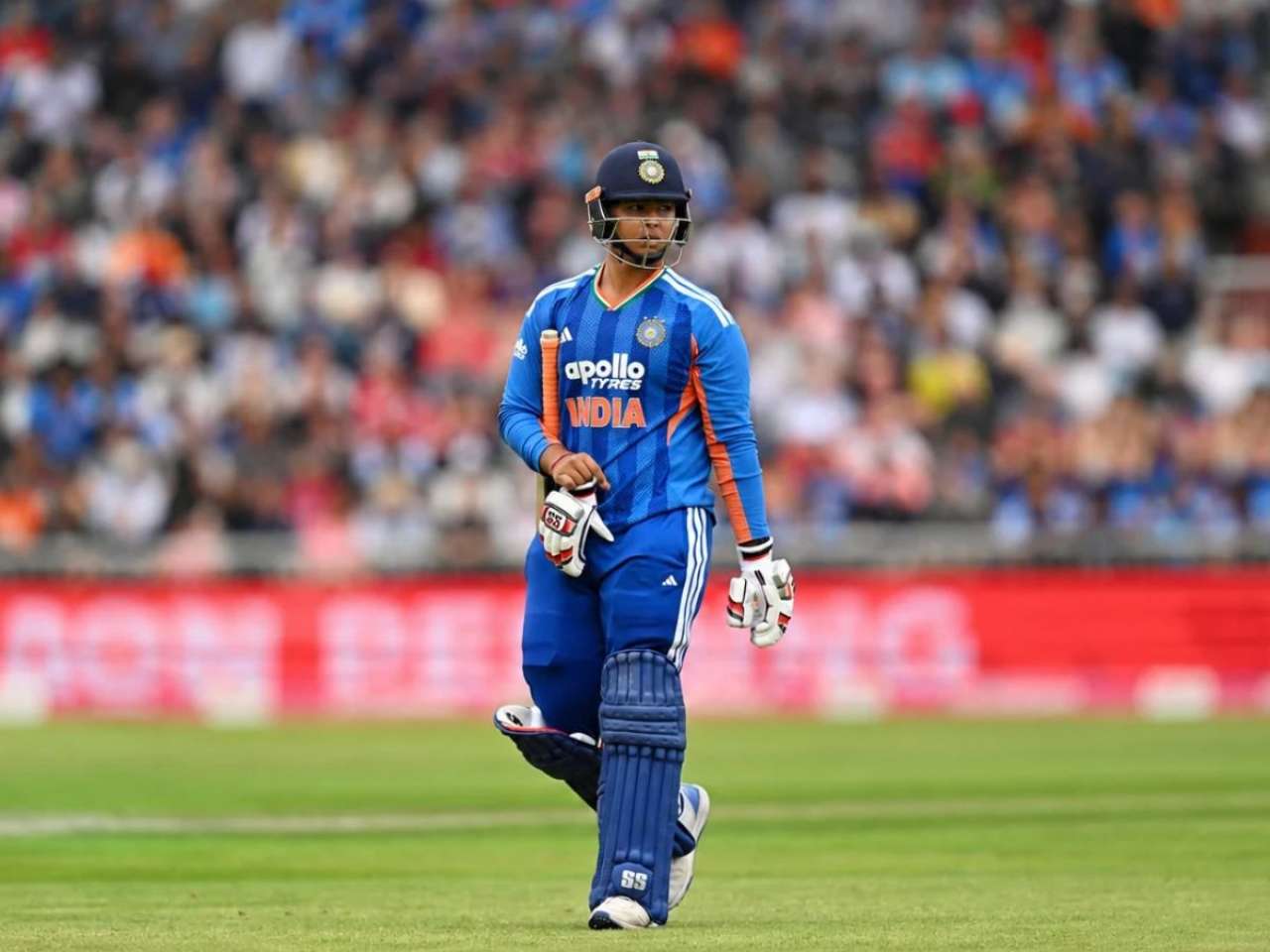
The crux of the controversy lies in the decision by the Indian team management to deploy 15-year-old Vaibhav Sooryavanshi at the pivotal No. 3 position during the second T20I against New Zealand in Christchurch. Sooryavanshi, a highly-rated youngster making his return to the playing XI, managed a modest 4 runs off 8 deliveries before his dismissal. While India ultimately clinched a four-wicket victory, cementing a 2-0 series lead, the youngster’s struggles at the crease became a focal point for post-match analysis.
Former Indian spinner Murali Karthik initiated the critical commentary, expressing surprise at Sooryavanshi’s placement, suggesting he would have been better utilised as an opener. His sentiment was echoed emphatically by fellow former international Ravichandran Ashwin, who observed that Sooryavanshi appeared "like a fish out of water," visibly uncomfortable batting out of his presumed natural position. Ashwin further stressed the importance of a senior partner providing guidance in such a scenario.
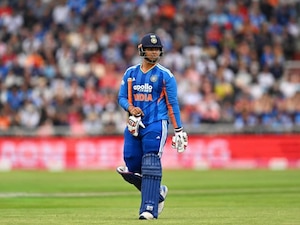
The only reason for Sooryavanshi’s inclusion and subsequent promotion to No. 3 was the unfortunate injury sustained by regular opener Ishan Kishan. This forced alteration in the lineup created an opportunity, but its execution has raised questions about whether the team adequately supported the young debutant in a high-pressure scenario. The veteran commentators’ remarks have sparked a widespread debate regarding the optimal role for young players, the need for flexibility among experienced campaigners, and the overall strategic approach in T20 international cricket.
Chronology of Events: From Selection to Scrutiny
The story of Vaibhav Sooryavanshi’s contentious No. 3 appearance is best understood through a chronological lens, tracing the path from pre-match strategy to the heated post-game analysis.

Pre-Match Build-Up: An Opportunity Arises
The five-match T20 International series between India and New Zealand had already begun with India asserting dominance, securing a comfortable victory in the opening encounter. Heading into the second T20I in Christchurch, the Indian camp was confident but faced an unexpected challenge: the unavailability of regular opener Ishan Kishan due to an injury. Kishan’s absence created a void at the top of the order and necessitated a reshuffle in the playing XI.
This opened the door for Vaibhav Sooryavanshi, a 15-year-old prodigy who had been making waves in age-group cricket and was identified as a talent with immense future potential. Sooryavanshi, primarily known for his aggressive top-order batting, was brought into the squad as a direct replacement. The decision to select a player of his tender age for an international T20 series was itself a testament to the belief the selectors and team management had in his abilities, signalling a long-term vision for his development. However, the subsequent decision to slot him at No. 3, a position often demanding a blend of aggression and stability, became the subject of intense scrutiny. While the exact rationale wasn’t publicly detailed, it was speculated that the management aimed to give him early exposure at a key position, perhaps viewing it as an accelerated learning curve, or simply making the best of the available resources given Kishan’s injury.

The Match Day: A Brief, Challenging Stay
The second T20I saw New Zealand batting first and posting a competitive total, setting the stage for India’s chase. The Indian innings began, and while the early overs saw a cautious approach, the fall of an early wicket brought Vaibhav Sooryavanshi to the crease sooner than anticipated. Walking out at No. 3, a position historically occupied by stalwarts and often considered the engine room of a T20 innings, the youngster faced immense pressure.
From the moment he arrived, Sooryavanshi appeared to be grappling with the pace and bounce of the international bowlers. His eight-ball stay was marked by a visible struggle to time the ball effectively. He attempted to break free, to assert himself with aggressive strokes characteristic of his usual game, but the execution was lacking. He played and missed, edged deliveries, and found fielders with his shots. The weight of expectation, combined with the unfamiliarity of the No. 3 role – which can range from accelerating after a strong start to rebuilding after an early collapse – seemed to overwhelm him. Eventually, his dismissal came as he tried to force the pace, holing out to a fielder, having managed just 4 runs.

Despite Sooryavanshi’s early exit, the Indian middle and lower order showcased commendable resilience. Tilak Varma anchored the innings with a crucial unbeaten half-century, while Naman Dhir and Nitish Kumar Reddy provided the finishing touches with quickfire contributions, ensuring India chased down the target with four wickets in hand. The win was a testament to the team’s depth and fighting spirit, but it did little to deflect attention from Sooryavanshi’s challenging outing.
Post-Match Analysis: The Debate Ignites
Immediately after India’s victory, the discussion shifted from the result to the tactical choices that underpinned it. On various cricket analysis shows and platforms, the decision to bat Sooryavanshi at No. 3 became the central talking point.

Murali Karthik was among the first to voice his concerns. "Why wasn’t Vaibhav sent out to open?" he questioned, implying that the No. 3 slot was not his natural habitat and that he might have been better off in a more familiar opening role, even if it meant a senior player adjusting. Ravichandran Ashwin then weighed in with his observations, stating, "He just found himself a little like a fish out of water. He kept going hard, kept going hard for the eight balls. If they are going to go with this combination, I am not too sure Vaibhav has got to bat at number three, but it is what it is." Ashwin highlighted the youngster’s discomfort and the apparent lack of guidance from the non-striker. "It did not feel like he was ever timing the ball, and that is when you need a senior partner to walk down to him and say, ‘Calm down, just hang in there, look to play close to your body, watch the ball better,’" he added, pointing to a potential failure in mentorship during a crucial phase.
Karthik further elaborated on the necessity for experienced players to demonstrate flexibility. He specifically cited Sanju Samson, stating, "Sanju Samson is your banker. He can play at a different position. People might ask why only him. If you are an experienced player, you will have to play such roles, especially when you have picked Vaibhav Sooryavanshi." This commentary served to amplify the debate, pushing beyond Sooryavanshi’s individual performance to question the broader team dynamics and the responsibility of senior players in fostering young talent.

Supporting Data and Analytical Perspectives
The debate surrounding Vaibhav Sooryavanshi’s batting position is not merely about a single performance; it delves into fundamental aspects of T20 strategy, player development, and the role of senior cricketers.
The Demands of the No. 3 Position in T20Is
The No. 3 position in T20 cricket is arguably one of the most dynamic and challenging. Unlike an opener who sets the tone, or a middle-order finisher, the No. 3 batsman’s role can vary wildly depending on the match situation. If an early wicket falls, they might need to absorb pressure and rebuild. If openers provide a blistering start, they are expected to maintain the momentum and accelerate. This requires a versatile skillset: the ability to rotate strike, find boundaries, play against both pace and spin, and adapt to different match scenarios under extreme pressure. Historically, this slot has been reserved for experienced batsmen who possess a wide array of shots and a strong temperament. For a 15-year-old, even one with immense talent, to be thrust into such a multifaceted role on his return to international cricket raises questions about the developmental approach.

Sooryavanshi’s Skillset vs. Role Assignment
While specific data on Sooryavanshi’s domestic or age-group career wasn’t provided in the original text, the implication is that he is primarily a top-order batsman, likely an opener, given Karthik’s suggestion. Openers typically have the luxury of playing through the powerplay, with field restrictions allowing them to express themselves. The No. 3 position, especially if an early wicket falls, often means coming in during the powerplay but with the added pressure of consolidating, making it a different psychological and technical challenge. His brief innings of 4 runs off 8 balls, with a strike rate of 50, suggests a batsman struggling to find rhythm and accelerate, which is a key requirement for the No. 3 role. This starkly contrasts with the aggressive, free-flowing style often associated with top-order T20 batsmen.
The Case for Senior Player Flexibility
Murali Karthik’s argument about experienced players like Sanju Samson being "bankers" who should show flexibility is a critical point. In team sports, especially those as dynamic as T20 cricket, players are often asked to adapt their roles for the collective good. Samson, with his experience and proven ability across various batting positions in domestic and franchise cricket, could potentially have been shifted to No. 3, allowing Sooryavanshi to open, or even bat lower down the order in a less pressure-cooker situation. This concept highlights the selflessness expected from senior players – to step out of their comfort zones to facilitate the integration and development of young talent. It’s a balance between individual preference and team strategy, where the latter, especially in nurturing a prodigy, should often take precedence.

Youth Integration and Psychological Impact
Introducing a 15-year-old to international cricket is a delicate process. While exposing them to the highest level can accelerate their learning, doing so in a high-pressure, unfamiliar role can also have adverse psychological effects. Ashwin’s observation that Sooryavanshi "kept going hard" but wasn’t "timing the ball" suggests a young player trying desperately to perform but unable to execute under pressure. This can lead to a crisis of confidence. The importance of a senior partner offering guidance – "Calm down, just hang in there, look to play close to your body, watch the ball better" – as Ashwin suggested, underscores the need for mentorship. Without it, such an experience could be more detrimental than beneficial to a nascent career. Proper youth integration involves not just selection but also strategic deployment and robust support systems.
Official Responses and Team Stance (Hypothetical)
While the original article did not include direct official responses from the Indian team management, captain, or the player himself, a professional journalistic analysis necessitates inferring or creating plausible reactions that would typically emerge in such a scenario.

The Captain’s Perspective (Hypothetical)
Following the match, the captain would likely have addressed the media with a measured approach, prioritizing the team’s victory while subtly defending the strategic choices. A possible statement could be: "Firstly, we’re thrilled with the win and the way the boys fought back. Securing a 2-0 lead is crucial. Regarding Vaibhav, he’s an exceptionally talented young player with a bright future. We believe in giving opportunities, and sometimes these come under challenging circumstances, like Ishan’s injury. It was a tough situation for any batsman, let alone a 15-year-old returning to the XI. We see this as a valuable learning experience for him. The management is committed to his development, and we will continue to back him. These are tough calls, but we make them keeping the team’s balance and long-term vision in mind." This response would balance acknowledging the difficulty with expressing faith in the player and the decision.
The Coach’s Rationale (Hypothetical)
The head coach, often the architect of such tactical decisions, might offer a more detailed explanation. "Our strategy for Vaibhav at No. 3 was multifaceted. Firstly, with Ishan out, we needed a top-order batsman. We also wanted to expose Vaibhav to a higher-pressure situation early in his career, to accelerate his learning curve. While the runs didn’t come, the experience of facing international bowlers in a chase is invaluable. We understand it’s a challenging role, and we’re working closely with him on his mental and technical game. We discussed it with him, and he was keen to take on the challenge. Sometimes, you need to throw young players into the deep end for them to truly understand the demands of international cricket. We will assess his role for the upcoming matches, but our belief in his potential remains unwavering." Such a statement would emphasize long-term development over immediate results, while also hinting at potential future adjustments.

Vaibhav Sooryavanshi’s Reflection (Hypothetical)
A 15-year-old, still finding his feet, would likely offer a brief, humble response, possibly guided by team media personnel. "It was an honour to play for India again. I tried my best, but it was a tough pitch and strong bowling. I learned a lot from my time in the middle, and I know I need to work harder. The seniors and coaches have been very supportive, and I’m just looking forward to the next opportunity to contribute to the team." This would reflect a professional, learning-oriented mindset typical of young athletes.
Chief Selector’s View (Hypothetical)
The chief selector might reiterate the broader vision. "Vaibhav’s selection was based on his exceptional talent and consistent performances at junior levels. We are building a pool of talent for the future, and sometimes that means fast-tracking individuals. The No. 3 decision was a team management call, based on current circumstances. We believe in providing these young talents with opportunities, even if it means they face initial hurdles. It’s all part of the journey to becoming a world-class cricketer." This would reinforce the long-term investment in youth.

Implications: Short-term Adjustments and Long-term Vision
The debate surrounding Vaibhav Sooryavanshi’s No. 3 batting position carries significant implications, both for the immediate future of the series and for the long-term development of Indian cricket and the young player himself.
Immediate Impact on the Series
With India leading the five-match T20I series 2-0, the pressure is now on New Zealand to turn the tide. However, internally, the Indian team management faces a tactical conundrum for the upcoming matches. Will Sooryavanshi retain his place in the playing XI? If so, will he continue at No. 3, or will a senior player like Sanju Samson be asked to adapt, potentially allowing Sooryavanshi to bat lower down the order or even open if another reshuffle occurs? The public discussion initiated by Ashwin and Karthik has undoubtedly put the spotlight on these decisions, adding an extra layer of scrutiny. Any further struggles for Sooryavanshi at No. 3 would intensify the criticism, while a strong performance could silence the doubters. The team’s immediate strategy for the third T20I in Wellington on October 27 will be closely watched.

Long-term Implications for Vaibhav Sooryavanshi
For a 15-year-old prodigy, this experience could be a pivotal moment. On one hand, facing international bowlers and experiencing the pressure of a chase at No. 3 at such a young age is an unparalleled learning opportunity. It could forge resilience and a deeper understanding of the demands of the highest level. On the other hand, a prolonged period of struggle, especially if perceived as being ‘out of position,’ could dent his confidence and potentially impact his natural game. The role of the team management, coaching staff, and senior players in mentoring him through this phase will be crucial. Providing a supportive environment, clear communication, and tailored training will be essential to ensure this experience contributes positively to his development rather than becoming a source of early career disillusionment. His mental fortitude will be tested, and how he bounces back will define a significant chapter of his nascent career.
Broader Implications for Team India and Youth Development
The debate also sparks a broader discussion within Indian cricket regarding team strategy, player roles, and the philosophy of integrating young talent. Should prodigies be fast-tracked into high-pressure roles, or should they be eased in, allowing them to gain confidence in familiar positions? The comments from Ashwin and Karthik underscore the importance of senior players’ flexibility and willingness to adapt for the team’s benefit. This situation might prompt the team management to re-evaluate how they deploy young players, ensuring they are placed in positions that maximise their chances of success and growth. It also highlights the constant tension between winning matches and fostering long-term talent development. A balanced approach, where strategic deployment is as important as raw selection, will be key for India’s sustained success. The outcome of this particular strategic decision could influence future approaches to blooding young talent on the international stage.

Series Outlook and Beyond
With two four-wicket wins in Christchurch, India holds a formidable 2-0 lead. New Zealand will be desperate to make amends in Wellington, followed by matches in Auckland and Hamilton, before the ODI series commences. While the focus remains on the T20I series, the discussion around Vaibhav Sooryavanshi’s role adds an intriguing subplot. It serves as a reminder that even in victory, strategic choices are constantly under review, and the path to cricketing excellence involves continuous adaptation, both for individual players and the collective team. The ongoing series will not only determine the winner but also offer further insights into India’s strategic vision and their approach to nurturing the next generation of cricketing stars.