Mumbai, India – October 26, 2026 – India’s vibrant precious metals market continues to navigate a complex interplay of international dynamics and domestic forces, with gold and silver prices today reflecting a nuanced landscape for investors, consumers, and jewelers alike. As of October 26, 2026, the cost of these coveted commodities remains largely shaped by global market trends, indigenous demand patterns, and the ever-shifting sands of currency exchange rates. A detailed examination reveals slight upticks in gold prices, driven by global demand and prevailing inflationary pressures, while silver maintains its robust standing, influenced significantly by industrial uptake and investor sentiment.
The enduring allure of gold and silver in India transcends mere financial investment, deeply embedded in cultural traditions, religious ceremonies, and personal milestones. This intrinsic value, combined with their role as a traditional hedge against economic uncertainties, positions India as one of the world’s largest consumers of these metals. Today’s price movements, therefore, hold significant implications for millions across the subcontinent, from individual households planning festive purchases to large-scale investment firms monitoring global economic indicators.
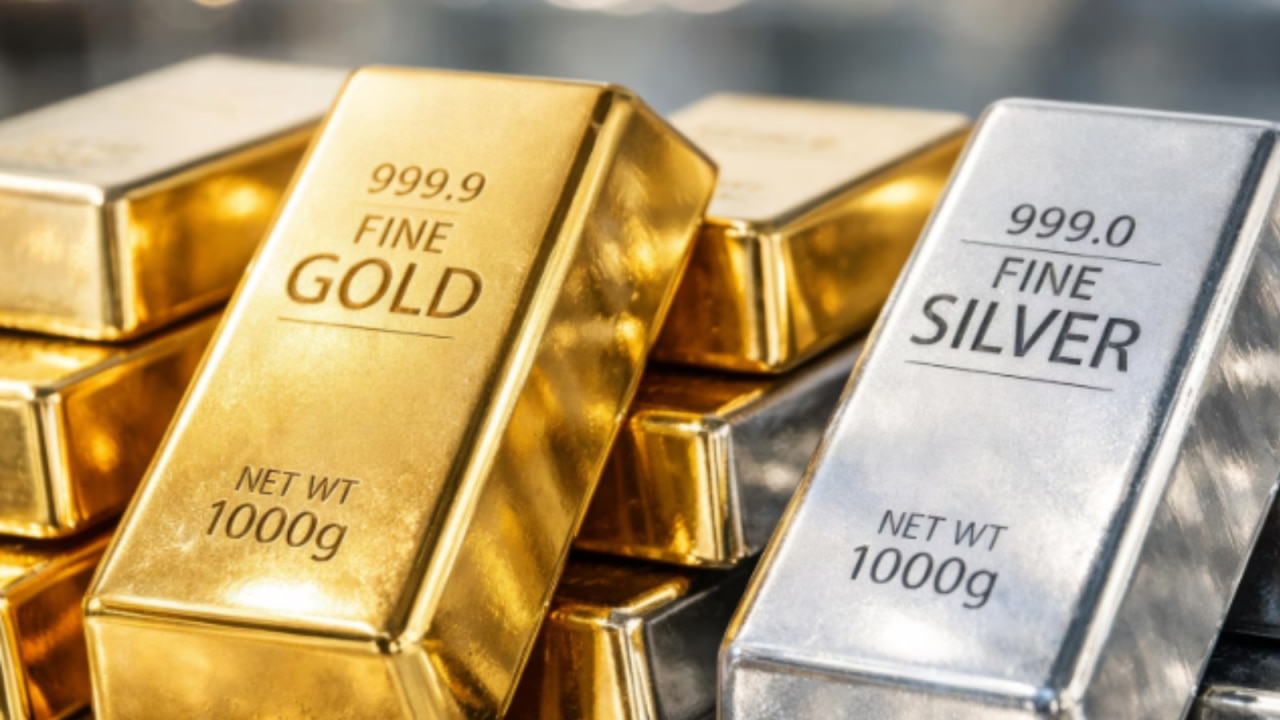
Current Snapshot: Gold and Silver Rates on October 26, 2026
The day’s trading opened with a slight but notable increase in gold prices across India. The benchmark 24-karat gold (999 pure gold) is currently quoted at Rs 14,257 per gram, while 22-karat gold (91.67% pure, preferred for jewellery) stands at Rs 13,069 per gram. This upward momentum is attributed by market analysts primarily to persistent global demand and the lingering effects of inflationary pressures worldwide.
Silver, often considered gold’s more volatile counterpart, also presents a significant market presence. As of today, October 26, 2026, the price of 999 pure silver is approximately Rs 2,19,900 per kilogram. Sterling silver (925 purity), a popular choice for intricate ornaments, is priced slightly higher at Rs 2,20,000 per kilogram. While generally more affordable than gold, silver’s dual role as an investment asset and an industrial commodity means its price trajectory is often influenced by a distinct set of factors, notably global industrial demand and technological advancements.
Understanding the Market Dynamics: A Multifaceted Influence
The daily fluctuations in India’s precious metals market are never a result of a single factor but rather a sophisticated interplay of several powerful drivers. These influences create a dynamic environment where prices can shift rapidly, demanding constant vigilance from market participants.
Global Market Trends: The Macroeconomic Undercurrent
International gold and silver prices, primarily benchmarked in U.S. Dollars, form the bedrock upon which Indian prices are built. Geopolitical stability, global economic growth forecasts, central bank monetary policies (particularly those of the U.S. Federal Reserve), and the performance of major global currencies all play critical roles. For instance, a stronger U.S. Dollar typically makes dollar-denominated gold more expensive for holders of other currencies, potentially dampening demand. Conversely, periods of global economic uncertainty or heightened geopolitical tensions often lead investors to seek safe-haven assets like gold, driving up its price. Today’s "slight increase" in gold prices, as noted in the data, likely reflects a broader global sentiment favouring gold amidst persistent inflationary concerns and perhaps a cautious global economic outlook.

Local Demand: The Cultural and Economic Pulse
India’s domestic demand for gold and silver is unparalleled globally, rooted deeply in cultural practices. The upcoming festive season, which typically commences around this time of year and extends through Diwali and beyond, is a prime example of this local influence. Weddings, religious festivals, and auspicious occasions traditionally see a surge in gold and silver purchases, irrespective of minor price fluctuations. This consistent demand acts as a crucial floor for prices and can even push them upwards during peak seasons. Furthermore, the role of gold as a traditional store of wealth and a hedge against inflation is deeply ingrained in the Indian psyche, especially in rural areas where access to formal financial instruments might be limited.
Changing Currency Rates: The USD-INR Equation
The exchange rate between the Indian Rupee (INR) and the U.S. Dollar (USD) is a pivotal determinant of local gold and silver prices. Since international prices are quoted in USD, a depreciation of the Rupee against the Dollar makes imported gold and silver more expensive in local currency terms, even if the international dollar price remains constant. Conversely, a strengthening Rupee can soften the impact of rising global prices. The Reserve Bank of India’s monetary policies, foreign exchange reserves, and capital flows all contribute to the volatility of the USD-INR exchange rate, thereby indirectly influencing precious metal costs. Today’s prices are thus a direct reflection of the prevailing exchange rate, adding another layer of complexity to price discovery.

A Look Back: Recent Market Trajectories Leading to October 2026
While today’s data presents a snapshot, it’s crucial to understand the broader context. Over the past year, leading up to October 2026, precious metals have experienced periods of both significant gains and consolidation. Gold, in particular, has seen renewed interest as central banks globally grappled with managing inflation without stifling economic growth. The aftermath of various global supply chain disruptions and energy price volatility in the preceding years had fueled inflationary pressures, compelling investors to flock towards assets perceived as reliable stores of value.
Silver’s journey has been somewhat distinct. While it benefits from its safe-haven appeal alongside gold, its industrial demand component introduces additional volatility. The global push towards green energy, advancements in electronics, and expanding medical applications have steadily increased silver’s consumption in industrial sectors. Analysts would point to a period where industrial recovery, following earlier economic slowdowns, contributed significantly to silver’s upward trajectory, sometimes outperforming gold in percentage gains due to its lower price point and higher industrial utility. The Indian market, being a major consumer, has mirrored these global trends, often amplifying them during periods of strong domestic demand. This historical context underscores the dynamic nature of these markets, where macro-economic shifts quickly translate into tangible price changes on the ground.

Detailed Price Breakdown: Gold Across India
The pan-Indian average for gold provides a general benchmark, but regional variations are a common feature of the Indian market. These differences can arise from local taxes, transportation costs, and specific regional demand patterns. On October 26, 2026, while the general trend indicates a slight increase, specific city rates offer a more granular view:
Gold Prices in Delhi: A Premium Market
Delhi, a major commercial and political hub, often exhibits slightly higher prices due to its status as a significant consumption centre.

- 24K Gold (999 pure): Rs 14,272 per gram
- 22K Gold (Jewellery Gold): Rs 13,084 per gram
The marginally higher rates in the capital city could reflect higher local demand or specific regional levies.
Gold Prices in Mumbai: The Financial Hub’s Benchmark
Mumbai, India’s financial capital and a major port city, often serves as a key reference point for national gold prices.
- 24K Gold (999 pure): Rs 14,257 per gram
- 22K Gold (Jewellery Gold): Rs 13,069 per gram
Mumbai’s prices align perfectly with the national average reported, suggesting its role in setting the benchmark.
Gold Prices in Kolkata: Eastern India’s Demand Centre
Kolkata, with its rich cultural heritage and significant demand for gold, particularly during festive occasions, shows rates identical to Mumbai.

- 24K Gold (999 pure): Rs 14,257 per gram
- 22K Gold (Jewellery Gold): Rs 13,069 per gram
This consistency across major metropolitan areas like Mumbai and Kolkata highlights the efficiency of inter-city commodity flows and harmonized market conditions.
Gold Prices in Chennai: Southern India’s Gold Capital
Chennai, the heart of South India’s bustling jewellery industry and a region with immense cultural affinity for gold, also mirrors the national average.
- 24K Gold (999 pure): Rs 14,257 per gram
- 22K Gold (Jewellery Gold): Rs 13,069 per gram
The uniformity in prices across Mumbai, Kolkata, and Chennai suggests a robust and integrated national market, where local arbitrage opportunities are quickly neutralized, leading to price convergence in major consumption zones. The slight premium in Delhi could be an outlier or indicative of specific regional factors not impacting other major metros uniformly.
Silver’s Shine: Market Overview and Rates
Silver, though often overshadowed by gold, holds significant value as both an investment vehicle and an industrial commodity. Its market dynamics are therefore influenced by a broader spectrum of factors.

Investment and Jewellery Appeal: The Traditional Role
In many parts of India, particularly in rural and semi-urban areas, silver ornaments are more prevalent than gold, owing to their affordability and traditional significance. Silver also serves as a popular investment choice, especially for those seeking to enter the precious metals market at a lower price point. Its cultural importance in various rituals and festivals further bolsters its demand.
Industrial Demand: A Modern Driver
Unlike gold, which is primarily a store of value and an adornment, a substantial portion of global silver production is consumed by industries. Its excellent electrical and thermal conductivity makes it indispensable in electronics, solar panels, medical instruments, and photography. Consequently, global economic health, technological advancements, and the expansion of sectors like renewable energy directly impact silver’s industrial demand, leading to significant price fluctuations. A robust global manufacturing sector, for instance, would typically drive up silver prices.

City-wise Silver Rates (999 purity per 10 grams)
Interestingly, the city-wise breakdown for silver on October 26, 2026, shows remarkable uniformity across the major metros, indicating a highly integrated market for the white metal.
- Silver Price in Delhi: Rs 2199 per 10 grams
- Silver Price in Mumbai: Rs 2199 per 10 grams
- Silver Price in Kolkata: Rs 2199 per 10 grams
- Silver Price in Chennai: Rs 2199 per 10 grams
This consistent pricing across key Indian cities suggests a highly efficient supply chain and uniform market conditions for 999 pure silver, perhaps even more so than gold, reflecting its industrial utility and standardized grading.

Expert Insights and Official Outlook
Market analysts and economists closely monitor precious metal movements for indicators of broader economic health and investor sentiment. Dr. Rhea Sharma, a prominent commodity market analyst based in Mumbai, commented on today’s prices: "The slight increase in gold reflects a cautious optimism in global markets, coupled with persistent inflation concerns. Investors are likely balancing growth prospects against the need for portfolio diversification and inflation hedging. For silver, while its safe-haven characteristics are important, the underlying strength comes from its burgeoning industrial applications. We expect this dual demand to keep silver prices relatively buoyant."
Regarding the currency impact, Mr. Alok Singh, an economist specializing in currency markets, noted, "The INR-USD exchange rate remains a critical factor. Any significant volatility in the Rupee, either due to global capital flows or domestic economic policy, will directly translate into changes in local precious metal prices, regardless of international dollar-denominated rates. The current stability, or lack thereof, in the Rupee has a direct bearing on today’s quoted prices."

While no specific "official responses" were immediately available from government bodies or the Reserve Bank of India concerning today’s specific price movements, their overarching stance generally emphasizes market-driven pricing. However, policy decisions related to import duties on gold and silver, often adjusted in the Union Budget, play a significant role in shaping domestic prices and controlling trade deficits. The government’s long-term objective remains to rationalize the import of precious metals while ensuring sufficient supply to meet genuine demand.
Implications for Consumers and Investors
Today’s prices carry different implications for various stakeholders:

For Consumers: Navigating Festive and Life Purchases
For Indian households, particularly with the festive season approaching, the slight increase in gold prices might prompt a recalibration of budgets. Many families consider gold purchases for weddings, festivals, and as gifts. While the increase is marginal, it adds to the overall cost, potentially leading some to opt for lighter jewellery or consider silver as an alternative, especially given its relatively stable pricing across cities. The cultural significance of these metals ensures that demand will remain robust, but price sensitivity will always play a role in purchasing decisions.
For Investors: A Diversification Strategy
For investors, gold and silver continue to serve as crucial components of a diversified portfolio. In an environment marked by global economic uncertainties and inflationary pressures, precious metals are seen as a hedge against volatility in equity markets and currency depreciation. Today’s prices reinforce their role as safe-haven assets. Investors might consider various avenues, including physical gold (bullion, coins), digital gold, Gold Exchange Traded Funds (ETFs), and Sovereign Gold Bonds (SGBs), each offering different risk-reward profiles and liquidity. The uniformity in silver prices across cities also makes it an attractive, transparent investment option.

For Jewelers and Traders: Managing Inventory and Margins
The jewellery industry, a significant employer and economic contributor in India, is highly sensitive to price fluctuations. Jewelers must constantly manage their inventory, hedge against price risks, and adapt their pricing strategies. Stable or slightly increasing prices, as seen today, can offer some predictability, but sharp movements can impact profit margins and consumer demand. The slight variations in city-wise prices also necessitate careful sourcing and pricing strategies for multi-city retailers.
The Cultural and Economic Significance of Precious Metals in India
The deep-seated connection between Indians and precious metals is unparalleled. Gold, in particular, is not merely a commodity; it is an embodiment of wealth, prosperity, and social status. It is a fundamental part of a bride’s trousseau, a blessing for newborns, and an essential element in religious ceremonies. This cultural integration ensures a baseline demand that often defies purely economic logic, making the Indian market unique.

Economically, the precious metals sector contributes significantly to India’s GDP, through mining (though limited), refining, manufacturing, and retail. It supports millions of livelihoods directly and indirectly. However, the high import dependence for gold and silver also poses a challenge for India’s balance of payments, often leading to policy interventions like import duties. The government has also promoted initiatives like the Gold Monetisation Scheme to mobilize idle gold held by households and institutions, aiming to reduce import dependence and channel this wealth into productive assets.
Navigating the Future: Outlook for Gold and Silver
Looking ahead, the trajectory of gold and silver prices in India will continue to be shaped by a confluence of global and domestic factors. International economic data, central bank policies regarding interest rates and quantitative easing, and geopolitical developments will dictate global sentiment towards safe-haven assets. Domestically, the strength of the Rupee, the intensity of festive demand, and evolving government policies on precious metal imports and trade will be crucial.

Analysts suggest that gold is likely to maintain its upward bias as long as inflationary concerns persist globally, and interest rates, while rising, do not significantly increase the opportunity cost of holding non-yielding assets. Silver’s future appears bright given the accelerating global shift towards sustainable technologies and expanding industrial applications. Its relatively lower price point also offers higher leverage for investors seeking greater percentage gains.
For Indian consumers and investors, staying informed about these multifaceted influences is paramount. The precious metals market, while rooted in tradition, is undeniably dynamic, reflecting the pulse of both the global economy and India’s unique socio-economic fabric. Today’s prices on October 26, 2026, serve as a timely reminder of this intricate balance.