BUSINESS
October 23, 2026 – The global economy finds itself teetering on the edge of a significant energy crisis, with Brent crude oil prices surging to an alarming $115 per barrel on Friday. This dramatic escalation, triggered by a confluence of geopolitical flashpoints, casts a long shadow over major oil-importing nations, none more vulnerable than India. Experts are now scrambling to assess the potential fallout, predicting severe repercussions for the Indian economy, including a sharp rise in domestic fuel prices, a weakening rupee, surging inflation, and a significant hit to GDP growth. The nation, heavily reliant on imported crude, faces a precarious balancing act between economic stability and burgeoning energy costs.
Main Facts: Global Oil Markets Brace for Impact as Brent Crude Soars
The international oil market is experiencing unprecedented volatility, driven primarily by escalating tensions in key oil-producing regions. On Friday, October 23, 2026, Brent crude oil futures, the global benchmark, climbed to $115 per barrel, marking a substantial increase and nearing its highest level in five weeks. This surge is a direct consequence of a series of destabilizing events that have underscored the fragility of global oil supply chains.
The immediate catalyst for the latest price hike was a series of audacious attacks by Yemen’s Houthi rebels on critical oil infrastructure in Saudi Arabia. These strikes, targeting both oil refineries and airports, including the Shaybah oilfield and the Red Sea port of Yanbu, ignited fears of widespread supply disruptions from the world’s largest crude exporter. While operations at the Shaybah oilfield reportedly continued despite a drone attack, the incident starkly highlighted the vulnerability of Saudi Arabian oil facilities, sending a potent signal of risk across the market.

Further complicating the geopolitical landscape are the simmering tensions between the United States and Iran. US President Donald Trump’s recent threats of resuming attacks on Iran after the upcoming midterm elections on November 3, 2026, have injected a profound layer of uncertainty into the Middle Eastern energy equation. This follows an already tense period, with a ‘US-Iran war’ having commenced on February 28, 2026, according to earlier reports, significantly impacting global oil dynamics. Simultaneously, the ongoing conflict in Europe, marked by Ukraine’s intensified attacks on Russian oil refineries, has further tightened global supply and exacerbated market anxieties. For India, a nation that imports approximately 88% of its fuel requirements, these global developments translate into an immediate and acute economic threat.
Chronology of Escalation: A Volatile Week for Global Oil
The current spike in crude prices is not an isolated event but rather the culmination of a rapidly unfolding series of geopolitical developments over recent weeks and months. Understanding this chronology is crucial to grasping the gravity of the situation.

The year 2026 has been marked by heightened geopolitical instability that has consistently put upward pressure on oil prices. The narrative of a "US-Iran war" beginning on February 28, 2026, set an early tone of volatility, introducing significant risk premiums into crude oil futures. This underlying tension has been a constant factor, making the market susceptible to sudden shocks.
The recent days, however, have seen a dramatic acceleration of these pressures. Earlier this week, Houthi militants, backed by Iran, claimed responsibility for a series of deadly strikes against key Saudi Arabian infrastructure. These included drone attacks on the Shaybah oilfield, a crucial component of Saudi Aramco’s operations, and the Red Sea port of Yanbu, a vital export terminal. These actions, characterized by the Houthis as responses to the ongoing conflict in Yemen, directly impacted investor confidence, signaling that even the most secure oil-producing regions are not immune to disruption.

On Friday, October 23, 2026, the market reacted sharply to these developments. Brent crude oil, which had already seen significant gains, surged to $114.50 per barrel at the time of writing this story, briefly touching $115 earlier in the day. This represented a substantial leap beyond the $100 psychological barrier, reflecting the market’s deep-seated concerns about supply security. The situation was further exacerbated by US President Donald Trump’s ominous warning regarding potential military action against Iran post the November 3, 2026, midterm elections. Such threats, combined with increased Houthi activity, significantly heightened apprehension about similar attacks on other critical oil refineries and stockpiles across the Middle East.
Adding another layer of complexity, the European theatre continues to contribute to global energy instability. Ukraine’s sustained and intensified attacks on oil refineries within Russian territory have further tightened global refined product supplies, thereby indirectly supporting crude oil prices. This multi-front assault on energy infrastructure—from the Middle East to Eastern Europe—has created a perfect storm, pushing Brent crude to levels that threaten to derail global economic recovery.

Supporting Data: India’s Precarious Position in the Global Oil Maze
India’s economic vulnerability to surging crude oil prices is not merely theoretical; it is deeply embedded in its energy consumption patterns and trade balances. The supporting data paints a stark picture of a nation caught between its rapidly growing energy demands and its limited domestic resources.
Deep Dive into India’s Import Dependency
India stands as the world’s third-largest consumer and importer of crude oil, a position that places it at the mercy of international price fluctuations and geopolitical instabilities. The nation imports an astonishing 88% of its total crude oil requirement. This colossal dependency means that every dollar increase in the price of a barrel of crude has a direct and significant impact on India’s national finances and economic stability.

A critical aspect of this dependency is the geographical concentration of its imports. Approximately 40% of India’s crude oil imports transit through the Strait of Hormuz, a narrow yet strategically vital waterway connecting the Persian Gulf to the open ocean. This choke point is notoriously susceptible to geopolitical tensions, making India’s supply lines inherently vulnerable to any conflict or disruption in the Middle East. Any blockage or severe disruption in the Strait of Hormuz, as might occur in a full-fledged US-Iran conflict, would not only lead to exorbitant price spikes but could also severely impede the physical flow of oil to India, posing an existential threat to its energy security.
Soaring Import Bills
The financial strain on India due to its oil imports has been escalating rapidly. The first half of the financial year 2026-27 has witnessed an alarming surge in the country’s crude import bill. India paid a staggering $90.6 billion for crude imports during this period, a sharp increase from $61.9 billion in the corresponding period of the previous year. This 46% year-on-year jump underscores the severe impact of rising global crude prices on the nation’s balance sheet.

Such an exponential increase in the import bill directly drains the country’s foreign exchange reserves, exerting immense pressure on the rupee and widening the current account deficit. It also diverts crucial financial resources that could otherwise be allocated to domestic development projects, infrastructure, or social welfare programs. The sustainability of such an escalating import burden becomes questionable, especially when global prices remain stubbornly high.
The Rupee Under Siege
The Indian Rupee (INR) is already under considerable pressure, and rising crude oil prices are only exacerbating its woes. On Friday, October 23, 2026, the US Dollar (USD) was trading at Rs 94.79, reflecting a significant depreciation of the Indian currency. Analysts are now expressing grave concerns that if Brent crude prices continue their upward trajectory and touch $120 per barrel, the rupee could breach the psychological barrier of 100 against the dollar within a few months.

The mechanism is straightforward: a higher crude import bill necessitates a greater demand for US dollars to settle these payments. This increased demand for dollars, coupled with potential outflows of foreign institutional investment (FII) in response to economic uncertainty, weakens the rupee. A depreciating rupee, in turn, makes imports even more expensive, creating a vicious cycle that fuels inflation and further strains India’s current account. This currency depreciation also impacts Indian companies with foreign debt, increasing their repayment burdens and potentially affecting their profitability and investment capacity.
Official Responses and Policy Dilemmas
The Indian government and its central bank, the Reserve Bank of India (RBI), are facing a formidable challenge in mitigating the economic fallout from soaring crude prices. Their responses involve a delicate balancing act between managing inflation, protecting consumers, and maintaining fiscal and monetary stability.

Oil Marketing Companies (OMCs) on the Frontline
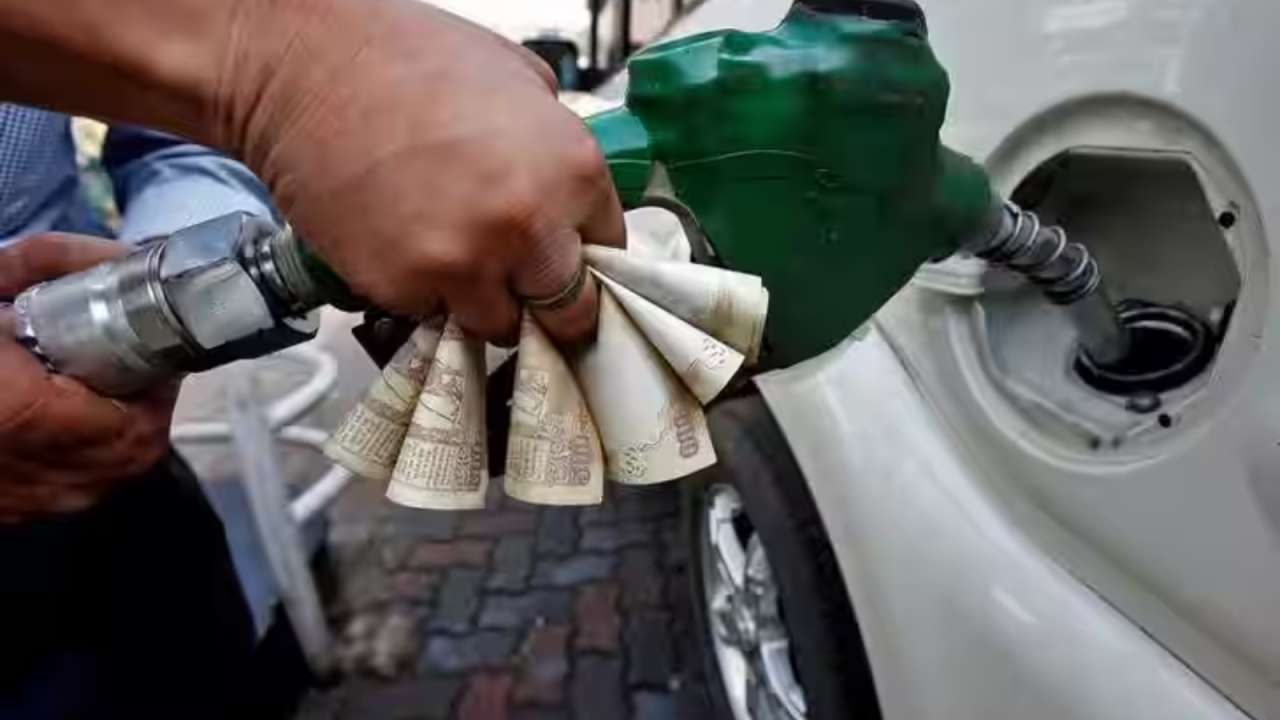
In India, the prices of key petroleum products like petrol, diesel, kerosene, Aviation Turbine Fuel (ATF), and Liquefied Petroleum Gas (LPG) are not entirely market-driven. Government-controlled Oil Marketing Companies (OMCs) such as Indian Oil, BPCL, and HPCL play a crucial role in their distribution and pricing. Historically, OMCs have absorbed a significant portion of the international price increases to shield consumers from immediate shocks. However, this absorption capacity has its limits.
The original article notes that OMCs have already increased prices "many times in a few months," indicating that their ability to continue subsidizing is diminishing. Should crude prices remain elevated or rise further, these companies will eventually be compelled to hike domestic retail prices of petrol, diesel, and LPG. This decision is always politically sensitive, as fuel price hikes directly impact household budgets and transportation costs, triggering widespread public discontent and contributing to inflationary pressures. The government’s dilemma lies in balancing the financial health of OMCs, which can incur massive losses if they continuously sell below cost, against the imperative of controlling inflation and maintaining public welfare.

Reserve Bank of India (RBI) Interventions
The Reserve Bank of India (RBI) is the primary guardian of monetary stability and is tasked with managing inflation and supporting the rupee. In the face of rising crude prices and a weakening currency, the RBI’s role becomes even more critical. The central bank has already been "tightening the economy," likely through measures such as interest rate hikes and liquidity management to curb inflationary expectations and stabilize the rupee.
To defend the rupee, the RBI may resort to intervening in the foreign exchange market, selling US dollars from its reserves to increase dollar supply and thus support the local currency. However, such interventions are costly and can deplete precious foreign exchange reserves if sustained over a long period. The current account deficit (CAD) is a key concern for the RBI. According to the central bank, India’s CAD stood at $4.2 billion, or 0.5% of GDP, for the first quarter of fiscal year 2026-27. A widening CAD, exacerbated by higher oil import bills, puts further pressure on the rupee and overall economic stability, necessitating proactive monetary policy responses.

Government’s Fiscal Challenges
Beyond the OMCs and RBI, the central government faces significant fiscal challenges. Excise duties on petrol and diesel are a major source of revenue for the government. If international crude prices necessitate lower retail prices or higher subsidies to protect consumers, the government might have to reduce these duties, leading to a direct hit on its revenue targets. Alternatively, if prices are passed on, it fuels inflation, which can dampen economic activity and consumer demand, indirectly affecting tax collections.
The balancing act involves navigating the trade-off between fiscal prudence and economic stimulus. Increased subsidies for LPG or other essential commodities to cushion the impact of higher crude prices would inflate the fiscal deficit, potentially leading to higher government borrowing and crowding out private investment. The government’s ability to maintain its fiscal deficit targets will be severely tested in this environment of elevated crude prices and geopolitical uncertainty.

Far-Reaching Implications: A Ripple Effect Across the Indian Economy
The repercussions of sustained high crude oil prices extend far beyond immediate fuel costs and government budgets. They permeate every layer of the Indian economy, creating a ripple effect that can significantly derail growth, inflate costs, and erode purchasing power.
Inflationary Pressures
One of the most immediate and tangible impacts of rising crude prices is on inflation. A rough estimate suggests that an increase of $10 per barrel in crude prices can escalate India’s inflation by approximately 30 to 50 basis points (0.3% to 0.5%). This is a conservative estimate, as the actual impact can be far greater due to indirect effects.

Direct Impact: Higher prices for petrol, diesel, and LPG directly translate into increased transportation costs for goods and services. This hike is then passed on to consumers, leading to higher prices for everything from food to manufactured goods.
Indirect Impact: Diesel is a primary fuel for agriculture (tractors, irrigation pumps) and freight transport. Higher diesel prices mean increased input costs for farmers, potentially leading to higher food prices. Similarly, manufacturing industries, which rely on energy for production and logistics, face higher operational costs, forcing them to raise product prices. This generalized increase in prices reduces the purchasing power of households, particularly those in lower-income brackets, and can lead to a slowdown in consumer demand.
Current Account Deficit (CAD) Widening
As discussed, a higher crude import bill necessitates more foreign exchange, specifically US dollars, to settle these transactions. This increased demand for dollars, combined with a weakening rupee, directly contributes to a widening Current Account Deficit (CAD). A rough estimate from the original article places India’s Q1 FY26-27 CAD at $4.2 billion, or 0.5% of GDP. However, sustained high crude prices could push this figure significantly higher.

A persistently wide CAD is a major concern for macroeconomic stability. It signals that the country is importing more than it is exporting, financed by drawing down foreign exchange reserves or attracting foreign capital. If the CAD widens excessively, it can spook foreign investors, leading to capital outflows, further currency depreciation, and increased vulnerability to external shocks. It also indicates a fundamental imbalance in the economy’s external sector.
GDP Growth Under Threat
The impact of soaring crude prices on India’s Gross Domestic Product (GDP) growth rate is multifaceted and unequivocally negative. A general consensus among economists is that an increase of $10 per barrel in crude prices can hit the Indian economy by about $12 billion to $15 billion, translating to approximately 0.4% to 0.5% of GDP.

Reduced Consumer Spending: Higher inflation erodes disposable income, leading to reduced consumer spending, which is a major driver of India’s economic growth.
Lower Industrial Output: Industries face higher input costs (energy, raw materials due to transportation), leading to reduced profit margins. This can deter new investments, reduce production, and potentially lead to job losses.
Increased Interest Rates: To combat inflation, the RBI might be forced to raise interest rates, which increases borrowing costs for businesses and individuals, further dampening investment and consumption.
Government Fiscal Constraints: As discussed, the government’s ability to invest in infrastructure or provide fiscal stimulus might be curtailed due to higher subsidy burdens or lower tax revenues. All these factors collectively contribute to a slowdown in overall economic activity and a lower GDP growth rate.
Export Competitiveness Erosion
India’s export sector, already grappling with global economic slowdowns and specific challenges like the "US tariff war" mentioned in the article, faces additional headwinds from elevated crude prices. Higher domestic energy costs make Indian manufactured goods more expensive to produce. This reduces their price competitiveness in international markets, making it harder for Indian exporters to compete with countries that might have lower energy costs or more stable currencies.

Furthermore, a global economic slowdown caused by high oil prices can depress demand for Indian exports. The combination of reduced competitiveness and weaker global demand creates a challenging environment for export-oriented industries, impacting foreign exchange earnings and exacerbating the current account deficit.
The Geopolitical Wildcard: The US-Iran Factor
The most ominous implication stems from the potential for a full-fledged US-Iran war, as hinted by President Trump’s threats post-November 3, 2026, midterm elections. This scenario represents a "double whammy" for India, escalating the current crisis into a potential catastrophe.

Strait of Hormuz Blockade: A major conflict in the Persian Gulf could lead to the blocking or severe disruption of the Strait of Hormuz. As 40% of India’s crude imports pass through this strait, such an event would not only cause crude prices to soar to unprecedented heights (potentially well over $200-$300 per barrel) but also physically restrict the flow of oil, threatening India’s energy security and industrial operations.
Exorbitant Fuel Bill & Inflation: The fuel bill would skyrocket, making the current $90.6 billion for H1 FY26-27 seem modest. Inflation would spiral out of control, likely entering double digits, severely eroding purchasing power and leading to social unrest.
Rupee Collapse & Widening CAD: The rupee could experience a freefall, and the current account deficit would widen to unsustainable levels, potentially triggering a balance of payments crisis.
GDP Contraction: The cumulative impact of these factors would almost certainly lead to a sharp contraction in GDP, pushing the economy into a deep recession. The RBI’s efforts to "tighten the economy" would prove woefully inadequate against such a monumental external shock. This scenario underscores the fragility of India’s economic position amidst global geopolitical instabilities.
Looking Ahead: Navigating the Turbulent Waters
The current surge in Brent crude prices to $115 per barrel, driven by a complex interplay of Houthi attacks, US-Iran tensions, and the Ukraine-Russia conflict, presents a formidable challenge to the Indian economy. The immediate future appears fraught with risks: potential hikes in domestic fuel prices, a depreciating rupee, escalating inflation, a widening current account deficit, and a significant dampening of GDP growth.

India’s heavy reliance on imported crude, coupled with the strategic vulnerability of its supply routes, necessitates a multi-pronged approach to navigate these turbulent waters. While immediate measures by the RBI and OMCs are crucial for short-term stability, the long-term imperative for India lies in enhancing its energy security. This includes diversifying its energy basket by aggressively investing in renewable energy sources, expanding strategic petroleum reserves, and exploring diplomatic avenues to stabilize global oil markets and secure its supply lines.
The current crisis serves as a stark reminder that in an increasingly interconnected and volatile world, economic stability is inextricably linked to geopolitical peace and energy security. How India manages these pressures in the coming months will be a true test of its economic resilience and policy foresight.