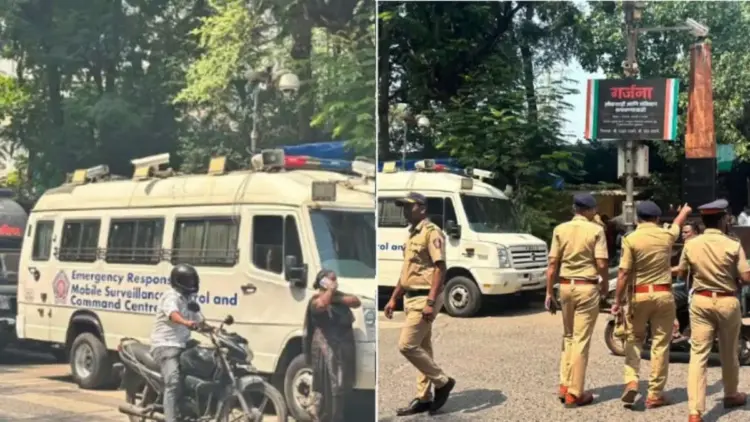
MUMBAI, October 2, 2026 – Mumbai’s iconic Shivaji Park has been enveloped in an unprecedented security blanket today, transforming the sprawling grounds and its surrounding areas into a veritable fortress. The massive deployment of police and paramilitary forces comes in response to a planned "jail-bharo" (fill the jails) protest by the civic rights organization, Citizens for Justice and Peace (CJP), which authorities have explicitly stated is unpermitted. The city is bracing for a tense standoff as the CJP vows to proceed with its demonstration, challenging the state’s efforts to maintain public order.
The pre-dawn hours saw the strategic positioning of thousands of police personnel, including specialized anti-riot squads, Quick Response Teams (QRT), and canine units. Barricades have been erected at all major entry points, and the entire perimeter of Shivaji Park has been cordoned off, effectively sealing it from public access. The situation has raised concerns among local residents and commuters, who face significant disruptions, and ignited a broader debate on the fundamental right to protest versus the state’s prerogative to ensure peace and stability.
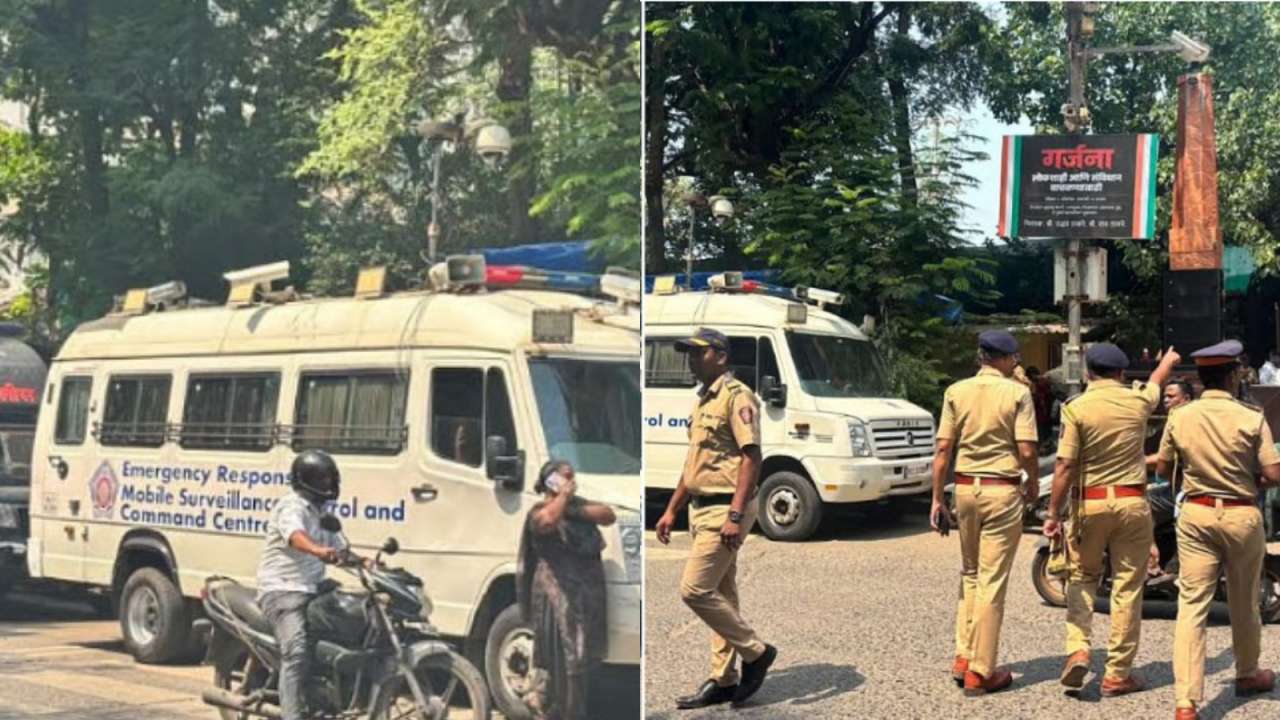
A City on Edge: Main Facts of the Standoff
The core of the unfolding drama at Shivaji Park revolves around a planned "jail-bharo" protest organized by the Citizens for Justice and Peace (CJP). This civil disobedience movement, scheduled for today, October 2, 2026, aims to draw attention to what the organization describes as "eroding civic liberties and the increasing suppression of dissenting voices" in the state. While the specific grievances articulated by CJP remain a subject of intense public discourse, their chosen method of protest – inviting mass arrests – signals a deliberate challenge to governmental authority.
In stark contrast to CJP’s intentions, the Mumbai Police have unequivocally declared the gathering illegal, citing the absence of necessary permissions. This declaration has paved the way for a comprehensive and visibly overwhelming security operation. Heavy security deployments commenced late Thursday evening and intensified through the night, covering not just the park itself but also key arterial roads and residential pockets surrounding it. The objective, as articulated by senior police officials, is to prevent any unauthorized assembly, maintain law and order, and avert potential disruptions to public life.
The visible security measures include the strategic placement of anti-riot squads equipped with non-lethal crowd control gear, the readiness of Quick Response Teams for rapid intervention, and the deployment of specialized dog squads to detect suspicious activities. Furthermore, plainclothes police personnel are actively monitoring the ground and mingling with the public to gather intelligence. Social media channels are also under continuous surveillance to track mobilization efforts, counter misinformation, and identify potential instigators. The sheer scale of the deployment underscores the authorities’ determination to prevent the protest from escalating into a major law and order challenge, setting the stage for a critical day in Mumbai’s recent history.
Chronology of Escalation: From Announcement to Containment
The current security clampdown at Shivaji Park is the culmination of a rapidly evolving situation that began weeks ago with the CJP’s initial announcement of their "jail-bharo" protest.

Mid-September 2026: CJP’s Call to Action
The Citizens for Justice and Peace (CJP), a prominent civic rights advocacy group known for its campaigns on issues of governance, human rights, and social justice, first announced its intention to hold a "jail-bharo" protest in mid-September. Through press conferences, social media campaigns, and internal communications, the organization urged its members and sympathetic citizens to gather at Shivaji Park on October 2nd. The stated aim was to protest against what they termed "draconian laws" and "undemocratic practices" that they claim are stifling fundamental rights. While specific legislative actions were hinted at, CJP largely maintained a broad critique of the current political climate, appealing to a wide spectrum of disaffected citizens. The choice of Shivaji Park, a historically significant venue for public gatherings and political rallies, was a deliberate one, intended to maximize visibility and symbolic impact.
Late September 2026: Police Deny Permission and Issue Warnings
Upon receiving formal applications for permission from CJP, the Mumbai Police, after due deliberation and assessment of intelligence reports, formally denied permission for the protest in the last week of September. Police authorities cited concerns over potential public disorder, traffic congestion, and the general safety of citizens, especially given the "jail-bharo" nature of the planned demonstration. Public advisories were subsequently issued, warning citizens against participating in any unpermitted assembly and reminding them of the legal consequences of defying prohibitory orders. These warnings were disseminated through official police channels, local media, and social media platforms.

October 1, 2026 (Thursday Evening): Initial Security Deployment and Senior Officer Inspection
As the date of the proposed protest drew closer, intelligence inputs suggested that CJP remained resolute in its plan, despite the police denial. Responding to this, security preparations began in earnest on Thursday evening, October 1st. Senior police officers, including the Commissioner of Police and other high-ranking officials from zonal commands, conducted a thorough inspection of Shivaji Park and its adjacent areas. Their assessment focused on identifying sensitive points, potential routes for protesters, and optimal locations for deploying personnel and equipment. This inspection directly preceded the initial deployment of barricades and the positioning of preliminary police contingents around the park’s perimeter. Traffic diversions were also mapped out, and local residents were informed of impending restrictions.
October 2, 2026 (Friday Morning): Full-Scale Security Mobilization
The early hours of Friday, October 2nd, witnessed the full-scale activation of the security plan. Thousands of police personnel, drawn from various units across the city, converged on Shivaji Park. The main entrance to the park was sealed, and a complex network of nearly a dozen multi-layered barricades was erected, creating an impenetrable barrier. The entire area surrounding the ground was systematically cordoned off, with checkpoints established at all access points. Anti-riot squads, QRT units, and dog squads were strategically positioned, ready to respond to any eventuality. Simultaneously, plainclothes officers were deployed to monitor the situation discreetly, and an advanced control room was activated to centralize surveillance and coordination efforts. The sheer magnitude of the security presence signaled the authorities’ zero-tolerance stance towards any unauthorized assembly, effectively transforming the public park into a heavily fortified zone by dawn.

Supporting Data: Contextualizing the Clampdown
The extraordinary security measures at Shivaji Park are not isolated but rather deeply rooted in the historical, legal, and operational realities of Mumbai and its policing. Understanding these layers provides crucial context to the current situation.
The Significance of Shivaji Park:
Shivaji Park is not merely a public ground; it is a crucible of Mumbai’s political and social history. Named after the revered Maratha warrior king Chhatrapati Shivaji, it has long served as an iconic venue for major political rallies, cultural events, and social gatherings. From the birth of Shiv Sena to countless independence-era movements and modern-day protests, the park holds immense symbolic weight. Its open expanse makes it a natural gathering point for large crowds, but its proximity to dense residential areas also makes it a logistical challenge for maintaining order. Any major event here inevitably impacts thousands of local residents, businesses, and daily commuters, amplifying the stakes for both protesters and authorities. The choice of Shivaji Park by CJP was undoubtedly aimed at leveraging this historical resonance and visibility.

CJP: A Profile of Advocacy:
While the specific demands for this protest are kept somewhat general in the original snippet, the Citizens for Justice and Peace (CJP) can be understood as a prominent civic rights organization. Such groups typically advocate for human rights, constitutional liberties, transparency in governance, and social justice. Their activities often involve public awareness campaigns, legal interventions, and peaceful demonstrations. A "jail-bharo" protest is a specific form of civil disobedience where participants voluntarily offer themselves for arrest to highlight the perceived injustice of a law or policy. It is a powerful, non-violent tactic designed to overwhelm the justice system and draw national attention to a cause, often employed when other forms of protest have yielded no results. For CJP to resort to such a measure indicates a deep-seated grievance and a strong commitment to their cause, irrespective of the legal ramifications.
Legal Framework for Public Gatherings in Mumbai:
The legality of public gatherings in Mumbai is governed primarily by the Mumbai Police Act and Section 144 of the Criminal Procedure Code (CrPC). The Mumbai Police Act mandates that organizers obtain prior permission for any public assembly, procession, or demonstration to ensure public safety, manage traffic, and prevent disturbances. Section 144 CrPC empowers executive magistrates to issue orders prohibiting the assembly of four or more people in an area if there is an apprehension of obstruction, annoyance, or danger to human life, health, or safety, or a disturbance of the public tranquility. When permission is denied, any attempt to gather constitutes an unlawful assembly, making participants liable for arrest and prosecution. The police stance on the CJP protest being "unpermitted" directly invokes these legal provisions, providing the legal basis for the extensive security deployment and potential arrests.

Specialized Security Assets and Their Roles:
The mention of the anti-riot squad, Quick Response Team (QRT), and dog squad highlights the multi-faceted approach to crowd management and security.
- Anti-Riot Squads: These units are specifically trained and equipped to handle large, potentially volatile crowds. They carry non-lethal weapons such as lathis, tear gas, and shields, and their primary objective is to disperse crowds without causing serious injury, while also protecting police personnel. Their presence serves as a deterrent and a readiness for any escalation.
- Quick Response Teams (QRT): QRTs are elite units designed for rapid deployment in high-threat situations. They are heavily armed and trained for counter-terrorism, hostage situations, and immediate response to serious law and order breaches. Their presence underscores the police’s assessment of a potentially high-risk scenario and their preparedness for any contingency beyond standard crowd control.
- Dog Squads: Police dogs are utilized for various purposes, including detecting explosives, narcotics, and tracking individuals. In a protest scenario, they can also be used for crowd control, acting as a psychological deterrent, and for searching premises for suspicious objects or individuals. Their deployment signifies a comprehensive security scan of the protest area.
- Plainclothes Personnel: The deployment of officers in civilian attire is a standard intelligence-gathering tactic. These personnel blend into the crowd, monitor activities, identify potential instigators, and gather real-time information that can inform operational decisions. This covert surveillance complements the overt display of force, providing a more nuanced understanding of the ground situation.
Impact on Local Life and Surveillance:
The cordoning off of Shivaji Park and surrounding areas inevitably leads to significant disruption. Local residents face restricted movement, traffic diversions cause delays, and businesses in the vicinity may experience a downturn due to reduced footfall. The monitoring of social media posts, while a common police practice, also raises questions about privacy and freedom of expression. Authorities analyze these platforms to track mobilization, gauge sentiment, and identify individuals or groups attempting to incite violence or coordinate unlawful assemblies. This digital surveillance is a critical component of modern policing strategies for managing large-scale public events.

Official Responses: Voices from the Frontline and Beyond
The unfolding situation at Shivaji Park has elicited strong responses from various stakeholders, primarily the Mumbai Police, but also drawing reactions from local residents and implicitly, the protest organizers.
Mumbai Police’s Unwavering Stance:
A senior Mumbai Police official, speaking on condition of anonymity due due to the sensitive nature of ongoing operations, reiterated the department’s firm position. "The gathering proposed by the CJP at Shivaji Park has not been granted any official permission," the official stated emphatically. "Our primary mandate is to ensure the safety and security of all citizens and to uphold law and order. Any attempt to form an unlawful assembly will be met with appropriate legal action. We urge all individuals to respect the prohibitory orders in place and refrain from participating in this unpermitted protest."

Earlier, during his inspection on Thursday evening, the Commissioner of Police, while addressing reporters briefly, emphasized the preparedness of the force. "We have assessed the situation thoroughly," the Commissioner said. "All necessary personnel and resources have been mobilized. We are prepared to deal with any scale of crowd and ensure that peace is maintained. Our officers are on high alert, and we have contingency plans in place for various scenarios. The goal is to prevent any disruption to public life and ensure the safety of our citizens." This official narrative consistently stressed the preventative nature of the deployment and the commitment to public safety.
CJP’s Defiant Voice (Inferred):
While the original article does not provide direct quotes from CJP, their decision to proceed with a "jail-bharo" protest despite police denial speaks volumes. A spokesperson for the CJP, in a statement released earlier in the week, likely emphasized their constitutional right to peaceful assembly and protest. They would have argued that the denial of permission was an attempt to stifle dissent and that their movement was a necessary expression of public grievances. The "jail-bharo" tactic itself is a deliberate challenge to authority, signaling their willingness to face arrest as a testament to their conviction and to highlight what they perceive as the state’s heavy-handedness. Their narrative would focus on the democratic right to voice opposition and the importance of civic action in a vibrant democracy.

Local Residents’ Mixed Reactions:
The increased security has inevitably impacted the daily lives of residents surrounding Shivaji Park. One local resident, quoted in the original report, expressed a mix of surprise and concern. "We are not protesting. We are residents of Shivaji Park, and we are just taking a round of the area. There is such a large crowd here and so many police personnel, and a stage has been set up there…" This sentiment encapsulates the disruption and the palpable tension in the neighborhood. Other residents, who wished not to be named, voiced frustration over restricted access to their homes and businesses. "It’s like a war zone," remarked a shop owner near the park. "Our customers can’t get through, and we’re losing business. While we understand the need for security, this level of disruption is unbearable." Conversely, some residents expressed relief at the police presence, hoping it would prevent any untoward incidents. "It’s better to be safe," commented an elderly resident, "especially if there’s a large, unpermitted gathering. We just want peace."
Government’s Implicit Backing:
While direct statements from the state government might be pending, the scale and coordination of the police operation strongly suggest implicit, if not explicit, backing from political authorities. The deployment of such extensive resources would typically require high-level approval, indicating the government’s resolve to maintain order and prevent any perceived challenge to its authority. This approach aligns with a broader policy of ensuring stability, particularly in a major metropolitan hub like Mumbai.

Implications: Beyond the Barricades
The unfolding situation at Shivaji Park carries significant implications, not just for the immediate outcome of the protest but also for the broader landscape of civic activism, public order, and political discourse in Mumbai and potentially across the nation.
Immediate Outcomes and Potential Scenarios:
The most immediate implication hinges on the actual turnout of protesters. If CJP members and supporters attempt to gather in significant numbers, despite the heavy police presence, several scenarios could unfold:

- Mass Arrests: Given the "jail-bharo" nature of the protest and the police’s unyielding stance, mass arrests are highly probable. This would test the capacity of the city’s legal and correctional systems and could generate powerful imagery for CJP’s cause.
- Peaceful Dispersal: Police might employ non-lethal crowd control measures to disperse smaller groups attempting to converge, aiming for a peaceful resolution without large-scale arrests or confrontations.
- Standoff and Negotiation: A prolonged standoff could ensue, potentially leading to last-minute negotiations between CJP leaders and police officials to de-escalate the situation, though the "unpermitted" status makes this challenging.
- Clashes: In the worst-case scenario, if protesters defy orders and police actions are perceived as excessive, there is a risk of clashes, though both sides would likely seek to avoid this.
Impact on Public Life and Economy:
Beyond the immediate protest site, the security clampdown will have a cascading effect on Mumbai’s daily rhythm. Traffic diversions will cause widespread congestion, affecting commuters and public transport. Local businesses in the Shivaji Park vicinity, already struggling with restrictions, will face further economic setbacks. Essential services might also experience delays, leading to public inconvenience and frustration. The city’s reputation as a stable financial hub could also face scrutiny, particularly if the situation escalates.
The Future of Civic Activism:
This incident sets a significant precedent for the future of civic activism in Mumbai. The heavy-handed police response to an unpermitted protest, even if aimed at maintaining order, could be interpreted by activists as a strong message against dissent. This might either deter future large-scale protests or force activist groups to innovate their strategies, perhaps moving towards smaller, more decentralized forms of resistance, or increasingly relying on digital platforms. Conversely, it could galvanize public support for groups like CJP, drawing more individuals into the fold who feel their right to protest is being curtailed.

Debate on Freedom of Assembly vs. Public Order:
The confrontation at Shivaji Park reignites the perennial debate between the fundamental right to freedom of assembly and expression, guaranteed by the Indian Constitution, and the state’s imperative to maintain public order and prevent chaos. While authorities emphasize public safety and adherence to legal procedures, civil rights advocates argue that denial of permission and overwhelming security can stifle legitimate dissent. This incident will likely fuel discussions in legal circles, media, and civil society about the balance between these two crucial aspects of a democratic society.
Political Ramifications:
The state government’s handling of the protest will undoubtedly have political ramifications. A successful, peaceful containment might be lauded as effective governance, while any misstep or perceived heavy-handedness could draw criticism from opposition parties and human rights organizations. The CJP protest, depending on its outcome, could become a significant talking point in upcoming local or state elections, highlighting issues of governance, civil liberties, and the administration’s approach to dissent.

Long-Term Trust and Dialogue:
Ultimately, the incident could impact the long-term relationship between citizens, civic organizations, and law enforcement. A lack of dialogue and persistent confrontation can erode trust. For a healthy democracy, channels for peaceful protest and constructive engagement are vital. The events at Shivaji Park on October 2, 2026, will serve as a critical case study in how one of India’s most vibrant cities navigates the complex terrain of public dissent and state control, shaping future interactions for years to come.