

Introduction: A Strategic Pivot Toward Mass-Market Utility

Simple Energy, the Bengaluru-based electric vehicle (EV) manufacturer that first made headlines with its high-performance Simple One, has officially announced its most significant portfolio expansion to date. The company has launched the "Simple Wave," a new family-oriented electric scooter designed to bridge the gap between high-end performance and everyday practicality. With a starting price of Rs 1,09,999 (ex-showroom), the Simple Wave represents a calculated move by the company to capture a larger share of the Indian two-wheeler market, targeting a demographic that prioritizes storage, comfort, and versatile range options over raw acceleration.
Deliveries for the Simple Wave are scheduled to commence on September 25th, marking a rapid transition from unveiling to road presence. This launch is not merely a new product entry; it is a technological showcase featuring India’s first heavy rare-earth-free electric motor and a modular approach to battery capacity that offers one of the widest range spreads in the industry.

I. Main Facts: Variants, Pricing, and Performance
The Simple Wave is positioned as a versatile platform rather than a single model. By offering four distinct battery configurations, Simple Energy is allowing consumers to pay specifically for the range they require, a strategy similar to the one employed by global EV giants.
1. Pricing and Variants
The Simple Wave lineup is categorized into three primary trims: the Wave S, the Wave, and the Wave+. While the entry-level pricing starts at Rs 1,09,999, the cost scales based on the chosen battery pack and feature set.

2. Battery and Range Hierarchy
The most striking feature of the Wave family is the range of energy densities available:
- 2.2 kWh Pack: Targeted at short-distance urban commuters, offering a claimed IDC (Indian Drive Cycle) range of 110 km.
- 2.7 kWh Pack: A mid-step offering for those with slightly longer daily commutes, providing 132 km of range.
- 3.7 kWh Pack: Moving into the premium territory, this configuration delivers 171 km.
- 5 kWh Pack: The flagship configuration, offering a massive 243 km IDC range. This puts the Simple Wave at the very top of its class, rivaling or exceeding the range of many electric motorcycles and premium scooters like the Ola S1 Pro and Ather 450 Apex.
3. Powertrain Innovation
At the heart of the Wave is a 6.4 kW Permanent Magnet Synchronous Motor (PMSM). In a significant departure from industry norms, Simple Energy has engineered this motor to be free of heavy rare-earth materials. This move is designed to insulate the company from the volatile global supply chain of minerals like neodymium and dysprosium, which are primarily controlled by a few international markets.

II. Technical Deep-Dive: Engineering and Chemistry
Simple Energy has taken a sophisticated approach to the Wave’s internals, utilizing different battery chemistries to optimize performance and cost across the variants.
LFP vs. NCA Chemistry
For the 2.2 kWh and 2.7 kWh variants, the company utilizes Lithium Iron Phosphate (LFP) chemistry. LFP is renowned for its thermal stability, long cycle life, and cost-effectiveness, making it ideal for entry-level models where durability is paramount.

In contrast, the high-capacity 5 kWh version utilizes Nickel Cobalt Aluminium (NCA) chemistry. NCA offers much higher energy density, allowing Simple Energy to pack more power into a smaller physical footprint, which is essential for achieving the 243 km range without compromising the scooter’s weight or storage capacity. All battery packs across the range are IP67-rated, ensuring protection against dust and water ingress—a critical requirement for the Indian monsoon.
Performance Profiles
The riding experience is dictated by the specific trim level:

- Wave S: Features three riding modes—EcoX, Eco, and Ride. It is capped at a top speed of 75 km/h, making it a sensible choice for city-dwellers.
- Wave & Wave+: These higher-spec trims introduce a Sport mode, pushing the top speed to 90 km/h. These versions also come equipped with advanced regenerative braking systems, which feed energy back into the battery during deceleration, further optimizing real-world range.
III. Design, Practicality, and Ergonomics
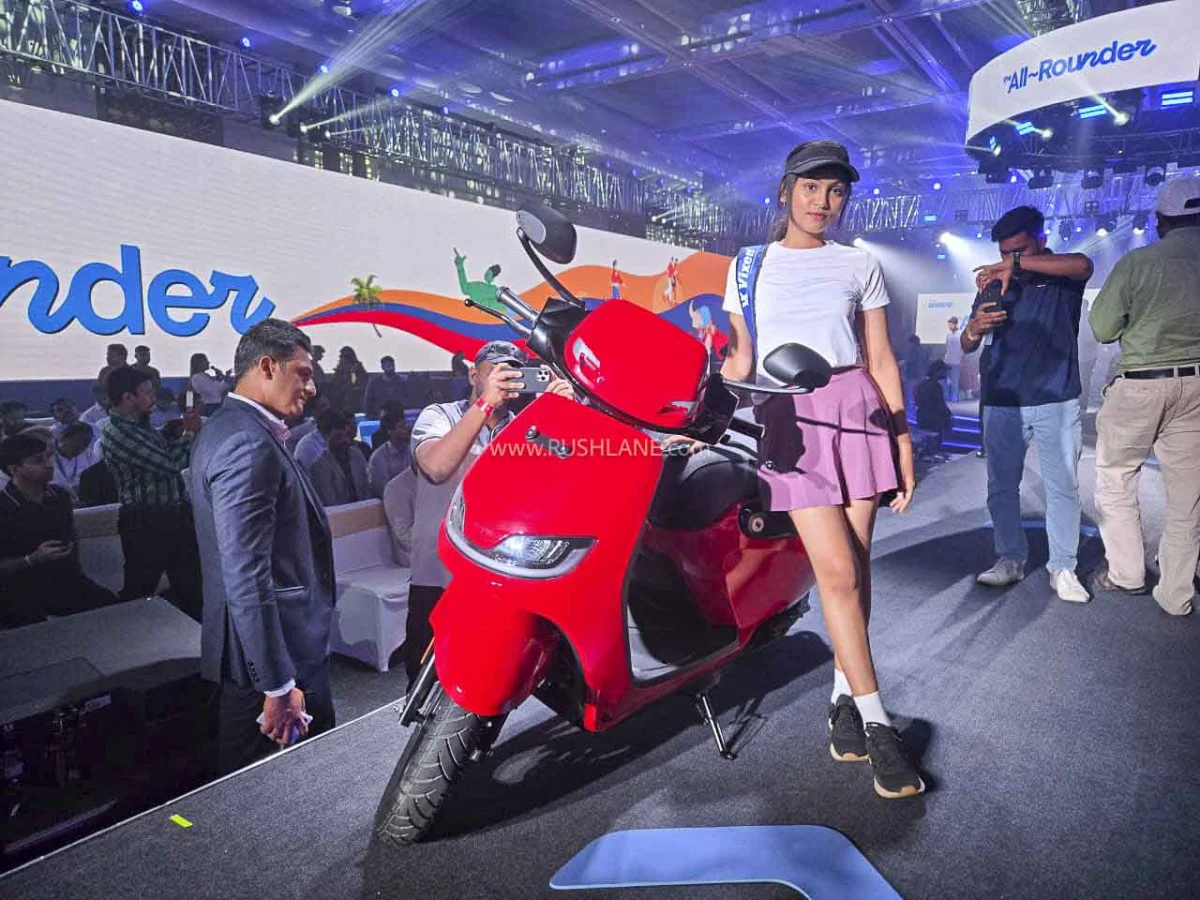
The "Wave" nomenclature reflects the scooter’s design language—clean, fluid, and approachable. Unlike the aggressive, sharp lines of the Simple One, the Wave adopts a more "family-friendly" aesthetic.
Unprecedented Storage Solutions
Practicality is the cornerstone of the Simple Wave. The scooter boasts a total of 70 litres of storage space, a figure that significantly dwarfs most of its competitors. This is achieved through a combination of a large under-seat boot and innovative pill-shaped storage compartments integrated into the side panels. These "pill" lockers allow riders to store small essentials like chargers, documents, or gloves for quick access without opening the main compartment.

Chassis and Handling
The scooter is built for the rigors of Indian road conditions:
- Suspension: It features a traditional telescopic front fork and twin rear shock absorbers, a setup chosen for its ability to soak up bumps while carrying a pillion passenger or heavy luggage.
- Braking: Safety is handled by a front disc brake, providing reliable stopping power.
- Dimensions: With a seat height of 775 mm, the Wave is accessible to riders of various heights. The 175 mm ground clearance ensures the underbody is protected when navigating tall speed breakers or water-logged streets.
IV. Connectivity and Smart Features
The Simple Wave is as much a digital device as it is a mechanical one. The dashboard is dominated by a 7-inch TFT instrument console that serves as the command center for the vehicle.

High-Performance Processing
The console is powered by a 480 MHz Arm Cortex-M85 graphics microcontroller. This high-performance chip ensures that the user interface is lag-free and capable of rendering complex data in real-time. The system supports:
- Turn-by-turn navigation for seamless city travel.
- Music and Call controls via Bluetooth connectivity.
- Non-touch interaction: Simple has implemented a physical interface logic that allows riders to toggle through menus without taking their hands off the handlebars, significantly enhancing safety by reducing visual distraction.
Proprietary Technologies
Two new branded technologies make their debut with the Wave:

- Hushdrive: A suite of engineering refinements aimed at reducing the acoustic signature of the drivetrain, resulting in a near-silent ride.
- GripSense: An intelligent safety feature designed to monitor traction and provide the rider with enhanced stability during sudden maneuvers or on slippery surfaces.
V. Chronology: Simple Energy’s Evolution
The launch of the Wave marks a new chapter in Simple Energy’s relatively short but impactful history:
- August 2021: The company launches the Simple One, its flagship high-performance scooter, promising industry-leading range and speed.
- 2022-2023: Focus shifts to setting up the "Simple Vision 1.0" manufacturing facility in Shoolagiri, Tamil Nadu, capable of producing 1 million units annually.
- Early 2024: Introduction of the Simple Dot One, a more streamlined version of the flagship model aimed at a lower price point.
- September 2024: Launch of the Simple Wave, pivoting the brand from a "performance-first" niche to a "utility-first" mass-market player.
VI. Market Implications and Official Outlook
The introduction of the Simple Wave comes at a time when the Indian EV market is maturing. While early adopters were satisfied with performance-oriented "tech-on-wheels," the next wave of buyers consists of families looking to replace 110cc and 125cc petrol scooters.

Competitive Positioning
By offering a 70-litre storage capacity and a 243 km range option, Simple Energy is directly challenging established players:
- vs. Ather Rizta: While the Rizta focuses on comfort and "big-scooter" feel, the Wave counters with a vastly superior range on its top-end variant and more innovative storage lockers.
- vs. TVS iQube & Bajaj Chetak: The Wave offers a more modern digital interface and the unique "rare-earth-free" motor narrative, which appeals to environmentally conscious and tech-savvy buyers.
Strategic Supply Chain Security
The use of a heavy rare-earth-free motor is a masterstroke in long-term corporate strategy. By reducing reliance on imported magnets, Simple Energy can maintain more stable pricing even if global trade tensions fluctuate. This aligns with the Indian government’s "Atmanirbhar Bharat" (Self-Reliant India) initiative and positions the company as a leader in indigenous EV R&D.

Final Implications
The Simple Wave is a clear signal that Simple Energy is no longer content being a boutique performance brand. With its multi-battery strategy, the company is casting a wide net. The 2.2 kWh variant targets the budget-conscious urbanite, while the 5 kWh variant targets the "range-anxiety" sufferer who wants to charge only once a week.
If Simple Energy can ensure a smooth delivery rollout and maintain high build quality, the Wave has the potential to become a benchmark in the family electric scooter segment, proving that practicality and high technology can coexist at a competitive price point. As deliveries begin on September 25th, the industry will be watching closely to see if this "Wave" can indeed turn into a tide of market dominance.
