

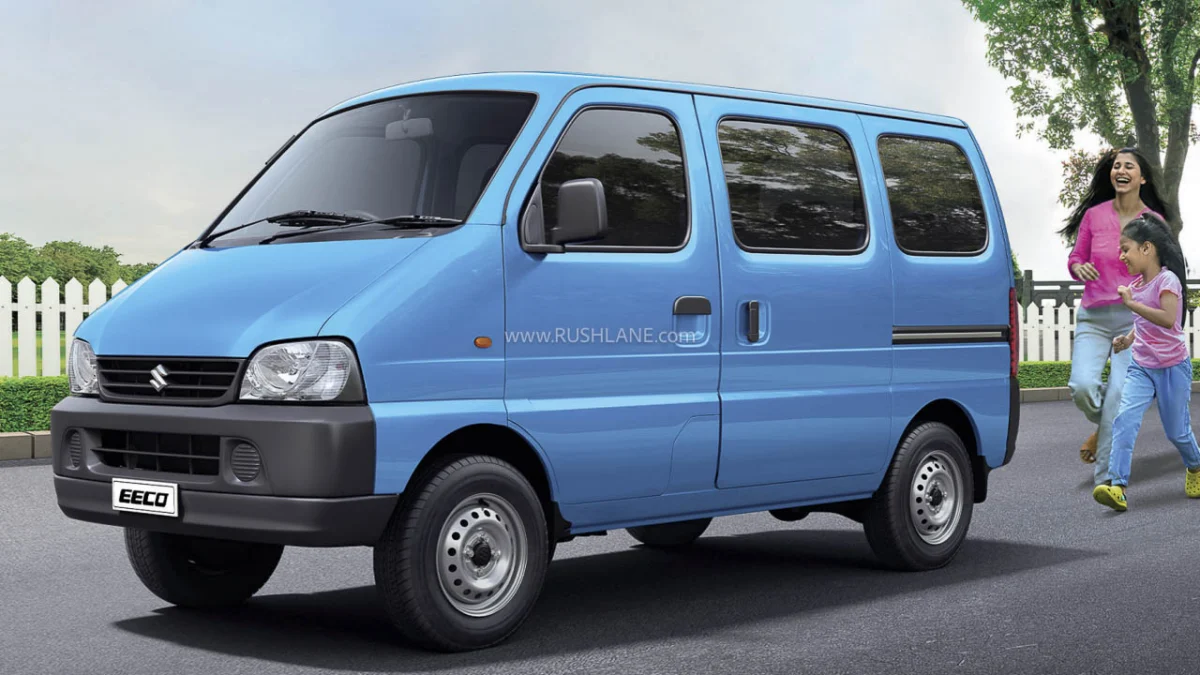
New Delhi, India – In an era where the Indian automotive landscape is increasingly dominated by sleek SUVs and feature-rich electric vehicles, a humble, boxy van continues to defy market trends and set record-breaking benchmarks. Maruti Suzuki India Limited (MSIL) recently announced that its versatile multi-purpose van, the Eeco, has officially crossed the 15 lakh (1.5 million) cumulative sales milestone.
Since its debut in early 2010, the Eeco has evolved from a basic utility vehicle into the backbone of India’s last-mile connectivity and small-business logistics. The achievement is not merely a testament to the vehicle’s longevity but also a reflection of its accelerating popularity; the latest 5 lakh units were sold in record time, signaling that the Eeco is more relevant today than at any point in its sixteen-year history.
I. Main Facts: A Dominant Force in an Uncontested Segment
The Maruti Suzuki Eeco stands as a unique anomaly in the Indian car market. While most vehicles see a decline in interest as they age, the Eeco has seen its sales trajectory sharpen. Launched in January 2010 as a successor to the legendary but aging Maruti Omni and the premium-positioned Versa, the Eeco was designed to bridge the gap between a family car and a commercial workhorse.
A Diverse Portfolio
Today, the Eeco is offered in an expansive range of 13 variants. These include:
- Passenger Versions: Available in 5-seater and 7-seater configurations, catering to large families and tour operators.
- Commercial Versions: The ‘Tour V’ and ‘Cargo’ variants are staples for logistics companies, couriers, and local vendors.
- Institutional Versions: A dedicated ‘Ambulance’ configuration that provides a cost-effective solution for healthcare providers across the country.
Powertrain and Efficiency
Under the hood, the 2026 iteration of the Eeco is powered by the 1.2-litre K-Series Dual Jet, Dual VVT petrol engine. This modern powerplant is a far cry from the original engine, offering a balance of performance and frugality.

- Petrol Efficiency: 19.71 km/l
- S-CNG Efficiency: 26.78 km/kg
This focus on fuel economy is a primary driver for its success, particularly among business owners who operate on thin margins.
II. Chronology: The Acceleration of a Legend
The journey to 15 lakh units is a story of three distinct phases. By analyzing the time taken to achieve each 5-lakh-unit increment, it becomes clear that the Eeco is experiencing a "second youth."
Phase 1: Establishing the Foundation (2010 – 2018)
The first 5 lakh units took approximately eight years to sell. During this period, the Eeco had to establish itself in the shadow of the Maruti Omni. It was perceived as a sturdier, more powerful alternative but faced the challenge of being a relatively new brand in the utility space.
Phase 2: Market Consolidation (2018 – 2022)
The next 5 lakh units (taking the total to 10 lakh) were achieved in under five years. This period saw the discontinuation of the Omni due to stricter safety and emission norms, leaving the Eeco as the undisputed king of the budget van segment. Maruti Suzuki capitalized on this by refining the engine and improving the interior ergonomics.
Phase 3: The Rapid Ascent (2022 – 2026)
The most recent 5 lakh units were sold in just three-and-a-half years. This represents the fastest 5-lakh-unit run in the model’s history. Despite the global pandemic and supply chain disruptions, the demand for Eeco surged, driven by a boom in e-commerce logistics and a shift toward factory-fitted CNG vehicles.

III. Supporting Data: The Demographics of Success
Maruti Suzuki’s internal data for the 2025-26 fiscal year provides a fascinating look into who is buying the Eeco and why. The statistics reveal a vehicle that is deeply embedded in the economic fabric of "Bharat" (rural India) as much as it is in urban centers.
1. The Rural Stronghold
Perhaps the most striking statistic is that 65% of Eeco sales in FY2025-26 came from rural markets. In regions where road conditions can be unpredictable and service centers are far apart, the Eeco’s simple mechanical layout and high ground clearance make it an ideal choice. It serves as a multi-purpose tool—transporting children to school during the day and carrying farm produce to the market at night.
2. Empowering First-Time Buyers
Around 55% of Eeco buyers were first-time car owners. This highlights the Eeco’s role as an entry point into the world of four-wheelers. For many Indian families, the Eeco represents the first step toward upward mobility, providing a level of safety and weather protection that a two-wheeler cannot offer.
3. The Entrepreneur’s Choice
More than 51% of Eeco buyers are business owners. Whether it is a small-scale catering business, a dry-cleaning service, or a last-mile delivery franchise, the Eeco is viewed as a "profit-making machine." Its low cost of acquisition combined with high uptime ensures a quick Return on Investment (ROI).
4. The CNG Revolution
The shift in fuel preference has been seismic. In FY2019-20, CNG variants accounted for only 12% of total Eeco sales. Fast forward to FY2025-26, and CNG contribution has skyrocketed to 48%. As the network of CNG stations expands across India, the Eeco S-CNG has become the default choice for buyers looking to minimize operational costs.

IV. Technical Evolution and Safety Standards
One of the most common criticisms of budget vans in India has historically been their lack of safety features. However, Maruti Suzuki has proactively updated the Eeco to meet modern regulatory standards and consumer expectations.
Enhanced Safety Suite
The 2026 Maruti Eeco is no longer a "basic" van. It now comes equipped with six airbags as standard across all variants. This is a significant move by Maruti Suzuki, bringing the Eeco in line with higher-end passenger cars. Other safety features include:
- Electronic Stability Program (ESP): To prevent skidding and maintain control during sudden maneuvers.
- ABS with EBD: Ensuring stable braking under heavy loads.
- Reverse Parking Sensors: Essential for a vehicle often used in cramped urban loading zones.
- Structural Integrity: Side-impact protection and three-point ELR seatbelts for all occupants.
Comfort and Convenience
While it remains a utilitarian vehicle, the interior has seen several quality-of-life improvements. The inclusion of a digital instrument cluster, reclining front seats, and a dome lamp with a battery-saver function shows that Maruti is listening to driver feedback. The HVAC system has also been optimized to ensure the large cabin remains cool even in harsh Indian summers.
V. Official Responses and Industry Perspective
While Maruti Suzuki executives celebrate this milestone, industry analysts view the Eeco’s success as a masterclass in "frugal engineering" and market positioning.
The Manufacturer’s View
In statements reflecting on the milestone, Maruti Suzuki leadership has emphasized the vehicle’s role in "Mobility for All." The company views the Eeco not just as a product, but as a solution for India’s unique logistical challenges. By keeping the platform simple and focusing on reliability, Maruti has created a "moat" that competitors have found difficult to breach.

Industry Analyst Insights
Automotive experts point out that the Eeco lacks any direct competition. The Tata Ace serves the pure commercial "last mile" segment, while hatchbacks cater to the personal segment. The Eeco sits comfortably in the middle.
"The Eeco is the only vehicle in India that can successfully wear three hats: a family van, a cargo carrier, and an emergency vehicle," says a leading industry consultant. "Its 15 lakh sales milestone is a reminder that in India, ‘value for money’ still trumps ‘features and tech’ for a massive portion of the population."
VI. Implications: What This Means for the Future
The success of the Eeco carries several broader implications for the Indian automotive industry and the economy at large.
1. Resilience of the Internal Combustion Engine (ICE)
The Eeco’s growth suggests that for utility and commercial applications, the ICE (specifically petrol and CNG) remains the preferred choice. While electric vans are entering the market, the Eeco’s price point and the ubiquity of Maruti’s service network make it a difficult incumbent to displace.
2. Rural Economic Vitality
The 65% rural sales figure is a strong indicator of rising disposable income and entrepreneurial spirit in non-metro areas. The Eeco is often the "engine" of a small village business, and its sales numbers are a proxy for the health of the rural economy.

3. Standardization of Safety
By making six airbags standard on a vehicle like the Eeco, Maruti Suzuki is setting a new floor for safety in India. This move will likely pressure other manufacturers to prioritize safety even in their most affordable offerings, potentially saving thousands of lives on Indian roads.
Conclusion: The Legacy of the "Big Small Van"
The Maruti Suzuki Eeco’s journey to 15 lakh sales is a remarkable feat of consistency. It has survived changing emission norms, stricter safety regulations, and the massive consumer shift toward SUVs. By staying true to its core DNA—affordability, space, and reliability—it has become an indispensable part of the Indian landscape.
As the pace of sales continues to accelerate, the Eeco is no longer just a "budget option." It is a symbol of India’s pragmatic approach to mobility. Whether it is a family heading for a vacation, a courier delivering a package, or an ambulance rushing to a hospital, the Eeco continues to move India forward, one kilometer at a time. With the 20 lakh milestone now firmly in its sights, the Eeco’s reign as India’s favorite van seems far from over.
