

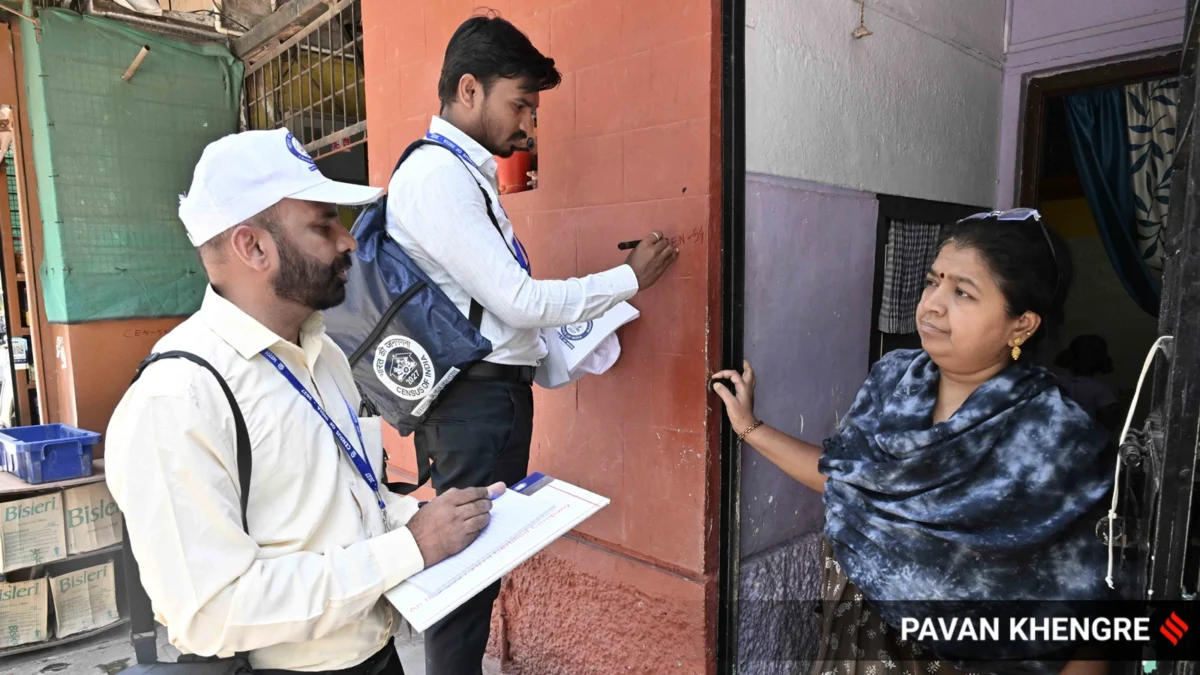
New Delhi, India – September 3, 2026 – India stands at the cusp of a monumental undertaking with the upcoming 2027 Census, an exercise not merely of counting heads but of attempting to enumerate the complex tapestry of its social structure, including caste. This ambitious endeavour, approved by the Cabinet Committee on Political Affairs (CCPA) on April 30, 2025, marks a significant reversal of the government’s previous stance and concedes a long-pending demand from various political and social quarters. However, the path to accurate and usable caste data is already fraught with political contention and bureaucratic discord, raising critical questions about the methodology chosen and the ultimate utility of the exercise.
The decision to include caste enumeration has ignited a fresh political flashpoint, primarily centering on the government’s preference for an "open-ended question" format over a pre-defined drop-down menu for respondents. This methodological choice has drawn sharp criticism from prominent opposition figures, including Leaders of Opposition in Lok Sabha and Rajya Sabha, Rahul Gandhi and Mallikarjun Kharge, respectively. They argue vehemently that effective implementation of social justice policies remains elusive without precise and comprehensive caste data, which they believe an open-ended format may compromise.
The Core Controversy: Open-Ended vs. Drop-Down Format
The heart of the current debate lies in the seemingly technical, yet deeply political, choice of how citizens will report their caste. The government’s decision to adopt an "open-ended question" format implies that enumerators will record caste names as stated by respondents, without providing a pre-compiled list for selection. This approach, proponents argue, is essential to avoid the state becoming an arbiter of caste identities, thereby respecting individual self-identification and preventing any perceived manipulation or omission of specific groups. It attempts to navigate the sensitive terrain of caste by allowing for the vast diversity and granular distinctions that exist within India’s social fabric.
Conversely, the Opposition and many social justice advocates contend that an open-ended format is inherently flawed for generating usable, standardized data. Their primary concern is that without a structured, pre-defined list, the enumeration will yield an unmanageable deluge of responses, replete with spelling variations, regional distinctions, sub-caste names, and synonyms, making accurate classification and aggregation nearly impossible. They point to the critical need for a standardized approach to ensure the data collected is robust enough to inform policy-making, particularly concerning reservations, affirmative action, and targeted welfare schemes aimed at uplifting historically marginalized communities. For these critics, a drop-down menu, while potentially challenging to construct comprehensively, offers the only viable route to achieve the reliable data necessary for evidence-based social justice interventions. The absence of such a definitive dataset, they argue, perpetuates the historical disadvantage faced by backward classes.
A Bureaucratic Tug-of-War: ORGI and MoSJE at Odds
Beneath the overarching political debate, an internal bureaucratic struggle has emerged between two pivotal government arms responsible for the exercise: the Office of the Registrar General of India (ORGI), which conducts the Census, and the Ministry of Social Justice and Empowerment (MoSJE), the nodal ministry for caste-related issues. Investigations by The Indian Express reveal that these two entities were not consistently aligned on the crucial matter of providing a comprehensive caste list for the enumeration.
The discord came to a head during a key meeting held on June 1, 2026. Sources indicate that officials from the MoSJE expressed their willingness to share the Central List of Other Backward Classes (OBCs), a meticulously maintained registry by the National Commission for Backward Classes (NCBC), for the upcoming caste enumeration. This offer was significant, as the OBC list forms a substantial component of the caste landscape beyond the Scheduled Castes (SCs).
However, this critical offer was reportedly not accurately reflected in the initial draft of the meeting minutes, which was subsequently prepared and circulated by the Registrar General’s office on June 8. This four-paragraph note, according to sources, ambiguously stated: "Ministry officials informed that there was no Constitutional mandate to maintain a caste list and, therefore, it was not available with them." The note further acknowledged that MoSJE maintained notified lists for SCs (comprising 1,258 entries) and OBCs (comprising 2,483 entries), which "if needed, could be provided to the Registrar General’s office." Crucially, the initial ORGI draft concluded: "In view of the absence of any list of castes, enumeration of castes in Census 2027 may not be possible using any pre-defined list in the question in the Census 2027."
Ministry officials, speaking anonymously to The Indian Express, viewed this wording as a strategic "trap." They felt the initial draft subtly shifted the onus of not proceeding with a pre-defined list onto the MoSJE, implying that the Ministry’s inability to provide a comprehensive "caste list" (beyond SCs and OBCs) was the reason for adopting the open-ended format. This perception of blame-shifting prompted a strong pushback from MoSJE.
On June 11, the Ministry sent an amended version of the note to the Registrar General’s office, meticulously clarifying its position. This revised note stated that MoSJE officials "informed that as mandated by the Constitution, in relation to castes, it maintains the List of Scheduled Caste and Other Backward Classes." It explicitly clarified, "No separate list of ‘Castes’, other than the Scheduled Caste List and Central List of Other Backward Classes, is required to be maintained by the Department." The note reiterated that the SC list had already been shared on September 25, 2025, and the Central List of OBCs "if required, will be provided to the ORGI." Finally, it nuanced the conclusion: "In view of the absence of any mandate to maintain a list of ‘Castes’ other than the Scheduled Castes List and Central List of Other Backward Classes, officials from DoSJ&E (Department of Social Justice and Empowerment) were unable to assist further." This revised wording precisely outlined the constitutional limitations of the MoSJE regarding a comprehensive, all-encompassing "caste list" beyond its mandated SC and OBC lists, while affirming its readiness to provide the lists it does maintain. After this clarification, on June 30, the Registrar General’s office accepted the revised notes, seemingly resolving the internal disagreement.
Both RGI Mrityunjay Kumar Narayan and Ministry Secretary Sudhansh Pant did not respond to requests for comment from The Indian Express, leaving the precise dynamics of the internal discussions to be inferred from the detailed accounts of sources.
Chronology of a Contentious Decision
The decision to include caste enumeration in the 2027 Census represents a culmination of decades of advocacy and a significant policy shift.
- May 2010: The then-UPA government promised caste enumeration along with Census 2011, responding to growing demands for updated caste data.
- September 2010: Following recommendations from a specially constituted Group of Ministers (GoM), the Union Cabinet decided against incorporating caste directly into the main Census 2011. Instead, it opted for a separate Socio-Economic Caste Census (SECC) to be conducted independently.
- 2011: The SECC was carried out at a substantial cost, collecting detailed socio-economic and caste data.
- April 30, 2025: The Cabinet Committee on Political Affairs (CCPA) formally approved the inclusion of caste enumeration in the main Census 2027, reversing the previous government’s position and meeting a long-standing political demand.
- September 1, 2026: Population enumeration, alongside the caste census, began in hilly and snow-bound areas to mitigate difficulties posed by winter conditions.
- February 2027: The nationwide population enumeration and caste census is slated to commence across the rest of the country.
- September 21 and December 14, 2021: In affidavits filed before the Supreme Court, the government stated that the data collected during SECC 2011 was "inaccurate and marked by technical flaws," rendering it "unusable."
- December 15, 2021: The Supreme Court noted the government’s submission, observing that "The fact remains that the affidavit filed before this Court emphatically states that the data as collated is not accurate and is unusable for any purpose whatsoever."
The Ghost of 2011: Unpacking the SECC Failure
The government’s decision to revert to an "open-ended" question format for caste enumeration in 2027 carries with it the heavy legacy of the 2011 Socio-Economic Caste Census (SECC). This previous exercise, intended to capture caste data separately from the main population count, cost approximately Rs 4,900 crore – a substantial investment that ultimately yielded no publicly usable caste-specific data.
The primary hurdle encountered in 2011, and one that looms large over the 2027 exercise, was the sheer complexity of classifying the reported caste names. Respondents, given the freedom to self-identify, reported an astonishing 46.7 lakh distinct caste names. This figure represented a massive spike compared to the 4,147 recorded in the 1931 Census, the last comprehensive caste enumeration. The vast proliferation of names highlighted the dynamic and often localized nature of caste identity, but it presented an insurmountable challenge for standardization.
The data collected by the 2011 SECC was eventually published by the ministries of Rural Development and Urban Development in 2016, but critically, the dataset on caste was excluded. The raw caste data was subsequently handed over to the Ministry of Social Justice and Empowerment (MoSJE), which formed a group of experts under then-NITI Aayog Vice Chairperson Arvind Panagariya. Their mandate was to classify and categorize the voluminous data, a task that proved incredibly difficult. To date, the classified caste data from SECC 2011 has not been made public, reinforcing the perception of its unusability.
According to current Ministry sources, there is a palpable concern that the 2027 count is set to "repeat the failure" of the previous exercise. The challenges of converting millions of individual, often idiosyncratic, responses into reliable, standardized caste data without the state appearing to determine or alter what respondents have reported remain formidable. The government’s stated position is that an open-ended response is the only way to conduct the exercise without becoming an arbiter of caste identities. However, this philosophical stance is juxtaposed against the practical reality of data processing and policy formulation.
The Census traditionally employs drop-down lists for the enumeration of notified Scheduled Castes (SCs) and Scheduled Tribes (STs). This method works because these are constitutionally recognized, well-defined categories with official lists. Expanding this approach to cover all castes, including the vast array of Other Backward Classes (OBCs) and others, would require an unprecedented exercise in list compilation, validation, and consensus-building—a task the MoSJE indicated it is not constitutionally mandated to undertake beyond the SC and OBC lists it already maintains.
Implications and the Road Ahead
The manner in which caste enumeration is conducted in 2027 carries profound implications for India’s social, political, and economic landscape.
The Standardization Challenge: The central technical challenge remains the arduous task of transforming raw, open-ended responses into a coherent and usable dataset. This involves developing robust methodologies for disambiguation, aggregation, and classification of millions of self-reported caste names. Experts in demography and statistics will need to grapple with issues like phonetic variations, sub-caste affiliations, regional differences in caste nomenclature, and potential misreporting. Without a clear and transparent standardization process, the data risks being as "unusable" as that of the 2011 SECC.
Impact on Social Justice Policies: The primary impetus behind the demand for caste enumeration is its perceived necessity for informing and refining social justice policies, particularly those related to affirmative action and reservations. Accurate caste data is vital for understanding current social stratification, identifying communities that genuinely require support, and ensuring that welfare schemes are effectively targeted. If the 2027 data suffers from the same categorization issues as its predecessor, the political arguments for evidence-based policy-making will be undermined, potentially leading to continued debates about the equity and efficacy of existing reservations.
Political Ramifications: The political stakes are exceptionally high. Parties advocating for greater social justice and representation for backward classes see accurate caste data as a potent tool for demanding proportional representation in all spheres. Conversely, concerns about potential societal fragmentation or heightened caste consciousness often accompany such enumeration efforts. The government’s careful navigation of the "arbiter of caste identities" argument reflects the delicate balance it seeks to strike in a politically charged environment. The successful or unsuccessful conduct of this enumeration could reshape political discourse and electoral strategies for years to come.
Expert Perspectives: Sociologists and demographers often highlight the inherent complexities of enumerating caste in a modern census. They note that caste identity is not static; it can be fluid, situational, and even contested. The act of enumeration itself can, at times, influence how people perceive and report their caste. The dilemma of balancing self-identification with the need for standardized categories is a global challenge in collecting sensitive demographic data. Many argue that while an open-ended question respects individual identity, it necessitates an equally sophisticated and transparent post-enumeration classification system to yield meaningful insights. Without such a system, the extensive effort and public expenditure risk being in vain.
The 2027 Census represents a critical juncture for India. It is an opportunity to gather data that could fundamentally alter the understanding of the nation’s social fabric and inform policies aimed at greater equity. However, the internal bureaucratic tussles, the cautionary tale of the 2011 SECC, and the inherent methodological challenges underscore the formidable task ahead. The success of this caste enumeration will hinge not just on the counting itself, but on the ability of the government and its institutions to process, standardize, and ultimately, make public a dataset that is both accurate and genuinely useful for shaping a more inclusive future for all Indians.
Conclusion: A Nation Awaits Definitive Data
As India gears up for the monumental 2027 Census, the inclusion of caste enumeration looms as both a promise of greater insight and a potential quagmire of methodological and political challenges. The decision by the CCPA marked a significant pivot, addressing a long-standing demand for updated caste data. Yet, the chosen "open-ended" format, while reflecting a desire to avoid state intervention in identity definition, has immediately sparked a heated debate with the Opposition, who fear it will render the data unusable for social justice policies.
The bureaucratic friction between the ORGI and MoSJE, particularly concerning the availability and sharing of comprehensive caste lists, highlights the intricate complexities of the exercise. The ghost of the 2011 SECC, which consumed significant resources but failed to produce publicly usable caste data, casts a long shadow over the current endeavor. With population enumeration already underway in certain regions and nationwide commencement set for February 2027, the nation watches intently. The ultimate success of the 2027 caste enumeration will not merely be measured by the number of responses collected, but by the government’s ability to navigate the technical hurdles, resolve internal disagreements, and deliver a standardized, transparent, and actionable dataset that truly serves the constitutional mandate of social justice and equitable development.
