

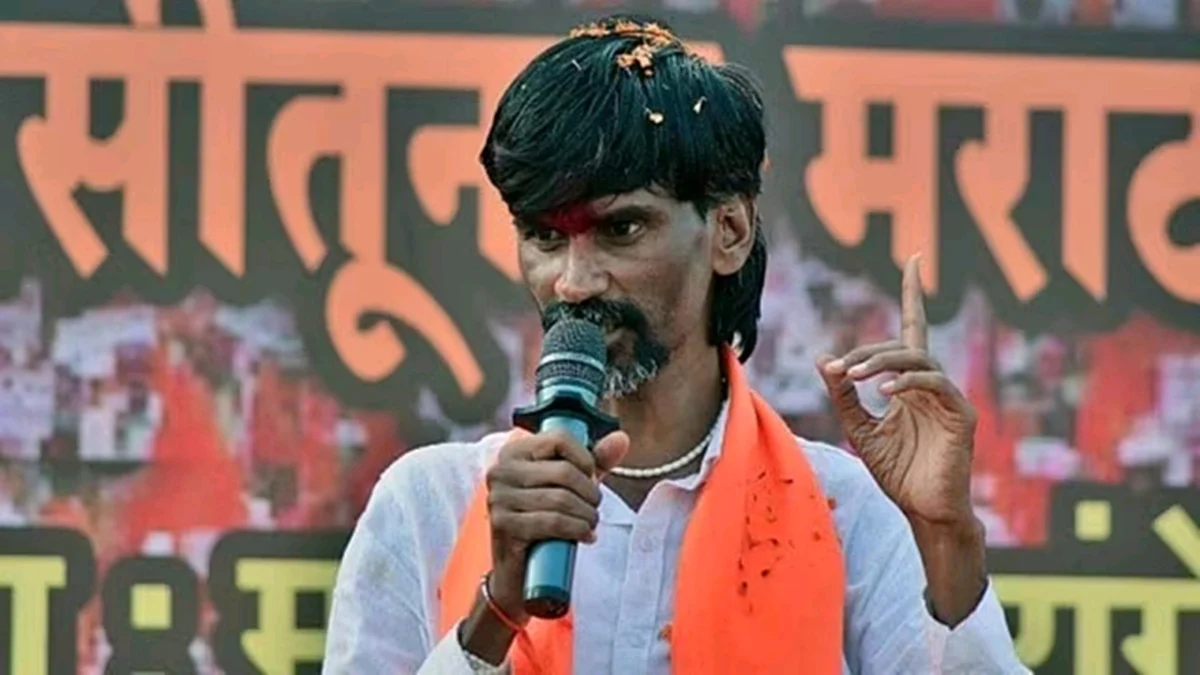
Mumbai, Maharashtra – The intricate and often volatile landscape of reservation politics in Maharashtra is once again at a critical juncture, placing the ruling Bharatiya Janata Party (BJP) in a profound dilemma. At the heart of the escalating tension is the renewed agitation by Maratha reservation activist Manoj Jarange-Patil, who is steadfastly demanding the expansion of Kunbi certificates for the Maratha community beyond the historical confines of the Hyderabad Gazette. This move, aimed at facilitating Maratha entry into the existing Other Backwards Classes (OBC) quota, has ignited a fierce backlash from various OBC groups, threatening to unravel the BJP’s carefully constructed social engineering strategy in the state.
The political stakes are exceptionally high. Maharashtra has long grappled with the complex and often competing demands for affirmative action, a struggle that has shaped its socio-political fabric for decades. While the BJP has historically leveraged periods of Maratha agitation to consolidate OBC support, party strategists now concede that the political equation is far less predictable. The current scenario, marked by student protests and renewed attempts by the Congress to capitalize on the discontent, suggests a potential realignment of electoral forces, posing a formidable challenge to the Mahayuti government, particularly in the run-up to crucial elections.
The Genesis of the Renewed Crisis: Jarange-Patil’s Unyielding Stance
Manoj Jarange-Patil, a figure who has emerged as the face of the renewed Maratha reservation movement, has once again brought the issue to the forefront with his persistent demands. His core contention revolves around the interpretation and expansion of Kunbi certificates. Kunbis are an agrarian community already categorized under OBC in Maharashtra, making them eligible for the 27% reservation quota earmarked for OBCs. Jarange-Patil and his supporters argue that a significant section of the Maratha community shares historical lineage with Kunbis, and therefore, should be recognized as Kunbis to access the existing OBC reservation.
Crucially, Jarange-Patil is pushing for the recognition of Kunbi lineage beyond the geographical limits of the erstwhile Hyderabad State, which primarily covers the Marathwada region. His demand is for a broader interpretation of historical records to prove Kunbi ancestry across the entire state, thereby allowing a much larger number of Marathas to obtain Kunbi certificates and subsequently, OBC status. This expansion, he asserts, is a legitimate right based on historical evidence and a necessary step to address the socio-economic backwardness perceived within the Maratha community.
The activist’s unwavering stance, often backed by large-scale demonstrations, fasts unto death, and public rallies, has galvanized a significant portion of the Maratha community, particularly the economically distressed and unemployed youth who see reservation as a pathway to upward mobility. They perceive Jarange-Patil as a beacon of hope, articulating their frustrations and aspirations for a more equitable share in government jobs and educational opportunities.
The Deepening Predicament for the BJP: A Precarious Balancing Act
For the BJP, the resurgence of the Maratha quota demand, coupled with the vigorous OBC counter-agitation, presents an unprecedented political tightrope walk. The party has long relied on a carefully crafted social engineering strategy in Maharashtra, positioning itself as a champion of OBC interests while also attempting to broaden its appeal to other communities, including sections of the dominant Marathas.
A senior BJP source, reflecting on the evolving dynamics, admitted, "In the past, Maratha protests often triggered polarisation that worked to our advantage, consolidating OBC votes behind us. Now, with the complexity of student protests and the Congress’s renewed attempts to revive the issue, we are uncertain how the situation will unfold. The traditional political calculus no longer applies with the same predictability." This statement underscores the profound shift in the political landscape, where historical alliances and vote banks are becoming increasingly fluid and unpredictable.
The core of the BJP’s predicament lies in the perception that the government might be "pampering Marathas beyond reason" due to their assertive street agitations. This perception risks alienating the crucial OBC constituency, which has been a bedrock of the party’s support base for decades. Any move seen as diluting the OBC quota by allowing a large influx of Marathas would be interpreted as a betrayal, potentially leading to a significant erosion of trust and electoral support.
OBC Grievances: A Voice of Discontent and Fear
The opposition to Jarange-Patil’s demands from the OBC community is not merely a political tactic but stems from deeply held fears and grievances. OBC leaders argue that their community, comprising nearly 250 sub-castes, accounts for close to half of Maharashtra’s population, significantly outnumbering the estimated 30% Marathas. These demographic estimates, while politically contested in the absence of a recent caste-based enumeration, fuel the OBC community’s sense of entitlement to their existing share of reservations.
Laxman Hake, a prominent OBC leader, while postponing his proposed Mumbai protest until after the Ganesh festival, issued a stark warning: the agitation could intensify if the government fails to address the community’s concerns adequately. He highlighted two critical issues fueling OBC anxiety: the absence of a separate OBC column in the ongoing caste census and the government’s perceived mishandling of the Kunbi certificate issue. The demand for a distinct OBC column in the census is seen as crucial for establishing their true demographic strength and ensuring equitable representation, a long-standing demand across various states.
The fear among OBC organizations is palpable: a broader interpretation of historical records for Kunbi lineage could substantially swell the ranks of Marathas eligible for OBC reservation. This, they contend, would inevitably shrink their opportunities in education and government employment, effectively undermining the very purpose of affirmative action for the historically marginalized.
Prakash Shendge, another senior OBC leader, articulated the community’s growing sense of betrayal. "The OBCs are not just angry; they are hurt by the government’s actions. They feel increasingly distanced from the BJP," he stated, pointing to the symbolic significance of state minister Chhagan Bhujbal’s decision to walk out of the government’s sub-committee dealing with the reservation issue. Bhujbal, a prominent OBC face in the Mahayuti government, resigning from such a crucial committee is seen as a powerful signal of the deep disconnect and dissatisfaction within the OBC leadership.
Adding to the sense of neglect, some OBC leaders have expressed frustration over what they perceive as the government’s "partial attitude." "While senior ministers like Radhakrishna Vikhe-Patil and Uday Samant have actively engaged with Jarange-Patil, we have received far less attention and fewer opportunities for direct dialogue with the highest echelons of power," an OBC leader lamented, highlighting the perceived disparity in the government’s approach to the two agitating communities.
Babanrao Tayade, President of the National OBC Federation, while advocating for restraint, did not shy away from warning of widespread protests. "Our preference has always been dialogue to achieve our demands. However, if the government fails to heed our call for a caste census with a separate OBC column and fails to guarantee the integrity of the OBC quota, we will be left with no option but to take to the streets," he declared, signaling a potential escalation of the OBC movement.
The Historical & Legal Maze of Maratha Quota: A Legacy of Contention
The current debate over Kunbi certificates is deeply rooted in Maharashtra’s complex history of reservation politics and repeated legal challenges. The Maratha community, traditionally seen as politically dominant, has long sought reservation under the OBC category, arguing their socio-economic backwardness, particularly among its poorer sections.
A pivotal moment in this history was the Maharashtra government’s 2018 law, which provided 12% reservation for Marathas in education and 13% in government jobs under the Socially and Educationally Backward Classes (SEBC) Act. This attempt, however, was struck down by the Supreme Court in 2021. The apex court ruled that the reservation breached the constitutionally mandated 50% ceiling on total reservations and that the "exceptional circumstances" required to exceed this limit had not been sufficiently established by the state. This ruling left the Maratha community without a dedicated quota and intensified the search for alternative avenues.
In 2023, the Mahayuti government issued a Government Resolution (GR) that offered a specific pathway for Marathas from the Marathwada region to avail OBC reservation. This region was historically part of the erstwhile Hyderabad State. The GR stipulated that Marathas from this area could claim OBC status if they could prove their Kunbi lineage through records from the Hyderabad Gazette. This Gazette, a repository of historical administrative records, was identified as a key document for establishing such ancestry. This was seen as a limited, legally tenable solution, but it also inadvertently opened the door for Jarange-Patil’s current demand for a broader interpretation.
Maratha organizations argue that historical records, including those predating the Hyderabad State, comprehensively establish Kunbi ancestry among significant sections of their community across the state. They contend that restricting the definition of Kunbi lineage to the Hyderabad Gazette is an arbitrary and unjust limitation. The demand for "sage-soyare" (blood relatives or relations by marriage) recognition for Kunbi certificates further complicates the issue, suggesting an expanded definition of familial ties for proving lineage.
The government, however, maintains that an individual cannot claim reservation simultaneously under multiple categories. It clarifies that benefits can only be availed under the category for which an individual is legally eligible, aiming to prevent the "stacking" of quotas.
Chief Minister Fadnavis’s Tightrope Walk: Assurances and Discontent
Chief Minister Devendra Fadnavis, who also holds the Home portfolio, finds himself at the unenviable center of this volatile situation. He has repeatedly attempted to placate both sides, offering assurances designed to mitigate anxieties without committing to a definitive, potentially divisive, solution.
"The government will not do any injustice to any community. The OBC quota will not be compromised," Fadnavis has affirmed publicly, seeking to assuage the fears of the OBC community. At the same time, he has maintained that "there would be no injustice to the Maratha community, and whatever is legally and Constitutionally valid will be done," attempting to keep the Maratha hopes alive within legal frameworks.
However, these carefully worded assurances have seemingly failed to fully allay the fears of the OBC community. Prakash Shendge’s comments about feeling "betrayed" and Chhagan Bhujbal’s public dissent underscore the growing skepticism within the OBC leadership. They perceive the government’s rhetoric as insufficient to protect their interests against what they view as aggressive Maratha demands. The challenge for Fadnavis and the Mahayuti government is to find a solution that is both legally sound and politically palatable to two powerful, numerically significant, and increasingly confrontational constituencies, a task that appears increasingly formidable.
The BJP’s Social Engineering at Risk: MADHAV and Beyond
The BJP’s strategic rise in Maharashtra has been inextricably linked to its astute social engineering. For decades, the party aimed to build a formidable social coalition beyond the state’s traditional dominant Maratha political class, which historically gravitated towards the Congress. Party ideologue Vasantrao Bhagwat’s "MADHAV" formulation – representing Mali, Dhangar, and Vanjari communities – was an early, significant attempt to consolidate key OBC communities behind the BJP. This strategy sought to create an alternative power base, effectively challenging the Congress’s traditional hold over Marathas, Dalits, and Muslims.
Over time, while the BJP broadened its outreach to include sections of Marathas, OBCs remained absolutely critical to its electoral expansion. This became particularly evident after the Maratha reservation movement gained significant momentum from 2017 onwards. The party’s ability to unite various smaller and micro-OBC communities proved pivotal. In the 2024 Maharashtra Assembly elections, this expanded outreach beyond the traditional MADHAV grouping contributed significantly to the BJP’s success, helping it secure 132 of the state’s 288 Assembly seats.
That electoral success now renders the current dispute exceptionally sensitive. The BJP’s carefully cultivated OBC support base, which has been instrumental in its ascent, is now feeling threatened. The party must now perform an agonizing balancing act, navigating the demands of two electorally significant constituencies that are increasingly viewing the same, finite reservation pool from diametrically opposed perspectives. The perception of favoritism towards one community at the expense of another could dismantle years of meticulous social engineering, leading to severe political repercussions.
The Economic Undercurrents of Agitation: Beyond Caste
While the debate is framed in terms of caste and reservation, underlying economic factors play a crucial role in fueling the agitation. A coordinator of the Maratha Kranti Morcha, speaking anonymously, emphasized the role of economic distress and widespread unemployment in driving support for Jarange-Patil.
"In Manoj Jarange-Patil, the poor and unemployed Marathas find hope," he explained. "They are made to believe that reservation within the OBC category will resolve their economic problems, providing a tangible path to a better future." This highlights the socio-economic anxieties that often intersect with caste identity, making the demand for reservation not just about recognition but also about survival and opportunity in a competitive job market.
The coordinator further argued that the intensified demand for Kunbi certificates is also a direct response to the repeated failures of previous attempts to secure a separate Maratha reservation. "When the government promised 58 lakh Kunbi certificates, OBCs were bound to react," he added, indicating the direct link between government promises and the escalating tensions. The scale of the potential inclusion of Marathas into the OBC quota, even as a promise, has triggered alarm bells among existing OBC beneficiaries.
A Broader Political Landscape: Opposition and Future Elections
The deepening quota conundrum is not merely an internal BJP challenge; it significantly impacts the broader political landscape of Maharashtra. Opposition parties, particularly the Congress and the Shiv Sena (Uddhav Balasaheb Thackeray) faction, are keenly observing the developments, seeking opportunities to exploit the government’s perceived vulnerability. Any misstep by the Mahayuti government could provide potent ammunition for the opposition to rally disgruntled communities.
The upcoming elections, both state assembly and potentially local body elections, will undoubtedly be shaped by how this issue is managed. The risk of OBCs distancing themselves from the BJP, as warned by leaders like Prakash Shendge, could translate into significant electoral losses. Conversely, alienating the Maratha community, a numerically powerful group, could also prove disastrous.
The situation also tests the cohesion of the Mahayuti alliance, comprising the BJP, Shiv Sena (Eknath Shinde faction), and NCP (Ajit Pawar faction). Internal dissent, as evidenced by Bhujbal’s walkout, suggests potential cracks within the ruling coalition, which could be exacerbated if a satisfactory resolution remains elusive.
Looking Ahead: An Uncertain Path to Resolution
The path forward for the Maharashtra government appears fraught with challenges. The primary hurdles include:
- Legal Validity: Any solution must withstand judicial scrutiny, particularly concerning the 50% reservation ceiling and the constitutional provisions for backward classes.
- Political Acceptability: The government needs to craft a solution that is politically palatable to both Maratha and OBC communities, a task made incredibly difficult by their conflicting demands.
- Data and Enumeration: The absence of a robust, recent caste-based census for OBCs complicates accurate assessment and decision-making, a point consistently raised by OBC leaders.
- Social Cohesion: The prolonged agitation and counter-agitation risk deepening social divisions, potentially leading to unrest and impacting the state’s socio-economic stability.
The government’s continued strategy of reassurance without a concrete, widely accepted solution risks prolonging the uncertainty and intensifying the agitations. The balancing act required of Chief Minister Fadnavis and the BJP is perhaps one of the most delicate in recent Maharashtra politics. The outcome of this intricate quota conundrum will not only determine the political fortunes of the ruling party but also profoundly shape the future of affirmative action and social justice in one of India’s most economically vital states. The coming months will be crucial in determining whether Maharashtra can find a lasting resolution or if the flames of reservation politics will continue to burn, threatening to consume its political stability.
