

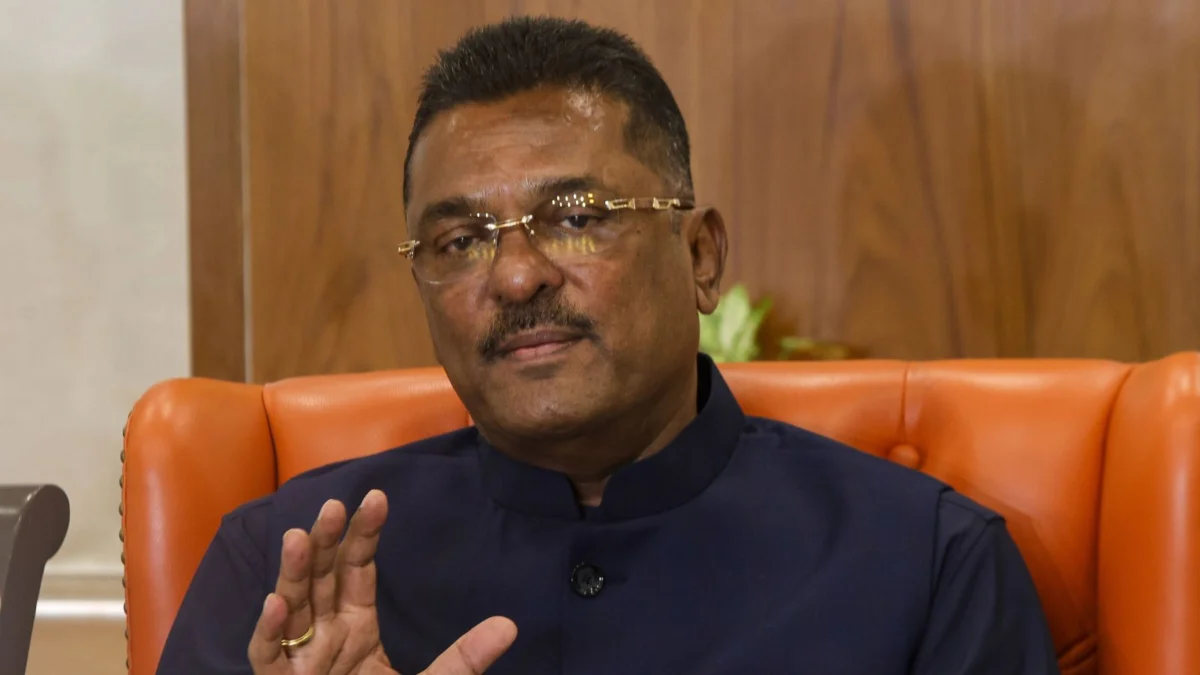
MUMBAI, Maharashtra – A potent accusation of "massive irregularities" in the voter list, leveled by Maharashtra Transport Minister Pratap Sarnaik, has plunged the political landscape of Mira-Bhayandar into fresh turmoil. The allegations have opened a new, intensely bitter front in the ongoing power struggle between the Shiv Sena (Eknath Shinde faction) and the Bharatiya Janata Party (BJP), two parties ostensibly allied in the state government but fiercely at odds in local dominion.
Sarnaik, a prominent leader of the Eknath Shinde-led Shiv Sena, on Tuesday delivered a scathing indictment, asserting that systemic irregularities within the electoral rolls directly benefited the BJP in the January 2026 Mira-Bhayandar Municipal Corporation (MBMC) elections. In a stunning victory, the BJP secured an overwhelming 78 out of 95 seats, effectively reducing the Shiv Sena to a mere three, a result that drastically reshaped the civic body’s power dynamics.
This charge carries significant weight, not only for its direct assault on the BJP – a crucial partner in the state’s ruling coalition – but also because it is deeply intertwined with the protracted and often acrimonious rivalry between Sarnaik and local BJP strongman, MLA Narendra Mehta. At its surface, the dispute revolves around the integrity of the voter list; beneath, it reveals a relentless battle for ultimate control over the strategically important twin-city region of Mira-Bhayandar.
The minister’s claims underscore a deeper fissure within the MahaYuti alliance, where state-level camaraderie often gives way to cutthroat competition at the grassroots. The Mira-Bhayandar saga is fast becoming a microcosm of these internal tensions, threatening to destabilize the delicate political balance in Maharashtra.
The Allegations: A Deep Dive into Disappearing Voters
Pratap Sarnaik’s allegations center on a dramatic shrinkage of the electorate in the Mira-Bhayandar Assembly constituency. He claims that following a "Special Intensive Revision (SIR)" exercise, the number of registered voters plummeted from approximately 5.14 lakh to a mere 3.01 lakh. This drastic reduction, he contends, is not merely an administrative correction but a deliberate cleansing that disproportionately affected certain demographics, thereby creating an unfair advantage.
According to figures meticulously cited by Sarnaik, the electoral rolls initially recorded 5,14,955 voters. The subsequent SIR exercise, intended to purify the lists, identified a staggering 2,13,045 entries for deletion. Beyond these outright deletions, Sarnaik highlighted further discrepancies: 47,901 voters remained "unmapped," their residential or contact details untraceable, while 48,379 cases exhibited various data discrepancies that warranted closer scrutiny.
Sarnaik has framed the sheer scale of these deletions and anomalies as irrefutable evidence of "bogus voters" having been systematically removed, implying a nefarious design to manipulate electoral outcomes. He posits that the presence of such a vast number of fraudulent or duplicate entries in previous lists, and their subsequent removal, directly contributed to the BJP’s landslide victory by excluding potential voters who might have leaned towards other parties.
However, the interpretation of these numbers is not universally accepted. Election officials and critics of Sarnaik’s stance point out that an entry being marked "uncollectable," "unmapped," or identified for exclusion does not automatically equate to a "bogus voter." Such entries can legitimately include a range of scenarios: voters who have moved residences without updating their details, individuals who could not be contacted by enumerators despite multiple attempts, forms that could not be collected due to various logistical hurdles, or details that simply required further verification but were not completed within the revision timeframe. Without a comprehensive, independent audit of each deleted entry, the precise nature of these removals remains open to interpretation, providing fertile ground for political contention.
Chronology of a Bitter Rivalry: Sarnaik vs. Mehta
The current voter list controversy is not an isolated incident but the latest chapter in a long-standing and often explosive rivalry between Pratap Sarnaik and Narendra Mehta. Their political animosity predates their parties’ alliance at the state level, evolving into a deeply personal and territorial battle for Mira-Bhayandar.
2019 Assembly Elections: A Precursor to Conflict
The seeds of intensified conflict were visibly sown during the 2019 Assembly elections. Narendra Mehta’s seemingly unassailable political dominance in Mira-Bhayandar was unexpectedly challenged by BJP rebel and former Mira-Bhayandar Mayor Geeta Jain. Contesting as an Independent, Jain pulled off a significant upset, winning with 79,575 votes against Mehta’s 64,049. This electoral setback for Mehta soon translated into a political gain for the Shiv Sena when Geeta Jain subsequently joined the party, further bolstering the Sena’s local presence and directly challenging Mehta’s sphere of influence. Sarnaik, an MLA from the neighbouring Ovala-Majiwada seat, part of which overlaps with MBMC jurisdiction, saw this as an opportunity to expand his party’s footprint in the region.
2019 Civic Unrest: The Bal Thackeray Auditorium Dispute
The rivalry frequently spilled over into the day-to-day functioning of the municipal corporation. A notable flashpoint occurred in 2019 over the Bal Thackeray cultural auditorium. A dispute escalated into a confrontational scene inside the civic body, with Shiv Sena corporators and workers ransacking the mayor’s office and the standing committee hall after an issue related to the auditorium was not taken up for discussion. Sarnaik vehemently defended his workers’ actions, publicly stating, "I am proud of my workers and they have done the right thing." In response, Mehta demanded an apology and issued a stark warning that such confrontations could have severe repercussions for the then-fledgling alliance between their parties. This incident highlighted the deep-seated animosity and the willingness of both sides to employ aggressive tactics to assert their authority.
Expanding Battlegrounds: Water, Infrastructure, and Land
As years progressed, the scope of their conflict expanded beyond mere civic politics to encompass critical issues of urban development, infrastructure, water supply, and land. In 2023, Sarnaik publicly accused an unnamed "political leader" – widely understood to be Mehta – of actively blocking access to private land, thereby delaying crucial work on a water-storage tank connected to the ambitious Surya water project, a vital initiative for the region’s water security. Mehta swiftly retorted, accusing his rivals of shifting blame for the project’s existing delays and politicizing essential infrastructure.
In May 2025, the BJP’s Mira-Bhayandar district chief, Dilip Jain, launched a direct counter-attack, alleging that Sarnaik had misused his ministerial position to secure road and drainage works worth an estimated Rs 150 crore near properties associated with him. Sarnaik vehemently denied these allegations and, in a calculated move, sought a comprehensive inquiry into the charges against himself, as well as into allegations made by Shiv Sena leaders against Mehta. He formally escalated the matter by writing to Chief Minister Devendra Fadnavis and Deputy Chief Ministers Eknath Shinde and Ajit Pawar, demanding an impartial investigation, indicating the high stakes involved.
Further fueling the fire, in April of the current year, the two leaders clashed over Metro projects and land acquisition. Sarnaik, speaking in the presence of senior government leaders, pointedly referenced Mehta’s alleged land holdings. He later clarified that he raised the issue because government development projects in the region frequently faced land-related obstacles, implicitly linking Mehta’s interests to these delays.
2024 Assembly Elections: A Personal Scorecard
Despite the local skirmishes, both leaders maintained their individual electoral strongholds in the 2024 Assembly elections. Narendra Mehta successfully recovered from his 2019 defeat, winning the Mira-Bhayandar Assembly seat with a commanding 54.87% of the vote. Simultaneously, Pratap Sarnaik comfortably retained his Ovala-Majiwada constituency with a significant margin exceeding one lakh votes, reaffirming his personal electoral strength. However, this individual success did little to bridge the chasm between them in Mira-Bhayandar.
The Numbers That Changed Balance: MBMC Election Fallout
The January 2026 civic election served as a brutal turning point, dramatically altering the political equilibrium in Mira-Bhayandar and solidifying the BJP’s dominance while marginalizing the Shiv Sena.
The results were stark: the BJP secured an overwhelming majority with 78 seats, while the Shiv Sena was relegated to a dismal three seats. The Congress managed to secure 13 seats, and one independent candidate also emerged victorious. This decisive mandate allowed the BJP to virtually take complete control of the Mira-Bhayandar Municipal Corporation. Following the election, BJP’s Dimple Mehta was subsequently elected Mayor with a resounding 79 votes, easily defeating Congress candidate Rubina Sheikh, who received 16 votes.
These unprecedented gains have not only given the BJP near-absolute sway over the corporation’s administration and policy-making but have also substantially bolstered Narendra Mehta’s personal position within local politics. With a supermajority, the BJP can push through its agenda with minimal opposition, making the corporation an effective vehicle for Mehta’s political objectives and development vision for the city.
Conversely, despite Pratap Sarnaik’s prominent position as a state minister and an MLA, the party he represents, the Shiv Sena, now has a negligible presence within the civic body. This disconnect creates a paradoxical situation where a powerful state minister finds his party politically weakened and marginalized in a region he considers vital. The inability of the Shiv Sena and BJP to agree on seat-sharing arrangements for the 2026 civic elections, despite being state-level allies, underscores the depth of their local rivalry and the uncompromising stance of both leaders.
A source within the Shiv Sena candidly described the underlying conflict between Sarnaik and Mehta as fundamentally a "battle over who controls Mira-Bhayandar." This territorial imperative explains the intensity of the current voter list allegations, as Sarnaik seeks to challenge the legitimacy of the BJP’s decisive victory and prevent his party from becoming politically irrelevant in a crucial urban center. The BJP, on the other hand, views Sarnaik’s renewed attacks as a calculated attempt to undermine Mehta’s authority and challenge the BJP’s hard-won control, particularly after the civic election results left the Shiv Sena in a significantly weakened state.
During the election campaign itself, Sarnaik had consciously made a distinction, strategically choosing to target Narendra Mehta directly rather than the BJP’s state or national leadership. He repeatedly characterized the local BJP organization as effectively "Mehta’s company," holding him personally responsible for the failure to forge a BJP-Sena alliance in the city. This personalization of the conflict highlights the deep-seated animosity and the perception that the local political landscape is dictated by the individual ambitions of these two powerful figures.
Official Responses and Counter-Narratives
The allegations leveled by Pratap Sarnaik have naturally drawn strong reactions from the BJP, particularly from Narendra Mehta, who has dismissed them as baseless and politically motivated.
Mehta’s Rebuttal: Narendra Mehta has categorically rejected Sarnaik’s claims as "ridiculous," arguing that the minister’s accusations lack credible evidence and are driven by post-election frustration. Mehta has shrewdly questioned the logical consistency of attacking the electoral rolls now, especially when the same rolls were utilized by Shiv Sena candidates and leaders during their own campaigns for the MBMC elections. "If the voter lists were indeed flawed to the extent Sarnaik claims, why did Shiv Sena candidates contest using them? Why were no such serious objections raised prior to the elections, or even during the initial stages of the revision process?" Mehta reportedly asked, implying an opportunistic motive behind the current allegations. He suggests that the complaints are an attempt to discredit a legitimate democratic outcome after a significant defeat.
Sena’s Perspective: A Shiv Sena source, speaking on condition of anonymity, reiterated that the heart of the conflict transcends mere electoral lists. "This is fundamentally a battle for who controls Mira-Bhayandar," the source stated, highlighting the long-term struggle for political dominance in the rapidly developing region. Sarnaik’s actions, from this viewpoint, are not just about questioning the 2026 results but about ensuring the Shiv Sena’s continued relevance and influence in a territory where the BJP has achieved near-hegemonic control.
BJP’s Strategic View: From the BJP’s perspective, Sarnaik’s renewed offensive is a direct consequence of the Shiv Sena’s significant weakening in the MBMC. The BJP sees these attacks as a desperate maneuver by Sarnaik to challenge Mehta’s enhanced stature and the BJP’s firm grip on the corporation. "Minister Sarnaik is trying to find excuses for his party’s poor performance," a local BJP functionary commented, "and by attacking the electoral process, he is attempting to undermine the mandate of the people of Mira-Bhayandar." They argue that the focus should be on governance and development, not on dredging up old rivalries through unsubstantiated allegations.
The Marathi Factor: A Lingering Dimension
The political contest has also, at times, acquired a sensitive linguistic dimension, reflecting the demographic complexities of Mira-Bhayandar. Following Dimple Mehta’s election as Mayor, protests erupted from certain Marathi groups who objected to a non-Marathi individual holding the mayoral post. This issue, though not directly related to the voter list, adds another layer of cultural and identity politics to the local power struggle. Pratap Sarnaik, however, sought to play down this particular controversy, pointing out that similar objections had not been raised when other non-Marathi leaders had previously held the post. He urged political parties to shift their focus from linguistic identity to more pressing civic issues and the region’s overall development, perhaps recognizing the potential for such issues to be divisive.
Implications: A Battle for Mira-Bhayandar’s Future
The voter list controversy is far more than a technical dispute over electoral procedures; it is a new weapon deployed in an entrenched political fight with significant implications for Mira-Bhayandar and potentially for the broader political dynamics within Maharashtra.
Strain on the MahaYuti Alliance: The most immediate implication is the visible strain it places on the MahaYuti alliance comprising the BJP and the Eknath Shinde-led Shiv Sena. While both parties cooperate at the state level, incidents like these expose the deep cracks and the "friendly rivalry" that often turns hostile at the grassroots. Such public accusations from a state minister against an allied party member can undermine trust and create friction, making future collaborative governance more challenging and potentially impacting the alliance’s stability, especially with crucial state assembly elections on the horizon.
Governance and Development Impact: The perpetual political infighting between Sarnaik and Mehta risks diverting attention and resources from critical governance and development initiatives in Mira-Bhayandar. A municipality perpetually embroiled in political accusations and counter-accusations struggles to focus on core issues like infrastructure, sanitation, public services, and urban planning. This relentless power struggle could lead to decision paralysis, project delays, and ultimately, hinder the progress and well-being of the citizens.
Electoral Integrity and Public Trust: Allegations of "massive irregularities" in voter lists, regardless of their veracity, can erode public trust in the electoral process itself. Such claims sow doubts about the fairness and transparency of elections, which is fundamental to a healthy democracy. If left unresolved or inadequately addressed, these doubts can lead to voter apathy or cynicism, weakening democratic participation.
Objectives of the Key Players:
- For Pratap Sarnaik: The primary objective is to prevent the Shiv Sena from becoming irrelevant in Mira-Bhayandar. Despite his significant stature in the state government, the Sena’s diminished presence in the MBMC poses a long-term threat to his party’s local influence. By raising questions about the voter list, Sarnaik aims to challenge the legitimacy of the BJP’s overwhelming victory, create a narrative of unfairness, and keep the Shiv Sena politically engaged and relevant in the region. This is also a way for him to assert his authority against Mehta, who now controls the civic body.
- For Narendra Mehta: His priority is to protect the BJP’s near-absolute control over the municipal corporation and further strengthen his local political machinery. The decisive victory in the MBMC elections has significantly amplified his power, and any challenge to the legitimacy of that victory is a direct threat to his authority. Mehta seeks to consolidate the BJP’s gains, dismiss Sarnaik’s allegations as sour grapes, and ensure that the civic body functions smoothly under BJP leadership without constant political interference.
The Broader Struggle for Mira-Bhayandar’s Future:
Sarnaik’s latest remarks regarding the voter list are, therefore, not merely a complaint but the latest expression of a much larger, ongoing struggle. It is a battle over who gets to define the political future of Mira-Bhayandar – its development trajectory, its administrative control, and ultimately, its political identity. As this high-stakes contest unfolds, the twin-city region finds itself at the epicenter of a political drama that reflects the intricate and often fraught nature of alliances and rivalries in Maharashtra’s vibrant, yet volatile, political landscape. The outcome of this particular skirmish could set precedents for how such local power struggles are resolved within the larger state alliance, making Mira-Bhayandar a key watchpoint for political observers.
