

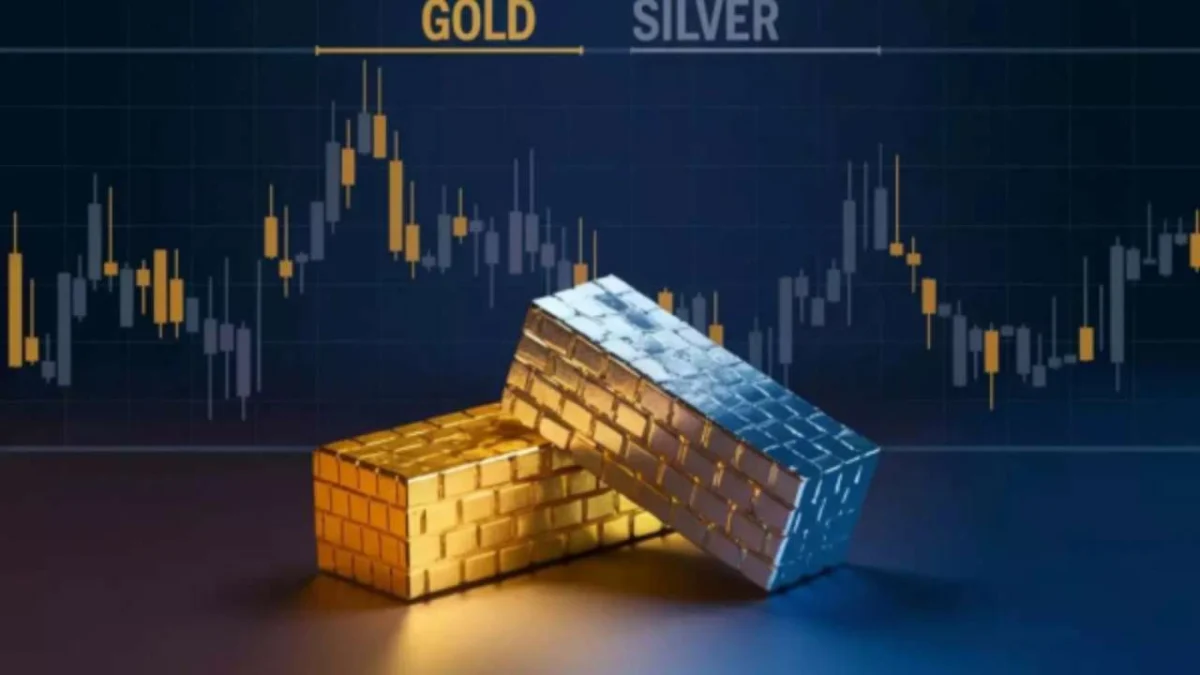
Mumbai, India – September 10, 2026 – India’s vibrant precious metals market is witnessing a significant surge, with gold and silver prices reaching historic highs today. As of September 10, 2026, the price of 24-carat gold has climbed to an astonishing Rs 15,667 per gram in major cities, while silver has breached the Rs 2,49,900 per kilogram mark. This extraordinary upward trajectory is a complex interplay of persistent global inflationary pressures, robust domestic demand, and fluctuating currency exchange rates, painting a dynamic picture for investors, consumers, and the jewellery industry alike.
The nation, deeply rooted in its cultural affinity for gold and silver, finds itself navigating a market where these precious commodities are not merely adornments but crucial investment vehicles and symbols of wealth security. The current pricing reflects a global economic landscape marked by uncertainty and a flight to safe-haven assets, amplified by India’s unique demand characteristics.
Unpacking the Current Market: Main Facts and Figures
The morning trading on September 10, 2026, has solidified a new benchmark for precious metal valuations across India. These figures, compiled from reliable market sources like Good Returns, illustrate a stark reality for those looking to buy or sell.
Gold Prices on September 10, 2026: A Detailed Overview
Gold, often considered the ultimate safe-haven asset, has seen its value propelled by a combination of international market dynamics and strong internal consumption. The purity levels of gold, specifically 24K (999 pure) and 22K (91.67% pure, ideal for jewellery), dictate their respective prices, with a slight variation observed across metropolitan centres.
)
- National Benchmark (24K Gold): The price of 24-carat gold stands at Rs 15,667 per gram in Mumbai, Kolkata, and Chennai. This reflects a substantial increase driven by global demand and inflationary pressures that have become a defining feature of the mid-2020s economy.
- National Benchmark (22K Gold): For 22-carat gold, the rate is Rs 14,361 per gram in Mumbai, Kolkata, and Chennai, reflecting its slightly lower purity, which makes it more malleable and suitable for intricate jewellery designs.
City-Wise Gold Rates Today:
-
Gold Prices in Delhi:

- 24K Gold (999 Pure): Rs 15,682 per gram
- 22K Gold (91.67% Pure): Rs 14,376 per gram
(Delhi’s slightly higher rates often reflect local demand and logistical factors unique to the capital region.)
-
Gold Prices in Mumbai:
- 24K Gold (999 Pure): Rs 15,667 per gram
- 22K Gold (91.67% Pure): Rs 14,361 per gram
-
Gold Prices in Kolkata:
)
- 24K Gold (999 Pure): Rs 15,667 per gram
- 22K Gold (91.67% Pure): Rs 14,361 per gram
-
Gold Prices in Chennai:
- 24K Gold (999 Pure): Rs 15,667 per gram
- 22K Gold (91.67% Pure): Rs 14,361 per gram
These figures underscore a remarkable period of appreciation for gold, far surpassing historical benchmarks and signaling a profound shift in global economic perceptions.
)
Silver Prices on September 10, 2026: The Industrial Precious Metal’s Ascent
Silver, often overshadowed by gold but equally significant for its dual role as an investment and an industrial metal, has also registered substantial gains. Its demand is heavily influenced by manufacturing sectors, particularly in burgeoning green technologies.
- Silver 999 (Pure Silver): The national average for pure silver (999 fineness) is approximately Rs 2,49,900 per kilogram. This robust pricing is indicative of both its safe-haven appeal and its critical role in various high-tech applications.
- Silver 925 (Sterling Silver): Sterling silver, commonly used in jewellery and silverware, is priced at Rs 2,49,000 per kilogram. Its slightly lower purity accounts for the marginal difference.
City-Wise Silver Rates Today (per 10 grams of Silver 999):
)
- Silver Price in Delhi: Rs 2,499 per 10 grams
- Silver Price in Mumbai: Rs 2,499 per 10 grams
- Silver Price in Kolkata: Rs 2,499 per 10 grams
- Silver Price in Chennai: Rs 2,499 per 10 grams
The uniformity in silver prices across major cities reflects its more globally integrated market and less regionalized demand compared to gold, though local factors still play a role.
A Chronology of Escalation: The Path to September 2026’s Highs
The current stratospheric prices for gold and silver are not an overnight phenomenon but the culmination of several years of evolving global and domestic economic conditions. The period leading up to September 2026 has been characterized by persistent volatility and a steady erosion of confidence in traditional fiat currencies.
)
Global Instability and Inflationary Pressures (2023-2025)
Beginning in the aftermath of the early 2020s economic disruptions, the global economy faced unprecedented inflationary pressures. Supply chain disruptions, exacerbated by geopolitical conflicts and resource scarcity, drove up the cost of raw materials and energy. Central banks, initially hesitant to tighten monetary policy too aggressively to avoid stifling fragile recoveries, found themselves in a difficult position. This period saw a gradual but consistent increase in the appeal of precious metals as a hedge against inflation. Investors, witnessing their purchasing power diminish, increasingly turned to gold and silver as tangible assets to preserve wealth.
Geopolitical Tensions and Safe-Haven Demand (Late 2025 – Early 2026)
The latter half of 2025 and early 2026 witnessed a significant escalation in geopolitical tensions across several regions, leading to heightened market uncertainty. This period saw a pronounced flight to safety, with institutional and retail investors alike pouring capital into precious metals. Gold, in particular, solidified its role as the ultimate safe-haven asset, benefiting from its historical perception as a reliable store of value during times of crisis. Silver, with its lower price point, also attracted considerable attention from a broader base of retail investors seeking accessible safe-haven options.
)
Currency Devaluation and Domestic Stimuli (Throughout 2025-2026)
In India, the Rupee-Dollar exchange rate has been a critical factor. A weakening Indian Rupee against the US Dollar has made imported gold and silver more expensive in local currency terms, directly contributing to the upward price revisions. While the Reserve Bank of India (RBI) has made efforts to stabilize the currency, the persistent global strength of the Dollar, driven by differing economic recovery trajectories and interest rate differentials, has posed a significant challenge. Concurrently, government stimulus measures and a growing disposable income among certain segments of the Indian population have maintained a strong underlying domestic demand, even at elevated price points.
Supporting Data: Dissecting the Influential Factors
The current price landscape is a microcosm of various economic, geopolitical, and cultural forces at play. Understanding these drivers is crucial for forecasting future movements.
)
Global Economic Outlook and Inflationary Environment
The most significant driver behind the current surge is the pervasive inflationary environment globally. Central banks have struggled to rein in inflation without tipping economies into recession. High government debt levels, expansionary fiscal policies, and persistent supply-side constraints have kept price levels elevated. In such an environment, gold and silver act as natural hedges, attracting investors seeking to protect their portfolios from the erosion of purchasing power. The expectation of continued inflation, even if moderating, sustains the appeal of precious metals.
The Role of Central Bank Policies and Interest Rates
Central bank interest rate decisions, particularly by the US Federal Reserve, wield immense influence. Historically, higher interest rates tend to make non-yielding assets like gold less attractive compared to interest-bearing bonds. However, in the current scenario, the real interest rates (nominal rates minus inflation) remain low or even negative in many economies, reducing the opportunity cost of holding gold. Moreover, central banks globally have been net buyers of gold in recent years, diversifying their reserves away from traditional fiat currencies, further underpinning demand.
)
Geopolitical Instability and Risk Aversion
The mid-2020s have been marked by a complex web of geopolitical tensions, including regional conflicts, trade disputes, and political uncertainties. Such instability fuels risk aversion among investors, leading them to divest from riskier assets like equities and channel funds into safe havens. Gold, with its millennia-old reputation as a crisis commodity, is the primary beneficiary of such shifts in sentiment. Silver, while more volatile, also gains from this risk-off environment.
US Dollar Strength and Currency Dynamics
The inverse relationship between the US Dollar and gold is a well-established phenomenon. A stronger Dollar typically makes gold more expensive for holders of other currencies, potentially dampening demand. However, in the current environment, the Dollar’s strength is often a reflection of global economic uncertainty and capital flight, which simultaneously boosts gold’s safe-haven appeal. For India, the Rupee’s depreciation against the Dollar directly translates to higher landed costs for imported gold and silver, passing on increased prices to the domestic consumer.
)
Domestic Demand: India’s Unwavering Affinity
Beyond global factors, India’s unique cultural and economic relationship with gold is a perpetual demand driver.
- Festive and Wedding Season: The approaching festive season (Dhanteras, Diwali) and the year-round wedding calendar are intrinsic to India’s gold consumption. Despite high prices, gold remains an indispensable part of cultural celebrations and gifting.
- Investment and Security: For many Indian households, particularly in rural areas, gold is not just jewellery but a primary form of savings and a hedge against economic uncertainty, especially given limited access to formal financial instruments.
- Demographic Dividend: A growing middle class with increasing disposable income contributes to sustained demand, viewing gold as both an aspirational purchase and a prudent investment.
Industrial Demand for Silver
Silver’s industrial applications set it apart from gold. It is a critical component in solar panels, electronics, medical instruments, and various green technologies. The global push towards renewable energy and technological advancements ensures a robust industrial demand for silver, creating a floor for its price and adding another layer of upward pressure. Any significant increase in manufacturing output or government investment in green infrastructure directly impacts silver prices.
)
Official Responses and Market Interpretations
The unprecedented price levels have elicited various reactions and analyses from economists, industry bodies, and regulatory authorities.
Economist Perspectives: Navigating the "New Normal"
Leading economists suggest that the current price levels reflect a "new normal" shaped by persistent global inflationary expectations and geopolitical fragmentation. Dr. Anjali Sharma, a prominent economist specializing in emerging markets, commented, "The era of cheap money and stable prices seems to be behind us. Gold and silver are simply reflecting the underlying erosion of confidence in traditional financial assets and the inflationary trajectory we’ve been on since the mid-2020s. Investors are seeking tangible assets that can weather this storm." She further highlighted the role of central bank diversification efforts, noting that "major central banks are actively increasing their gold reserves, signaling a shift in global monetary strategy that inevitably influences market sentiment."
)
The Jewellery Industry’s Adaptation
The Indian jewellery industry, a major stakeholder, is grappling with the implications of such high prices. Mr. Rajesh Mehta, President of the All India Gems and Jewellery Council, acknowledged the challenges: "While high prices deter some casual buyers, the core demand for weddings and festivals remains strong due to cultural significance. However, we are seeing a definite shift towards lighter-weight jewellery designs, multi-purpose pieces, and an increased interest in diamond or gemstone-studded gold and silver items to manage the ticket size. Digital gold and Sovereign Gold Bonds are also gaining traction as pure investment alternatives." He also noted a rise in the recycling of old jewellery, as consumers leverage high prices to liquidate existing assets.
Government and RBI Stance
The Reserve Bank of India (RBI) and the Ministry of Finance continue to monitor the precious metals market closely. While direct intervention in pricing is not typically the norm, the government has historically used import duties to manage gold imports, which can significantly impact India’s current account deficit. Sources within the Ministry of Finance indicate a cautious approach, balancing the need to support domestic industry and consumer sentiment with macroeconomic stability. "The government is exploring various avenues to promote investment in gold through financial instruments like Sovereign Gold Bonds, which reduce reliance on physical imports and mitigate their impact on our trade balance," a senior official stated on condition of anonymity. The RBI, meanwhile, remains focused on managing the Rupee’s stability, understanding its direct correlation with imported commodity prices.
)
Implications: A Multifaceted Impact
The sustained high prices of gold and silver carry significant implications for various segments of the Indian economy and society.
For Consumers: Affordability and Shifting Preferences
The most immediate impact is on consumer affordability. For many, particularly middle and lower-income households, purchasing gold for weddings or as a traditional investment becomes a substantial financial burden. This could lead to:
)
- Delayed Purchases: Families may postpone significant gold purchases, waiting for potential price corrections.
- Shift to Alternatives: Increased interest in diamond jewellery, artificial jewellery, or even digital gold as more accessible alternatives.
- Emphasis on Utility: A greater focus on purchasing gold for its investment value rather than purely ornamental purposes, leading to simpler designs.
- Liquidation of Old Gold: The high prices incentivize consumers to sell or exchange old gold jewellery, contributing to the recycling market.
For Investors: Safe Haven vs. Opportunity Cost
For investors, gold and silver continue to serve as crucial safe-haven assets in volatile times. The current prices validate their role as a hedge against inflation and economic uncertainty. However, the high entry point also presents an opportunity cost, as capital locked in precious metals could potentially be deployed in other growth assets if market conditions improve. Diversification remains key, with many investors exploring:
- Digital Gold: Purchasing gold in fractional units through online platforms.
- Gold Exchange Traded Funds (ETFs): Investing in gold without the hassle of physical storage.
- Sovereign Gold Bonds (SGBs): Government-backed bonds denominated in grams of gold, offering interest and capital appreciation.
For the Jewellery Industry: Innovation and Resilience
The jewellery sector faces a dual challenge: managing inventory at high costs and adapting to evolving consumer preferences. This environment pushes for:
)
- Design Innovation: Focus on lightweight, intricate designs that offer aesthetic appeal without the hefty price tag.
- Transparency and Trust: Building greater consumer confidence through certified purity and transparent pricing.
- Technological Adoption: Embracing online sales, virtual try-ons, and digital marketing to reach a wider audience.
- Recycling and Sourcing: Increased reliance on recycled gold to mitigate import costs and promote sustainability.
For the Indian Economy: Trade Balance and Inflationary Pressures
High gold and silver prices have significant macroeconomic implications for India.
- Current Account Deficit: India is a major importer of gold. Elevated international prices, combined with a weaker Rupee, inflate the import bill, potentially widening the current account deficit. This puts pressure on the country’s foreign exchange reserves.
- Inflationary Spiral: While gold itself is an inflation hedge, its high price can also contribute to inflationary sentiment within the economy, impacting consumer spending power on other goods and services.
- Financialization of Gold: The government’s push for SGBs and digital gold aims to channel investment into financial instruments, reducing physical imports and formalizing gold as an asset class within the financial system.
The Road Ahead: Future Outlook
The trajectory of gold and silver prices in India remains inextricably linked to the global economic pulse. In the short term, continued geopolitical uncertainty, sustained inflationary pressures, and the upcoming festive season are likely to keep prices elevated, potentially leading to further incremental gains or maintaining current levels.
)
Longer-term forecasts suggest that while some volatility is inevitable, the underlying structural drivers for precious metals demand – particularly the hedging against inflation and the search for safe havens in a fragmented global order – will likely persist. Industrial demand for silver, especially from the green technology sector, is also projected to grow steadily.
Investors and consumers are advised to remain vigilant, consult financial experts, and consider a diversified approach to wealth management. The current high prices of gold and silver on September 10, 2026, are a clear indicator of a world in flux, where traditional assets are increasingly valued for their inherent stability and enduring worth. The precious metals market in India will undoubtedly continue to be a fascinating barometer of both global economic health and local cultural enduring values.
