

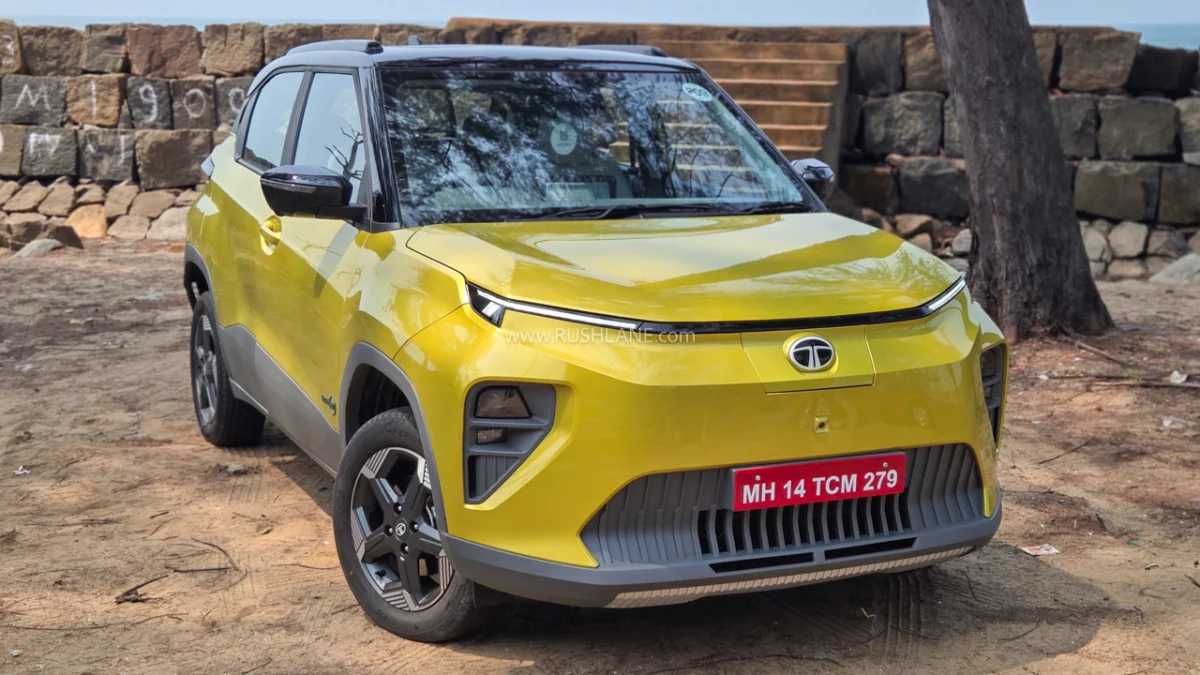
Mumbai, September 2026 – Tata Motors, the undisputed leader in India’s electric vehicle (EV) sector, has officially announced a price revision for its highly popular compact electric SUV, the Punch EV. Coming on the heels of a record-breaking performance in August, this price adjustment reflects the evolving economic landscape of the automotive industry. The Punch EV, which has been a pivotal driver in Tata’s mission to democratize electric mobility, now sees its price ceiling touch nearly ₹13 lakh, as the company balances manufacturing costs with market demand.
Main Facts: Navigating the New Price Structure
The price hike for the Tata Punch EV varies across its extensive lineup, categorized primarily by battery capacity and trim levels. The adjustment ranges from a modest ₹10,000 to a more significant ₹20,000, depending on the specific variant chosen by the consumer.
The New Pricing Spectrum
Following this revision, the entry-level Tata Punch EV now starts at an ex-showroom price of ₹9.79 lakh, up from its previous starting point of ₹9.69 lakh. At the other end of the spectrum, the top-tier Empowered+ S variant, equipped with the long-range battery pack, is now priced at ₹12.99 lakh.
Variant-Specific Adjustments
Tata Motors has strategically applied the price increase based on the battery architecture:
- 30 kWh Battery Variants (Standard Range): These models, including the ‘Smart’ and ‘Smart+’ trims, have seen a uniform increase of ₹10,000. These variants are aimed at urban commuters who prioritize efficiency and value.
- 40 kWh Battery Variants (Long Range): The more powerful variants, including the Smart+, Adventure, Empowered, and the flagship Empowered+ S, have undergone a price upward revision of ₹20,000.
Notably, the ‘Smart+’ trim remains the only variant in the lineup to offer a choice between both the 30 kWh and 40 kWh battery packs, serving as the bridge between the standard and long-range offerings.
Chronology: The Evolution of the Punch EV
To understand the context of this price hike, one must look at the rapid trajectory of the Punch EV since its inception.
- Early 2024: The Tata Punch EV was first introduced as the first model built on the dedicated acti.ev (Advanced Connected Tech-Intelligent Electric Vehicle) architecture, marking a departure from the converted internal combustion engine (ICE) platforms used for the Nexon and Tiago EVs.
- February 2026: Tata Motors launched the much-anticipated facelift of the Punch EV. This version introduced a more refined design language, reminiscent of the larger Nexon EV, featuring a full-width LED light bar and a more aerodynamic front fascia. The launch price was set at a competitive ₹9.69 lakh.
- June 2026: The Punch EV achieved a significant milestone by securing a 5-star safety rating from Bharat NCAP, reinforcing its position as one of the safest vehicles on Indian roads.
- August 2026: Tata Motors reported a dominant performance in the EV segment, selling 13,158 electric cars in a single month. The Punch EV contributed significantly to this tally, helping the company maintain a commanding market share of approximately 43%.
- September 2026: Citing rising input costs and inflationary pressures, Tata Motors implemented the current price hike, the first major adjustment since the facelift’s launch earlier in the year.
Supporting Data: Technical Specifications and Performance
The Tata Punch EV continues to be a technical powerhouse in the compact SUV segment, offering a blend of performance and range that few competitors can match at its price point.
Battery and Range Dynamics
The vehicle is offered with two distinct Liquid-cooled IP67-rated battery packs:
- 30 kWh Pack: Paired with a 65 kW (88 PS) permanent magnet synchronous motor. It offers a certified MIDC range of 365–375 km.
- 40 kWh Pack: Paired with a more robust 95 kW (130 PS) motor, delivering a certified MIDC range of 468 km.
Real-World Efficiency (C75 Standard)
In a move toward greater transparency, Tata Motors has highlighted the "C75" range—a more realistic estimation of driving range under typical Indian conditions.
- 30 kWh Variants: Realistic range of 260–275 km.
- 40 kWh Variants: Realistic range of 335–355 km.
Charging Infrastructure Compatibility
The Punch EV is designed for versatility in charging:
- DC Fast Charging: Using a 50 kW to 65 kW DC fast charger, the vehicle can replenish its battery from 20% to 80% in approximately 26 minutes.
- AC Charging: It supports both the standard 3.3 kW AC charger and the faster 7.2 kW AC home/office charger, catering to different user lifestyles.
Performance and Driveability
The 40 kWh Long Range version boasts a 0–100 km/h sprint time of just 9 seconds, making it one of the quickest vehicles in its class. In contrast, the 30 kWh version completes the same sprint in 13.5 seconds. Both versions feature four levels of regenerative braking, allowing for "one-pedal" like driving in heavy traffic, which significantly enhances energy recovery.

Official Responses and Market Context
While Tata Motors has not issued a verbose statement regarding the specific line-item costs leading to the hike, industry analysts and company insiders point toward several key factors.
The "Cost of Innovation"
The acti.ev platform, while efficient, involves sophisticated electronics and high-grade battery chemistry. The global fluctuation in the prices of raw materials—specifically lithium, cobalt, and high-grade steel—continues to exert pressure on manufacturers. Tata’s decision to hike prices by a maximum of 1.5% to 2% is seen as a "calibrated move" to absorb most of the cost increases without alienating its core customer base.
The BaaS Factor (Battery as a Service)
To mitigate the impact of the higher upfront costs, Tata has continued to push its Battery as a Service (BaaS) program. Under this scheme, the Punch EV is available at a starting price of just ₹6.49 lakh, with consumers paying a battery rental of ₹2.6 per km. This model has been instrumental in attracting first-time EV buyers who are wary of high initial acquisition costs.
Competitive Landscape
The price hike also reflects the competitive positioning of the Punch EV. It currently faces stiff competition from:
- MG Windsor EV: Offering a premium cabin experience.
- Mahindra XUV 3XO EV: Known for its performance and feature-rich interior.
- Citroen eC3: A direct rival in terms of dimensions and utility.
- MG Comet EV: The budget-friendly urban alternative.
By keeping the price hike relatively low, Tata ensures that the Punch EV remains a more viable option than many of its rivals, especially when considering its 5-star safety pedigree and extensive service network.
Implications: What This Means for the Indian EV Market
The price revision of the Punch EV carries several implications for the broader automotive ecosystem in India.
1. Resilience of Demand
Despite the price increase, the Punch EV remains one of the most accessible and "complete" electric cars in India. Given that the hike is less than the cost of a high-end smartphone, it is unlikely to deter serious buyers. Tata’s massive 43% market share suggests high brand loyalty and consumer trust in their EV technology.
2. Setting a Benchmark for "Realistic" Range
By proactively discussing the C75 range alongside MIDC figures, Tata is setting a new industry standard for transparency. This helps manage customer expectations and reduces "range anxiety," which is crucial for the mass adoption of EVs in Tier-2 and Tier-3 cities.
3. The Future of the acti.ev Platform
The success of the Punch EV, even with price adjustments, validates Tata’s investment in the acti.ev platform. This architecture will underpin several upcoming models, including the Harrier EV and the Sierra EV. The ability to maintain high sales volumes (over 13,000 units monthly for the brand) provides the economies of scale needed to keep future price hikes minimal.
4. Safety as a Non-Negotiable
With its 5-star Bharat NCAP rating, the Punch EV has shifted the conversation from "EVs are tech-heavy" to "EVs are safe." This reputation allows Tata a degree of pricing power; consumers have shown a willingness to pay a slight premium for a vehicle that guarantees superior structural integrity and safety features like six airbags, ESP, and electronic parking brake as standard or available options.
Conclusion
The September 2026 price hike for the Tata Punch EV is a testament to the maturing of the Indian electric vehicle market. It represents a balance between the manufacturer’s need for sustainable margins and the consumer’s demand for affordable, high-tech, and safe mobility. As Tata Motors continues to dominate the charts, the Punch EV stands as a benchmark—a compact SUV that refused to compromise on features or safety, even as it navigated the complexities of a fluctuating global economy. For the Indian car buyer, the Punch EV remains a compelling proposition, proving that the future of mobility is not just electric, but also increasingly resilient.
