

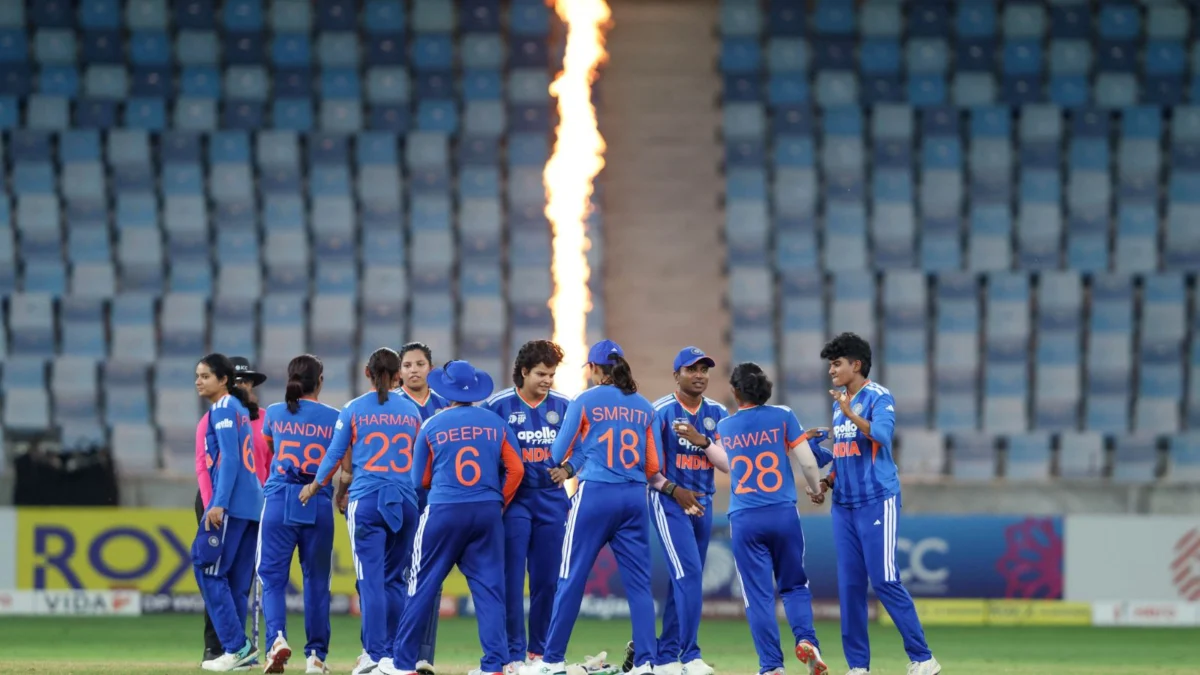
Dubai, UAE – September 12, 2026 – As the sun sets on another enthralling edition of the Women’s Asia Cup, all eyes turn to Dubai for a final that has become a recurring emblem of continental cricketing prowess: India versus Sri Lanka. This Sunday, September 14, 2026, marks the third successive time these two nations will contest the coveted title, underscoring a rivalry that has deepened with each hard-fought encounter. From India’s dominant sweep in 2022 to Sri Lanka’s historic upset in 2024, the stage is set for a rubber match that promises tactical brilliance, individual heroics, and a captivating display of women’s cricket at its finest.
The match, scheduled for 8 PM IST, will be live on the Sony Sports Network and Sony LIV, bringing the high-stakes drama to millions of fans. With the tournament having expanded its field and traversed various venues over the years, the constant remains the magnetic pull of this particular fixture, especially when the ultimate prize is on the line.
The Storied Rivalry: A Chronology of Continental Clashes
The Women’s Asia Cup has witnessed numerous shifts in format and participation since its inception, yet the rivalry between India and Sri Lanka has been a steadfast narrative, particularly in its finals.
Early Dominance and a Hiatus
The inaugural editions of the Women’s Asia Cup were largely dominated by India, with Sri Lanka often emerging as their primary challengers. Indeed, the first four finals of the tournament saw India and Sri Lanka lock horns for the title. These early encounters established a clear hierarchy, with India frequently emerging victorious, laying the foundation for their reputation as regional powerhouses. However, after this initial flurry of direct confrontations, the two teams went a significant 14 years without meeting in a summit clash. This hiatus, while perhaps diminishing the frequency of their final showdowns, only served to build anticipation for their eventual return to the grandest stage.
The Modern Resurgence: 2022, 2024, and Now 2026
The rivalry reignited with remarkable intensity in recent years. The 2022 final in Sylhet, Bangladesh, brought the two giants back together, with India asserting their traditional dominance. In a commanding performance, India swept aside Sri Lanka by eight wickets, showcasing their batting depth and bowling precision. This victory further solidified India’s position as the most successful team in the tournament’s history, adding another trophy to their already illustrious cabinet.
However, the narrative took a dramatic turn two years later in Dambulla, Sri Lanka. In what was widely considered a stunning upset, Sri Lanka defied expectations to defeat India by the exact same margin of eight wickets. This victory was monumental for Sri Lankan cricket, marking their maiden Women’s Asia Cup title. It was a testament to their growing prowess, tactical acumen, and the emergence of new talents capable of challenging the established order. The Dambulla triumph was not just a win; it was a statement, signaling Sri Lanka’s intent to be a consistent force in women’s cricket.
Now, in 2026, the two teams meet again in Dubai, making it their third successive final. This rubber match carries immense weight. For India, it’s an opportunity to reclaim the title they lost and reassert their supremacy. For Sri Lanka, it’s a chance to prove that their 2024 victory was no fluke, to defend their maiden title, and to cement their status as a formidable contender. The historical context adds layers of intrigue, promising a final steeped in strategic battles and emotional resonance.
Road to Dubai: Journey Through the 2026 Asia Cup
Both India and Sri Lanka have navigated challenging paths through the 2026 Women’s Asia Cup to reach this highly anticipated final, showcasing their strengths and overcoming hurdles along the way.
India’s Dominant Run
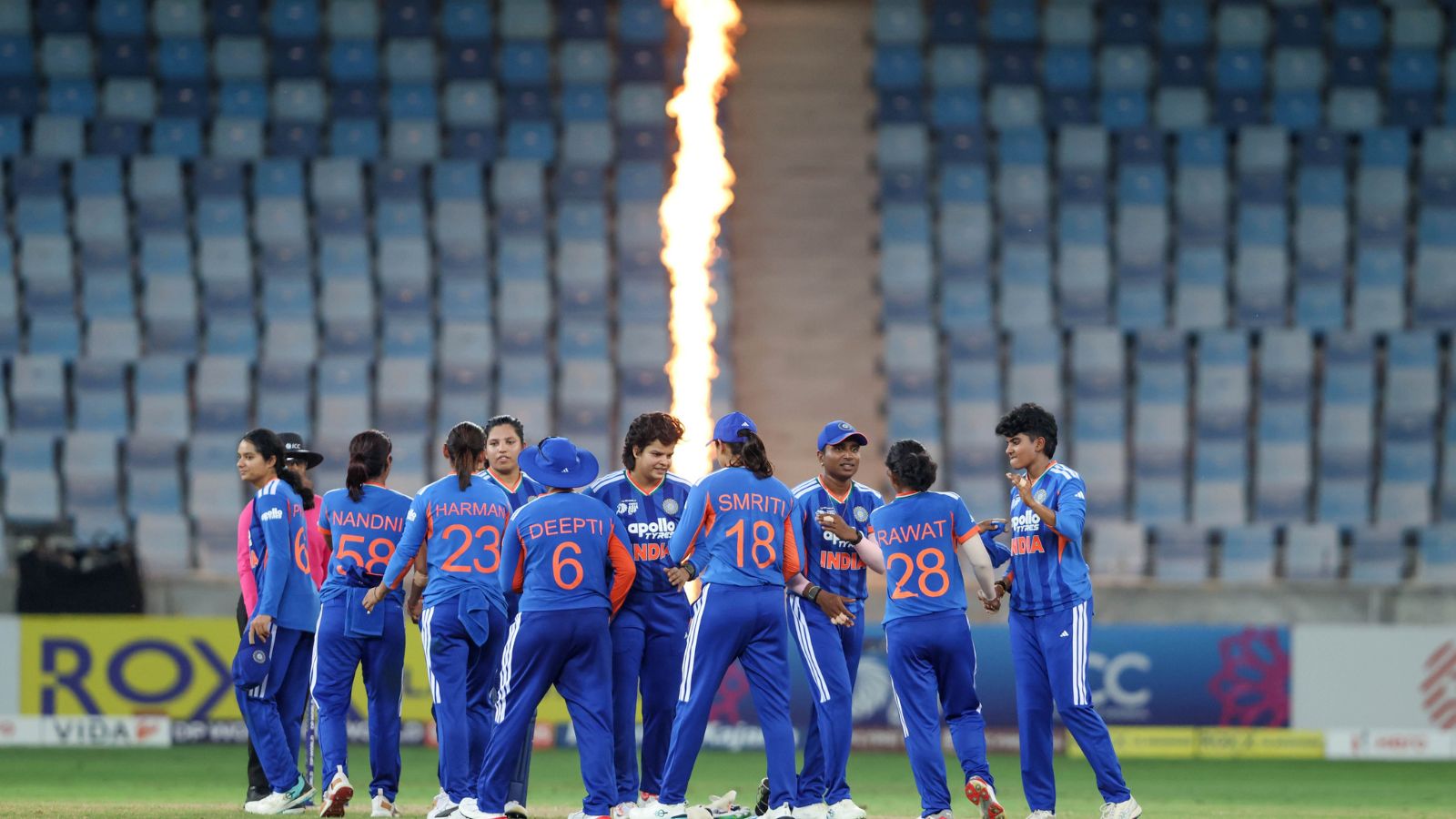
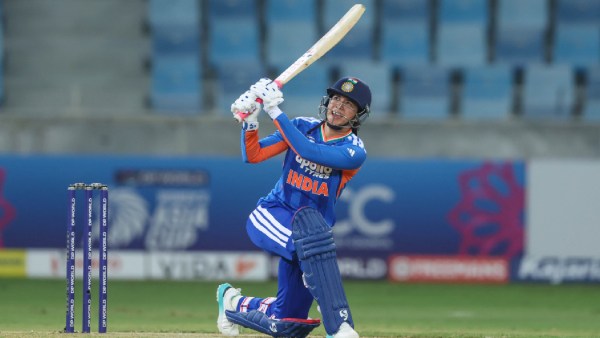
India’s campaign in the 2026 edition has been characterized by powerful batting displays and disciplined bowling. They have consistently topped their group, demonstrating an all-round game that has proven difficult for opponents to contain. The batting has been particularly explosive, driven by the prolific opening pair of Shafali Verma and Smriti Mandhana. Verma currently leads the batting charts with an impressive 168 runs at a blistering strike rate of 169.70, while Mandhana is not far behind with 154 runs at an even more aggressive strike rate of 171.11. Their ability to provide rapid starts has often put India in unassailable positions.
Beyond the openers, the Indian middle order, featuring players like Pratika Rawal, captain Harmanpreet Kaur, and the explosive Richa Ghosh, has provided crucial stability and acceleration when needed. Their semi-final performance against Bangladesh, while a victory, also offered a glimpse into potential vulnerabilities, particularly against quality spin bowling, a point that will be crucial for the final.
Sri Lanka’s Path to the Final
Sri Lanka’s journey to the final has been equally commendable, marked by resilience and strategic brilliance, particularly from their bowling unit. They have shown a remarkable ability to stifle opponents with their spin attack and execute crucial game plans. Their captain, Chamari Athapaththu, has been an inspirational figure, leading from the front with both bat and ball.
Their semi-final against Pakistan was a testament to their strength, where their spinners played a pivotal role in restricting their opponents and setting up a comfortable chase. The emergence of young talents alongside experienced campaigners has created a well-balanced side capable of challenging any team in the tournament. Sri Lanka’s focus on tight bowling, particularly spin, and sensible batting has been a hallmark of their success in this edition.
The Tactical Chessboard: India’s Batting vs. Sri Lanka’s Spin Web
The final in Dubai is poised to be a classic contest between India’s formidable batting firepower and Sri Lanka’s cunning spin attack. The tactical battle between these two facets will likely dictate the flow and outcome of the match.
India’s Formidable Batting Core
India’s batting lineup is arguably one of the most destructive in women’s cricket, especially in the T20 format. The aggressive starts provided by Shafali Verma and Smriti Mandhana have been a consistent theme throughout the tournament. Verma, with her fearless approach, has decimated bowling attacks, while Mandhana’s elegant yet powerful strokeplay provides a perfect foil.
However, a key characteristic of India’s top order, beyond the left-handed Mandhana, is its heavy concentration of right-handers. Shafali Verma, Pratika Rawal, captain Harmanpreet Kaur, and Richa Ghosh form a potent right-handed core that can score quickly and dominate. This composition presents both an opportunity and a challenge, particularly against a spin-heavy attack designed to exploit specific match-ups.
Sri Lanka’s Left-Arm Spin Arsenal
Sri Lanka’s primary weapon against India’s batting lineup will undoubtedly be their slow left-arm duo: the experienced Sugandika Kumari and the prodigious 17-year-old Chamudi Praboda. This pair has been instrumental in Sri Lanka’s success, offering control, wicket-taking ability, and excellent economy rates.
Sugandika Kumari has been a pillar of consistency, taking six wickets while conceding a mere 63 runs in 15 overs throughout the tournament. Her economy rate is a testament to her disciplined line and length, often trusted to bowl crucial overs, including the powerplay. Her ability to dismiss batters like Muneeba Ali in the semi-final against Pakistan highlights her effectiveness in key moments.
Chamudi Praboda, despite her youth, has shown maturity beyond her years. With five wickets for 66 runs in 15 overs, she has provided excellent support, frequently bowling in the middle and death overs. Her skill in generating turn has been particularly impressive, as demonstrated when she outfoxed Sadaf Shamas with late turn, leading to a stumping in the semi-final.
Together, these two left-arm spinners have taken 11 wickets in 30 overs at an outstanding combined economy rate of 4.3. Their ability to maintain this control against an Indian batting order packed with right-handers, who often find left-arm spin turning away from them challenging, could be the decisive factor in the final.
The Chamari Athapaththu Factor
Beyond her leadership, captain Chamari Athapaththu presents another significant threat with her off-spin. Her all-round brilliance has been a cornerstone of Sri Lanka’s campaign. She is the joint leading wicket-taker in the tournament with 11 wickets, including a sensational spell of 7/5 against Indonesia. While Sugandika and Chamudi will focus on the right-handers, Athapaththu’s off-spin provides a crucial dimension, particularly against Smriti Mandhana and any other left-handers in the Indian lineup. Her ability to pick up wickets in the middle overs can disrupt India’s momentum and create pressure.
Lessons from Previous Encounters: India’s Vulnerability to Turning Ball
The Indian team, despite its formidable batting prowess, has shown instances of vulnerability against quality spin bowling that turns the ball away from their predominantly right-handed batters. These past encounters offer crucial insights into the tactical battle awaiting them in Dubai.
Bangladesh’s Spin Challenge
In their semi-final clash against Bangladesh, India faced a stern test from the opposition’s spinners. Left-arm spinner Nahida Akter proved particularly effective, taking 1/25 in her four overs. Her dismissal of Richa Ghosh was a prime example of how spin can trouble Indian batters; reacting to Ghosh’s charge, Akter widened her line and slowed the ball down, resulting in a stumping. Akter also helped build pressure on captain Harmanpreet Kaur, who found herself struggling at 2 off 10 balls at one stage.
Bangladesh’s leg-spinner Rabeya Khan further compounded India’s challenges by turning the ball away from the right-handers. While Pratika Rawal managed to hit her for a six by using her feet, she eventually succumbed to the same tactic, top-edging to cover after advancing again. These instances highlighted that even aggressive intent can backfire if not executed with precision against skilled spin.
Thailand’s Surprise Attack
Earlier in the tournament, India also encountered a similar challenge from Thailand’s leg-spinner Suleeporn Laomi. Laomi produced a remarkable spell of 3/26, dismissing three key right-handers: Pratika Rawal, Shafali Verma, and Richa Ghosh. While not all wickets were directly attributable to turn, Richa Ghosh’s dismissal was particularly instructive. She attempted to hit a flighted ball outside off-stump over cover but picked out the fielder, demonstrating how deceptive flight and subtle turn can lead to misjudgments even from powerful hitters.
Analyzing the Pattern
These incidents collectively reveal a pattern: India’s right-hand-heavy lineup can be tested by spinners who possess the ability to turn the ball away from them, creating doubts and forcing errors. Whether it’s the flight and deception of a leg-spinner or the subtle drift and turn of a left-arm orthodox bowler, the challenge lies in adapting to variations in length, pace, and trajectory. Sri Lanka’s Sugandika and Chamudi, with their left-arm spin, are perfectly positioned to exploit this potential vulnerability.
India’s Counter-Strategy: Aggression with Intent
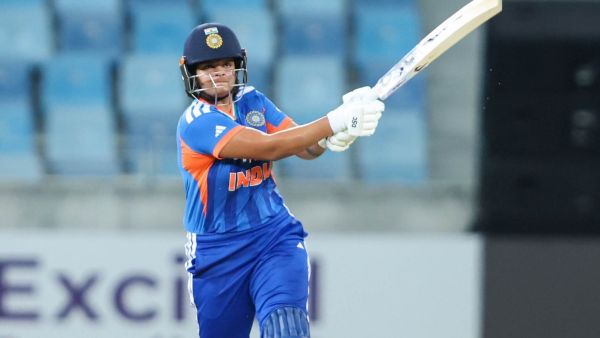
For India, the answer to Sri Lanka’s potent left-arm duo need not be an overly cautious approach. The Indian batters have demonstrated their capacity to disrupt spinners by taking the attack to them, but the key will be intelligent aggression. Shafali Verma has effectively employed the reverse sweep to break lines and find boundaries, while Pratika Rawal has shown willingness to skip down the pitch to negate spin and hit straight. Richa Ghosh, with her immense power, often backs herself to clear the field.
The challenge, however, will be discerning when to attack and when to defend against bowlers who are adept at varying their lengths and pace. Chamudi Praboda, in particular, has shown an uncanny ability to dismiss batters who look to advance against her. Her 3/21 against Bangladesh included the dismissal of Sobhana Mostary, who was stumped after coming down the pitch, only for the ball to turn away and beat her bat. This highlights the risk associated with charging down the track against a bowler with good control and turn. India will need to strike a delicate balance, reading the bowler’s intentions and the pitch conditions meticulously to execute their attacking shots effectively while minimizing risks.
Key Match-Ups and Deciding Factors
The final will ultimately be decided by several crucial match-ups and tactical decisions made under pressure.
Mandhana’s Pivotal Role
Smriti Mandhana, as the lone left-hander in India’s likely top six, could hold the key to disrupting Sri Lanka’s spin plans. If she can stay at the crease and score freely, Sri Lanka will be forced to adjust their lines and fields, preventing them from settling into a consistent match-up against India’s right-handers. Her ability to rotate strike and hit boundaries against both left-arm and off-spin will be vital in taking pressure off her teammates.
Left-Arm Spin Control
The sustained control offered by Sri Lanka’s left-arm spinners, Sugandika and Chamudi, will be paramount. Their combined economy rate of 4.3 runs an over is exceptional, but maintaining that against an aggressive Indian batting order, especially in a high-pressure final, will be a different test. If they can continue to stifle scoring, they will create opportunities for wickets.
India’s Adaptation
India’s ability to adapt swiftly to the conditions and the specific threats posed by Sri Lanka’s spin attack will be crucial. This includes making smart decisions about shot selection, rotating strike effectively, and knowing when to absorb pressure versus when to counter-attack.
Fielding and Captaincy
In a final of such magnitude, fielding brilliance and astute captaincy will undoubtedly play a significant role. Dropped catches, missed run-out opportunities, or misjudged bowling changes could swing the momentum. Harmanpreet Kaur and Chamari Athapaththu, both seasoned leaders, will be under immense pressure to make the right calls at critical junctures.
Implications: More Than Just a Trophy
This final is more than just a contest for a trophy; it carries significant implications for both teams and the broader landscape of women’s cricket.
For India
For India, reclaiming the Asia Cup title would be a powerful statement of regional supremacy. It would help them regain the momentum lost in 2024 and boost their confidence heading into future global tournaments. A dominant performance would also validate their evolving batting strategies and reinforce their position as one of the top teams in the world.
For Sri Lanka
For Sri Lanka, successfully defending their maiden title would be a monumental achievement. It would solidify their rise in women’s cricket, proving that their 2024 victory was not a fluke but a testament to sustained improvement and tactical maturity. Such a win would inspire a new generation of cricketers in Sri Lanka and further enhance their global standing.
For Women’s Cricket
The growing competitiveness and the quality of this rivalry speak volumes about the progress in women’s cricket. A thrilling final between two well-matched teams will further raise the profile of the Asia Cup and showcase the exciting talent within the women’s game, attracting new fans and investors alike.
Conclusion
As India and Sri Lanka prepare to lock horns in Dubai, the anticipation is palpable. The history, the recent results, and the intriguing tactical match-ups all point towards a final that could be etched into the annals of women’s cricket history. With India seeking to reclaim their throne and Sri Lanka eager to defend their hard-won title, Sunday’s showdown promises an exhilarating display of skill, strategy, and sheer determination. The Women’s Asia Cup final is not just a game; it’s the culmination of a fierce rivalry, a testament to growing excellence, and a spectacle not to be missed.
