

5 min read Sep 12, 2026 10:01 PM IST
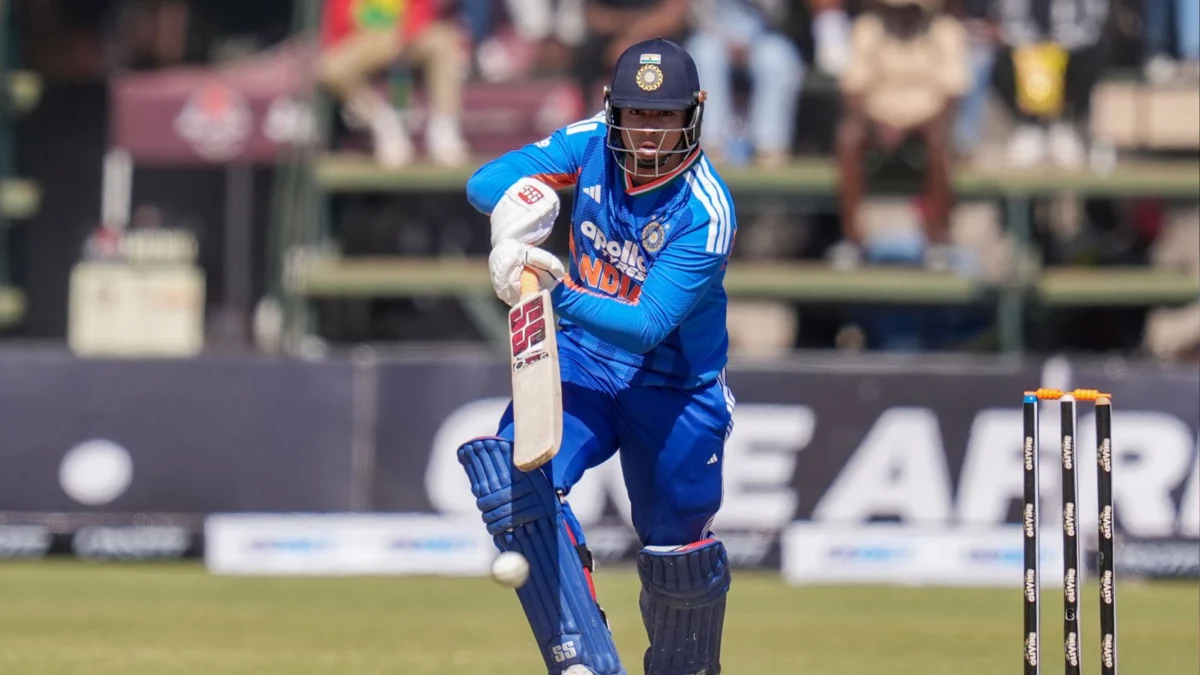
(Image: Vaibhav Sooryavanshi in action. (Faheem Hussain / CREIMAS for BCCI))
A Young Star Under the Glare: Vaibhav Sooryavanshi’s Crucial Home Debut
For Vaibhav Sooryavanshi, the relentless grind of professional cricket often compresses itself into a single day’s work, or at times, two. But as the 15-year-old batting sensation gears up for his first international appearance on Indian soil – albeit with India technically playing as the "away" side against Afghanistan in the upcoming T20I series – the stakes have never felt higher. The spotlight at the Arun Jaitley Stadium, a venue that has witnessed both his prodigious talent and recent struggles, is set to scrutinize every move of this remarkable young cricketer.
The narrative surrounding Sooryavanshi has been one of thrilling contrasts in the lead-up to Sunday’s opening encounter. Four months prior, at this very ground, he had etched his name into IPL folklore with a blistering 21-ball 46, a knock that saw neither the searing pace of Mitchell Starc nor the raw power of Lungi Ngidi spared his wrath. It was a performance that spoke volumes of his fearless approach and extraordinary hitting ability. Yet, just days before his significant debut, a different version of Vaibhav Sooryavanshi was on display during India’s training session. He was beaten four times by the master craftsman Jasprit Bumrah, and twice apiece by the emerging talents of Arshdeep Singh and Yash Thakur. This momentary dip, however, was quickly overshadowed by a defiant resurgence in an optional net session, underscoring the mental resilience that perhaps defines this young prodigy more than his boundary-hitting prowess.
Sunday promises to be a crucible, a definitive test of Sooryavanshi’s mettle against a formidable Afghanistan pace attack, particularly with the new ball. The Delhi pitch, known for its early assistance to seamers, coupled with the opponent’s strategic homework, sets the stage for a captivating individual battle within the broader context of the series opener.
Chronology: A Week of Contrasts and Determination
The past few days have offered a microcosm of Vaibhav Sooryavanshi’s burgeoning career – a rollercoaster of challenges, setbacks, and remarkable resilience. This chronological unfolding of events at the Arun Jaitley Stadium provides crucial insight into the psychological and technical preparation of a young athlete under immense pressure.
Friday’s Ordeal: Facing the Indian Pace Battery
The Indian team’s main training session on Friday was a stark reminder of the unforgiving nature of international cricket. Even in the nets, against his own teammates, Sooryavanshi faced a baptism of fire. The formidable trio of Jasprit Bumrah, Arshdeep Singh, and Yash Thakur, armed with new balls and the advantage of fresh conditions, put the young left-hander through a rigorous examination. Bumrah, with his deceptive variations and pinpoint accuracy, repeatedly found the edges of Sooryavanshi’s bat, and often, the air between bat and ball. Arshdeep’s left-arm angle and ability to generate swing, combined with Thakur’s raw pace, ensured that Sooryavanshi rarely found his rhythm.
This session bore little resemblance to his earlier IPL heroics at the same venue. The effortless power, the audacious strokes that had dismantled international bowlers, seemed to be momentarily elusive. It was a challenging experience, a direct encounter with the sheer quality and intensity of top-tier international bowling. For any young batter, such a session could be deflating, but for Sooryavanshi, it appeared to serve as a vital, albeit harsh, learning experience. It highlighted the vast gulf between domestic brilliance and the exacting standards of the senior national team, even in a practice setting. The struggles were visible, the frustration perhaps internal, but the lesson, invaluable.
Saturday’s Redemption: Unleashing in the Optional Session
The true measure of a champion often lies not in avoiding failure, but in how swiftly and decisively they respond to it. Less than 24 hours after his challenging Friday, Vaibhav Sooryavanshi was back at the Arun Jaitley Stadium, a testament to his unwavering dedication. He was one of only three Indian cricketers to turn up for the optional session, the others being fellow left-handers Abhishek Sharma and Tilak Varma. This voluntary effort underscored his commitment to rectify and refine.
For close to two hours, the 15-year-old batted in the nets, and as the original article poignantly suggests, it would be more accurate to say he "unleashed." Gone was the tentative play of Friday. In its place emerged the familiar, aggressive Sooryavanshi. Whoever had the "misfortune" of holding the ball – primarily net bowlers, with the occasional over from Abhishek Sharma – was treated with disdain. His strokes were clean, powerful, and authoritative. Most of the shots came back straight down the ground, a clear indication of his intent to hit through the line and dominate. Those occupying the old clubhouse, including his father, Sanjeev, and younger brother, Ashirvad, an aspiring cricketer himself, were kept on their toes, witnessing the raw power and precision of his hitting.
This session was more than just practice; it was a psychological reset. It demonstrated an incredible ability to process a difficult experience, adapt, and regain confidence almost overnight. The presence of his family added another layer of significance, highlighting the deep support system that fuels his journey and the collective aspirations invested in his prodigious talent. It was a powerful statement of intent, a declaration that the previous day’s struggles had only sharpened his resolve.
The Looming Sunday: A Home Debut with an "Away" Tag
The culmination of these contrasting days arrives on Sunday, a date etched in Sooryavanshi’s nascent career. It marks his first opportunity to represent India on home soil, a moment every cricketer dreams of. The technicality of India being designated the "away" side for scheduling reasons does little to diminish the profound significance of this debut in front of home fans.
However, two critical factors loom large, both arriving early in the innings: the challenging conditions offered by the new ball at the Kotla, and the strategic acumen of Afghanistan’s potent pace attack. His ability to navigate these initial overs will not only dictate his personal performance but could also set the tone for India’s innings and the series itself. The stage is set for a true test of character, skill, and the remarkable adaptability that Sooryavanshi has already hinted at.
Supporting Data: The New Ball Conundrum at Kotla
The Arun Jaitley Stadium, historically a venue of fluctuating fortunes, presents a distinct challenge, particularly in the early overs of a T20 contest. The data and expert observations leading into the India-Afghanistan series underscore a clear pattern: the new ball reigns supreme, and survival against it is paramount.
Expert Analysis: Navdeep Saini’s Ground Assessment
Navdeep Saini, drafted in as India’s net bowler for the series, offered invaluable insights into the pitch conditions. His recent experience bowling to top-tier batsmen has provided a first-hand account of what the pacers can expect. "From what I have experienced so far, there was movement on offer," Saini told this newspaper. "With the new ball, the pacers can surely be effective. The ball was gripping a bit as well. Perhaps it is because the weather has been a bit cold, with the rain around. The runs will start flowing once the ball gets older, but we might see movement in the first few overs."
Saini’s observations are critical. The combination of cooler weather, potentially exacerbated by recent rain, can preserve the seam and shine of the new ball for longer, aiding both swing and seam movement. The "grip" he mentions suggests that while pacers will benefit, there might also be some assistance for spinners early on if they can exploit the surface. For an opening batsman like Sooryavanshi, this translates to a high-risk, high-reward scenario. The initial few overs will demand immaculate technique, watchful defence, and judicious stroke-making against a moving ball, a stark contrast to the flat-track hitting often associated with T20 cricket.
Local Tournament Insights: The Delhi Premier League Precedent
The recent Delhi Premier League (DPL), which concluded less than a fortnight ago, serves as a compelling local barometer for the Kotla pitch. The tournament’s data paints a vivid picture of early-innings struggles. Across the last five full-length matches of that competition, a staggering nine wickets fell inside the first three overs across all ten innings. While 229 runs were scored in these powerplay phases, it came at an average of 25.44 runs per wicket, and a strike rate of 7.63 runs per over – figures that are far from ideal for T20 cricket, especially for top-order batsmen.
This statistical pattern is not mere coincidence; it reflects a consistent characteristic of the Kotla pitch this season. New-ball trouble wasn’t a theoretical concept; it was the prevailing narrative. Teams that navigated these early overs with minimal damage often found themselves in a stronger position to accelerate later. For Sooryavanshi, whose natural game is aggressive, this data presents a strategic dilemma: temper his instincts or trust his eye and attack the movement? The DPL figures strongly suggest that caution, at least initially, might be the more prudent approach.
Afghanistan’s Early Attack Prowess: Naveen-ul-Haq and Fazalhaq Farooqi
Afghanistan, for their part, possess an attack perfectly suited to exploit these conditions. Their pace spearheads, Naveen-ul-Haq and Fazalhaq Farooqi, have demonstrated a consistent ability to strike early and maintain tight control in the powerplay.
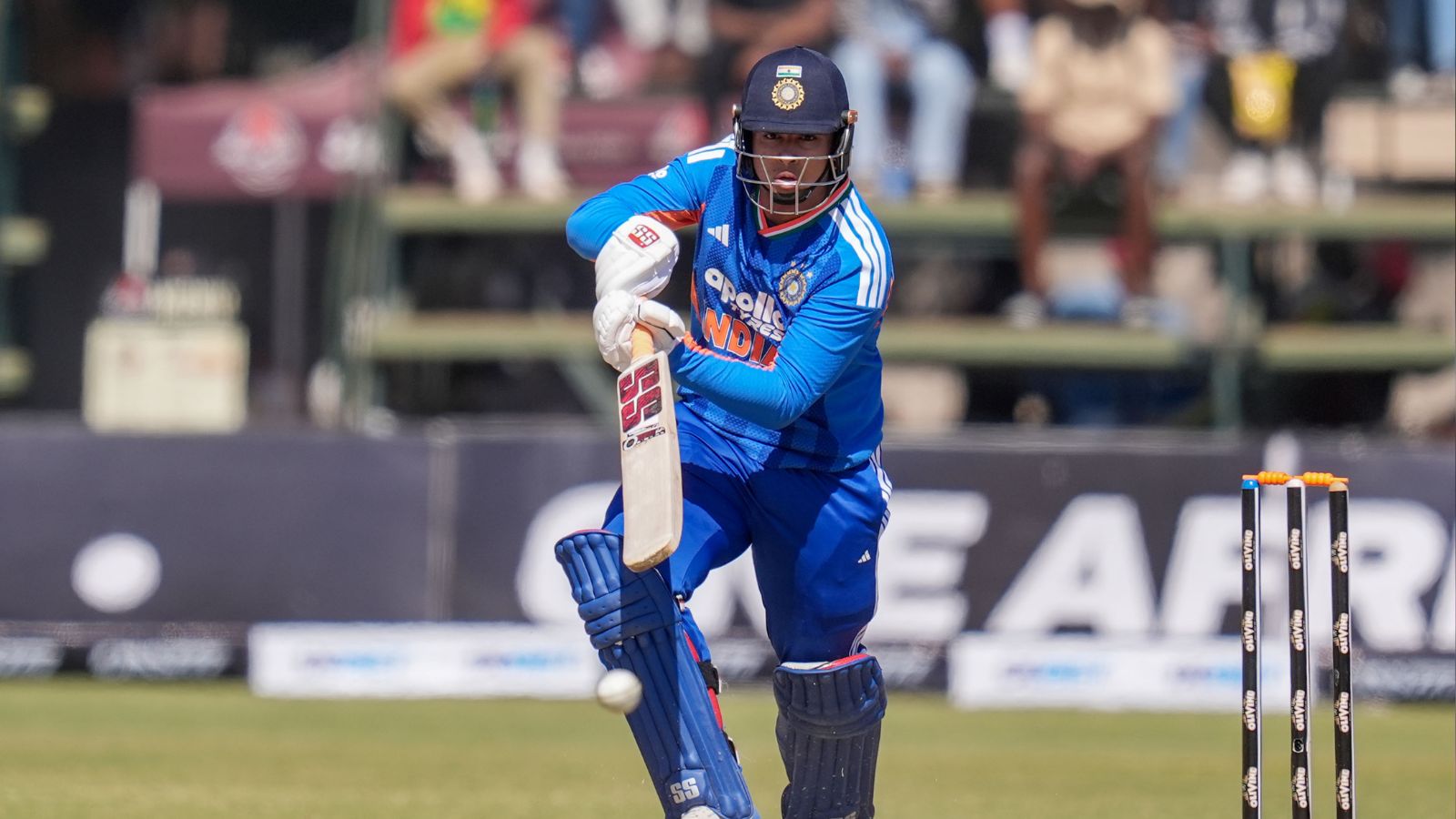
Naveen-ul-Haq, returning to the side after a nearly two-year hiatus, boasts impressive early-overs statistics. Inside the first three overs of his T20I career, he has taken wickets at an economy of 6.65 and an average of 13.3. These figures loosen considerably to 7.78 and 18.73 once the innings settles, highlighting his potency with the new ball. His variations, subtle changes of pace, and ability to swing the ball both ways make him a genuine threat in the initial phase.
Fazalhaq Farooqi, a former Rajasthan Royals teammate of Sooryavanshi, exhibits a similar pattern. His early-overs figures read 6.02 economy and an average of 17.3, which then expand to 7.02 and 20.2 after the powerplay. Farooqi’s left-arm angle and ability to hit consistent lengths, often generating late swing, can be particularly challenging for right-handers, but also for left-handers who might misjudge the line. His familiarity with Sooryavanshi from their IPL stint adds another layer of intrigue, as he would have firsthand knowledge of the young batsman’s strengths and weaknesses.
These bowlers are not merely pace merchants; they are skilled practitioners of new-ball bowling, capable of exploiting even the slightest assistance from the pitch. Their early-overs aggression and control make them ideal candidates to capitalize on the Kotla conditions.
Sooryavanshi’s Vulnerability: A Recurring Pattern
Compounding the challenge for Vaibhav Sooryavanshi is a statistic from his nascent T20I career: in just six matches, he has already fallen inside the first three overs three times. This suggests a potential vulnerability against the new ball, either due to an eagerness to score quickly, a slight technical deficiency against early movement, or simply facing high-quality opening spells.
This recurring pattern, when juxtaposed with the DPL data and the skills of Afghanistan’s pacers, creates a clear strategic target for the opposition. Sooryavanshi’s ability to overcome this specific challenge will be crucial. It demands not just skill, but also temperament, patience, and a well-defined game plan to navigate the initial onslaught. His IPL heroics showcased his ability to dominate, but international cricket often demands a different kind of heroism – the heroism of survival and calculated risk.
Official Responses: The Opponent’s Strategic Acknowledgment
The opposition’s respect, particularly when articulated by the captain, often speaks volumes about a player’s perceived threat. Afghanistan captain Ibrahim Zadran’s comments regarding Vaibhav Sooryavanshi were a blend of admiration and strategic intent, indicating that the young Indian prodigy has firmly registered on their radar.
"Vaibhav Sooryavanshi is a great talent," Zadran acknowledged, his words carrying the weight of a captain who has done his homework. "He has been great at the IPL, and has been performing at all the different levels of cricket." This upfront recognition of Sooryavanshi’s abilities is a testament to the impact the 15-year-old has already made, transcending domestic boundaries to become a known entity on the international stage. Zadran’s emphasis on his performance "at all the different levels" suggests that Afghanistan’s scouting has extended beyond just the IPL, delving into his junior and state-level achievements to build a comprehensive profile.
However, Zadran’s praise was quickly followed by a clear statement of strategic intent: "We have thought about him, and we have knowledge about him too. There are guys in our team who have played against him in the IPL, and we have already watched his videos. We will try to just keep it simple and execute the right plans at the right time against him." This isn’t merely a polite nod to a talented opponent; it’s a declaration of war, albeit a sporting one.
The phrases "thought about him," "knowledge about him," and "watched his videos" confirm that Sooryavanshi has been a focal point of Afghanistan’s pre-series tactical discussions. The mention of IPL teammates, particularly Fazalhaq Farooqi from the Rajasthan Royals, is significant. These players can offer invaluable first-hand accounts of Sooryavanshi’s temperament, preferred scoring areas, weaknesses against specific deliveries, and how he reacts under pressure. Such insider information can be gold dust for opposition analysis.
Zadran’s final remark – "We will try to just keep it simple and execute the right plans at the right time against him" – is classic captaincy speak. It suggests that while they respect his talent, they believe they have identified specific areas to target. "Keeping it simple" often implies sticking to fundamental bowling principles: hitting good lengths, exploiting movement, and starving the batsman of their preferred scoring opportunities. "Executing the right plans at the right time" points to strategic deployment of their bowlers, perhaps using specific variations or fields at crucial junctures of his innings.
For Sooryavanshi, these comments are a double-edged sword. On one hand, it’s validation of his rising profile. On the other, it’s a clear warning that he will be targeted. The psychological battle has already begun, with the opposition signalling their intent to test his resolve from ball one. This level of scrutiny, rarely afforded to a 15-year-old, underscores the unique pressure and expectation placed upon him.
Implications: The Prodigy’s Path Forward and Broader Significance
Sunday’s match is more than just a T20 international; for Vaibhav Sooryavanshi, it’s a pivotal moment that carries significant implications for his personal trajectory and, by extension, for Indian cricket’s youth development philosophy. The challenge of the new ball at Kotla, combined with Afghanistan’s targeted strategy, creates a high-stakes scenario that could either be a launchpad or a crucial learning curve.
The Art of Overnight Rebuilding: From Nets to the Middle
What Friday and Saturday showed, side by side, is a batter capable of rebuilding overnight. This remarkable capacity for self-correction and mental fortitude is perhaps Sooryavanshi’s most underrated asset. He has demonstrated it before, across an IPL season that was built on exactly that kind of correction – bouncing back from a few quiet games to deliver match-winning performances. The ability to shake off a poor session against top international bowlers and then dominate an optional net session with renewed vigour speaks volumes about his mental strength and self-belief.
The critical implication now is whether he can carry this "overnight rebuilding" from the nets into the unforgiving cauldron of an international match. The pressure, the crowd, the live broadcast, and the intensity of genuine match scenarios are entirely different from practice. If he can translate that immediate learning and adaptation into a composed and effective performance on Sunday, it will signal a maturity far beyond his years. It will prove that his talent is not merely raw power but also encompasses the mental toughness required to thrive at the highest level.
Surviving the New Ball, Capitalizing on the Older Pitch
The key to Sooryavanshi’s success, as hinted by the pitch analysis, lies in navigating the initial onslaught. If he survives the new ball at the Kotla, the pitch tends to pay back everything it took away from him early. As the ball gets older, loses its shine, and softens, the pitch generally becomes flatter and more conducive to stroke play. The early movement subsides, and the ball comes onto the bat with greater predictability.
This creates a clear tactical blueprint for Sooryavanshi: absorb the pressure, respect the conditions and the bowlers in the first few overs, and then unleash his natural, aggressive game once the ball and the pitch settle. If he can withstand the early storm – a period where Afghanistan’s pacers are at their most dangerous and Sooryavanshi has shown vulnerability – the latter half of his innings could see him dominate. The pitch, which initially troubled him, could then become his ally, allowing him to score freely and rapidly, much like his IPL heroics. This strategic patience, combined with his inherent attacking instincts, will be the true test.
Broader Implications for Indian Cricket’s Future
Sooryavanshi’s debut on home soil at 15 years old carries significant implications for Indian cricket. It underscores the Board of Control for Cricket in India (BCCI)’s increasing willingness to fast-track exceptional young talent, providing them with exposure to international cricket at an age when many are still playing junior leagues. This approach, while risky, signals a forward-thinking vision for talent development.
His performance in this series will be closely watched, not just for his individual brilliance, but also as a litmus test for this youth-centric strategy. A successful outing could inspire a new generation of young cricketers and validate the decision to invest in prodigies. Conversely, a challenging series might prompt a re-evaluation of how quickly young players should be integrated into the senior setup.
Sooryavanshi represents the future of Indian batting – dynamic, fearless, and brimming with potential. This series is an opportunity for him to learn, grow, and solidify his place, not just in the squad, but in the hearts of millions of fans. It’s about more than just runs; it’s about character, resilience, and the promise of what a 15-year-old phenom can achieve on the global stage.
The Arun Jaitley Stadium on Sunday will not just host a T20 match; it will stage a pivotal chapter in the unfolding story of Vaibhav Sooryavanshi. All eyes will be on the prodigy as he steps onto the field, ready to confront the challenges, seize the opportunities, and hopefully, rewrite his narrative yet again.
