

New Delhi, India – September 12, 2026 – Indian hockey, a sport with a storied past but often mired in administrative turbulence, finds itself once again at a critical juncture. In a dramatic move that underscores deep-seated rifts within its governing body, Hockey India President Dilip Tirkey has unilaterally stripped Director General RK Srivastava of all his powers. The decision, conveyed through a stringent legal notice issued on Saturday, cites a litany of grievances ranging from insubordination and arbitrary decision-making to alleged financial impropriety and a glaring lack of accountability in disciplinary matters.
This unprecedented action by the former captain and Olympic medalist sends shockwaves through the sports fraternity, raising serious questions about the stability and future direction of Hockey India just as both the men’s and women’s national teams prepare for the high-stakes Asian Games. The timing could not be more precarious, with an Olympic berth for Los Angeles 2028 hanging in the balance for the gold medalists at the continental event.
A Federation in Turmoil: Hockey India President Strips Director General of Powers
The immediate cessation of powers for RK Srivastava, effective immediately, marks a significant escalation in what has clearly been a simmering power struggle within Hockey India. President Dilip Tirkey’s decision, delivered via a legal notice, paints a picture of a federation grappling with internal discord, where established protocols and presidential directives have allegedly been disregarded.
The Immediate Fallout
The legal notice unequivocally states that all powers vested in RK Srivastava as the Director General of Hockey India "cease" forthwith. This directive is not merely a suspension but a complete withdrawal of authority, underscoring the gravity of the charges leveled against him. Srivastava has been explicitly instructed "not to exercise any authority or act on behalf of Hockey India" until further decisions are made in accordance with the federation’s bye-laws. The notice emphasizes that this drastic measure was taken "in the interest of maintaining discipline, accountability and smooth functioning" of the sport’s national governing body. Such a public and definitive severing of executive authority is rare in Indian sports administration and signals a complete breakdown of trust between the President and a key administrative official. The sudden vacuum in the Director General’s office is bound to create operational challenges, particularly given the ongoing preparations for major international tournaments.
Allegations of Misconduct and Mismanagement
The core of Tirkey’s grievances against Srivastava is multi-faceted, encompassing both administrative overreach and perceived dereliction of duty. Eight distinct issues were highlighted in the notice, each pointing to a pattern of behaviour that the President deems detrimental to the integrity and efficacy of Hockey India. These include a controversial overseas trip by Srivastava against direct orders, an "arbitrary decision" regarding the national team’s jersey colour, a conspicuous failure to initiate disciplinary proceedings following player misconduct, and the alarming "unavailability" of crucial records pertaining to a staffer’s case under the Prevention of Sexual Harassment (POSH) Act. Each of these allegations, if substantiated, represents a significant breach of administrative trust and corporate governance, casting a long shadow over the federation’s operational transparency and ethical conduct. The cumulative weight of these accusations suggests a systemic issue that Tirkey is determined to address head-on, even at the risk of further internal upheaval.
A Chronology of Conflict: Unpacking the Seeds of Discord
The dramatic confrontation between President Tirkey and Director General Srivastava is not an isolated incident but rather the culmination of a series of contentious events and decisions that have plagued Hockey India over the past year. The legal notice meticulously outlines these instances, providing a timeline of alleged defiance and administrative lapses.
The South Africa Tour: Disciplinary Lapses
One of the earliest points of contention cited in the legal notice dates back to December of the previous year (2025), specifically regarding the Indian hockey teams’ tour of South Africa. The notice alleges that there was a lack of appropriate disciplinary action following instances of player misconduct during this crucial tour. While the exact nature of the misconduct remains unspecified in the public domain, the failure to address such issues promptly and transparently can severely undermine team discipline, morale, and the federation’s authority. For a national sports body, ensuring strict adherence to codes of conduct by its athletes is paramount, and any perceived leniency or inaction in this regard can send a dangerous message. Tirkey, a former captain himself, likely views disciplinary integrity as non-negotiable, and the alleged failure of Srivastava to enforce it would be a significant point of disagreement. This issue points to a deeper concern about accountability within the team management and the administrative leadership overseeing it.
The Saffron Controversy: A Question of Identity and Authority
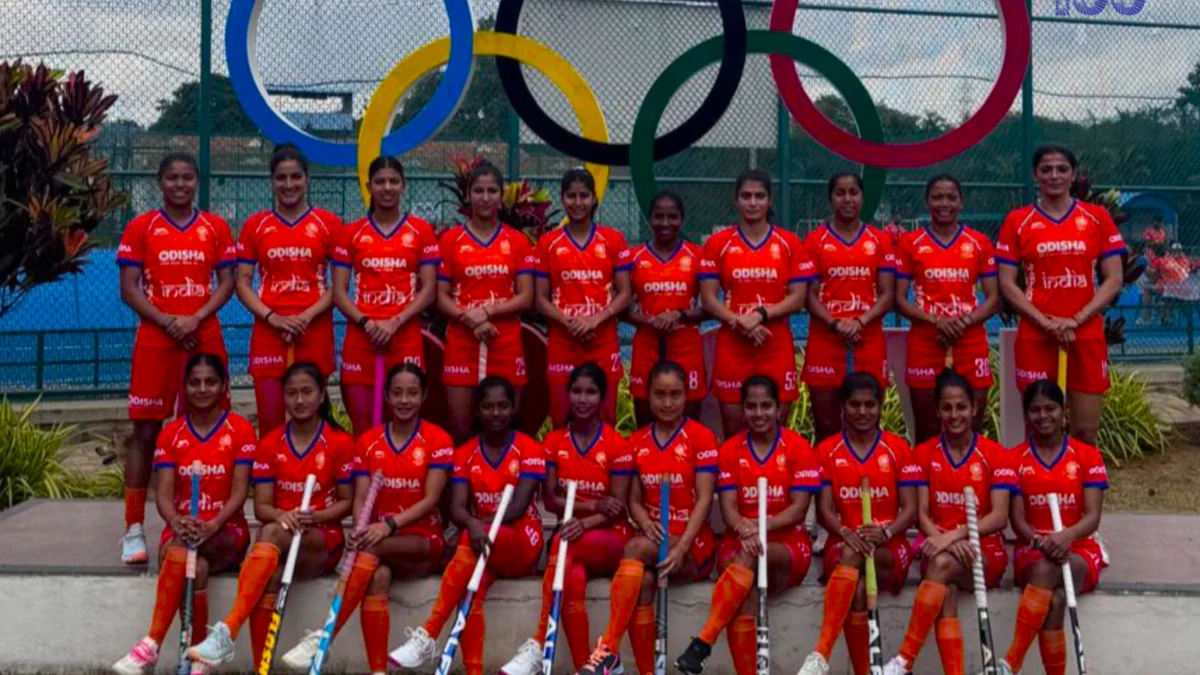
Perhaps the most visible and widely criticized decision attributed to Srivastava was the "arbitrary decision" to change the national teams’ jersey colour to saffron from the traditional blue. This move, made without apparent consultation with the executive board, sparked a significant public outcry. The national jersey is a symbol of identity, tradition, and pride, deeply ingrained in the collective consciousness of fans and players alike. The sudden shift to saffron, a colour with strong political and religious connotations in India, was perceived by many as an attempt to politicize the sport and disregarded the established visual identity of Indian hockey. Critics from all quarters – including former players, sports analysts, and the public – voiced their displeasure, forcing Hockey India to swiftly revert to the traditional blue for the ongoing Asian Games. President Tirkey, reportedly, had to personally insist on the restoration of blue, highlighting Srivastava’s alleged unilateral decision-making and his disregard for collective opinion and the sport’s heritage. This incident exposed a clear clash of visions and a profound lack of consensus at the highest levels of the federation.
The World Cup Trip: Disobedience and Financial Scrutiny
Another critical point of contention revolves around Srivastava’s trip to the World Cup last month, reportedly held in the Netherlands. The legal notice explicitly states that this trip was undertaken in direct defiance of President Tirkey’s clear instructions. An email from the President dated August 2, 2026, had "expressly directed" Srivastava not to travel, emphasizing that his "full attention was required in India for HIL (Hockey India League), franchise coordination and other priority matters." Srivastava’s decision to travel despite this directive constitutes a blatant act of insubordination, directly challenging the President’s authority.
This trip not only became a matter of defiance but also drew significant financial scrutiny. Former Hockey India president Narinder Batra, a figure no stranger to administrative controversies himself, wrote a letter to Sports Secretary Hari Ranjan Rao, alleging exorbitant expenditures. Batra claimed that approximately Rs 43.68 lakh (nearly USD 52,000) was spent on daily allowances alone for four office bearers who attended the World Cup. Specifically, Rs 12.38 lakh (approx. USD 14,800) each was allegedly spent on Bhola Nath Singh (Secretary-General) and RK Srivastava, while Rs 9.46 lakh (approx. USD 11,300) each was reportedly spent on Treasurer J Manoharan and Selection Committee Chairman RP Singh. Such figures for daily allowances for a single tournament trip are astronomical by any standard and raise serious questions about fiscal prudence and the responsible use of federation funds, especially when one official was explicitly forbidden from attending.
Bypassing Protocol: Executive Board Ignored
A recurring theme in the allegations against Srivastava is his alleged tendency to bypass the executive board on "major decisions," including the controversial jersey colour change. The executive board is the primary decision-making body of any sports federation, designed to ensure democratic governance, collective responsibility, and diverse input. By allegedly circumventing this essential body, Srivastava is accused of undermining the very democratic structure of Hockey India. Such actions not only concentrate power unduly but also risk decisions being made without proper deliberation, legal vetting, or consideration of all stakeholders. President Tirkey, as the head of the executive board, would naturally view this as a direct challenge to his leadership and the established governance framework.
The POSH Records Enigma
Perhaps one of the most serious and legally sensitive allegations is the "unavailability" of ICC/POSH records in a case involving a federation staffer. POSH (Prevention of Sexual Harassment) committees and their records are mandated by Indian law to ensure a safe working environment and to address complaints of sexual harassment with due process and confidentiality. The "unavailability" of such records is not merely an administrative oversight; it could indicate a serious breach of legal compliance and a failure to protect employees. It raises alarming questions about transparency, accountability, and Hockey India’s commitment to its legal and ethical obligations. The absence of these records could potentially hinder justice for the affected staffer and expose the federation to significant legal and reputational risks. For Tirkey to highlight this particular issue suggests a deep concern for the federation’s legal standing and its ethical responsibility towards its personnel.
Supporting Data and Broader Context
The internal strife at Hockey India is not occurring in a vacuum. It is set against a backdrop of persistent governance issues within Indian sports, coupled with the national teams’ fluctuating fortunes on the international stage.
Financial Irregularities: Batra’s Allegations
The allegations of exorbitant daily allowances made by former President Narinder Batra are particularly damning. Batra, who himself has faced scrutiny over financial matters during his tenure, has a detailed understanding of the federation’s finances. His claim of Rs 43.68 lakh spent on daily allowances for just four officials for a single World Cup trip, particularly for individuals like Srivastava who were explicitly told not to travel, points to a potential misuse of funds. Such lavish spending, if proven, stands in stark contrast to the often-modest resources available to grassroots hockey development and player welfare initiatives. It reignites the perennial debate about financial transparency and accountability in Indian sports federations, many of which receive substantial public funding or generate revenue from public interest in the sport. The Sports Ministry’s attention, drawn by Batra’s letter, could lead to a deeper investigation into these financial dealings, potentially uncovering broader systemic issues.
Governance Under Scrutiny: A History of Disputes
Indian hockey has a tumultuous history of administrative disputes, often overshadowing on-field achievements. For decades, the sport has grappled with factionalism, power struggles, and allegations of corruption, leading to multiple governmental interventions and the formation of new governing bodies. The Indian Hockey Federation (IHF) was famously de-recognized in 2008 amidst a corruption scandal, paving the way for the formation of Hockey India. However, even Hockey India has not been immune to internal wrangling, with various presidents and secretaries facing challenges and controversies. This latest clash between President Tirkey and Director General Srivastava appears to be another chapter in this long saga of administrative instability. It highlights a recurring pattern where personal agendas and power plays often supersede the collective good of the sport and its athletes. The constant churn at the top creates an environment of uncertainty, making it difficult to implement long-term strategies for player development, infrastructure improvement, and sustained international success.
The Performance Paradox: On-Field Struggles Amidst Off-Field Chaos
Crucially, this administrative turmoil is unfolding at a time when the performance of the men’s national team has been described as having "nosedived" internationally. While the team won a historic bronze at the Tokyo Olympics, recent results have been inconsistent, leading to concerns about their readiness for top-tier global competition. The pressure is particularly intense as the Asian Games gold medal offers a direct route to the Los Angeles Olympics, making it arguably the most important tournament of the current cycle. For the men’s team, defending their Asian Games gold is not just about pride but about securing their Olympic future without the added pressure of qualification tournaments.
The women’s team, on the other hand, is also challenging China for the top of the podium, carrying their own Olympic aspirations. The timing of this administrative crisis could not be worse for the athletes, who need a stable and supportive environment to focus solely on their performance. Internal strife, power struggles, and financial controversies can inevitably trickle down, impacting player morale, focus, and overall team cohesion. The paradox is stark: while the players strive for excellence on the field, the administrators are embroiled in a battle for control off it, potentially jeopardizing the very goals they are meant to support.
Official Responses and Silences
In the wake of President Tirkey’s decisive action, the immediate reactions from the key players have been telling, or conspicuously absent.
Tirkey’s Stance: A Push for Accountability
President Dilip Tirkey’s legal notice is more than just an administrative directive; it is a powerful statement of intent. As a former captain of the Indian hockey team, Tirkey brings a player’s perspective to the administrative role, often emphasizing discipline, integrity, and meritocracy. His move against Srivastava, therefore, can be interpreted as a genuine attempt to instill these values at the highest levels of the federation. The notice’s language, emphasizing the need for "maintaining discipline, accountability and smooth functioning," reflects a commitment to rectifying what he perceives as severe operational and ethical deficiencies. By taking such a public and forceful stance, Tirkey is signaling that he will not tolerate insubordination, arbitrary decision-making, or a lack of transparency. He appears to be asserting his authority as the elected head of the federation, aiming to restore order and establish clear lines of command, which he believes have been blurred or ignored. This could be a crucial moment for Tirkey to consolidate his leadership and implement reforms.
The Silence from Srivastava and Singh
In stark contrast to Tirkey’s overt action, both RK Srivastava, the now-deposed Director General, and Bhola Nath Singh, the Secretary-General who has been at odds with Tirkey and travelled with Srivastava, have maintained a stony silence. The article notes that they "did not respond to calls." This lack of immediate public response from the accused officials is notable. It could signify several things: they might be preparing a legal counter-response, deliberating their next steps, or simply choosing to avoid public commentary given the severity of the allegations. Their silence, however, also leaves a vacuum, allowing Tirkey’s narrative to dominate the initial discourse and potentially solidifying public perception against them. Given the strict four-week deadline for Srivastava to submit his clarification and supporting documents, their silence is likely a temporary tactical move before a more formal response.
The Sports Ministry’s Potential Role
The involvement of former Hockey India president Narinder Batra, who directly addressed his concerns regarding financial irregularities to Sports Secretary Hari Ranjan Rao, immediately brings the Union Sports Ministry into the picture. The Ministry plays a crucial oversight role for national sports federations, particularly those receiving government funding or representing India internationally. Given the serious nature of the allegations – insubordination, financial impropriety, governance breaches, and the unavailability of POSH records – the Ministry may find it difficult to remain a passive observer. They could initiate an independent inquiry, demand detailed reports from Hockey India, or even intervene directly if the situation is deemed to be significantly detrimental to the sport or in violation of good governance principles. The government’s stance will be critical in shaping the future trajectory of this conflict and potentially enforcing stricter accountability mechanisms within Hockey India.
Implications: The Road Ahead for Indian Hockey
The fallout from this administrative upheaval is likely to be far-reaching, impacting not only the immediate performance of the national teams but also the long-term governance and public perception of Indian hockey.
Impact on the Asian Games Campaign
The most immediate and critical implication of this internal crisis will be its potential impact on the Indian hockey teams’ performance at the Asian Games. With the tournament already underway, the news of such a high-level administrative conflict could serve as an unwelcome distraction for the players and coaching staff. While athletes are often trained to compartmentalize and focus on their game, the pervasive atmosphere of instability and controversy can inevitably affect morale and concentration. The stakes are incredibly high, with a direct qualification spot for the Los Angeles Olympics 2028 at stake. Any dip in performance, however slight, could be attributed, at least partially, to the off-field chaos. For a sport that constantly battles for public attention and funding, a strong performance at the Asian Games is crucial, and anything that jeopardizes this goal is a significant setback. The players, already under immense pressure, now have the added burden of knowing their federation is in turmoil.
The Future of Hockey India’s Leadership
The stripping of powers from the Director General signals a decisive move by President Tirkey to assert his authority and reform the federation. However, this action could also trigger further power struggles and legal challenges. Srivastava has been given four weeks to respond, suggesting a potential for protracted legal battles and internal investigations. Depending on his response and any subsequent findings, there could be calls for his permanent removal, or even for the Secretary-General Bhola Nath Singh, who is also at odds with Tirkey, to step down. This could lead to a complete overhaul of the administrative leadership, potentially bringing in new faces or consolidating power under Tirkey’s faction. The stability of the federation will depend on how swiftly and decisively these leadership questions are resolved, ideally with transparency and adherence to due process.
Repercussions for Governance and Transparency
This episode serves as a stark reminder of the persistent governance challenges faced by sports federations in India. The allegations of bypassing the executive board, arbitrary decision-making, and the unavailability of POSH records highlight systemic issues that go beyond individual misconduct. This crisis could force Hockey India, and perhaps other national sports federations, to re-evaluate their internal governance structures, decision-making processes, and transparency mechanisms. There might be increased pressure from the Sports Ministry, sports ethics bodies, and the public to implement stricter codes of conduct, financial oversight, and robust mechanisms for addressing internal complaints, including those related to sexual harassment. This incident could catalyze a broader demand for improved accountability and ethical leadership across Indian sports.
The Long-Term Vision for the Sport
Ultimately, the goal of any sports federation is to foster the growth and success of its sport. Constant administrative strife and controversies distract from this core mission. For Indian hockey to achieve sustained international success and build on its legacy, it requires a stable, transparent, and athlete-focused administration. The current crisis, while disruptive, presents an opportunity for Hockey India to fundamentally reassess its operations, prioritize athlete welfare and development, and build a governance model that is resilient to internal power struggles. The long-term vision for Indian hockey – from grassroots development to elite performance – hinges on resolving these immediate challenges and establishing an administrative framework that commands respect and operates with unquestionable integrity. The coming weeks will be crucial in determining whether this crisis leads to further chaos or a much-needed period of reform and renewed focus for the beloved national sport.
