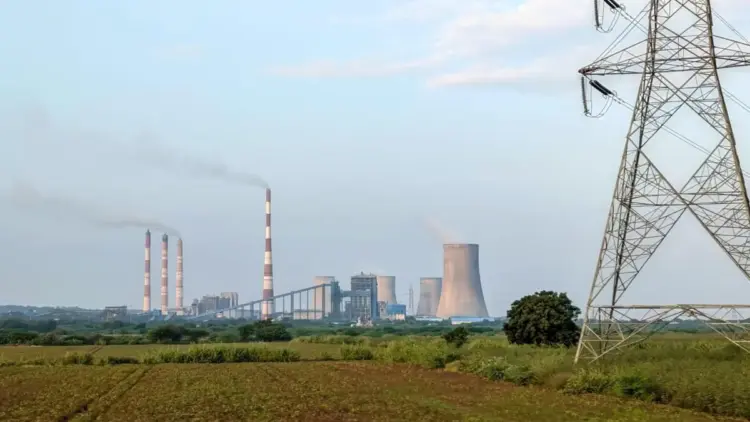
New Delhi — As the sweltering heat of the Indian summer recedes, the nation’s power grid remains in a state of high-tension equilibrium. Even in September, typically a month of cooling temperatures, India’s electricity demand surged to a daytime peak of over 267 gigawatts (GW). However, the real challenge emerged not under the blazing sun, but in its absence. As solar generation tapered off each evening, the grid faced a staggering deficit of more than 7.7 GW, highlighting a structural vulnerability in the nation’s transition toward a greener future.
Against this backdrop of operational strain, India is preparing for a pivotal moment on the global stage. While the country recently withdrew its bid to host the COP33 summit in 2028, all eyes are now on COP31, scheduled to open in Antalya on November 9. This will be the first United Nations climate summit since India submitted its 2035 Nationally Determined Contribution (NDC). The new targets are ambitious: India aims for 60% of its installed power capacity to come from non-fossil sources by 2035.
Main Facts: The 2035 Mandate and the Solar Gap
The cornerstone of India’s updated climate pledge is a reliance on the power sector to drive a decade-long transformation. The 2035 NDC represents a significant "raising of the bar," yet it is being tested in real-time by the harsh realities of demand and supply.
The Daytime Surplus vs. Nighttime Deficit
India’s solar capacity has seen exponential growth, contributing heavily to meeting daytime peaks. However, the "post-sunset" problem remains the Achilles’ heel of the Indian grid. In September, the 7.7 GW shortage occurred precisely when solar contributions dropped to zero, forcing the Ministry of Power to tap into captive thermal plants and maximize coal-fired generation to prevent blackouts. This reliance on fossil fuels during non-solar hours underscores the gap between installed capacity and reliable, round-the-clock (RTC) green energy.
The 60% Non-Fossil Goal
The 2035 target of 60% non-fossil capacity is a progression from the previous 50% target. Notably, India reached the 50% milestone in 2025—five years ahead of the 2030 schedule. Currently, non-fossil sources (including solar, wind, hydro, and nuclear) account for approximately 54% of total capacity. While this progress is commendable, the final 6% to 10% of the transition is expected to be the most difficult, as it requires massive investments in storage and grid stabilization.

The 1.5°C Threshold
The urgency of India’s transition is framed by global climate trends. A recent United Nations Environment Programme (UNEP) report warns that the world is likely to breach the 1.5°C warming threshold within the next few years. For a country as climatically vulnerable as India—facing erratic monsoons, heatwaves, and rising sea levels—the margin by which this threshold is exceeded will dictate the severity of future domestic catastrophes.
Chronology: From Paris to Antalya
To understand the 2035 NDC, one must look at the trajectory of India’s climate policy over the last decade.
- 2015 (The Paris Agreement): India commits to achieving 40% non-fossil power capacity by 2030.
- 2021 (COP26, Glasgow): Prime Minister Narendra Modi announces the "Panchamrit" (five nectar elements) strategy, raising the 2030 target to 50% non-fossil capacity and pledging Net Zero by 2070.
- 2024-2025 (Early Achievement): India hits the 50% non-fossil mark prematurely, currently sitting at 54%. The Ministry of Power begins aggressive procurement of Battery Energy Storage Systems (BESS) and Pumped Hydro Projects (PSP).
- Late 2025 (The 2035 NDC Submission): India formalizes its 60% target, shifting the focus from "rapid expansion" to "navigating uncertainty."
- November 2025 (COP31, Antalya): India will present its 2035 roadmap to the international community, emphasizing the need for climate finance and technology transfer to meet these goals amidst global economic volatility.
Supporting Data: The CEEW Projections
Research by the Council on Energy, Environment and Water (CEEW) suggests that India’s non-fossil share could actually land anywhere between 60% and 68% by 2035. This eight-percentage-point variance is not a matter of choice, but a reflection of three critical "uncertainty drivers."
1. The GDP Growth Variable
Economic growth is the primary driver of electricity demand. CEEW analysis contrasts two scenarios:
- High-Growth Scenario: With an average annual GDP growth of 7.6% and a robust manufacturing sector, power demand could reach 3,025 billion units (BU) by 2035.
- Low-Growth Scenario: If growth slows to 5.9%, demand drops to 2,567 BU.
The 458 BU difference is massive; a slump in growth would reduce the incentive for new investments in renewable capacity, potentially stalling the transition.
2. Supply-Side Constraints and Solar Pricing
The cost of the transition is highly sensitive to trade policies. Currently, the price of solar electricity in India hovers around ₹2.5/kWh. However, if import duties on solar modules remain high and domestic manufacturers cannot scale efficiently, prices could rise to ₹3/kWh or more. Such an increase would diminish the technology’s attractiveness to private investors, slowing the pace of grid additions regardless of demand.

3. Demand-Side Interventions (The LiFE Initiative)
The Indian government’s "Lifestyle for Environment" (LiFE) initiative aims to reduce consumption through behavioral changes. For instance, encouraging citizens to set air conditioners to 24°C or 26°C instead of 18°C could significantly flatten the demand curve. While beneficial for efficiency, these measures ironically create a "policy tension": if demand growth is too successful, it may slow the capital expenditure required to modernize the grid with green technology.
Official Responses and Strategic Frameworks
The Indian government and international financial institutions have reacted to these uncertainties with a mixture of caution and recalibrated optimism.
Ministry of Power Stance
The Ministry of Power has acknowledged that the transition cannot rely on solar and wind alone. Officials have emphasized a "diversified green basket," which includes a renewed push for nuclear energy and carbon capture and storage (CCS). The government’s recent decision to tap captive thermal plants during the September shortage was described as a "necessary pragmatism" to ensure energy security while the storage infrastructure catches up.
The COP31 Presidency’s Push
The COP31 Presidency has signaled a focus on "Electric Ambition"—the share of electricity in final energy use worldwide. The IPCC’s sixth assessment report supports this, noting that deep decarbonization is impossible without electrifying transport, cooking, and heavy industry. India’s response has been to align its NDC with this global trend, viewing electrification not just as a climate goal, but as a hedge against volatile oil and gas prices.
Financial Sector Revisions
Global financial entities have provided a reality check. Goldman Sachs recently revised India’s growth forecast for FY 2026-27 downward to 5.9%, citing geopolitical tensions in West Asia and supply chain disruptions. This downgrade directly impacts the "High-Growth" projections for energy demand, reinforcing the government’s decision to set a "calibrated" 60% target rather than a more aggressive one.

Implications: A Strategic Opportunity Amidst Chaos
The road to 2035 is fraught with geopolitical and economic landmines, yet these very challenges present India with a unique strategic opportunity.
Geopolitics as a Catalyst
The ongoing conflict in West Asia and the resulting fluctuations in oil and gas prices have highlighted the risks of fossil fuel dependency. For India, which imports the vast majority of its oil, high fossil prices act as an inadvertent "carbon tax" that makes electric vehicles (EVs) and induction cooking more economically attractive. By accelerating electrification in these sectors, India can simultaneously improve its trade balance and its carbon footprint.
The Role of Technological Breakthroughs
If India manages to lower the cost of green hydrogen and rooftop solar, the 68% non-fossil "optimistic" scenario becomes achievable. Technological progress in nuclear modular reactors and bioenergy could provide the baseload power needed to replace coal during those critical 7.7 GW "after-sunset" shortages.
Grid Decarbonization as the Ultimate Test
The ultimate success of the 2035 NDC will not be measured by the number of solar panels installed, but by the "greenness" of the grid during peak hours. Electrifying the economy is only a climate win if the electricity itself is clean. As the world approaches the 1.5°C threshold, India’s ability to navigate trade disputes, energy inflation, and the rising power demands of Artificial Intelligence (AI) will determine if it remains a global climate leader or a victim of the transition’s inherent volatility.
In the words of Vaibhav Chaturvedi and Pallavi Das of the CEEW, the 60% target is "calibrated ambition." It is a target designed to survive a world defined by uncertainty—a world where the sun sets every evening, but the demand for power never sleeps.