WELLINGTON, NEW ZEALAND – October 27, 2026 – Four years is a significant span in the unforgiving landscape of international cricket, a period that can see careers flourish, falter, or fade into memory. For Bhuvneshwar Kumar, India’s seasoned swing bowler, it marked a prolonged hiatus from the national team, a chapter that has now emphatically closed. His return to the international arena has not only added a layer of experience to India’s pace attack but has also unveiled a crucial new role: that of a mentor, guiding the next generation of fast bowlers through the increasingly complex demands of Twenty20 cricket.
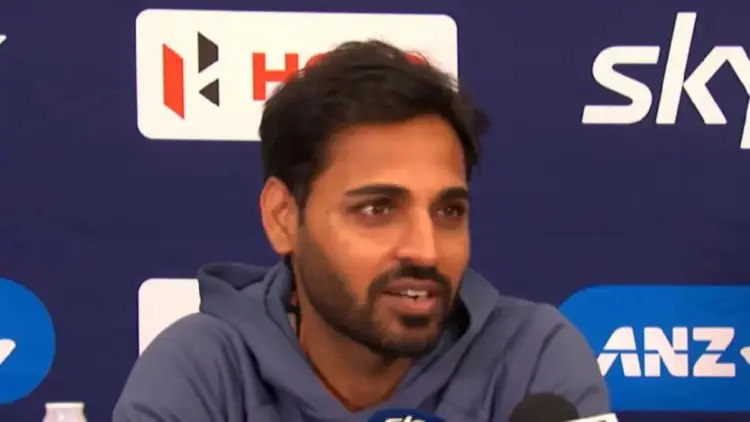
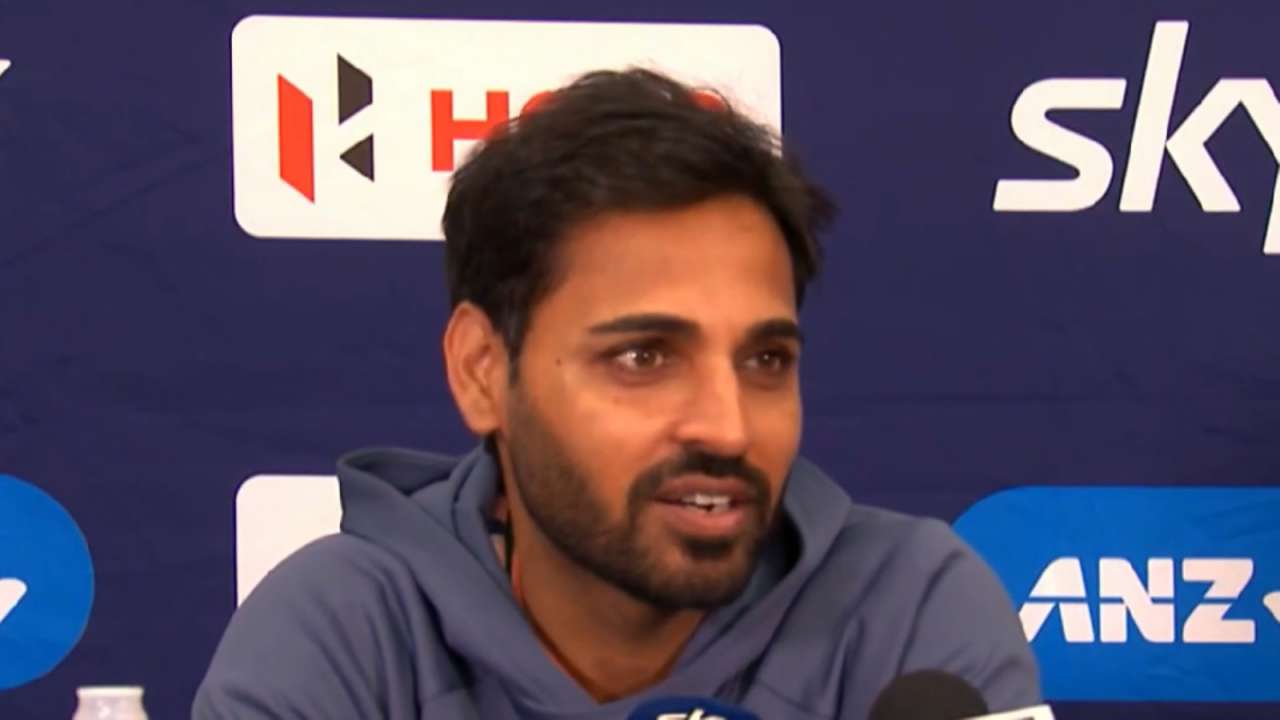
Speaking after India secured an unassailable 3-0 lead in the five-match T20I series against New Zealand, the 36-year-old pacer offered candid insights into his interactions with the team’s young talent. Kumar, known for his subtle variations and impeccable control, emphasized the profound transformation T20 cricket has undergone since his debut, underscoring the necessity for modern pacers to possess not just skill, but also a profound sense of maturity and adaptability. His observations come at a critical juncture for Indian cricket, as it navigates the intense pressures of a packed international calendar and the relentless evolution of the shortest format.
The Return of the Craftsman: A New Chapter Unfolds
Bhuvneshwar Kumar’s re-entry into the international squad, following a four-year absence, has been met with a mix of anticipation and intrigue. A mainstay of India’s limited-overs attack for much of the 2010s, Kumar’s career had been hampered by a series of injuries and the emergence of a formidable crop of younger pacers. His journey back to the national team is a testament to his perseverance, dedication, and an unyielding passion for the game.
His presence in the dressing room, particularly for a burgeoning crop of young fast bowlers, is invaluable. Kumar, with his deep understanding of seam and swing, pace variations, and strategic bowling in death overs, embodies a wealth of experience. It is this repository of knowledge that he is now generously sharing, acting as a crucial bridge between different cricketing eras. He understands firsthand the nuances of adapting to various conditions, the mental fortitude required to perform under pressure, and the tactical adjustments necessary in the blink-and-you-miss-it world of T20 cricket.
The image of Kumar, a veteran of numerous high-stakes encounters, engaging in conversations with wide-eyed youngsters like Mayank Yadav, Nitish Kumar Reddy, Arshdeep Singh, and Prince Yadav, paints a compelling picture of succession planning within the Indian team. He acknowledged the inherent "curiosity" among these debutants and young players, a natural inclination to learn from those who have navigated the treacherous waters of international cricket. While their IPL experience provides a solid foundation, the leap to the international stage, especially in a format as demanding as T20, requires an additional layer of guidance and wisdom.
Chronology of Events: A Series Dominance and Mentorship in Action
The backdrop to Bhuvneshwar Kumar’s revelations is India’s dominant performance against New Zealand. The third T20I, played at Wellington, epitomized the current state of modern T20 cricket – a high-scoring thriller where fortunes shifted rapidly, and individual brilliance shone brightly.

The Wellington Encounter: A T20 Spectacle
Indian skipper Shreyas Iyer, winning the toss, elected to field first, a decision often favoured in T20s to assess the target and manage the chase under lights. New Zealand, batting first, capitalized on a flat pitch and some aggressive hitting to post a formidable total of 198/3 in their allotted 20 overs. The innings was anchored by a blistering display from Daryl Mitchell, who smashed 89 runs off just 52 deliveries, showcasing his power-hitting prowess and ability to dismantle the Indian attack. Despite the high total, Kumar’s spell saw him concede 40 runs from his four overs, a figure that reflects the challenging nature of bowling in contemporary T20s, especially against an in-form batsman on a batting-friendly surface. Such instances, however, provide crucial learning opportunities, both for the bowler and for the young pacers observing from the dugout.

In response, India launched an astonishing chase that underscored their aggressive batting philosophy. The target of 199 was overhauled with remarkable ease, as India reached 202/4 in just 13.2 overs, securing a six-wicket victory with a staggering 40 balls to spare. The chase was spearheaded by a sensational innings from Abhishek Sharma, who plundered 113 runs off a mere 38 balls, an innings studded with audacious strokes and raw power. He was ably supported by Vaibhav Sooryavanshi, who contributed a quickfire 45 runs off 19 deliveries. This clinical victory not only sealed the series for India with two matches to spare but also highlighted the depth of talent and fearless approach now characteristic of Indian white-ball cricket.
It was in the aftermath of this emphatic victory, during the post-match press conference, that Kumar articulated his perspective on his role and the challenges facing young pacers. His words provided a window into the inner workings of the dressing room, revealing a culture of learning and shared experience.

Supporting Data: The Shifting Sands of T20 Bowling
Bhuvneshwar Kumar’s assertion that "T20 cricket has become very difficult" is not merely an anecdotal observation; it is a stark reality supported by evolving statistics and tactical trends. When Kumar made his T20 debut, the format was still finding its feet, often seen as an extended version of ODIs. Bowlers focused more on traditional line-and-length, with variations being deployed more sparingly. However, the last decade has seen an exponential growth in scoring rates, particularly in the middle and death overs, driven by innovation from batsmen and increasingly smaller boundaries.
The IPL’s Transformative Influence:

The Indian Premier League (IPL) has been a significant catalyst in this transformation. It has not only provided a global platform for talent but has also fostered an environment where batsmen are constantly innovating, employing scoops, ramps, reverse sweeps, and switch hits with greater frequency and confidence. This offensive onslaught has compelled bowlers to develop a more diverse arsenal. The emphasis has shifted from simply restricting runs to picking up wickets at crucial junctures, often requiring unconventional deliveries.
Key Demands on Modern T20 Pacers:

- Variations Galore: Slower balls (off-cutters, leg-cutters, back-of-the-hand), knuckleballs, wide yorkers, bouncers delivered with subtle changes in pace are now standard requirements, not luxury options.
- Death Bowling Mastery: The ability to execute pinpoint yorkers under extreme pressure in the final overs, often against set batsmen, is a non-negotiable skill.
- Powerplay Prowess: The skill to swing the ball and pick up early wickets while simultaneously containing runs in the powerplay remains vital.
- Mental Fortitude: The constant threat of being hit for boundaries demands exceptional mental resilience and the ability to bounce back after conceding runs.
- Fitness and Durability: The sheer volume of T20 cricket, both international and domestic leagues, necessitates peak physical condition to maintain high performance levels and prevent injuries.
Profiles of the Young Brigade:
The young pacers Kumar mentioned represent different facets of this evolving landscape:

- Mayank Yadav: Burst onto the scene with express pace, consistently clocking speeds over 150 km/h. His challenge lies in translating raw speed into wicket-taking ability and developing variations.
- Nitish Kumar Reddy: An exciting all-rounder, known for his medium-fast bowling and explosive batting. His development will focus on consistency with the ball and exploiting different conditions.
- Arshdeep Singh: Already an established young international, Arshdeep has shown immense growth in death bowling, particularly his wide yorkers and slower deliveries. His journey is about refining these skills and adding more dimensions.
- Prince Yadav: While less exposed at the highest level, his inclusion in these conversations indicates his potential and the team’s investment in nurturing diverse talent.
Kumar’s own career trajectory exemplifies adaptability. Starting as a swing bowler, he progressively added pace, developed effective slower balls, and honed his death bowling skills, making him a valuable asset across formats. This personal evolution makes him an ideal mentor to articulate how "maturity" in T20s is not just about age, but about understanding game situations, reading batsmen, and executing plans under pressure.
Official Responses: Wisdom from the Veteran
Bhuvneshwar Kumar’s post-match statements were laced with the humility and insight of a player who has seen it all. His words underscored the importance of dialogue and shared learning within the team.

"There is a curiosity among youngsters. They are new, but there is experience," Kumar stated, acknowledging the impact of the IPL on their initial exposure to high-pressure T20 environments. "Because they play IPL, which is also T20 cricket, and on this level everyone wants to learn. Whatever we can talk about, we talk." This highlights the seamless transition many young players make from franchise cricket to international duty, yet also the need for veteran guidance to fine-tune their approach.
He elaborated on the format’s transformation: "But we have to understand, T20 cricket has become very difficult. When I made my T20 debut, it was like, okay, have him play, and let him debut slowly across all formats. But now, it is difficult. In T20s, you need maturity." This distinction is crucial; T20 is no longer merely a stepping stone but a highly specialized format demanding unique skill sets and strategic acumen from the outset.

Kumar’s belief in the current crop of talent was also evident: "All these bowlers have shown that in the IPL and have done well. I can share my experience with them, be it in general or the conditions in New Zealand, but they have done well so far." This reflects a supportive environment where experience complements, rather than overshadows, nascent talent.
On a personal note, Kumar expressed his profound satisfaction at representing India again. "I think my comeback, of course it feels good to represent India. I wasn’t there for many years. But I think, what can I say about my comeback? It feels good; I am getting the opportunity to play for India again. I am trying to perform well again." This sentiment resonates deeply, underscoring the privilege and pride associated with playing for one’s country, a motivation that transcends individual performance statistics.

Implications: Strengthening India’s Pace Future and the Role of Mentorship
The resurgence of Bhuvneshwar Kumar, not just as a player but as a mentor, carries significant implications for the future of Indian pace bowling.
Nurturing the Next Generation:
In an era where India consistently produces fast bowlers with genuine pace and skill, the challenge often lies in refining these raw talents into world-class performers capable of thriving under international pressure. The mentorship provided by experienced players like Kumar is critical in bridging this gap. It’s about more than just technical advice; it’s about instilling a professional mindset, teaching game awareness, and helping young players navigate the emotional highs and lows of elite sport. This organic, in-dressing-room mentorship can be far more effective than formal coaching clinics, as it provides real-time, context-specific guidance.

Strategic Depth for India:
A robust pool of adaptable fast bowlers is non-negotiable for India’s aspirations in ICC tournaments, particularly the T20 World Cup. Having pacers who can perform across diverse conditions and adapt their strategies mid-game is crucial. The insights shared by Kumar, based on his extensive experience in different countries and against various batting lineups, will equip these young bowlers with the tools to handle future challenges.
The Value of Veteran Presence:
Kumar’s return highlights the often-underestimated value of veteran players beyond their immediate on-field contributions. Their presence in the dressing room fosters a healthy team culture, where knowledge transfer is seamless, and younger players feel supported. In a sport increasingly driven by data and analytics, the human element of experience and wisdom remains irreplaceable.

Bhuvneshwar’s Continued Role:
For Bhuvneshwar Kumar himself, this comeback could signal a new phase in his career. Even if his playing days at the absolute peak are limited, his current role as a guiding light could extend his influence within the Indian cricketing ecosystem. His ability to articulate complex cricketing challenges and solutions makes him a prime candidate for future coaching or mentoring roles.
As India continues its dominant run in the T20I series against New Zealand, with the next game scheduled in Auckland on Friday, October 30, the spotlight will remain on the team’s performance. However, beneath the surface of thrilling contests and individual heroics, the quiet work of mentorship, spearheaded by veterans like Bhuvneshwar Kumar, is laying the groundwork for a stronger, more resilient Indian pace attack for years to come. The future of Indian fast bowling, it appears, is in wise and experienced hands.

(With inputs from ANI)