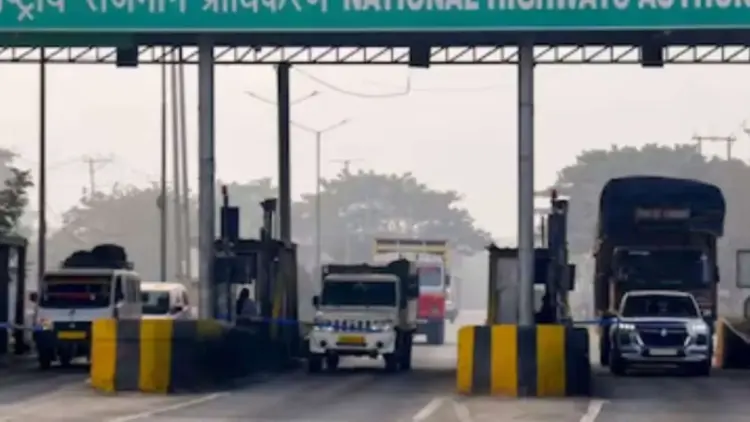
New Delhi, India – In a significant move aimed at easing the financial burden on daily commuters and local residents, the Ministry of Road Transport and Highways (MoRTH) has announced a new concessional annual pass for private vehicles equipped with valid FASTags. Starting November 1, 2026, individuals residing within a 20-kilometer radius of National Highway (NH) toll plazas will be eligible to obtain an annual pass for either Rs 1,500 or Rs 3,000, valid for one specific toll plaza. This initiative marks a pivotal shift in toll collection policy, designed to foster greater convenience and affordability for a substantial segment of the driving population.
The announcement signals a progressive step towards refining the highly successful FASTag system, which has revolutionized electronic toll collection across India. While the existing FASTag infrastructure has streamlined traffic flow and promoted digital payments, local residents frequently traversing specific toll plazas have often voiced concerns over cumulative costs. This new scheme directly addresses those concerns, offering a tailored solution that acknowledges the unique travel patterns of individuals living in proximity to national highways.
The annual pass, available exclusively for private, non-commercial vehicles, represents a considerable saving compared to accumulating daily toll charges over a year. It is a distinct offering from the standard FASTag Annual Pass, which, for the 2026-27 fiscal year, costs Rs 3,075 and permits up to 200 crossings across multiple covered National Highways and Expressways. The new local pass is strictly confined to a single designated toll plaza, catering specifically to the needs of neighbourhood travel and short-distance commutes that frequently intersect with national highway stretches.
Main Facts: A Detailed Overview of the New FASTag Local Pass
The core tenets of the new discounted annual pass are designed to provide clear guidelines for eligibility and usage. From November 1, 2026, eligible residents will be able to avail themselves of this benefit, marking a new chapter in India’s extensive toll collection framework.
Eligibility Criteria:
The primary criterion for obtaining this concessional pass is residency. Only individuals whose permanent address falls within a 20-kilometer radius of a National Highway toll plaza are eligible. This measure ensures that the benefit is extended to genuine local commuters who are compelled to use the toll road for their daily activities, such as work, education, or accessing local markets and services. The vehicle for which the pass is sought must be a private, non-commercial vehicle and must possess a valid and active FASTag. This integration with the FASTag system ensures seamless electronic deduction and management, leveraging the existing digital infrastructure.
Cost Structure:
The annual fee for the pass will be either Rs 1,500 or Rs 3,000. While the specific determinants for these two tiers have not been fully elaborated in the initial announcement, it is widely anticipated that the variation could depend on factors such as the classification of the toll plaza (e.g., urban periphery vs. rural), the traffic volume it handles, or the specific cost structure associated with the highway stretch. The government has also indicated that these rates may be subject to annual revision, typically effective from April 1st each year, aligning with broader policy adjustments and inflationary considerations. This provision for revision ensures the scheme remains financially sustainable and responsive to economic shifts.

Validity and Scope:
Crucially, the concessional pass will be valid for a period of one year from its date of issue. Its utility is strictly limited to the specific toll plaza for which it is obtained. This "single-plaza" restriction is a fundamental differentiating factor from other FASTag annual or monthly passes, underscoring its intent as a localised benefit. Residents will retain the option to choose between the existing monthly pass scheme and this new annual pass, allowing them to select the most cost-effective solution based on their individual travel frequency and financial planning.
Key Restrictions:
The Ministry has also outlined specific scenarios where the new annual pass will not be applicable. These include:

- Closed Toll Collection Systems: On certain expressways and advanced highway networks, toll collection operates on a "closed system," where charges are calculated based on the distance travelled between entry and exit points. Implementing a fixed annual pass for a single plaza within such a dynamic system would be operationally complex and inconsistent with the distance-based tariff structure.
- Availability of Alternate/Service Roads: If a toll plaza is accompanied by a designated service road or an alternate route that residents can utilize free of charge to bypass the toll, the concessional pass will not be offered. The rationale here is to prevent duplication of benefits, as a free alternative already exists for local traffic. This ensures that the scheme targets those who genuinely have no practical alternative but to use the tolled section for their local commutes.
Documentation Requirements:
While the official list of required documents is yet to be formally released by the National Highways Authority of India (NHAI), applicants should prepare common proofs of identity, residency, and vehicle ownership. These are expected to include:
- Aadhaar Card or other government-issued ID for proof of identity and address.
- Vehicle Registration Certificate (RC) to link the pass to the specific private vehicle.
- Proof of residence within the 20 km radius (e.g., utility bills, property documents, or a certificate from local authorities).
- Active FASTag details associated with the vehicle.
Prospective applicants are strongly advised to consult official NHAI guidelines and notifications as they become available closer to the implementation date.
Chronology: The Journey Towards Localized Toll Relief
The introduction of the discounted annual FASTag pass for local residents is not an isolated event but rather the culmination of years of policy evolution and technological advancements in India’s road infrastructure.

Early Days of Toll Collection:
For decades, toll collection in India relied heavily on manual systems, leading to significant traffic congestion at plazas and operational inefficiencies. Local residents often faced the same toll charges as long-distance travellers, leading to frequent complaints and demands for exemptions or special provisions. While some informal arrangements or monthly passes existed, they lacked a unified, nationwide structure.
The Advent of FASTag (2014 onwards):
The paradigm shifted dramatically with the introduction of FASTag in 2014, a brainchild of the Indian government aimed at digitizing toll payments. Mandated for all four-wheelers from 2021, FASTag leverages Radio Frequency Identification (RFID) technology to enable cashless, electronic toll collection directly from a linked bank account or digital wallet. Its widespread adoption has drastically reduced waiting times at toll plazas, improved fuel efficiency, and brought greater transparency to toll operations. This technological backbone has proven instrumental in facilitating more nuanced and targeted tolling policies.

Addressing Local Grievances:
Despite the overall success of FASTag, the challenge of local commuter grievances persisted. While monthly passes were introduced for specific plazas to cater to frequent users, there remained a strong demand for a more deeply discounted, long-term solution for residents who, by virtue of their proximity, were often forced to cross a toll multiple times a day or week. Various state and national level discussions, petitions, and policy reviews have consistently highlighted this issue. The Ministry of Road Transport and Highways, under the leadership of Union Minister Nitin Gadkari, has repeatedly emphasized its commitment to citizen-centric policies and addressing these concerns.
Policy Conception and Announcement (Leading to 2026):
The idea of a highly subsidized annual pass for local residents has been in various stages of discussion and formulation for some time. The process involved extensive consultations with NHAI, state transport departments, and potentially public feedback mechanisms. The official announcement of the November 1, 2026 implementation date signals the finalization of the policy framework, the operational readiness of the FASTag system to accommodate this new pass type, and sufficient lead time for public awareness campaigns and logistical preparations. The two-year lead time from the hypothetical announcement in late 2024 (given the image date of Oct 27, 2026) to the actual rollout allows for necessary technological upgrades, clarification of guidelines, and robust communication strategies to reach all eligible citizens.

Future Revisions:
The provision for annual rate revisions on April 1st each year indicates a forward-looking approach, allowing the scheme to adapt to changing economic conditions, inflation, and potentially, to reflect performance metrics or demand. This flexibility ensures the long-term viability and fairness of the initiative.
Supporting Data: Unpacking the Impact and Mechanics
The new annual pass scheme is not merely a gesture of goodwill; it is underpinned by pragmatic considerations and has the potential for far-reaching impacts. Understanding the ‘why’ and ‘how’ behind its specifics provides a clearer picture of its anticipated benefits and challenges.

The Significance of the 20-Kilometer Radius:
The choice of a 20-kilometer radius is a carefully considered demarcation. This distance typically encompasses a significant portion of a toll plaza’s immediate catchment area, including neighbouring towns, villages, and extended suburbs whose residents regularly commute into central areas or across district lines via national highways. While exact figures are difficult to ascertain without specific geographic data, this radius is estimated to cover hundreds of thousands, if not millions, of households nationwide, depending on the density of toll plazas and population distribution. It balances the need to provide relief to genuine local traffic without unduly extending the benefit to more distant commuters who might be considered ‘through traffic’.
Economic Savings for Commuters:
The financial relief offered by this pass is substantial. Let’s consider a hypothetical scenario:

- Average daily toll for a private car: Rs 50.
- A resident crossing the toll twice a day (to and from work/market), 5 days a week: 2 crossings * Rs 50 = Rs 100 per day.
- Monthly cost (assuming 22 working days): Rs 100 * 22 = Rs 2,200.
- Annual cost: Rs 2,200 * 12 = Rs 26,400.
With the new annual pass costing Rs 1,500 or Rs 3,000, the savings are immense, ranging from Rs 23,400 to Rs 24,900 annually in this example. This represents a significant disposable income boost for many households, which can then be channelled into other essential expenses or savings. For those using the toll less frequently but still regularly, the savings, though smaller in absolute terms, remain significant on a percentage basis.
Differentiating the Rs 1,500 and Rs 3,000 Tiers:
While not explicitly stated, the two-tiered pricing structure (Rs 1,500 vs. Rs 3,000) is likely influenced by factors such as:
- Location of the Plaza: Toll plazas in high-density urban or semi-urban areas with higher traffic volumes might warrant the Rs 3,000 tier, reflecting the higher operational costs and potentially greater utility derived by users.
- Highway Classification: Major expressways or high-speed corridors might fall under the higher tier, while less congested NH sections could be priced at Rs 1,500.
- Economic Zone: The socio-economic profile of the region surrounding the toll plaza could also be a consideration, aiming to keep the lower tier accessible in areas with lower average incomes.
Clarity on these distinctions will be crucial for public understanding and acceptance.
Leveraging FASTag Penetration:
The success of this scheme is heavily reliant on the near-universal adoption of FASTag. With most private vehicles already equipped with FASTags, the administrative overhead of introducing a new payment mechanism is negated. The pass will likely be linked directly to the existing FASTag account and vehicle registration number, ensuring a seamless experience at the toll booth. This digital integration also facilitates efficient verification of eligibility and reduces scope for manual errors or fraudulent claims.

Impact on NHAI Revenue vs. Public Goodwill:
While offering such a deep discount might marginally impact NHAI’s gross toll revenue from these specific plazas, the long-term benefits of enhanced public goodwill, reduced complaints, and potentially increased local economic activity (as people are less deterred by toll costs for local travel) are expected to outweigh the direct revenue loss. NHAI’s mandate extends beyond mere revenue generation to facilitating smooth and efficient national connectivity, and this scheme aligns with that broader objective.
Rationale Behind Exclusions:
The exclusions for closed toll systems and the presence of service/alternate roads are pragmatic. Closed systems are designed for distance-based charging, and a fixed local pass would disrupt their logic. For example, on a 100 km expressway with multiple entry/exit points, a fixed annual pass for one exit would be difficult to reconcile with charges based on actual travel distance. Similarly, providing a discounted pass when a free alternative exists would be an inefficient allocation of resources and could be perceived as unfair to taxpayers who fund the service roads. These restrictions ensure the scheme targets those in genuine need.

Official Responses: Government’s Vision and Stakeholder Perspectives
The Ministry of Road Transport and Highways has consistently championed initiatives aimed at improving road user experience and fostering equitable access to infrastructure. This new annual pass is a direct reflection of that commitment.
MoRTH’s Stance:
While specific official quotes on this particular scheme are awaited, the broader philosophy articulated by MoRTH, particularly by Union Minister Nitin Gadkari, underscores the government’s dedication to making highway travel more affordable and convenient. The Minister has often spoken about the need to reduce the burden on local communities who are frequently impacted by toll plazas. The underlying rationale for this scheme is to:

- Enhance User Experience: Reduce the financial stress and administrative hassle for frequent local commuters.
- Promote Local Economy: Facilitate easier access for residents to local markets, workplaces, and services without the deterrent of recurring toll charges.
- Streamline Operations: Leverage the FASTag system for efficient management of concessional passes, reducing manual intervention and potential disputes.
- Foster Equity: Acknowledge the unique position of residents living close to toll plazas, differentiating them from long-distance traffic.
NHAI’s Role in Implementation:
The National Highways Authority of India (NHAI) will be the primary implementing agency. Their responsibilities will include:
- Developing Detailed Guidelines: Issuing comprehensive instructions on application procedures, required documents, verification processes, and operational protocols for toll plaza staff.
- Technological Integration: Ensuring that the FASTag system is fully capable of recognizing and processing the new annual pass seamlessly.
- Public Awareness Campaigns: Launching extensive campaigns to inform eligible residents about the new scheme, its benefits, and how to apply.
- Grievance Redressal: Establishing clear channels for addressing queries, complaints, and disputes related to the new pass. NHAI’s ability to manage this new category of pass effectively will be critical to its success.
Anticipated Public Reaction:
The general public, particularly those living near toll plazas, is expected to welcome this initiative warmly. The substantial savings will undoubtedly be a major relief for many households. However, there might also be initial confusion regarding eligibility criteria, the application process, and the differentiation between the Rs 1,500 and Rs 3,000 tiers. Effective communication from NHAI will be vital in mitigating these potential issues.

Industry and Expert Views:
Road transport experts and economists are likely to view this as a positive, citizen-centric policy. It reflects a maturing approach to tolling, moving beyond a uniform charge to a more nuanced system that considers local socio-economic impacts. Analysts might also point to the potential for increased local traffic on national highway stretches as the financial deterrent is removed, which could slightly alter traffic patterns. However, the overall sentiment is expected to be positive, recognizing the government’s efforts to balance infrastructure development with public welfare.
Implications: Broader Impact and Future Outlook
The introduction of the discounted annual FASTag pass is poised to have multi-faceted implications, influencing everything from local economies to future policy-making.

Economic Impact:
- Reduced Commuting Costs: Directly translates to higher disposable income for thousands of families, potentially stimulating local consumption and savings.
- Boost for Local Businesses: Easier and cheaper access to markets and workplaces for employees and customers could invigorate local commerce, particularly for small and medium-sized enterprises (SMEs) located near national highways. Deliveries and local logistics could also see reduced costs.
- Property Value Considerations: While speculative, proximity to a toll plaza with a discounted pass could become a minor positive factor in local property values, as it mitigates a previously existing cost burden.
Social Impact:

- Enhanced Quality of Life: For residents who frequently use tolled roads, the elimination of repetitive daily toll payments will reduce financial stress and improve the overall commuting experience.
- Improved Accessibility: Facilitates easier access to essential services like healthcare, education, and government offices located across a toll plaza, promoting better social integration within the 20 km radius.
- Reduced Friction: By addressing a long-standing grievance, the policy is likely to foster greater trust and satisfaction among local communities regarding highway infrastructure management.
Operational Challenges and Mitigation:
NHAI and toll plaza operators will face initial operational challenges:
- Verification of Residency: Ensuring robust and foolproof mechanisms for verifying residency within the 20 km radius will be paramount to prevent misuse. This might involve integration with local municipal databases or requiring specific documentation.
- System Integration: Seamless integration of the new pass type into existing FASTag readers and backend systems requires careful planning and testing.
- Staff Training: Toll plaza personnel will need thorough training on the new pass, its validity, and how to handle customer queries and issues.
- Managing Two Annual Pass Types: Clearly distinguishing between the general FASTag Annual Pass and the new local pass for both operators and users will be crucial to avoid confusion.
These challenges, though significant, are manageable with adequate preparation and technological foresight.
Environmental Considerations:
While the primary benefit is financial, the scheme indirectly contributes to environmental goals. By further streamlining toll collection for a significant user base, it could marginally reduce instances of vehicles idling at toll booths (though FASTag already largely addresses this). More importantly, by making local travel more affordable, it might subtly influence travel patterns, potentially reducing reliance on circuitous, non-highway routes that might be less fuel-efficient.

Future Policy Directions:
This initiative could serve as a blueprint for further localized or specialized tolling policies. If successful, it might encourage:
- Expansion of Radius: Depending on the feedback and impact, there could be calls to slightly adjust the 20 km radius in specific contexts.
- Inclusion of Commercial Vehicles: While currently limited to private vehicles, future discussions might explore similar concessions for small commercial vehicles used by local businesses.
- Dynamic Pricing Models: The scheme could pave the way for more sophisticated, data-driven pricing models that adapt to local needs and traffic conditions.
Conclusion:
The introduction of the discounted annual FASTag pass for residents near National Highway toll plazas from November 1, 2026, marks a progressive and citizen-centric evolution in India’s road infrastructure policy. It is a testament to the government’s commitment to leveraging technology for public welfare and addressing the specific needs of local communities. While its implementation will require careful planning and robust execution by NHAI, the anticipated benefits – substantial financial relief for commuters, a boost for local economies, and enhanced public satisfaction – position this initiative as a landmark reform. As the deadline approaches, residents are urged to stay informed through official NHAI channels, verify their eligibility, and prepare the necessary documentation to avail themselves of this significant benefit, truly ushering in a new era of convenient and affordable highway travel for local populations.